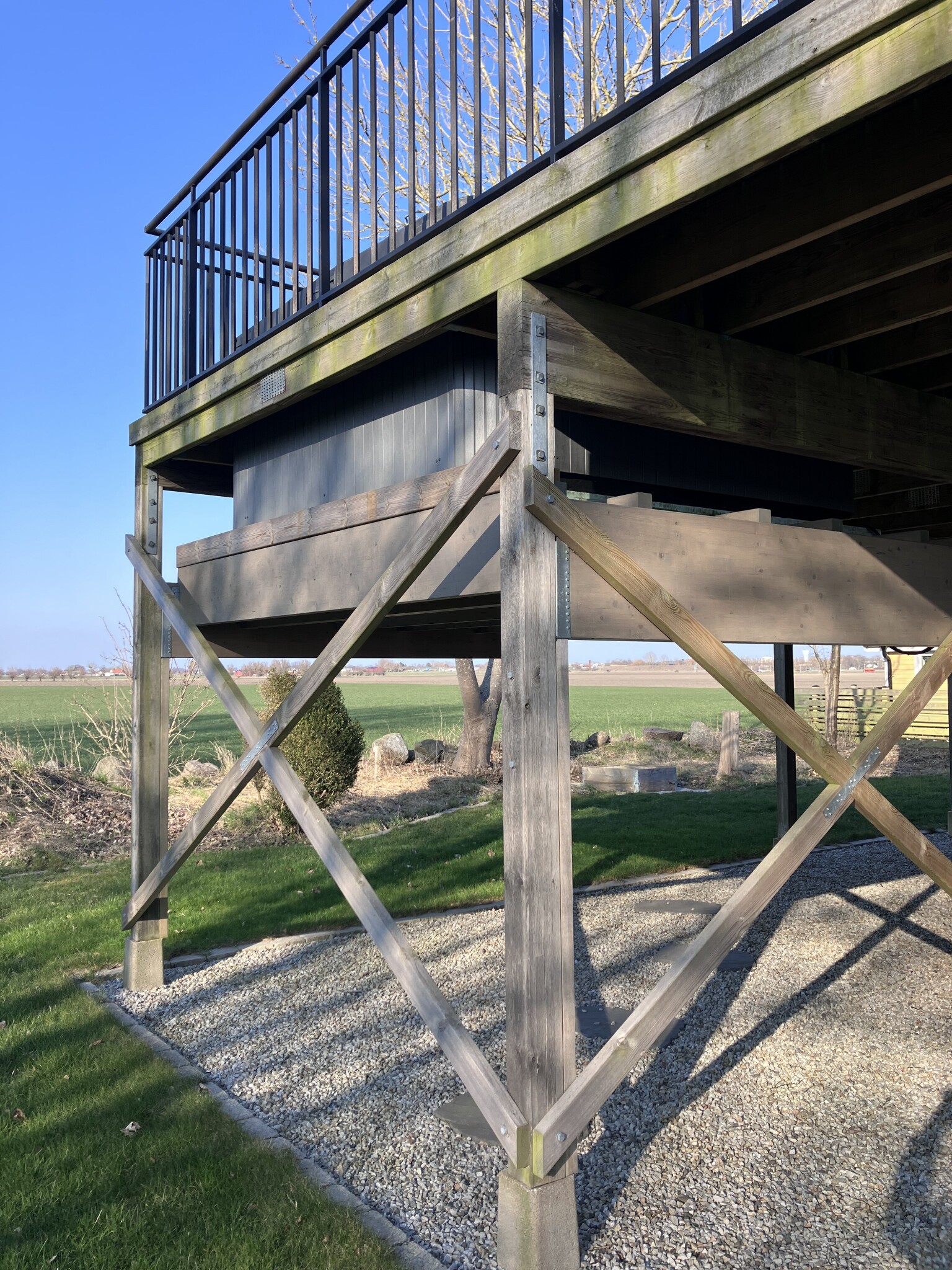
We have a hot tub (=heavy) that is placed on a recessed shelf under our terrace. It does not rest on the ground but stands on posts. When we made the arrangement, we had a designer who planned how the forces would be sustained, what dimensions were needed, etc., so that part should be correct.
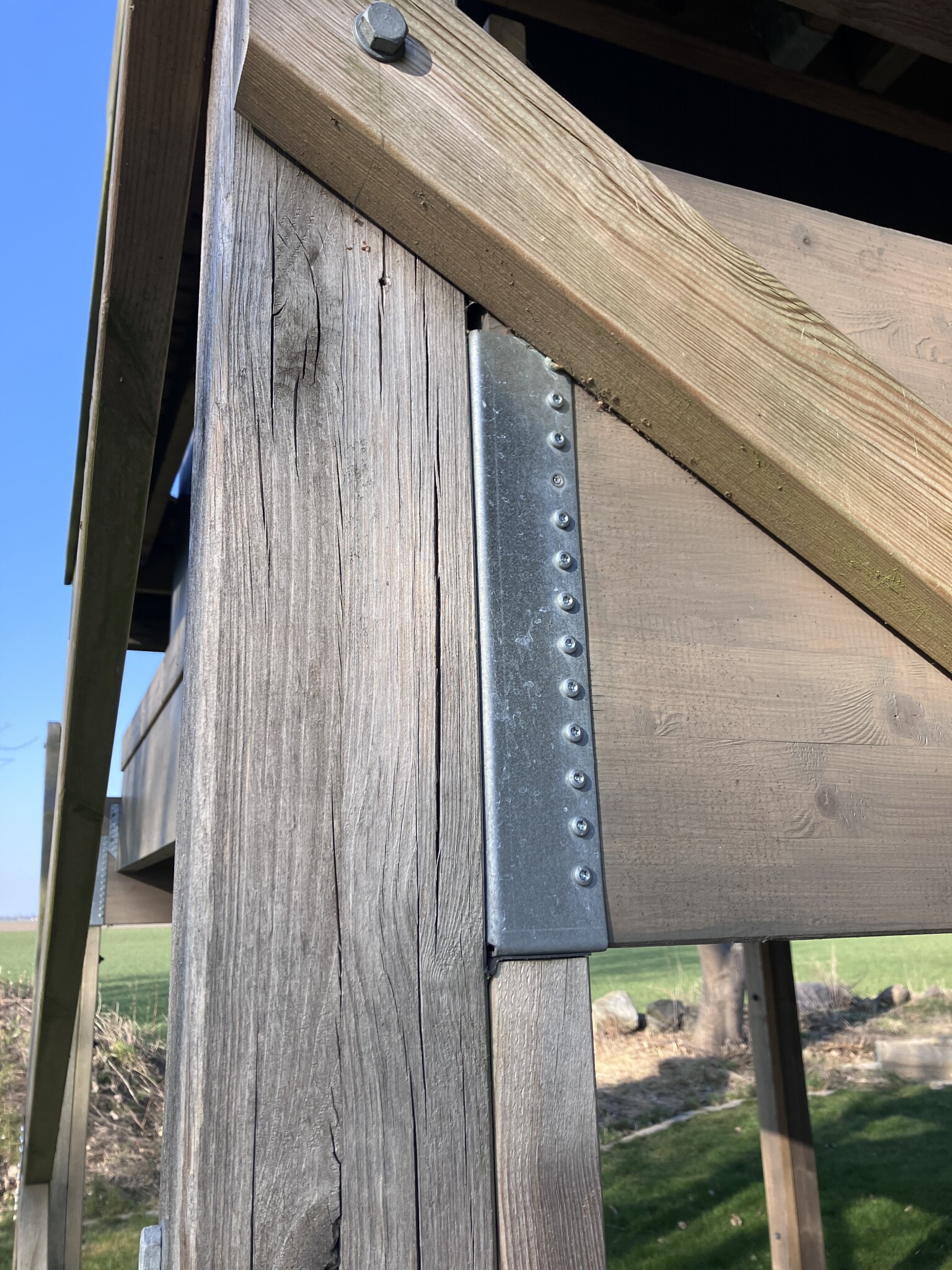
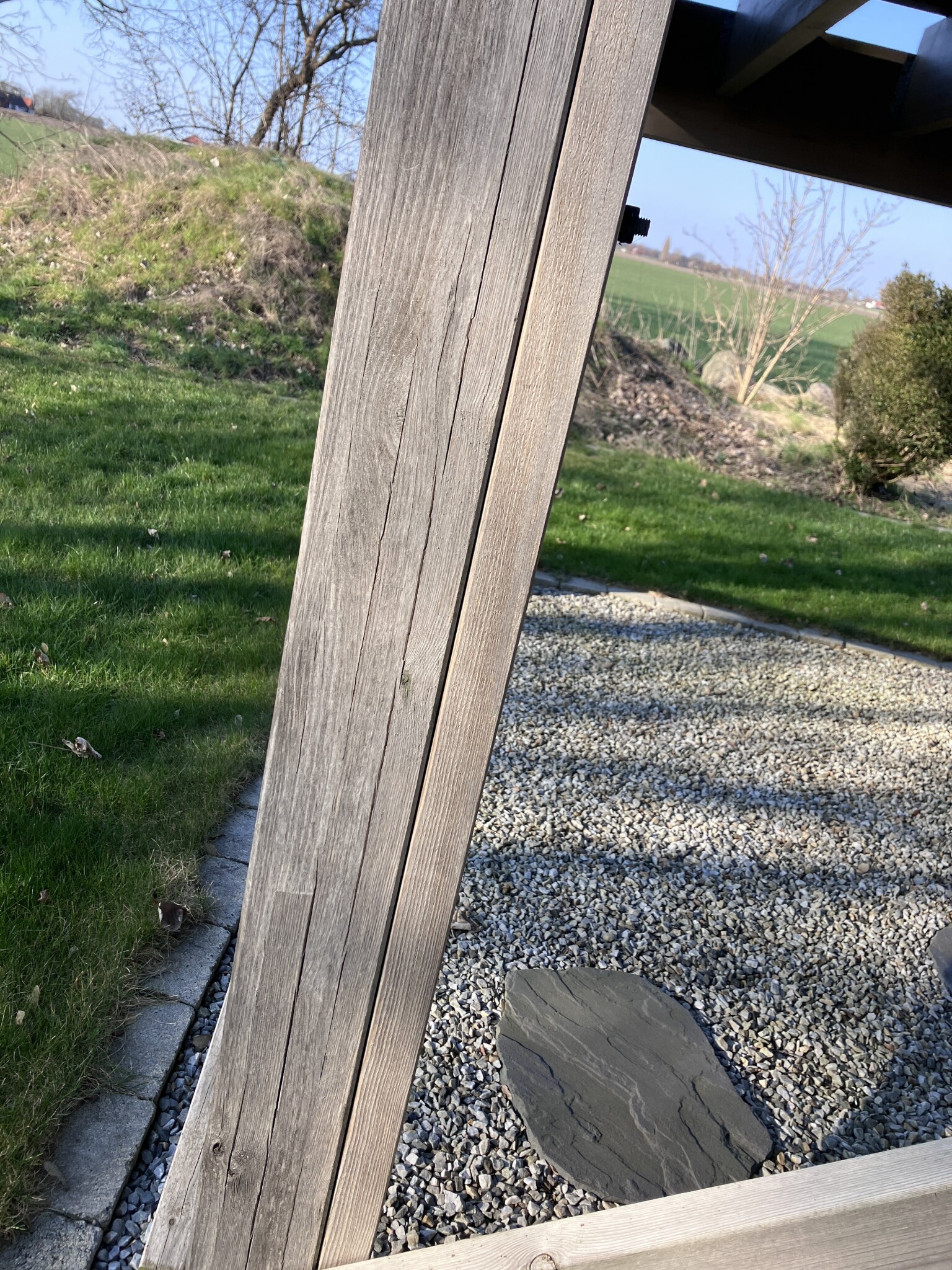
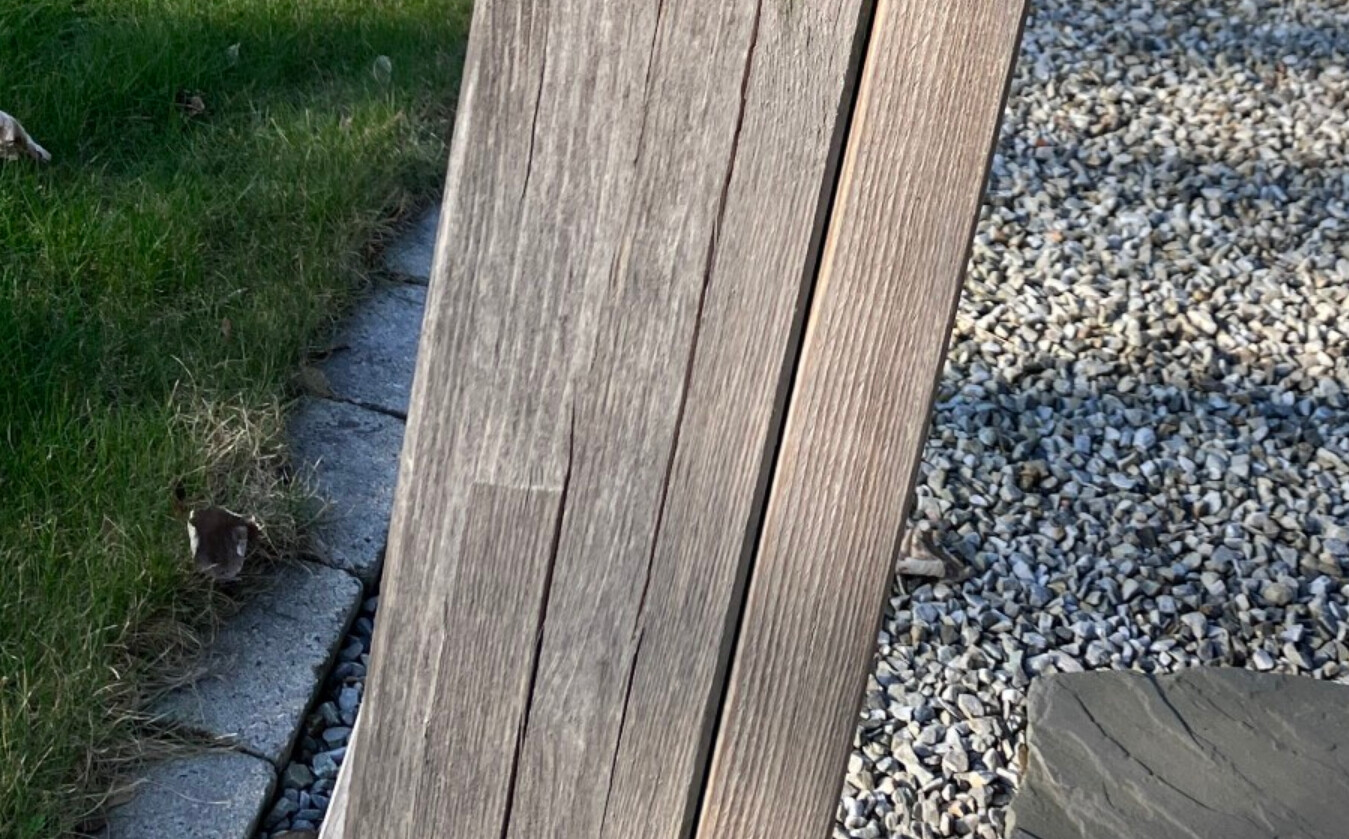
The terrace itself was built at the same time as the house, by a reputable house company, in 2016. The shelf for the hot tub was retrofitted in 2022. The terrace, and thus the hot tub, rests on posts that go from beams under the terrace, down to concrete footings below ground. Now we see that vertical cracks are starting to appear in these posts (see pictures). Is this something we should be concerned about? Is it something that needs to be addressed, and if so, how? Or is it just aesthetic? The wood otherwise looks good, not rotten or anything.
It appears to be solid wood and not laminated timber posts, and in that case, there's no risk - surface cracks will develop over time. If it were laminated timber where the glue joints are splitting, that would not be good, but as mentioned, it doesn't seem to be the case?
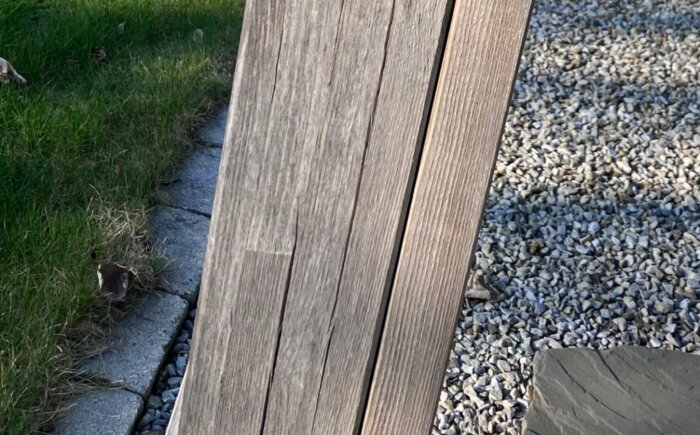
As wrote @Matti_75 you must change posts. The wrong glue was used to glue them because they delaminate at the glue point. Moreover, as you can see below, the layers are glued "to the front" along the length instead of using micro-joints. This looks like it was made by the contractor himself and not purchased from certified material.
As wrote @Matti_75 you must change posts. The wrong glue was used to glue them because they delaminate at the glue point. Moreover, as you can see below, the layers are glued "to the front" along the length instead of using micro-joints. This looks like it was made by the contractor himself and not purchased from certified material.
Well, now you're probably guessing a bit so I feel I can continue guessing...
It's a completely ordinary glulam post, factory-made and glued entirely according to standard and with the correct glue, but for indoor use, then it becomes like that.
What you want for outdoor use is a post classified for outdoor use (and with glue for outdoor use) or a solid post.
The constructor you hired should have liability insurance that can be used when there are errors in calculations/instructions.
I suspect that we might be stuck with the short end of the stick after all... The constructor who designed the house hadn't planned for the hot tub and can probably point to it as an unplanned load. And the constructor who calculated for the hot tub can't be blamed if the existing posts were incorrect (as suggested in other replies in the thread). I guess we'll end up in between, I think resignedly... 🫤
Well, now you're guessing a bit, so I feel like I can continue guessing...
It's a completely ordinary glulam post, factory-made and glued according to standard and with the correct glue, but for indoor use, it ends up like this.
What you want outdoors is a post classified for outdoor use (and with glue for outdoor use) or a solid post.
What is the likelihood that it is a correct post but it still ends up like this? That is to say, that it's "normal" wear and tear?
If they are incorrect posts, we might possibly pursue it with the house company, but if it's just bad luck, they naturally shouldn't be blamed for it.
Well, now you're probably guessing a bit so I feel like I can continue guessing...
It's a regular laminated wood post, factory-made and glued according to standard and with the correct glue, but for indoor use, then it turns out like that.
What you want for outdoor use is a post classified for outdoor use (and with glue for outdoor use) or a solid post.
Glued wood is not produced with glue on the inside! In addition, the thickness of the panels in these posts is also not typical. A properly made element should crack along the grain, and not delaminate at the glued joint. This definitely indicates poor gluing!
Vi vill skicka notiser för ämnen du bevakar och händelser som berör dig.

Matti_75 said:


BirgitS said: