
I had to fix some of the foundation stones at my cottage. They had sunk or toppled over after two hundred years. One rascal was large and nice, so after hauling it up with the tractor and digging out a bit, it was maneuvered back to be placed on a bed of concrete. A tremendous effort, but it turned out well. I backfilled with 0-8 around it, but when I gently compacted with the 100-kilo tamper, a crack opened in the stone, about 12 mm at its widest, and probably tapers to zero at the base of the crack. It's positioned so that it doesn’t affect the load-bearing capacity (I placed the house back on the stone again, and the crack didn't move), but I suspect there is a risk of water seeping in and causing frost damage or displacing the stones over time. So I thought about filling the crack with suitable material to prevent this. What should I use, cement-based materials, epoxy, or something else?

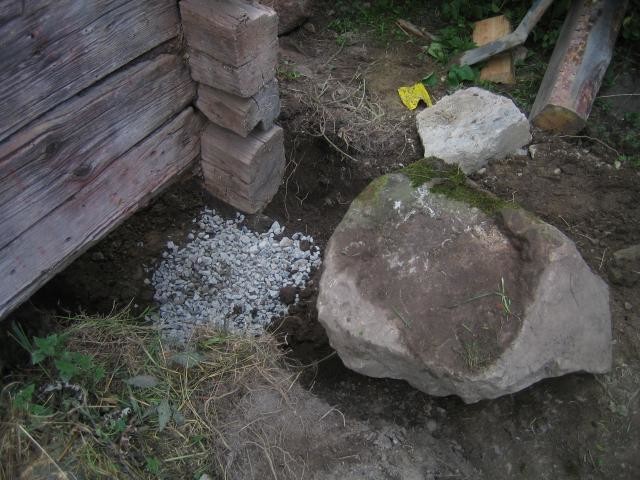
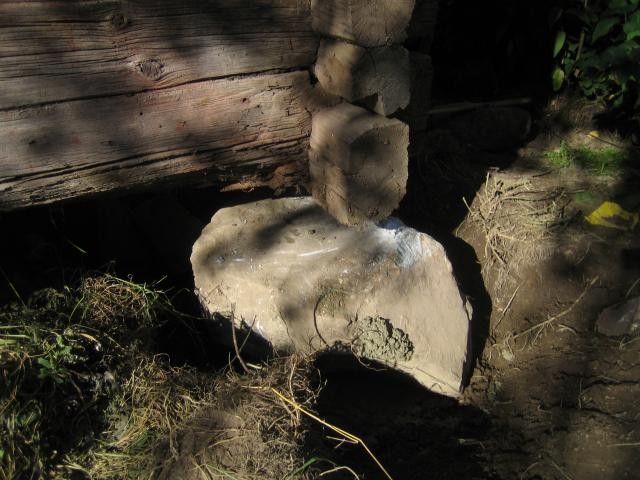



Now I think you're exaggerating a bit. Any water that runs down the crack will likely continue downward under the stone. The crack reasonably goes straight through. Regardless of whether the water runs in the crack or not, it would have ended up in the same place anyway.
The worst that can happen is that this only lasts 150 years......
The worst that can happen is that this only lasts 150 years......
Well, I am probably exaggerating. But my thought is that water can end up standing in the crack, as the stone lies in a bed of concrete that doesn't let water through particularly quickly. And if this water then freezes, the stones might be forced apart a millimeter each time. I might be completely wrong, but it would still feel better to seal the crack..

You should probably have a roof overhang on the house so the risk of the stone being exposed to large amounts of water is minimal. It’s not clear if the stone is cast in the footing. Otherwise, I would have split the stone and filled in between with cement and then immediately lowered the frame onto the stones. The cement itself is not to bear the load but merely to prevent water from "flooding" into the crack.
Well, the stone is in a concrete bed and is fixed in it. I would prefer not to separate the stones.
I also don't think there will be lots of water, but maybe just a little is enough for it to remain, if the gap ends against the concrete at the bottom. I was thinking of something like self-leveling compound (but not the regular kind, of course) that can be poured down and fill the gap.
I also don't think there will be lots of water, but maybe just a little is enough for it to remain, if the gap ends against the concrete at the bottom. I was thinking of something like self-leveling compound (but not the regular kind, of course) that can be poured down and fill the gap.
OK. With that sole, there is no risk of the stones moving against each other except in the case of frost heave. In other words, a non-elastic joint is needed.
I would use washed/rinsed macadam, for example 8-16 or river stone, and fill the bottom of the crack to 20-30 mm from the edge. Then I would fill with suitable mortar and level it against the stone. The advantage of having macadam at the bottom is that there is room for expansion if water gets in and freezes in the crack. Unfortunately, I'm not very knowledgeable about mortar, but I think you could probably use the same type of joint mortar that is used for granite or other stone exterior facade panels.
I would use washed/rinsed macadam, for example 8-16 or river stone, and fill the bottom of the crack to 20-30 mm from the edge. Then I would fill with suitable mortar and level it against the stone. The advantage of having macadam at the bottom is that there is room for expansion if water gets in and freezes in the crack. Unfortunately, I'm not very knowledgeable about mortar, but I think you could probably use the same type of joint mortar that is used for granite or other stone exterior facade panels.
Click here to reply