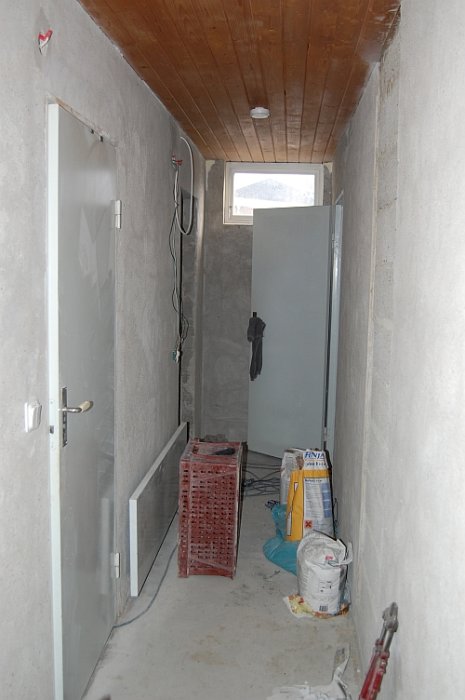
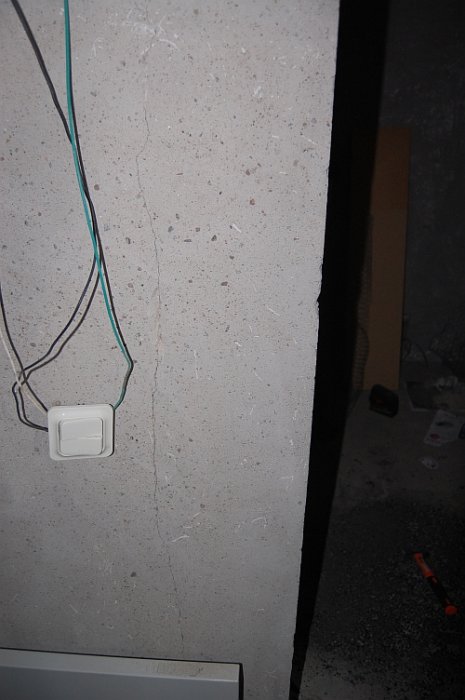
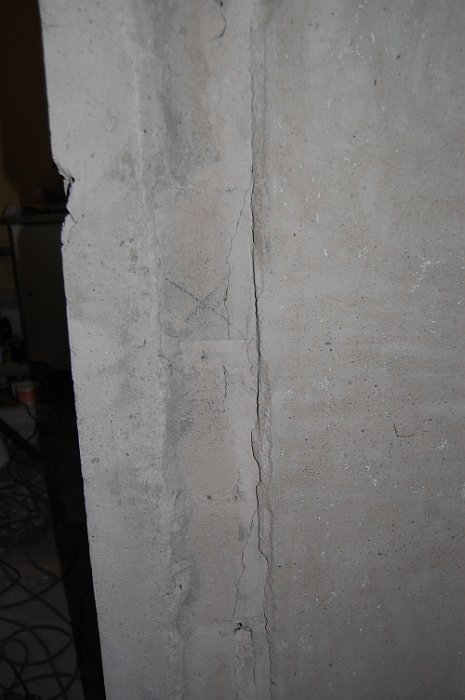
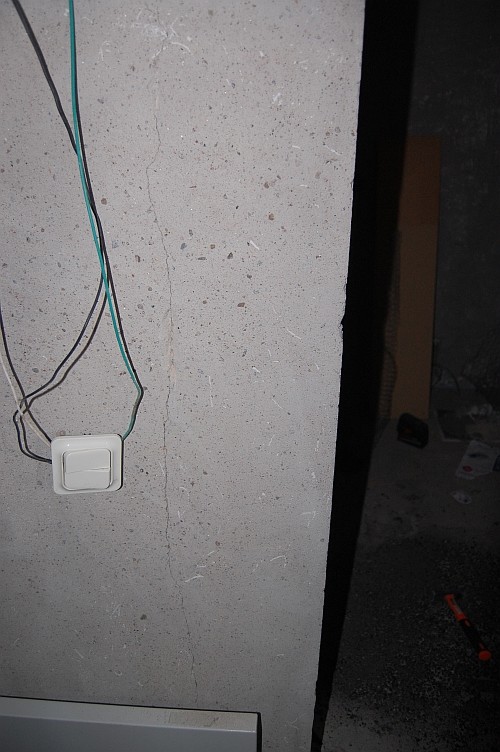
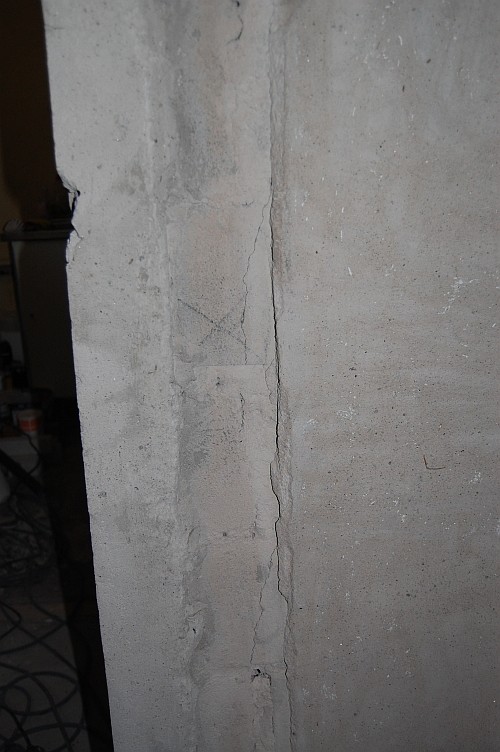
We demolished a basement wall, but unfortunately, the wall perpendicular to it also cracked. The crack is about 15-20 cm from a doorway and goes right through the wall. The wall is made of plastered concrete blocks. Now we have noticed that the crack has grown a bit, probably due to us walking on the upper floor, and we are afraid that the tiles will crack in the joints over time if we don't fix this properly and stop the movement.
But what should we do? Can anyone help?
The wall is unlikely to crack from you walking upstairs. Most likely, the wall you tore down was a support wall intended to counteract the pressure of the ground from the outside against the basement wall.
No, it is not load-bearing, we have a load-bearing wall that runs along the entire basement (from end to end) which has a steel beam that supports the upper floor. Then we have a short wall which I assume is load-bearing (or a support wall as you write above) since it is much thicker.
The wall that has cracked is an interior wall and cracked where the interior wall was attached. It was not reinforced into the wall except with a couple of small nails that were probably to keep it straight.
Difficult to explain, but we have two walls that run like a long corridor from one short side to the other of the house. One has an iron beam and is load-bearing, we haven't touched this one. Against the other wall, there are small rooms, first a pantry with a load-bearing support wall, then this wall we've demolished which is not load-bearing.
If you imagine a "T" where the top is the long wall and the foot is the wall we've demolished, and the door to the room is at the beginning of the top which then of course continues. We were a bit too aggressive with the sledgehammer when we demolished the partition wall, so the long wall cracked where the partition wall was attached (only the top of the T remains). That the long wall is moving can hardly be due to ground pressure as the ground pressure against it is unchanged; rather, it now has less pressure against it since it no longer has any contact with the outer wall except at the short sides of the house.
Here are the pictures:
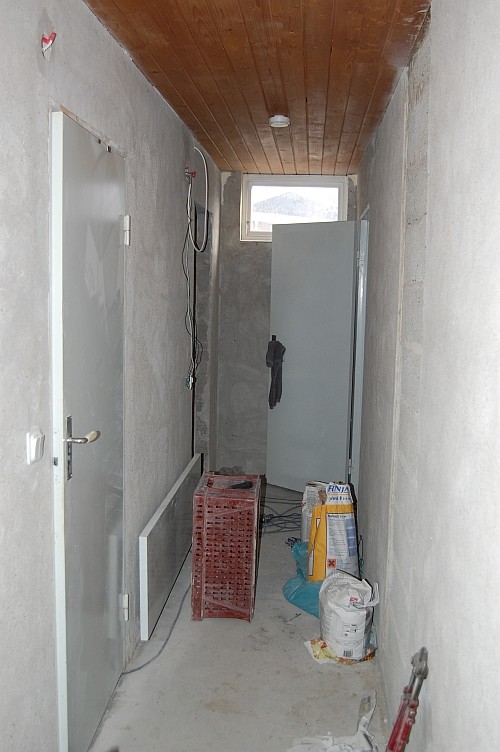
The corridor that runs from the short sides of the house, here the right wall is load-bearing. At the very end of the left wall, you can see the door hole (where the contact is hanging):
and a picture of the crack from outside and inside where we have torn down the wall (a bit unclear here but visible at the height of the X):
it is at the very bottom towards the radiator that the crack has grown.
Click here to reply
Vi vill skicka notiser för ämnen du bevakar och händelser som berör dig.


 ...
...