
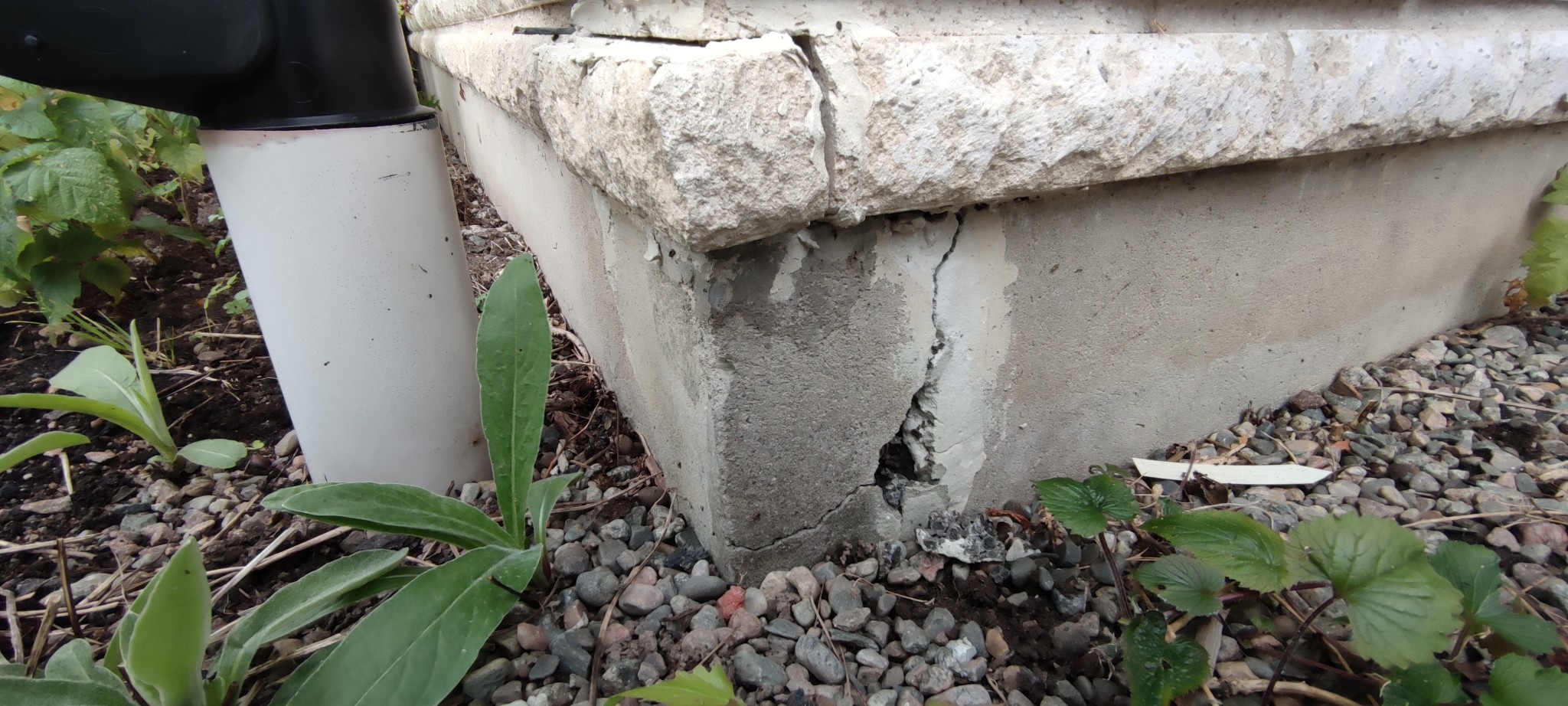
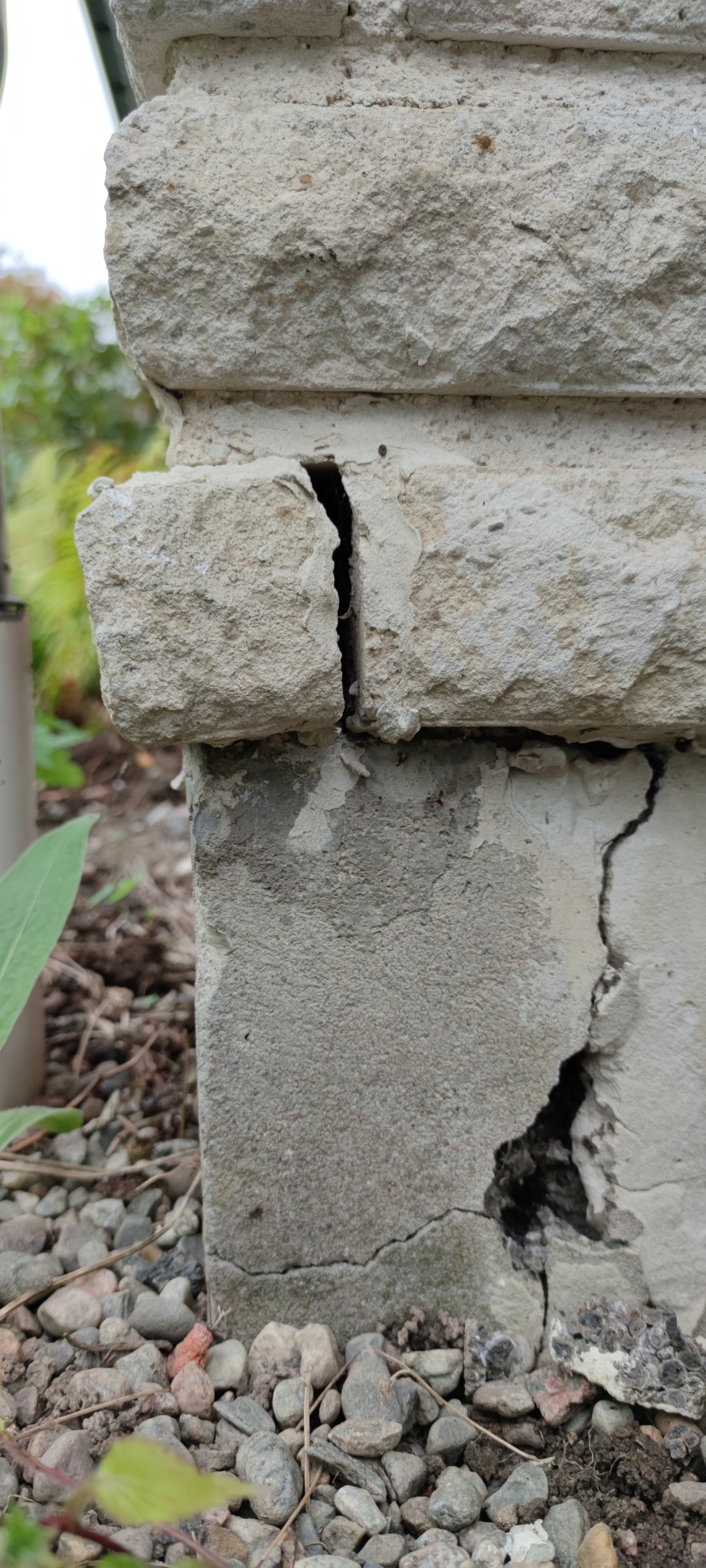
It looks like it has been repaired there before, so it might be a good idea to find out why it is cracking.
Husfix is very easy to work with and should work well. However, I'm not entirely sure if it can be used outdoors.
Husfix is very easy to work with and should work well. However, I'm not entirely sure if it can be used outdoors.
Member
· Västra Götaland
· 3 613 posts
I'm making an educated guess that moisture is entering through the top edge of the bottom facade stone, this goes into the wall and causes frost damage to the base. Patch up the cracks, paint.
Probably because the spout was full or just from regular rain. It could also be that the leaf strainer was positioned along the wall, causing it to splash on the facade with each rain.
Probably because the spout was full or just from regular rain. It could also be that the leaf strainer was positioned along the wall, causing it to splash on the facade with each rain.

One needs to be able to see the whole picture. It's much too zoomed in. Also mention how the house is built including the foundation and the year of construction. Please take a photo showing the entire corner of the house from the eaves down.
The house was built in 1973, on a concrete slab. I think it looks like lecablock when I look in the crack. Yes, the previous owner has tried to fix it, probably with housefix. I (guy) guess that if I tap on the corner piece, it will fall off completely.J justusandersson said:
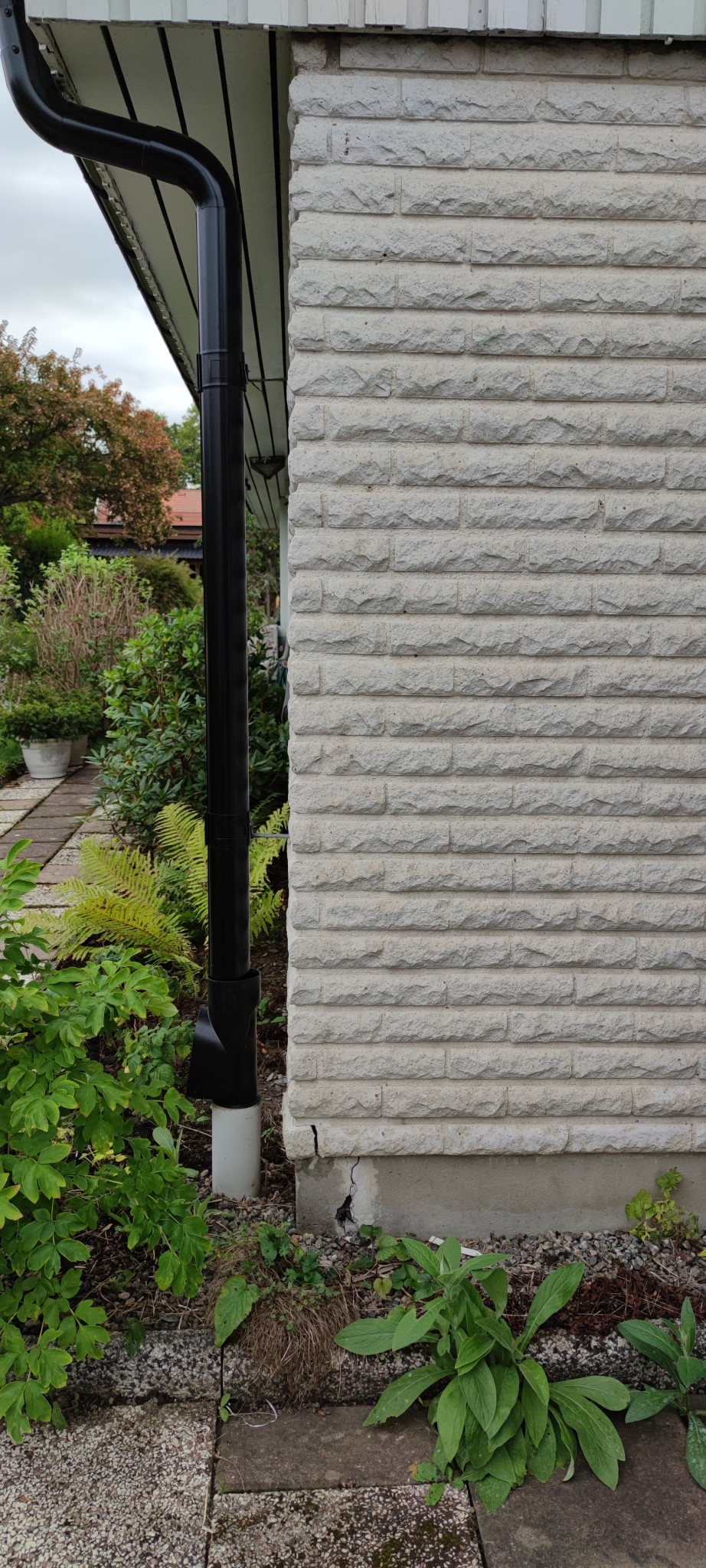
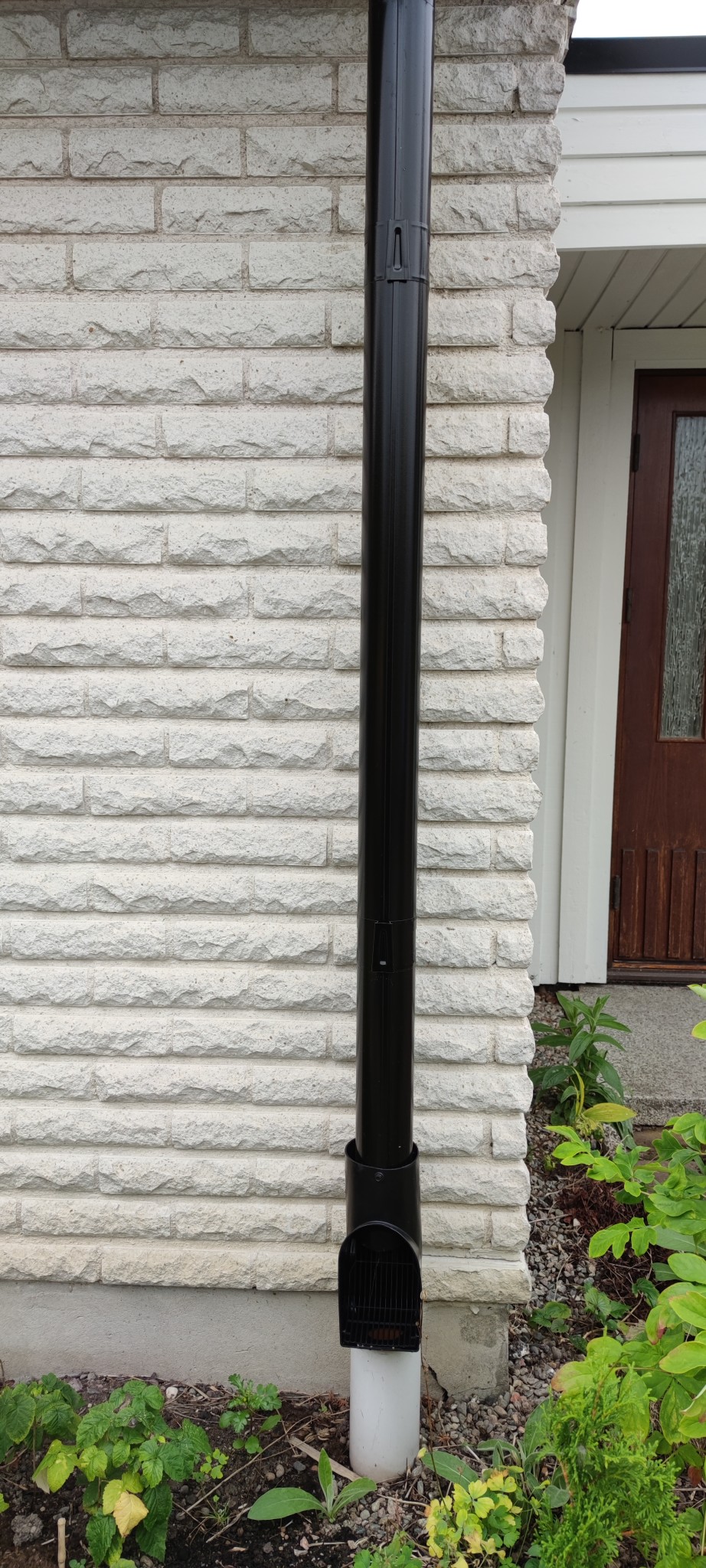
Nice pictures! It is likely that the concrete slab is surrounded by a wall of lecastenar. The lecamuren should rest on a concrete footing and be reinforced together with the slab. I think the cracks look like settlement cracks, which admittedly seems far-fetched so far out in the corner. It might be that there was some corner-cutting with the execution of the concrete footing. I don't think it's related to the drainage. You might need to dig down to the footing and check.
Thanks for the response, I'll dig up the foundation and take a look. I'll return with more pictures and surely with questions about appropriate measures.J justusandersson said:Great pictures! It is likely that the concrete slab is surrounded by a wall of leca stones. The leca wall should rest on a concrete foundation and be reinforced together with the slab. I think the cracks look like settlement cracks, which admittedly seems unlikely so far out in the corner. It could be that shortcuts were taken with the construction of the concrete foundation. I don't think it seems related to drainage. You might need to dig down to the foundation and take a look.
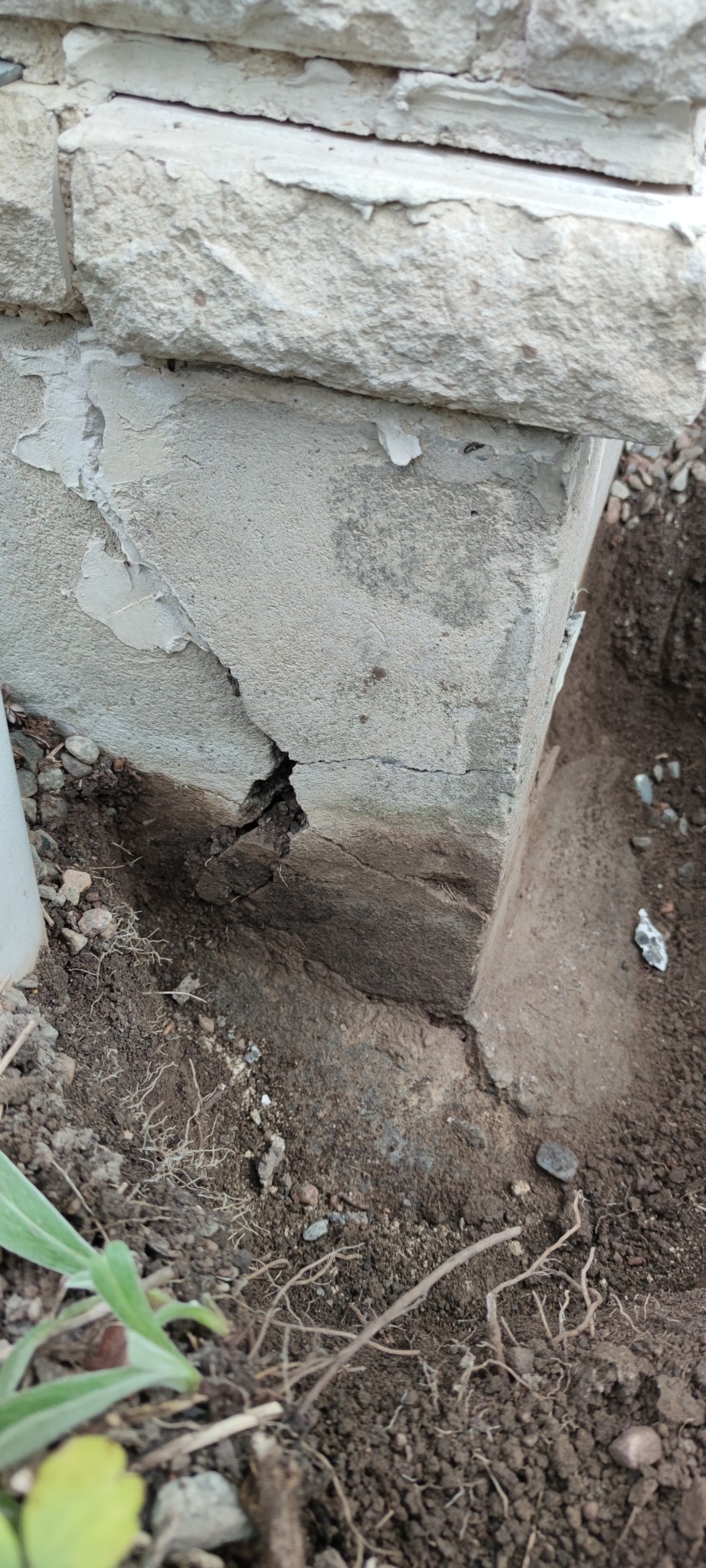
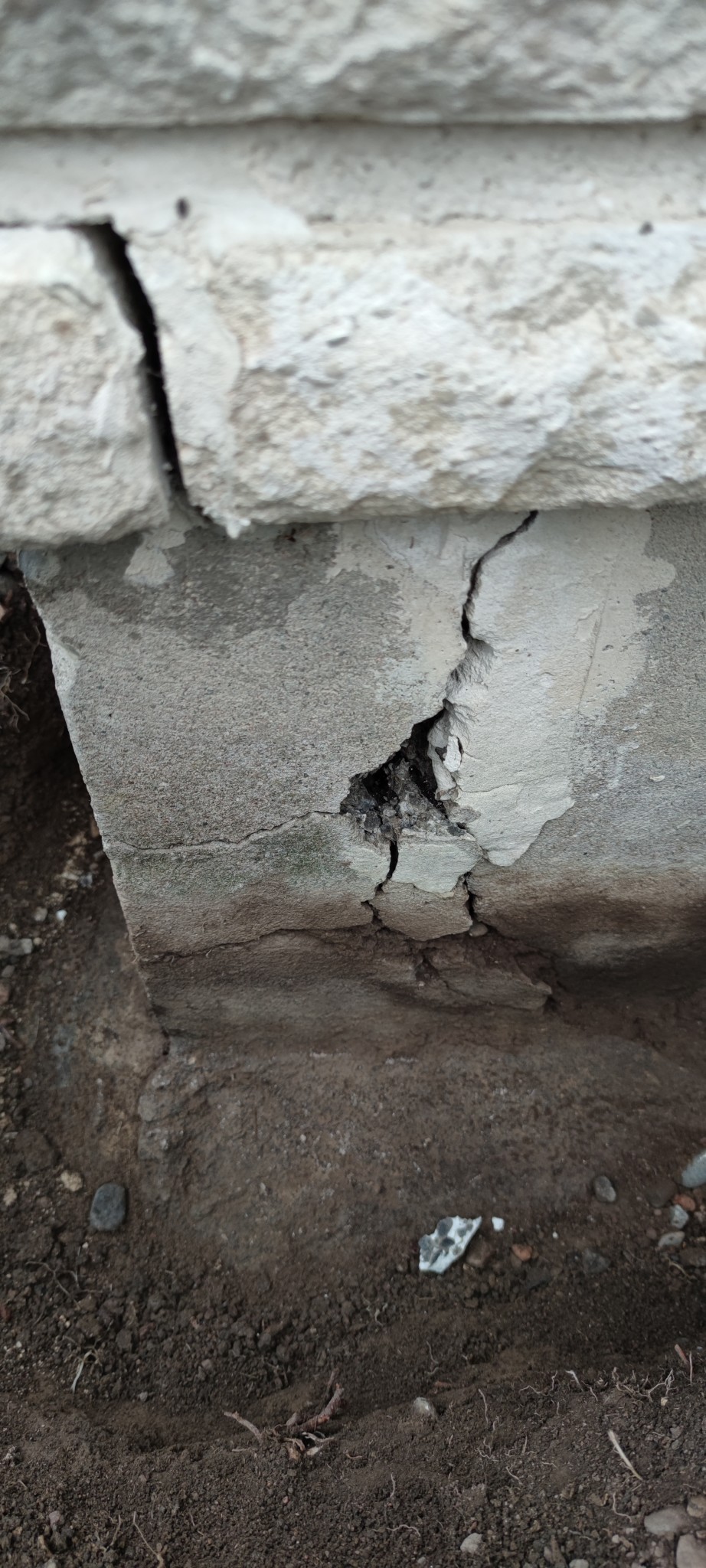
I don't think the foundation looks like it should for a relatively modern house. It seems amateurish (judging by the pictures). I wonder if it is reinforced. Dig a bit more to fully expose the foundation. If the ground is relatively stable (moraine, gravel, sand, firm clay), it should be possible to reinforce it. Then you should enlist the help of someone experienced in foundations. If the ground is looser, I think you should call in a structural engineer with knowledge in geotechnics (all university-educated ones have it).
Click here to reply