
3,286 views ·
15 replies
3k views
15 replies
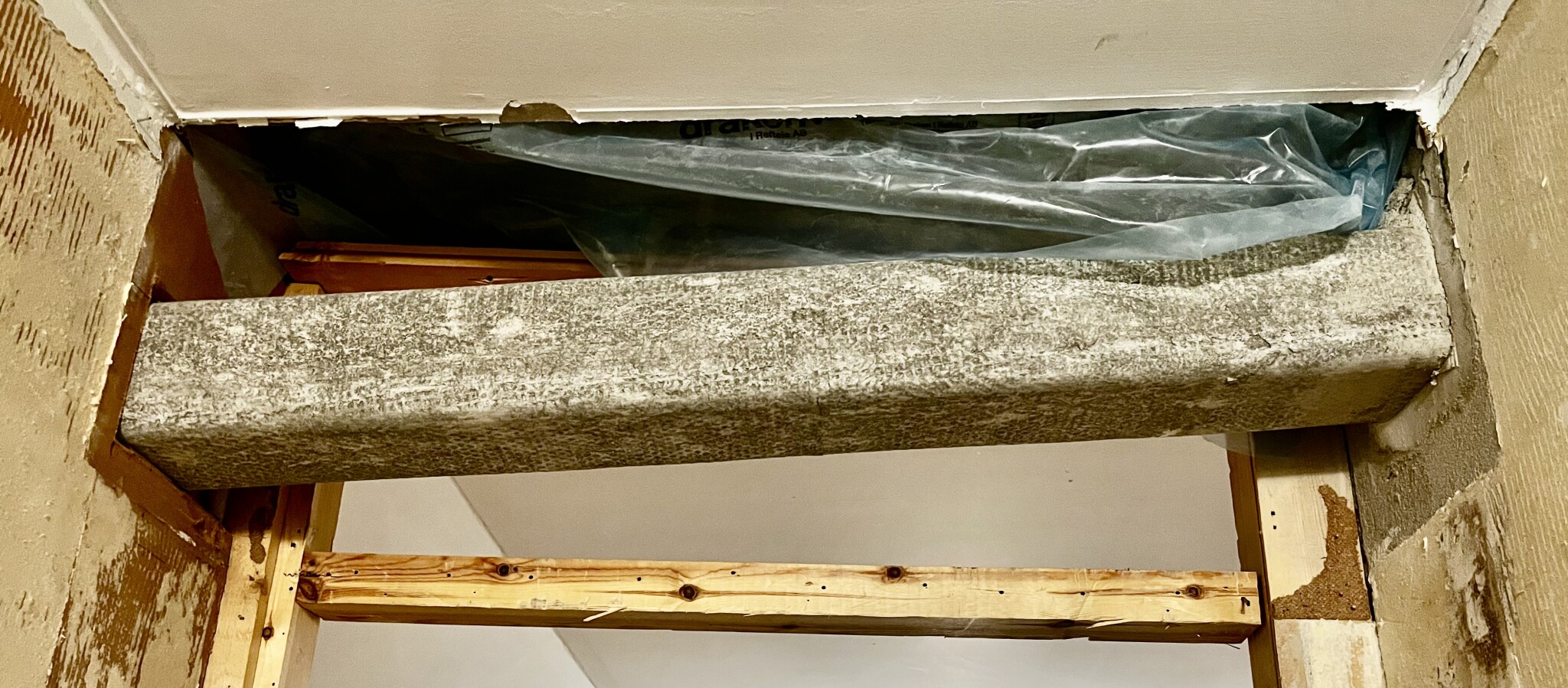
Could this be asbestos cement here?
This seems to be some old ventilation duct and I wonder:
1. Could it be eternit? (I know a test must be done to be completely sure)
2. In the upper right corner, it has broken a bit where it first meets the chimney. How dangerous is it to be in the rooms if it's eternit?
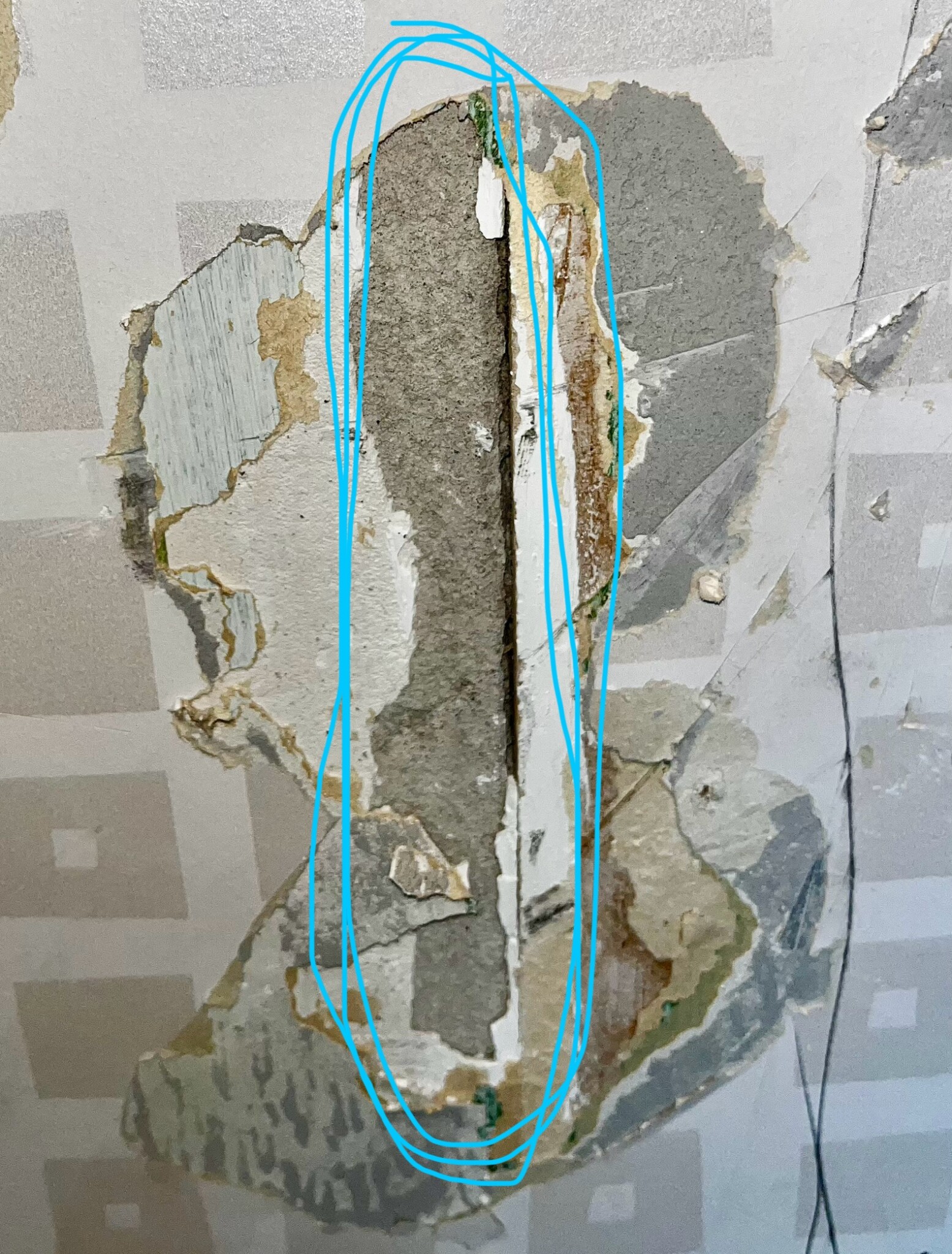
3. The second picture is of the chimney, and there is some material on it that is damaged in several places. This material is from the 1970s when the house was built, and the previous owner has wallpapered over it. I've read that eternit could be used around chimneys then. Could that material be eternit?
1. Could it be eternit? (I know a test must be done to be completely sure)
2. In the upper right corner, it has broken a bit where it first meets the chimney. How dangerous is it to be in the rooms if it's eternit?
3. The second picture is of the chimney, and there is some material on it that is damaged in several places. This material is from the 1970s when the house was built, and the previous owner has wallpapered over it. I've read that eternit could be used around chimneys then. Could that material be eternit?

Homeowner
· Småländska höglandet
· 5 777 posts
Yes, the ventilation duct is made of eternit and contains asbestos. If you are concerned, you can use a half-mask with a P3 filter when removing it. Wrap the duct in tight plastic and label it 'asbestos' before taking it to the recycling center. Wet wipe around the duct to remove any potential asbestos dust.
What's on the chimney breast is some kind of plaster. Very low probability of asbestos.
What's on the chimney breast is some kind of plaster. Very low probability of asbestos.
It is basically completely harmless to be in the room as long as you don't do anything that causes the eternit to release dust. Asbestos is dangerous, but it is only dangerous when the dust is airborne. Otherwise, it is a fantastic material. Now there are good substitutes available today, so there is no reason to use it anymore. At the same time, it does no harm where it lies in old houses.
Thanks 😊Yes, the ventilation duct is made of asbestos cement. If you are worried, you can use a half-mask with a P3 filter when removing it. Wrap the duct in tight plastic and label 'asbestos' before taking it to the recycling center. Wet wipe around the duct to remove any possible asbestos dust.
The material on the chimney is some kind of plaster. Very low probability of asbestos.
I don't know if I would need to saw anything to remove it, haven't dared to investigate further. It's located between a toilet and the chimney. If one needs to make incisions into it, how should it be done?
Besides mask and suit, what should one consider then? Airlocks? Ventilation box connected to the HVAC system farther away? Anything else?

Carefully break it apart with a hammer and lift out as large pieces as possible.T ToT15 said:
You don't need to exaggerate - it's not E.T. you’re dealing with...T ToT15 said:
use a mask, turn off the ventilation, and clean thoroughly afterwards.
I know it's not a danger as long as it's intact, but it's positioned in such a way that a construction company had screwed in a small screw there, and missed by just a millimeter. I don't want something like that to accidentally happen in the future that someone can damage it. So it's better to remove it as it's located a bit awkwardly.pacman42 said:
It's basically completely safe to be in the room as long as you don't do anything that causes the eternit to dust. Asbestos is dangerous, but it's only dangerous when the dust is airborne. Otherwise, it's a fantastic material. Nowadays, there are good replacements, so there's no reason to use it anymore. At the same time, it doesn't do any harm where it is in old houses.
If it's the case that this channel has broken a little on top in the upper right corner, how long does the dust stay airborne before it's no longer, so to speak, dangerous to be in the room?
We first have such a plastic door we go through, then further ahead there's regular construction plastic, but it's not sealed, and finally the same plastic is just before you reach the room, which is also not sealed, just to minimize dust spread. Is there a big risk of bringing asbestos into other living areas then?
All material is disposed of via another exit that is not otherwise used, suit and mask are removed before two of these plastics that are up.
Haha, no 😂 but we have a child with a severe illness who is EXTREMELY sensitive, so we are very careful with everything for that reason, even regular construction dust is harmful (perhaps excessive in others' eyes).useless said:
We don't have the option to turn off the ventilation, but we've taped over the ventilation outlets. That should be fine, right?
Okay, we've been vacuuming as we've been demolishing so far, but is it because it can spread the dust in the air that you shouldn't vacuum?Rejäl said:
Then we'll wet wipe it.
Could there be other places that might have Eternit indoors? The house is from the 70s, and this is an upper floor with sloped ceilings and crawl spaces on each long side.
For example, there were 4 different layers on the walls. Wondering about glue and other things?
A regular vacuum cleaner spreads the asbestos fibers, so if you have used it, it needs to be cleaned. For ordinary construction dust, use a wet/dry vacuum cleaner; if you have sensitive children, an M-class vacuum cleaner is recommended for construction dust.
Here is a simple description of different classes of vacuum cleaners:
https://www.proffsmagasinet.se/kunskapsportalen/guider/arbeta-dammfritt-valj-ratt-dammsugare
Here is a simple description of different classes of vacuum cleaners:
https://www.proffsmagasinet.se/kunskapsportalen/guider/arbeta-dammfritt-valj-ratt-dammsugare
If you're going to vacuum asbestos, you should have an H-class vacuum cleaner to avoid spreading the dust further.T ToT15 said:Okay, I've been vacuuming as we've been tearing out now, but is it because it can spread the mess in the air that you shouldn't vacuum?
In that case, we'll wipe it down instead.
Could there be other places that might have asbestos indoors? The house is from the 70s, and this is an upper floor with slanted ceilings and storage spaces on each long side.
We had, for instance, 4 different layers on the walls. Wondering about glue and other things?
For a private individual, I think one should advise against vacuuming asbestos-containing material, it is simpler, safer, and cheaper to succeed without risking spreading fibers if you wet wipe.T Timmermannen77 said:
That's exactly why you should use an H-class vacuum cleaner that doesn't spread the dust further.F fribygg said:
It can also be difficult to wipe with damp cloth if the dust gets into cracks or settles in places that can't be wiped with damp.

You are scared by the doomsday people who always say that asbestos is deadly and you die instantly, almost just by looking at it. That's completely wrong, as has been mentioned in previous posts here and in other threads. Everyone knows it's not good. But it needs to be worked on with tools to create dust. Taking down such a drum has been mentioned here. A quality mask, a hammer, and a larger pipe wrench. Make a hole in it and break off pieces is best. Start from the top. Place it in a plastic bag and take it to recycling. The dust created is no more than the grime you breathe outdoors in the city.T ToT15 said:Haha no 😂 but we have a child with a severe illness who is EXTREMELY sensitive, so that's why we're careful with everything for that reason, even regular construction dust is harmful (maybe exaggerated in others' eyes).
We don't have the option to turn off the ventilation, but we have taped over the ventilation outlets. That should be enough, right?
Homeowner
· Småländska höglandet
· 5 777 posts
No, in my humble opinion, the best (and least dust-producing) way is to try to take down the duct in one piece. It might require some work to get the end that is attached to the chimney loose, but you can spray water on the pipe before you start. The end that goes through the bathroom wall, you saw off by cutting around the pipe in the wall with a reciprocating saw or something similar. Then you pull the pipe out completely.
(And please, some of you, if you want to write "aspest" and "asbets," you are welcome to the parody thread, where you can do so! I might even do it myself sometimes 🤓.)
(And please, some of you, if you want to write "aspest" and "asbets," you are welcome to the parody thread, where you can do so! I might even do it myself sometimes 🤓.)