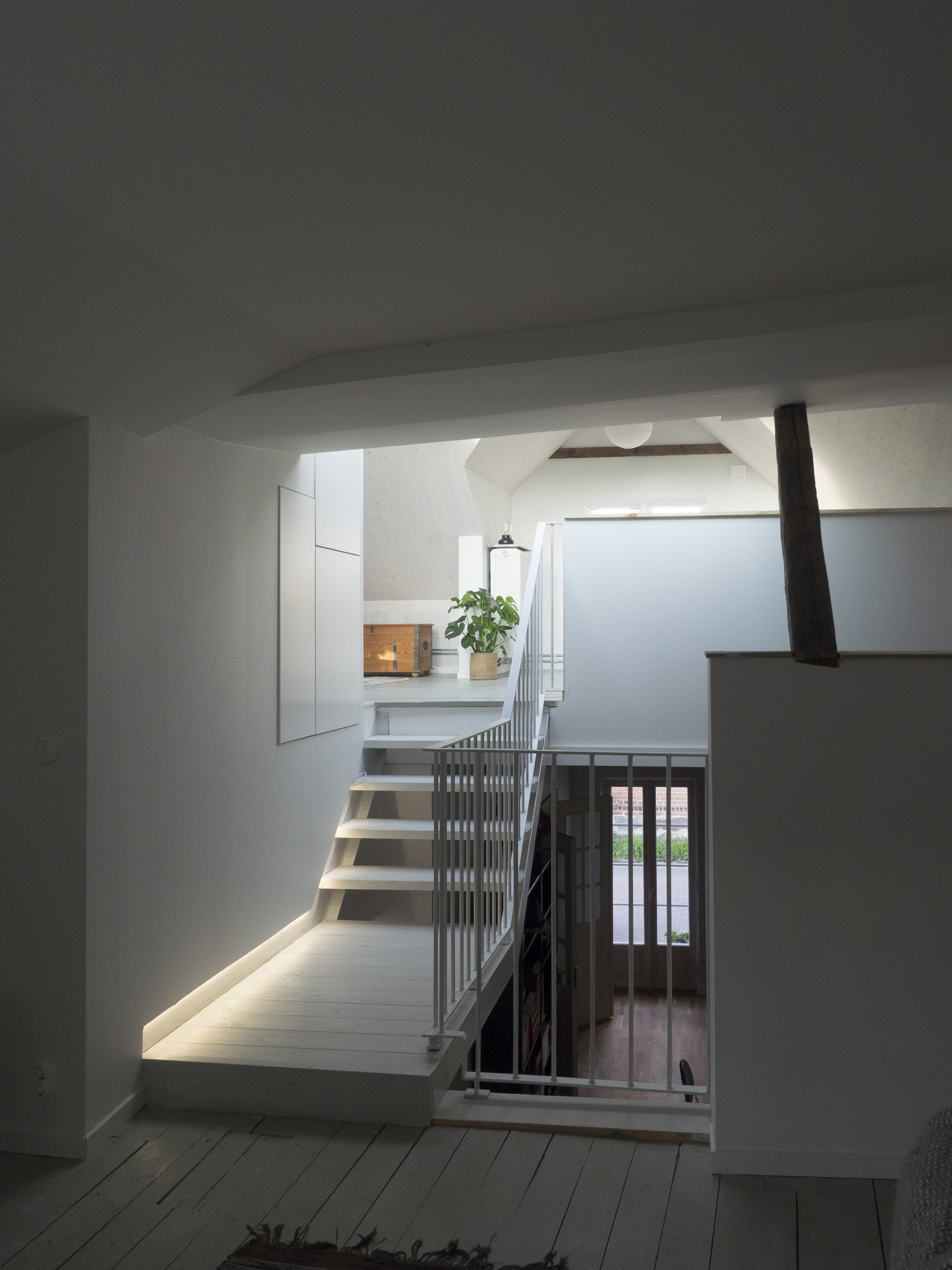
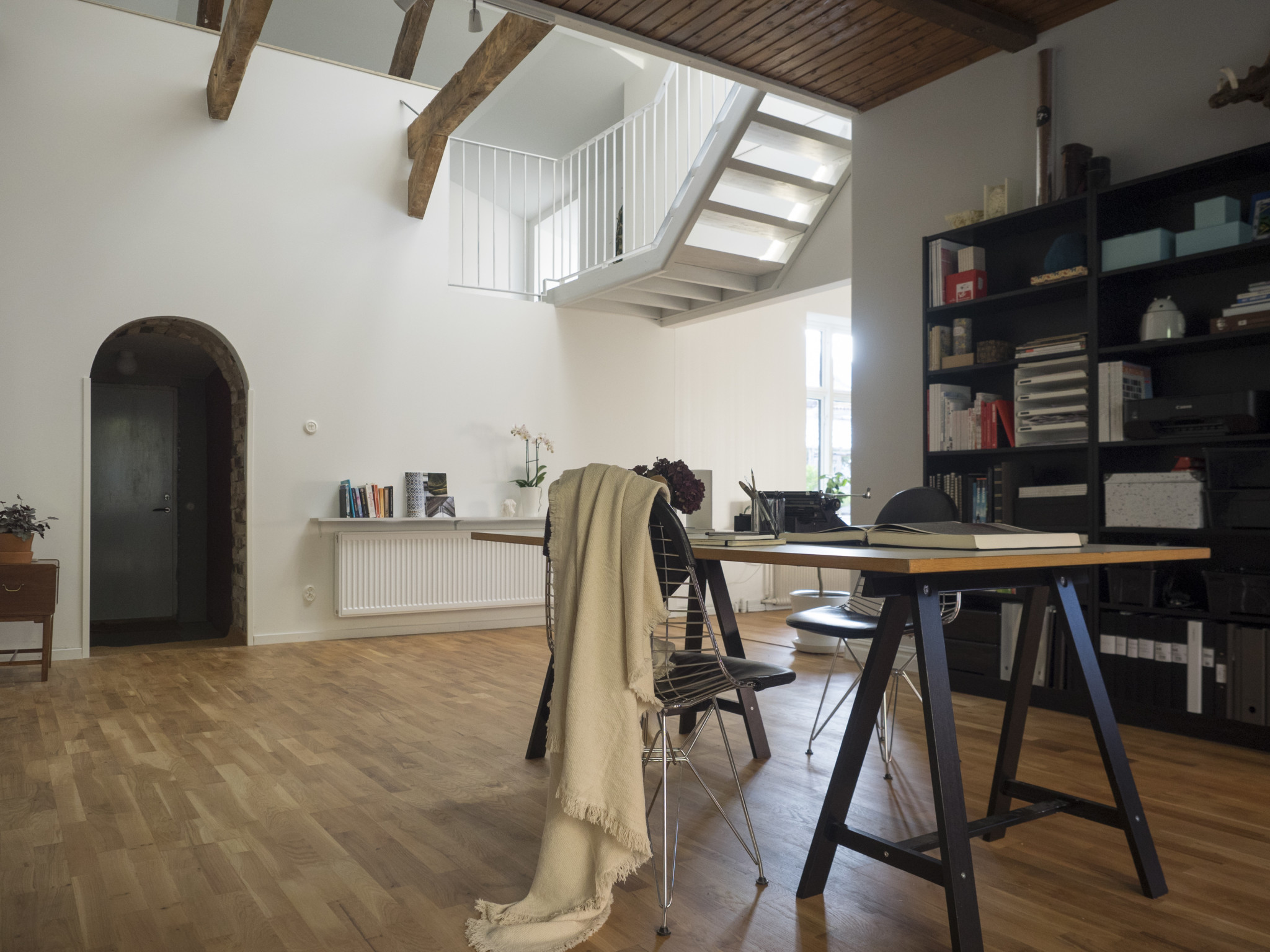
I am going to build a combined staircase/bridge connecting two floors with a height difference of about 800mm. I feel a bit uncertain about the construction and sizing, so I would appreciate some input!
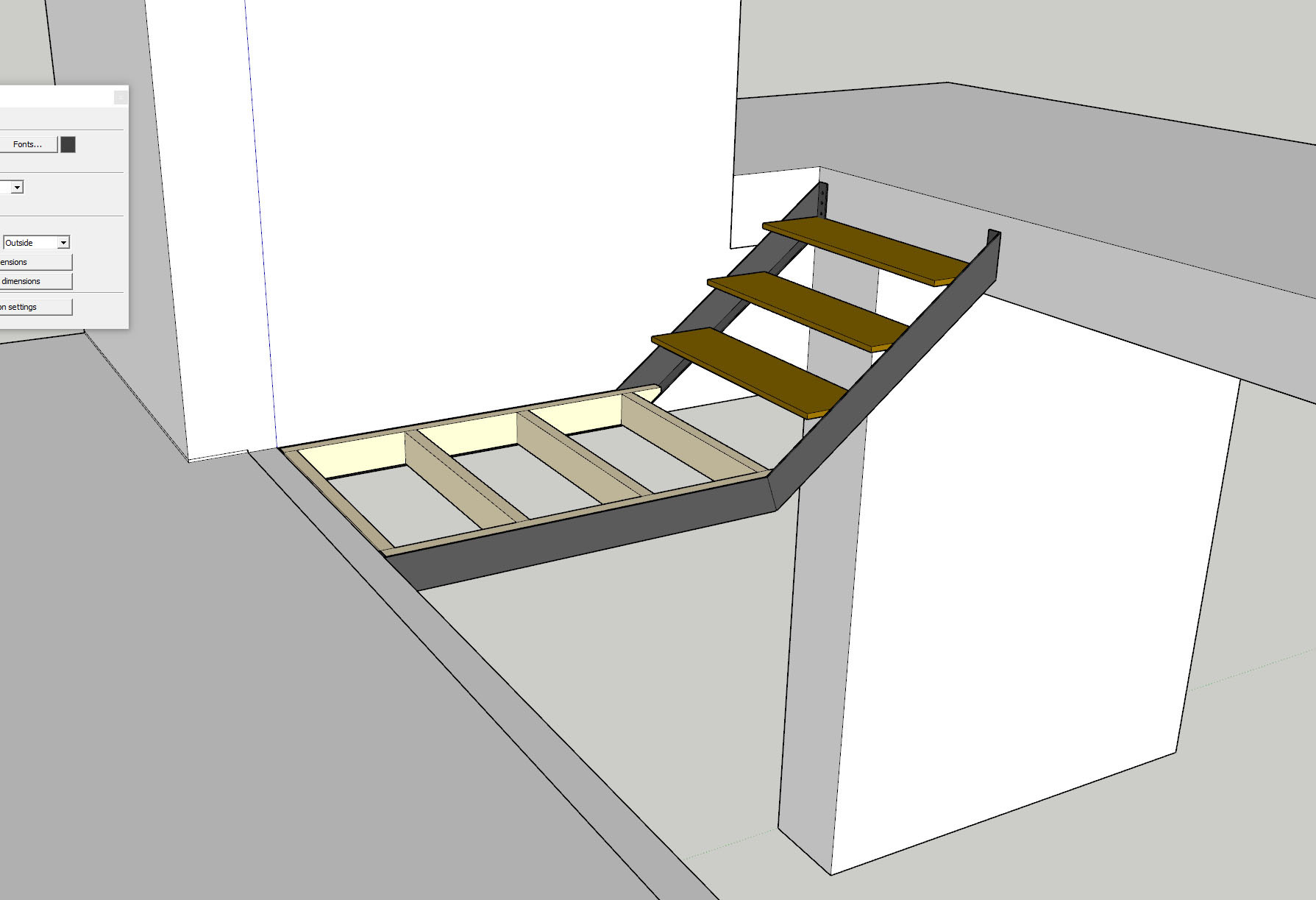
Here's the plan. The horizontal distance between the floors is 2200mm, and the width of the "bridge" is 950mm. It can be connected to floor joists at all four corners, as well as to a wall on one side of the bridge. A spiral staircase will connect to the other side (this side in the picture).
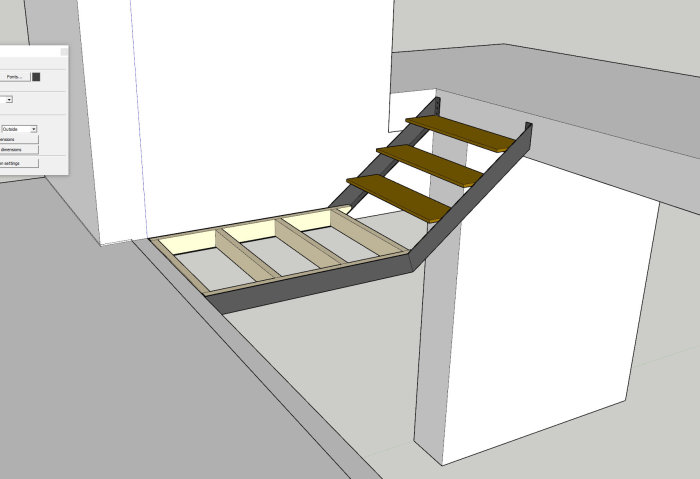
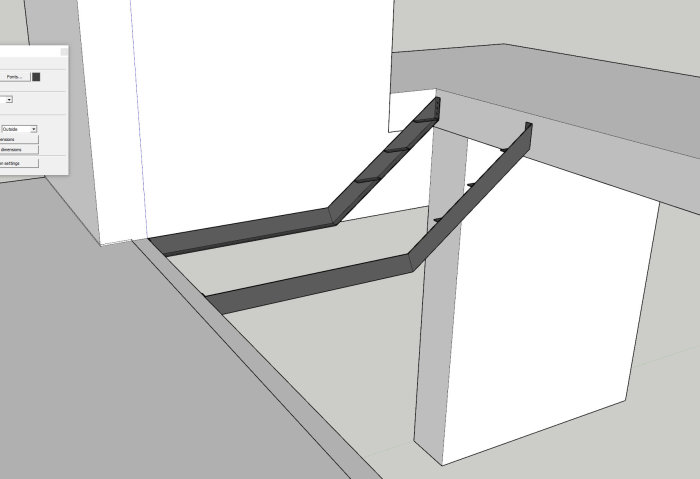
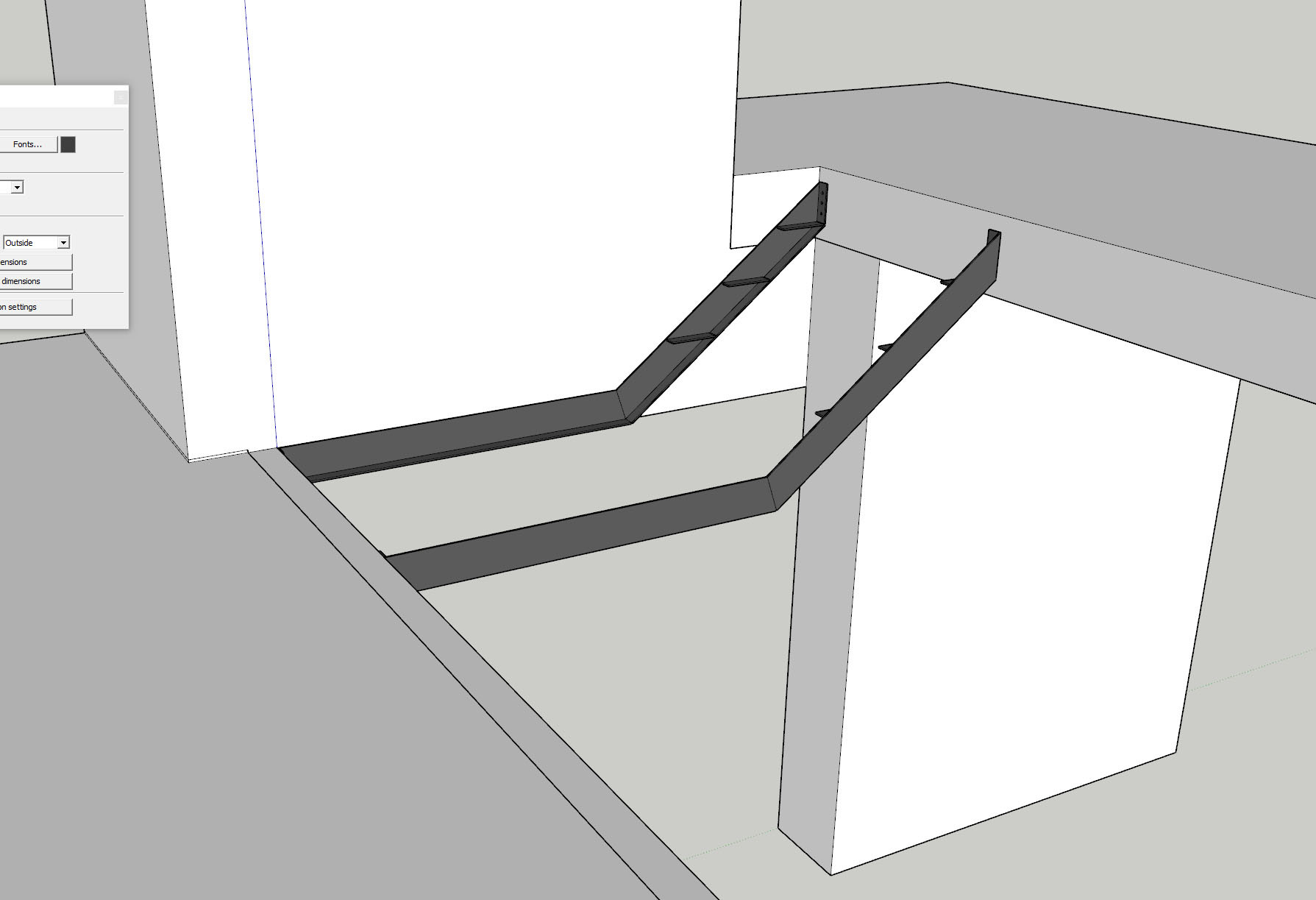
My idea is to ask our blacksmith to make two bent L-iron pieces, height 120, width 45, into which I will place 120 joists, linked together with similar joists at cc 450. The steps will be placed on welded supports. At all four corners, fastened plates will be welded on, which will be screwed into the joists. The platform will also be screwed in the middle on one of the long sides.
The steel construction will look like this:
Does this sound like a realistic plan? To maintain walking height underneath, I would like to stick to 120, if possible. What would be a reasonable thickness for the steel, do you think?
It can certainly be solved as you intend, but I think it's a somewhat backward solution. It must be better to create something that looks like a ramp but with small and deep tread steps. It's a complication that both the height and length are fixed, but you can experiment a bit. You need to modify the stair formula so that it allows a foot shift per tread. Instead of counting with 2xh + d = 60-63, use 2xh + d = 120-126.
I understand. Personally, I do not like your solution because it deviates from what one expects. I would have preferred to see a flat bridge and stairs on the left side. But maybe there isn't enough height for that? With your proposed solution, everything depends on the weld seam. It can also be executed in glulam.
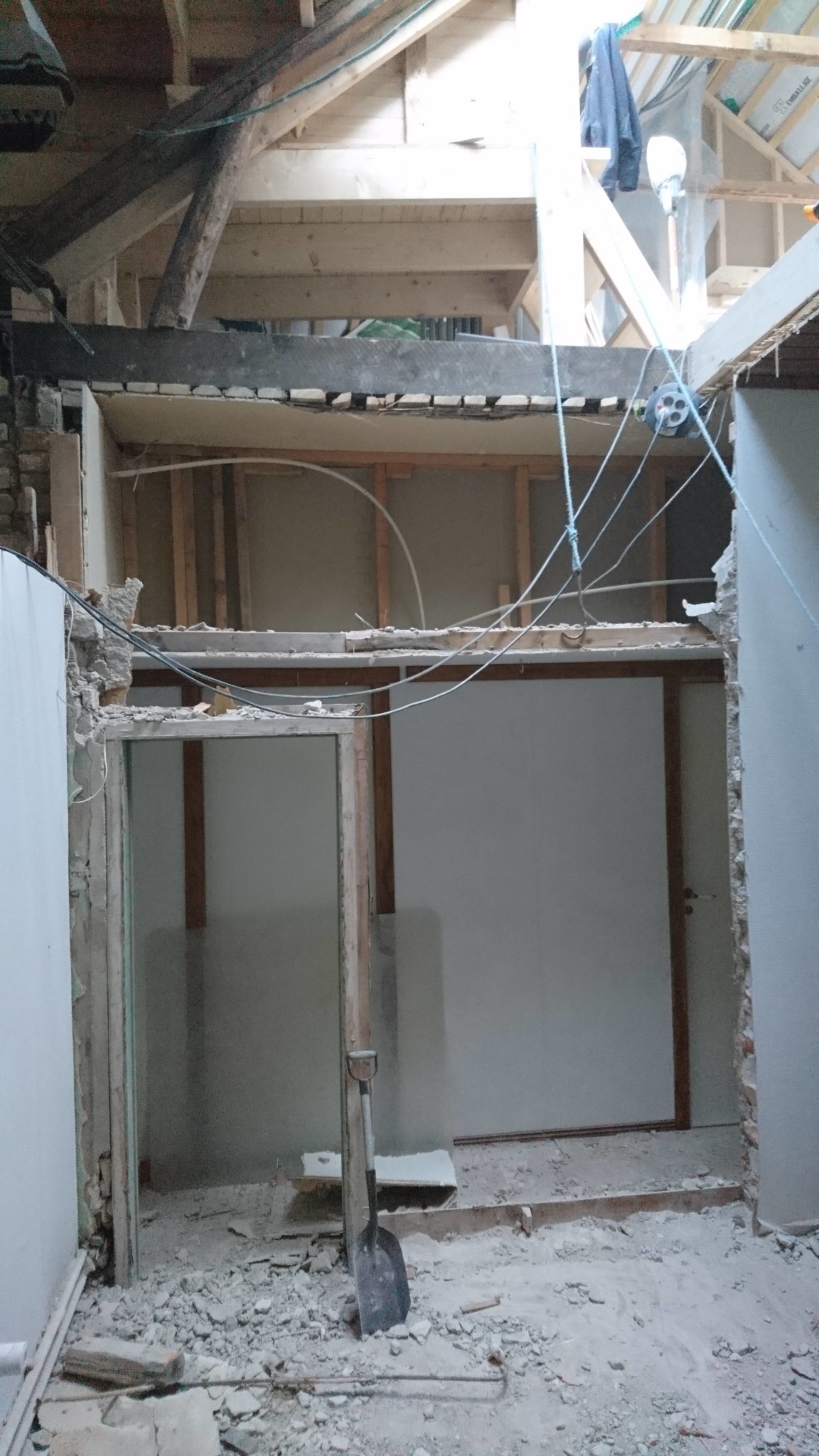
I'm not at all uncertain about the architecture; it will be fine. But you don't see much of the context in the images, so I can understand your uncertainty.
I'm not worried about the weld either, I believe; we have a skilled blacksmith doing it for us. But I interpret you as thinking that 120 in height is a sensible solution? Any thoughts on the thickness of the material?
Does the central pillar of the spiral staircase connect to the angle hanging in the air in the picture? If so, it will be very stable.
I had considered it initially, but now we are going for a cheaper kit-staircase. So it will be more of an indirect connection, but yes, it does connect. Is it stable enough to go down to 95?


Bernieberg said: