
2,042 views ·
4 replies
2k views
4 replies
Construction of attic floor/garage roof, how should it be built to avoid moisture problems?
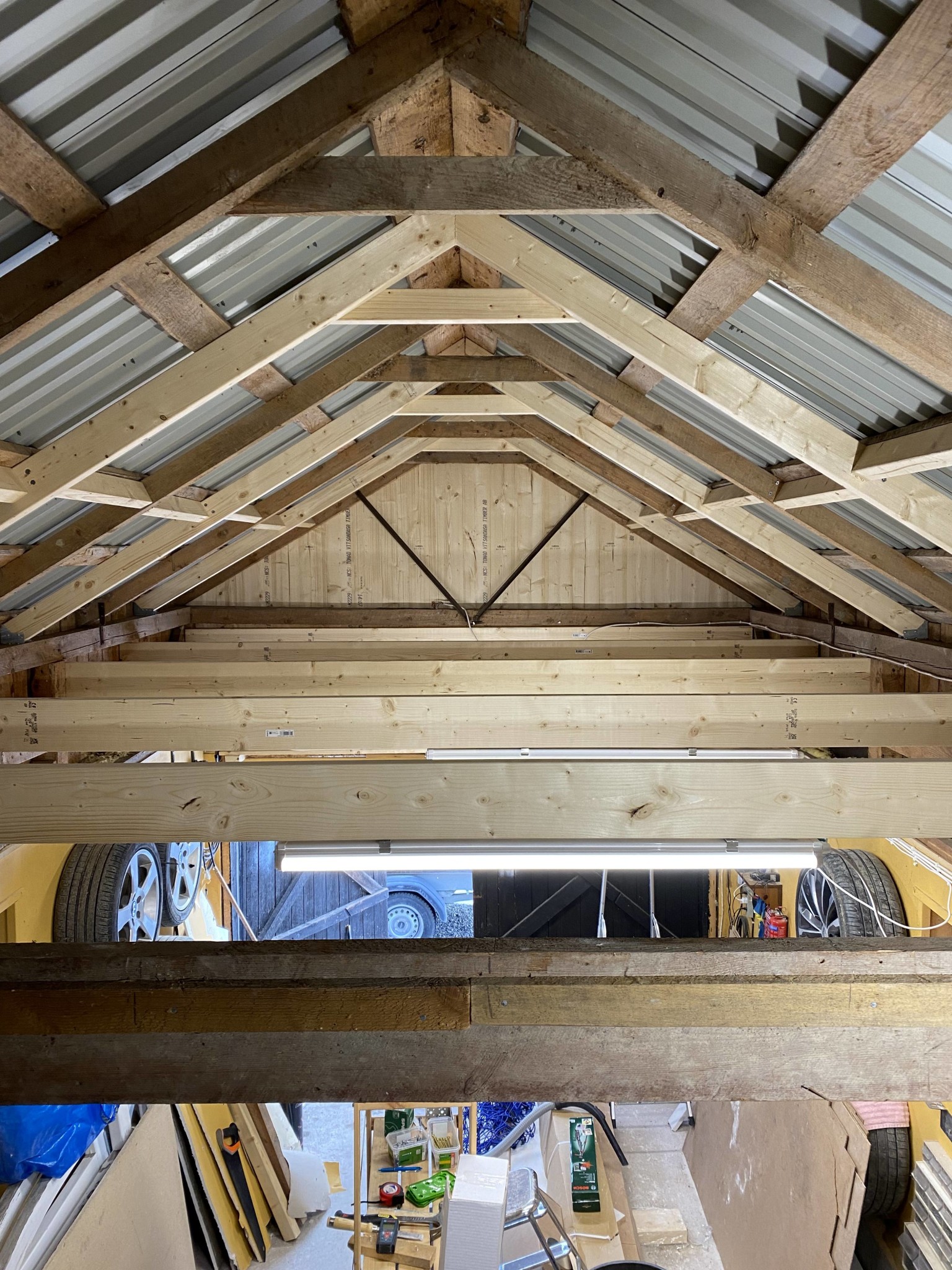
I need help with the construction of my loft floor/garage ceiling. I've tried googling and reading to find out what applies, but it's difficult to find something that fits my conditions. I'm building a new ceiling/loft floor in my garage. The garage part is currently unheated but the walls have insulation from before. The idea is to have some form of heating eventually to keep a few degrees above freezing in there during the winter. It won't be used for car parking, just mostly for storage. The loft area is completely uninsulated and has only a metal roof and will remain so.
I really don't want the heat to rise toward the metal roof causing condensation. It might not be a problem now that it's unheated, but I’m thinking about the future when I get a heating source. I already sometimes have issues with condensation on the metal roof dripping down, so I will look into ventilation in the loft area.
I'm thinking of a construction like this but would gladly accept tips and ideas for other ways.
Gypsum or OSB as the ceiling (OSB would be good for being able to screw all the mounts for the new garage door)
Plastic that lies against the battens and folds down against the inner walls. Or should I skip the plastic?
Battens that lie against the bottom of the beams to be able to screw gypsum/OSB into something.
Plenty of insulation between the beams.
A floor of old planks I have lying on top of the beams.
I'm a bit worried that if there is condensation or if the metal roof starts leaking at some point, water might drip onto the plank floor and then down into the insulation. That's why I'm wondering if I can lay a layer of paper on the planks to protect the insulation, or am I creating moisture problems then?
I hope someone can help me move forward, I'm going gray-haired and more confused the more I google.
I really don't want the heat to rise toward the metal roof causing condensation. It might not be a problem now that it's unheated, but I’m thinking about the future when I get a heating source. I already sometimes have issues with condensation on the metal roof dripping down, so I will look into ventilation in the loft area.
I'm thinking of a construction like this but would gladly accept tips and ideas for other ways.
Gypsum or OSB as the ceiling (OSB would be good for being able to screw all the mounts for the new garage door)
Plastic that lies against the battens and folds down against the inner walls. Or should I skip the plastic?
Battens that lie against the bottom of the beams to be able to screw gypsum/OSB into something.
Plenty of insulation between the beams.
A floor of old planks I have lying on top of the beams.
I'm a bit worried that if there is condensation or if the metal roof starts leaking at some point, water might drip onto the plank floor and then down into the insulation. That's why I'm wondering if I can lay a layer of paper on the planks to protect the insulation, or am I creating moisture problems then?
I hope someone can help me move forward, I'm going gray-haired and more confused the more I google.

Self-builder
· Stockholm
· 8 611 posts
Skip the plastic if you don't have heating all year round. Possibly, for the future, you could use a vapor barrier I would say.A Akerfeldt said:I need help with the construction of my loft floor/garage ceiling. I've tried googling and reading up on what's applicable, but it's hard to find something that fits my parameters. Currently, I'm building a new inner ceiling/loft floor for my garage. The garage part is presently unheated but there is insulation in the walls from before. The intention is to have some form of heating eventually to maintain a few degrees above freezing inside during winter. It won't be used for car parking, but mostly for storage. On the loft part above, it's completely uninsulated and only has a metal roof which will continue to remain that way.
I really don't want the heat to rise towards the metal roof causing condensation. It might not be an issue now while it's unheated but I'm thinking about the future when a heating source is added. I sometimes already have problems with condensation on the metal roof that drips down so I need to look into the ventilation of the loft area.
I'm thinking of a construction like this but I'm open to suggestions and ideas for a different approach.
Gypsum or OSB as the inner ceiling (OSB would be good to be able to screw all mounts for the new garage door)
Plastic laying against the battens and folded down against the inner walls. Or should I skip the plastic?
Battens are mounted against the bottom side of the joists to be able to screw gypsum/OSB into them.
Plenty of insulation between the joists.
A floor of old planks I have lying on top of the joists
I'm a bit worried that if there is condensation or if the metal roof ever starts leaking, water will drip onto the plank floor and then into the insulation. That’s why I'm considering if putting a layer of paper on the planks to protect the insulation is safe or if it will create moisture problems.
Hope someone can help me move forward, I'm getting gray hair and more confused the more I google.
Condensation against the metal signals that you should add something against the outer roof, with an air gap in between - so that warmer humid air does not come into direct contact with the roof. Even if you separate the loft and garage, condensation can still occur otherwise, I would think.
The idea is not to have heating all year round, just to maintain a few plus degrees in the garage during winter so you can store things that shouldn't freeze.Skip the plastic if you don't have heating all year round. Possibly, for the future, you could use a vapor barrier, I would say.
Condensation against the sheet metal probably means that you should place something against the outer roof, with an air gap in between - so that warmer humid air doesn't come into direct contact with the roof. Even if you separate the loft and garage, you might still get condensation otherwise, I would think.
My thought with the correctly built ceiling/floor on the loft was precisely to prevent warm air from reaching the metal roof, but you mean that it's not enough and that I should do something with the outer roof as well?
Self-builder
· Stockholm
· 8 611 posts
Maybe, hard to say: But if you have enough air circulation in the loft (=essentially outdoor air) then maybe it works, otherwise there's a risk that the air there still heats up and reaches a middle temperature, which can cause condensation...A Akerfeldt said:The idea is not to heat year-round but just to keep a few degrees above freezing in the garage during winter so I can store things that must not freeze.
My idea with the ceiling/floor of the loft built correctly was precisely to prevent the warm air from reaching the metal roof, but you mean that's not enough and that I should do something with the outer roof as well?
Need to review the ventilation in the attic to avoid the condensation issue. Therefore, I thought it would be good to have plastic in the inner ceiling to prevent warmer air from rising upwards.
Click here to reply