
1,952 views ·
8 replies
2k views
8 replies
Cone-shaped plinth at the waterline, reinforcement
I am going to cast two footings with post bases at the water's edge. There is a risk of harsh ice in the winter, and I am now considering how to reduce the risk of the ice shifting the footings.
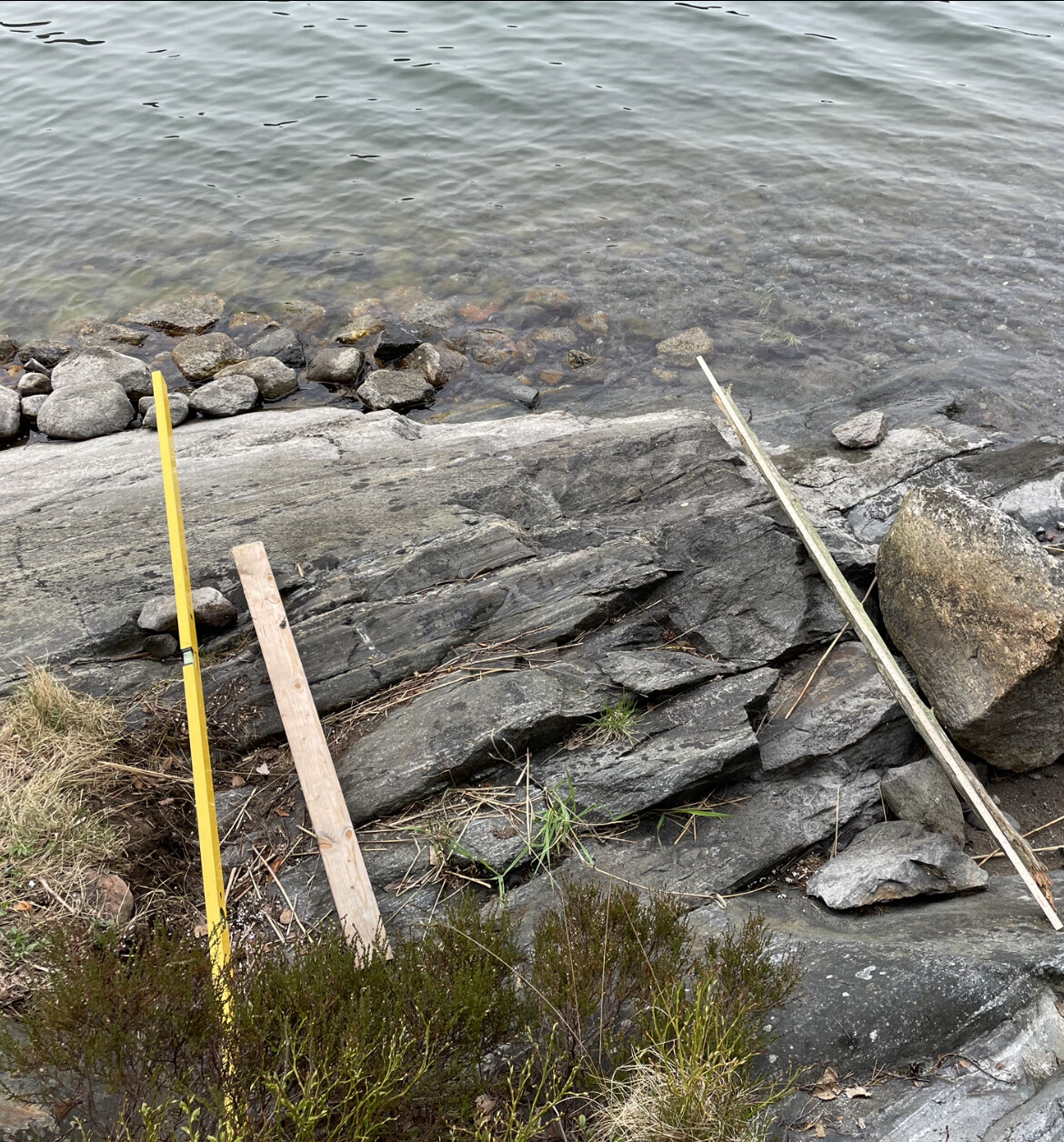
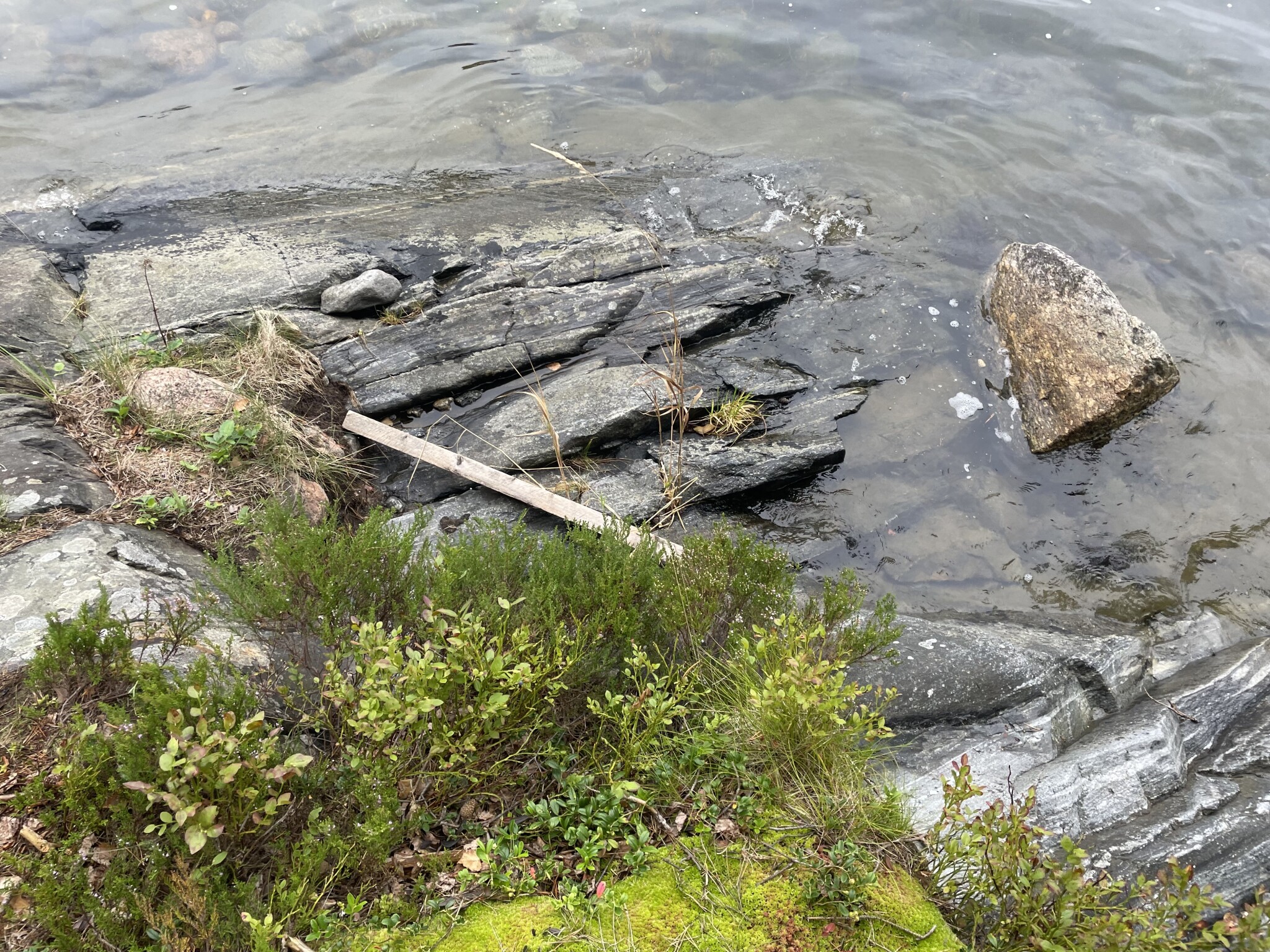
At the water's edge, there is rock. The footings need to be about 30-45 cm high.
If I understand correctly, it is advantageous for the footing to taper at the top, which reduces the risk of the ice grabbing the footing. Therefore, I was thinking of using a wastepaper basket as a mold.
https://www.ikea.com/se/sv/p/fniss-avfallshink-svart-60295438/
The mold (bucket) is 28 cm in diameter at the bottom and maybe 18-20 at the top.
It will be a bit tricky to get the mold level because the rock forms irregularly, but I think I can solve that.
1 How many reinforcing bars should I aim to insert?
2 How deep into the rock should I drill for the reinforcement?
3 What dimension should the reinforcement be?
4 How should the reinforcement be formed? Is it conceivable to have cross-connections between the sticking up reinforcement bars?
5 The idea is to use some old worn-out concrete drill bits in the dimension of 18-24 mm. They are about 45 cm long. They could be drilled down 20 cm (?) and thus protrude 25 cm into the footing.
6 I was thinking of securing the reinforcement to the rock with anchoring compound.
At the water's edge, there is rock. The footings need to be about 30-45 cm high.
If I understand correctly, it is advantageous for the footing to taper at the top, which reduces the risk of the ice grabbing the footing. Therefore, I was thinking of using a wastepaper basket as a mold.
https://www.ikea.com/se/sv/p/fniss-avfallshink-svart-60295438/
The mold (bucket) is 28 cm in diameter at the bottom and maybe 18-20 at the top.
It will be a bit tricky to get the mold level because the rock forms irregularly, but I think I can solve that.
1 How many reinforcing bars should I aim to insert?
2 How deep into the rock should I drill for the reinforcement?
3 What dimension should the reinforcement be?
4 How should the reinforcement be formed? Is it conceivable to have cross-connections between the sticking up reinforcement bars?
5 The idea is to use some old worn-out concrete drill bits in the dimension of 18-24 mm. They are about 45 cm long. They could be drilled down 20 cm (?) and thus protrude 25 cm into the footing.
6 I was thinking of securing the reinforcement to the rock with anchoring compound.
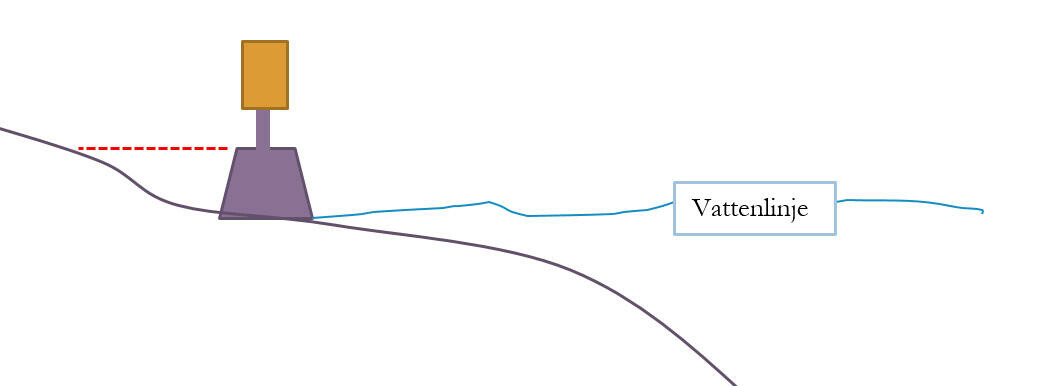
If I have understood the ice correctly, it can push up against the land but also take things with it out to sea.
Would I gain an advantage if instead of cone-shaped piles, I made piles shaped like loaves with a sloping part towards the sea?
What I mean is essentially cone-shaped piles where I instead place concrete behind the cone towards the land, i.e., I fill out against the underlying rock.
In this way, I should reduce the risk of the ice getting a grip around the entire pile.
Would I gain an advantage if instead of cone-shaped piles, I made piles shaped like loaves with a sloping part towards the sea?
What I mean is essentially cone-shaped piles where I instead place concrete behind the cone towards the land, i.e., I fill out against the underlying rock.
In this way, I should reduce the risk of the ice getting a grip around the entire pile.
I'm thinking you choose a larger cone-shaped bucket in metal or plastic and cut/saw it so it fits reasonably against the surface.D Derbyboy said:
If you're going to have a 45 cm high plinth, the bucket needs to be at least that high.
There are indeed great forces unleashed on the pier posts if there is a lot of ice in the winter. In the archipelago where we hang out a bit, it feels like the piers that hold up the best are cast as a whole box and filled with stone. Now I don't know what it is you're going to build, but if it's possible to cast a frame that is also anchored in the rock, you'll surely have the best chance that it will stand for a long time.
I found this description of different types of docks. I was probably thinking of a solution they describe under Free-standing dock, where you do a slightly larger casting instead of separate foundations.
https://www.beijerbygg.se/privat/sv/bygga-brygga
But foundations can certainly work too if they are well anchored.
https://www.beijerbygg.se/privat/sv/bygga-brygga
But foundations can certainly work too if they are well anchored.
Click here to reply