Hello,
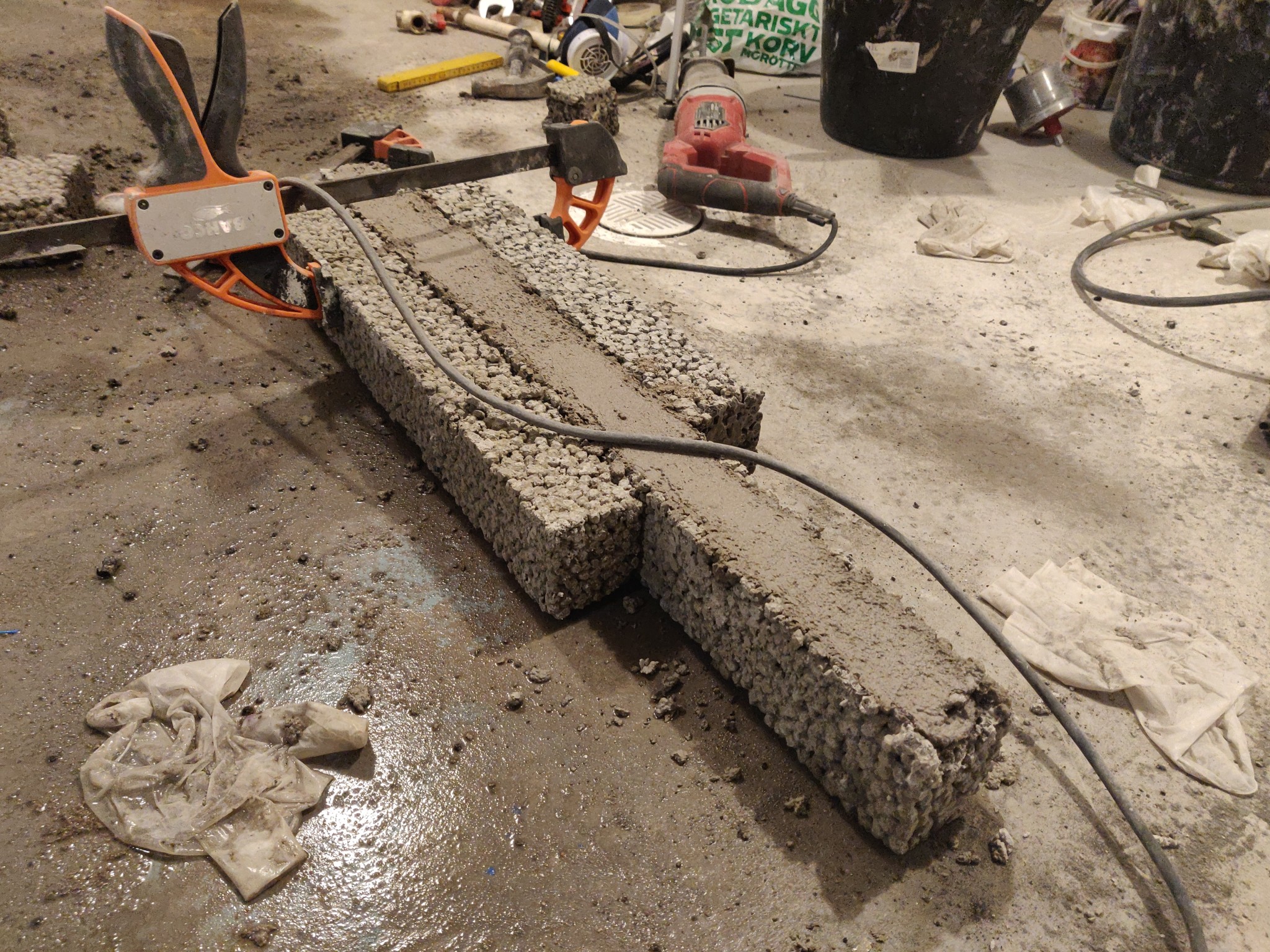
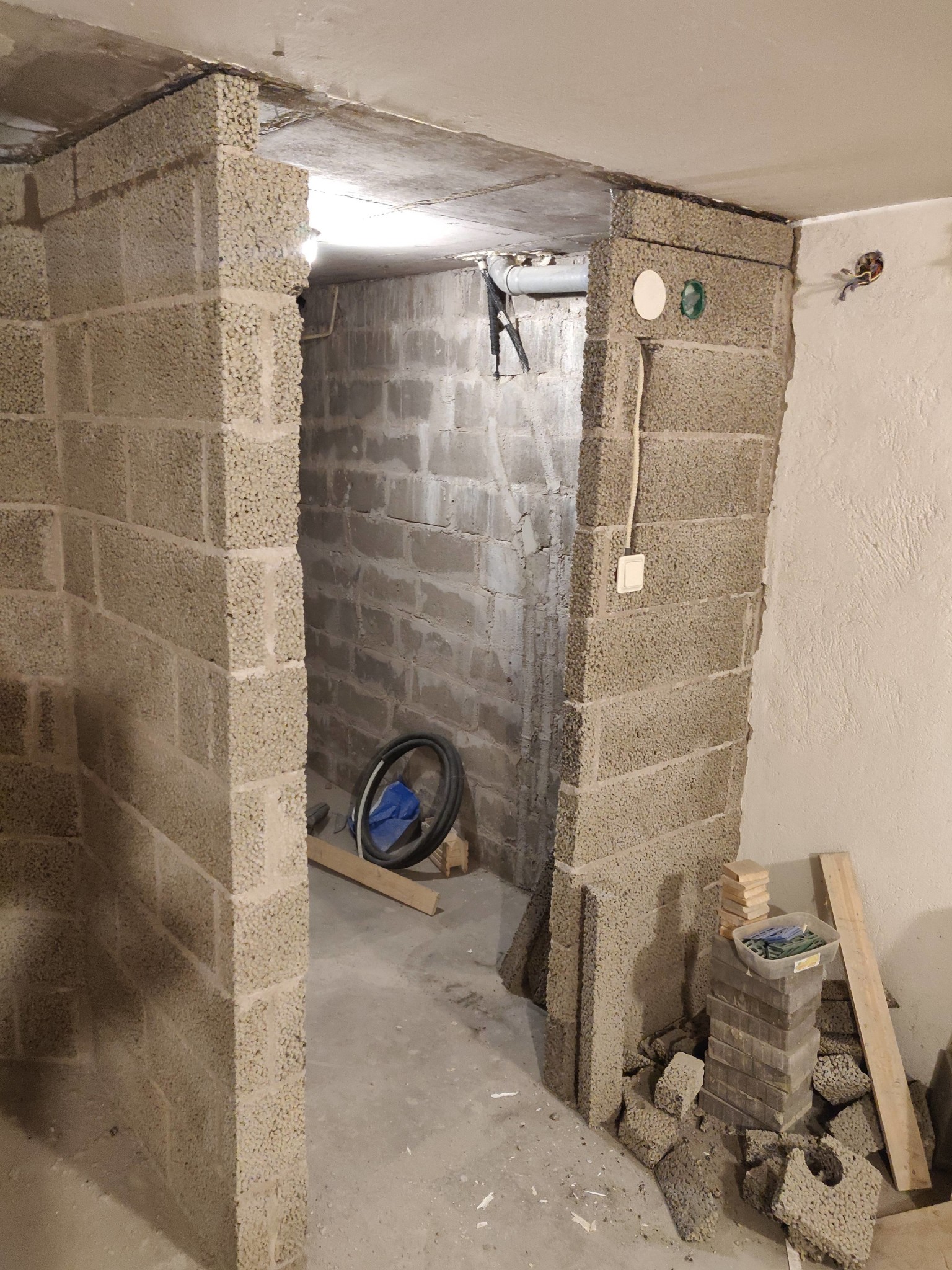
I have built partition non-load-bearing interior walls in my basement. But I need to install a sauna door with the module measurement 19x7, and I was thinking of creating a mini-beam from two lecablocks plus a rebar to place over the door opening. It should really only support its own weight.
A bit like the idea in the thread https://www.byggahus.se/forum/threads/armerade-leca-ovan-oeppningar.42733/
Question:
1. Can it work to just mortar the blocks together and then carve out a groove for the rebar in the blocks and cast it with mortar B?
Bonus question:
In the connection to the ceiling, should I use regular mortar B, or should I go down to a weaker mortar (C) here or even just use foam sealer?
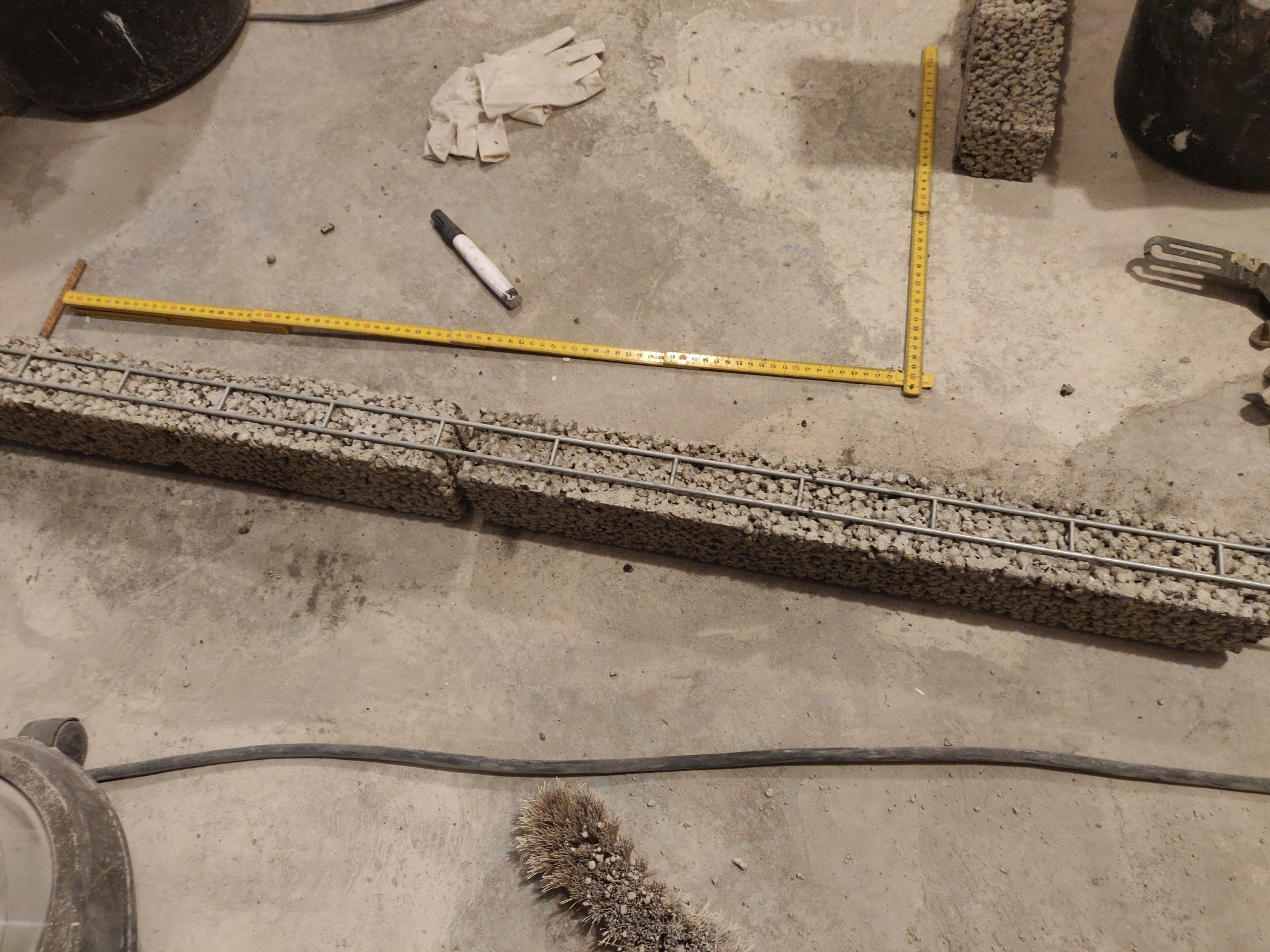
Since you are not out casting, fit together a mold that fits and cast with 4 pieces of iron, 12 mm, 2 pieces about 5 cm from the bottom edge and 2 pieces about 5 cm from the top edge, then you have something that is strong. You will probably need to plaster there, so make the beam about 1 cm narrower on each side for the plaster.
Most likely, you should plaster there, so make the beam about 1 cm narrower on each side for the plaster
But why should it be narrower? Even where it connects, there should be a layer of plaster. Shouldn't it then be flush with the rest of the newly built wall?
You might need a wire mesh on the beam, not necessarily, but plaster doesn't adhere well to concrete and it's good to have a little space to be on the safe side, so it doesn't fall down when the door slams shut and shakes things up.
I almost think it will be difficult to make it narrower without the rebar sticking out. The blocks are only 70mm thick. Also, the door should not be slammed as it will be made of glass... I guess I'll have to cast it in a wooden mold with a coarse surface texture and coat the concrete part with a slurry of adhesive+Portland cement.
Is there not a ready-made metal rail with the same profile as the blocks for this purpose? Now, this is the kind of detail you don't think about unless you're building a wall yourself, but I seem to recall that my builder used a ready-made metal rail. But then the brand was probably not Leca but Finnish Siporex, so maybe this is something that only exists here in Finland?
Now I don't know if you're building new or renovating, but what I noticed is that it doesn't seem like you're building the bathroom as a room-within-a-room. At least, the standard here is to build up interior walls with a couple of centimeters of air gap to the outer walls and lower the ceiling by about 15 cm. Both the air gap and the lowered ceiling are in the same space, so to speak, and you ensure that this space is "in contact" with the nearest room, like a hallway or similar. That way, you get circulation around the entire bathroom. Maybe a bit poorly explained, but I'm sure you get the idea.
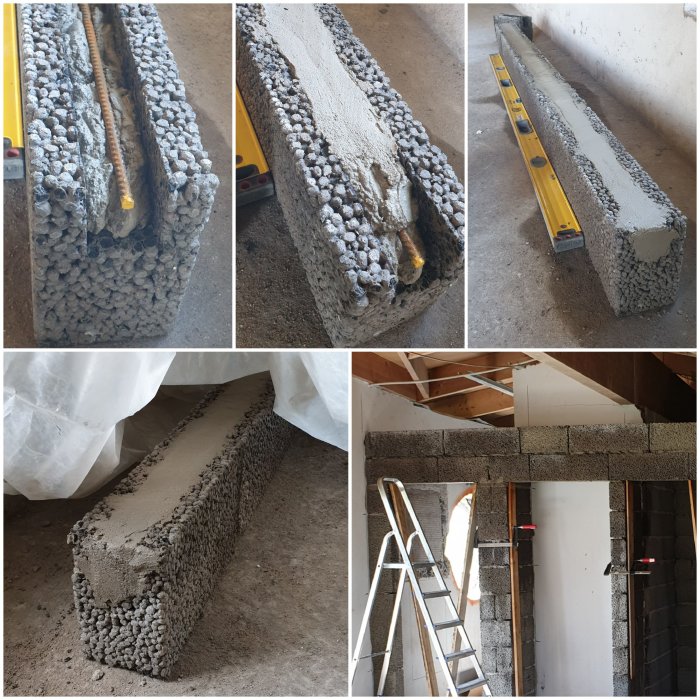
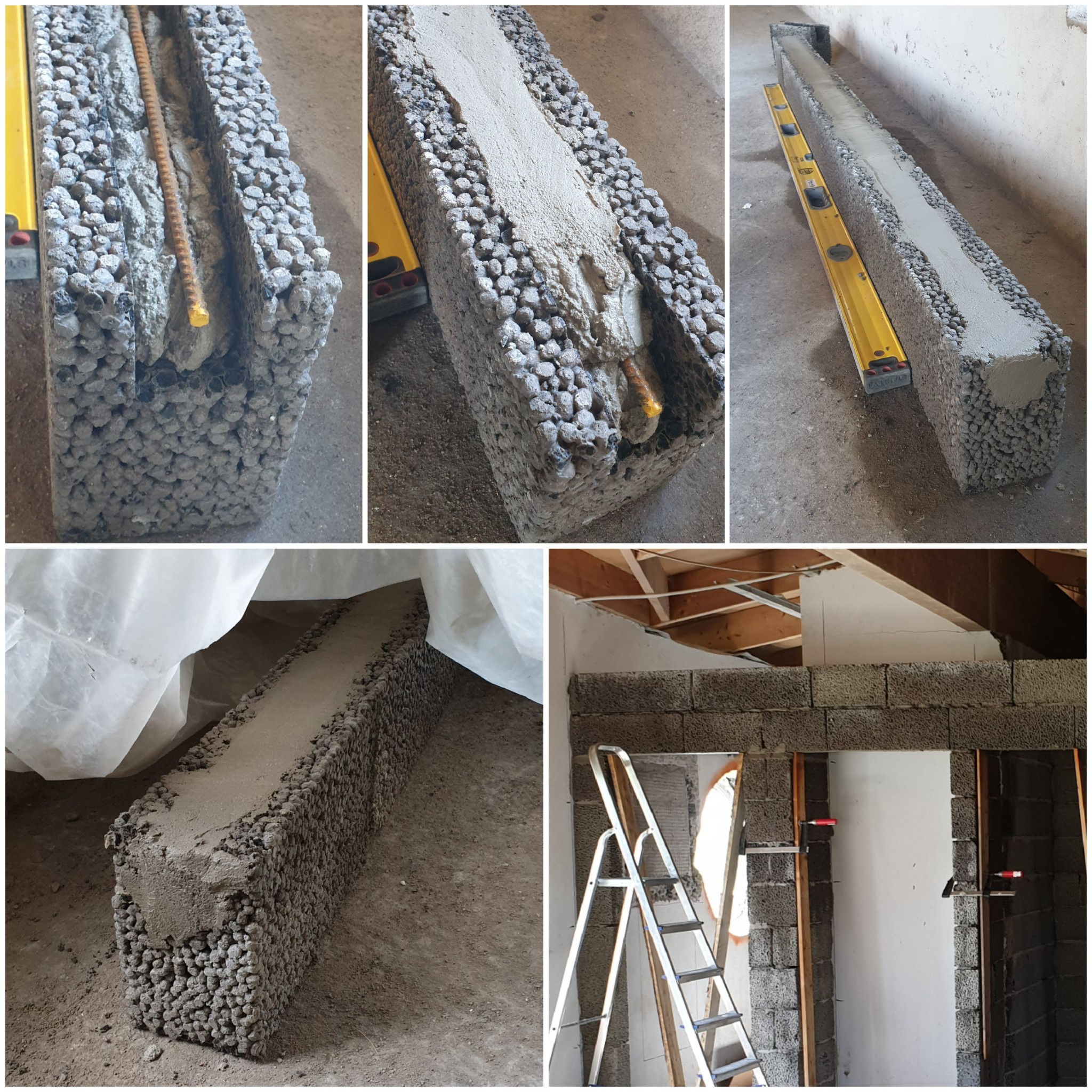
I scored the blocks with an angle grinder and knocked out the middle piece. Then inserted a rebar in the middle of the mortar, let it cure under plastic.
After a few days, it was just a matter of turning the beam into place, seems to hold well. To clarify, the reinforcement is at the bottom.
Isn't there a ready-made metal rail, with the same profile as the blocks, for this purpose? This is one of those details that you don't think about if you're not building a wall yourself, but I believe my builder used a ready-made metal rail. However, the brand was probably not Leca but Finnish Siporex, so maybe this is only something available here in Finland?
Now, I don't know if you're building new or renovating, but what I notice is that you don't seem to be building the bathroom as a room-within-a-room? At least, the standard here is to build interior walls with a couple of cm air gap to the exterior walls and lower the ceiling by about 15 cm. Both the air gap and the lowered ceiling are within the same space so to speak, and then you make sure that this space is "in contact" with the nearest room, like a hall or similar. Then you get a circulation around the entire bathroom. Maybe a little poorly explained, but you surely understand the idea.
I am renovating an existing basement. Building a bathroom as a "room within a room" is something I've never heard of. It certainly sounds exciting, but it's probably too late to rethink that now. Instead, I'll have local waterproofing around the shower area as the Swedish industry regulations allow not waterproofing everything if you have an uninsulated floor and only mineral materials.
I scored the blocks with an angle grinder and knocked out the middle piece. Then inserted a reinforcement bar in the middle of the mortar, let it set under plastic.
After a few days, I just turned the beam in place, seems to hold well. To clarify, the reinforcement is at the bottom.
[image]
Great pictures, thanks! I'm trying this now according to the picture, and we'll see if it holds. It's only a 700mm span and no load from above.
Click here to reply
Vi vill skicka notiser för ämnen du bevakar och händelser som berör dig.


pjodden said: