Hello! We live in a 1930s villa. Bought as a wooden house. I've always wondered why several interior walls are bricked (with some white porous brick). But as mentioned, we now understand that it's a brick house we live in with a wooden facade outside.
A large living room still has tretex and old external electricity. We removed the electricity (which was dangerous) and thought about installing renovation plasterboard over the tretex and then external electricity. But since there are no boards behind it, it's not feasible since it's so porous. So what to do!
The room is actually quite well insulated.
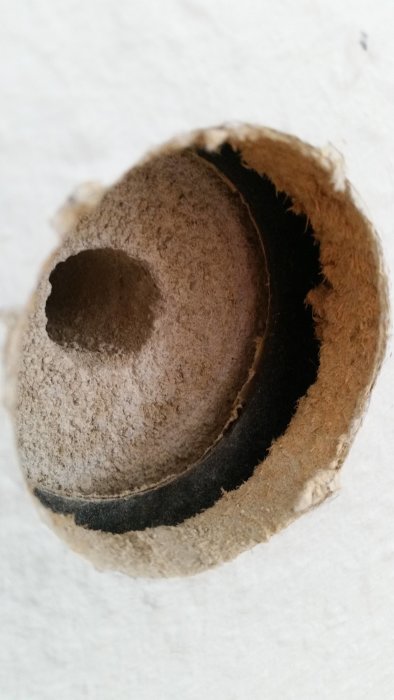
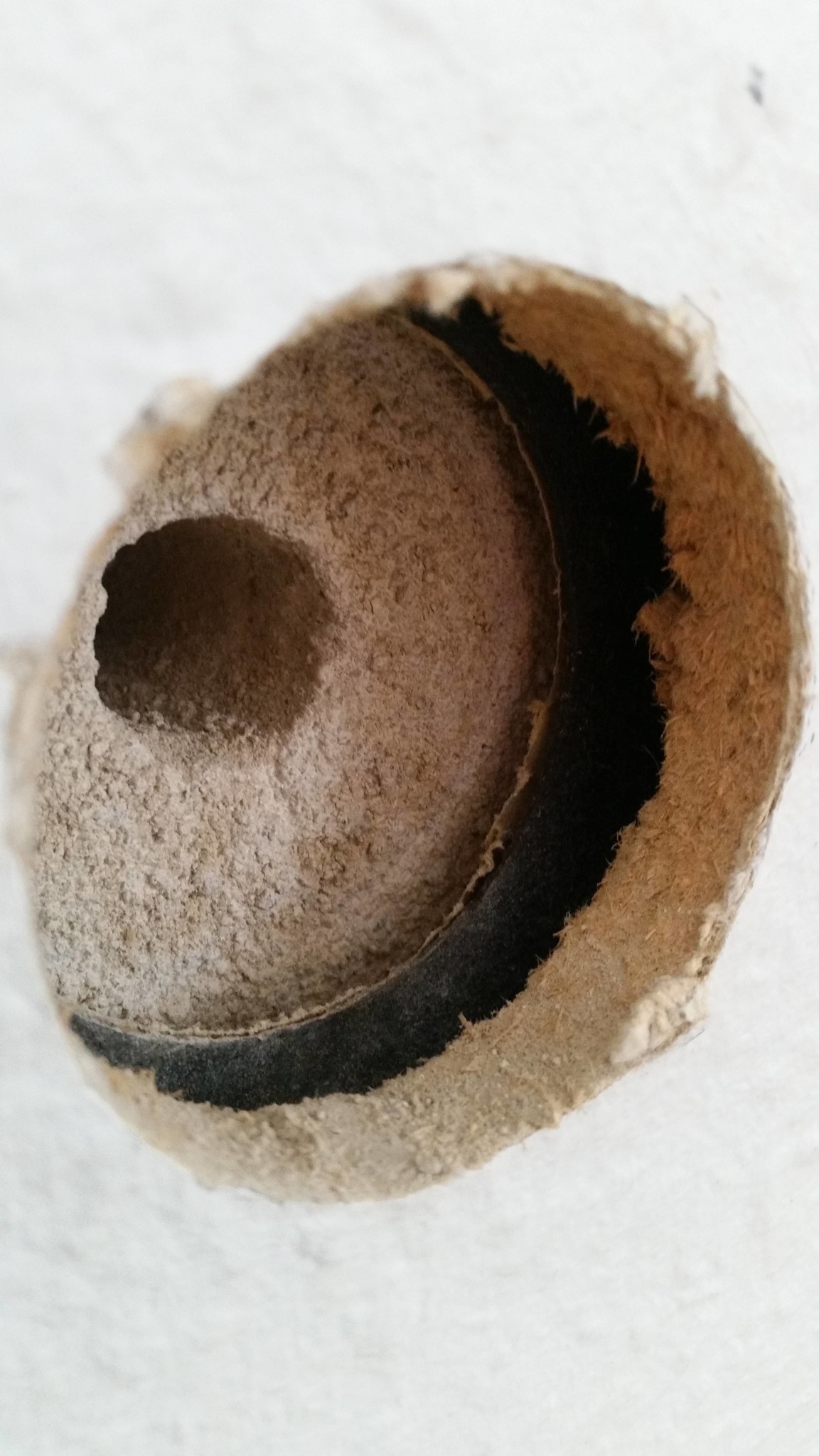
The wall is 26cm thick. Consists of = Tretex 13mm, Air gap 17mm, some black paper, plaster about 100mm (I believe there is white brick in the wall since it's in the interior walls), fiberglass insulation about 90mm, and wood facade.
But the interior wall is very uneven, ugly, and impossible to hang things on. No smell thankfully.
Here are some options=
1.
We have hydronic heating. The radiators are far enough out so I could remove the tretex and install 45 laths with insulation. You could also run the electricity through there.
I thought it would insulate just as well as the tretex anyway. But then it struck me that there should be an air gap against the brick so the fiberglass insulation isn't directly against the plaster.
Is an air gap needed against the brick when the brick wall is insulated externally? The tretex with an air gap was probably installed when there was only a brick wall.
2. The cheapest would be just to putty over the textured wallpaper, wallpaper again, add moldings, and external electricity again. But that would feel a bit shabby!
3. The most expensive is to properly add insulation. But as mentioned 4 elements. It will likely be a hefty bill from the plumber as you'll have to reroute pipes.
4. According to the electrician, it's enough to place thin laths, 22mm over the existing wall, and then plasterboard to lay internal electricity. That way you hide the ugly wall. But the wall is wavy and uneven so it probably won't look nice and the plaster might crack...
The Treetex must be mounted on some form of battens, can't those be used? Treetex is almost equivalent to mineral wool, so there's no reason to remove it.
I'm having a bit of difficulty understanding the wall construction. If the load-bearing structure consists of a brick wall, it should be a full brick (about 25 cm) thick. Could your "white brick" be some form of concrete stone?
probably brick. supporting structure with shavings (looks like hard-pressed tretex) between studs.
and weather paper and batten tretex.
depends a bit on the age of the house.
how much do you want to spend on the wall?
considering a Finnish variant with gypsum and "frigolit"
It could be an early aerated concrete house. Is it located near Dalby? Aerated concrete has relatively good insulation properties. The wood paneling has in any case been added afterward. Mineral wool did not exist in the 1930s.
Hello again! As mentioned, the house has several walls made of white brick, probably Vittskövletegel. I live in eastern Skåne. The outer walls are probably made of it as well. I'll probably know more soon.
I've decided to remove all the tretex. The radiators will be moved out. I plan to insulate with 45mm rock wool, a moisture barrier, and 45mm with space for electronics, followed by 2 gypsum boards. The house is fairly well-insulated outside the brick wall. Is this too little insulation?
Is it safe to place the insulation against the brick wall? In the instructions I've read, it says not to do that, but they are about brick facades exposed to rain and wind. Not covered with insulation and wood paneling as in this case.
The plumber is delayed by 3 weeks, so it's just a matter of waiting... itching to get started.
The information doesn't quite add up. As far as I know, load-bearing exterior walls have never been built with half-brick (about 12 cm). Brick is hygroscopic and absorbs moisture. It is common for insulation to be placed between two brick walls (so-called skalmur), but I think you should be careful about placing it against the "brick" on the inside. Don't you still have the asphalt paper? I would prefer to have the whole picture clear before I say too much.
The information doesn't quite add up. To my knowledge, load-bearing outer walls have never been built with half-brick thickness (about 12 cm). Brick is hygroscopic and absorbs moisture. It happens that insulation is placed between two brick walls (so-called cavity wall), but I think you should be cautious about placing it against the "brick" on the inside. Don't you still have the asphalt paper?. I would prefer to have the whole picture clear before I say too much.
I will get back to you when the plumbers have disconnected the radiators and I can tear away the tretex. Don't want to tear it away in this winter cold. A layer of brick as a supporting structure. True, that can't be right. I will also try to contact the previous owner. We'll be in touch.
Stud walls (which is an American idea originally) did not come into general use until around 1950. Before that, plank walls or masonry walls were the most common. Lightweight concrete was introduced on a small scale in the 1930s. One of the better examples of the time it takes for technological development is the steam engine. It was invented as a water pump in mines in the 18th century. It wasn't until well into the 19th century that someone thought to put wheels on it and use it as a locomotive.
Click here to reply
Vi vill skicka notiser för ämnen du bevakar och händelser som berör dig.