
43,586 views ·
53 replies
44k views
53 replies
Coloring and stamping or patterning concrete
Page 1 of 4

In the USA, there's a lot about this. If you Google Stamped concrete, you'll find plenty of great pictures of what they do over there. They seem quite ahead of us here.
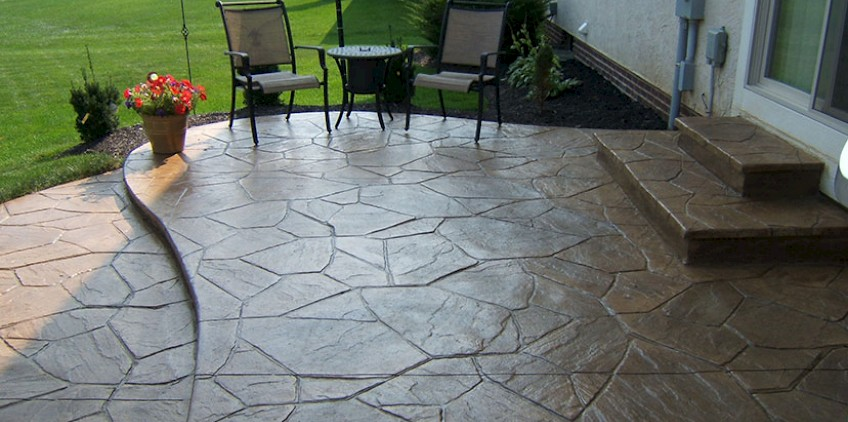
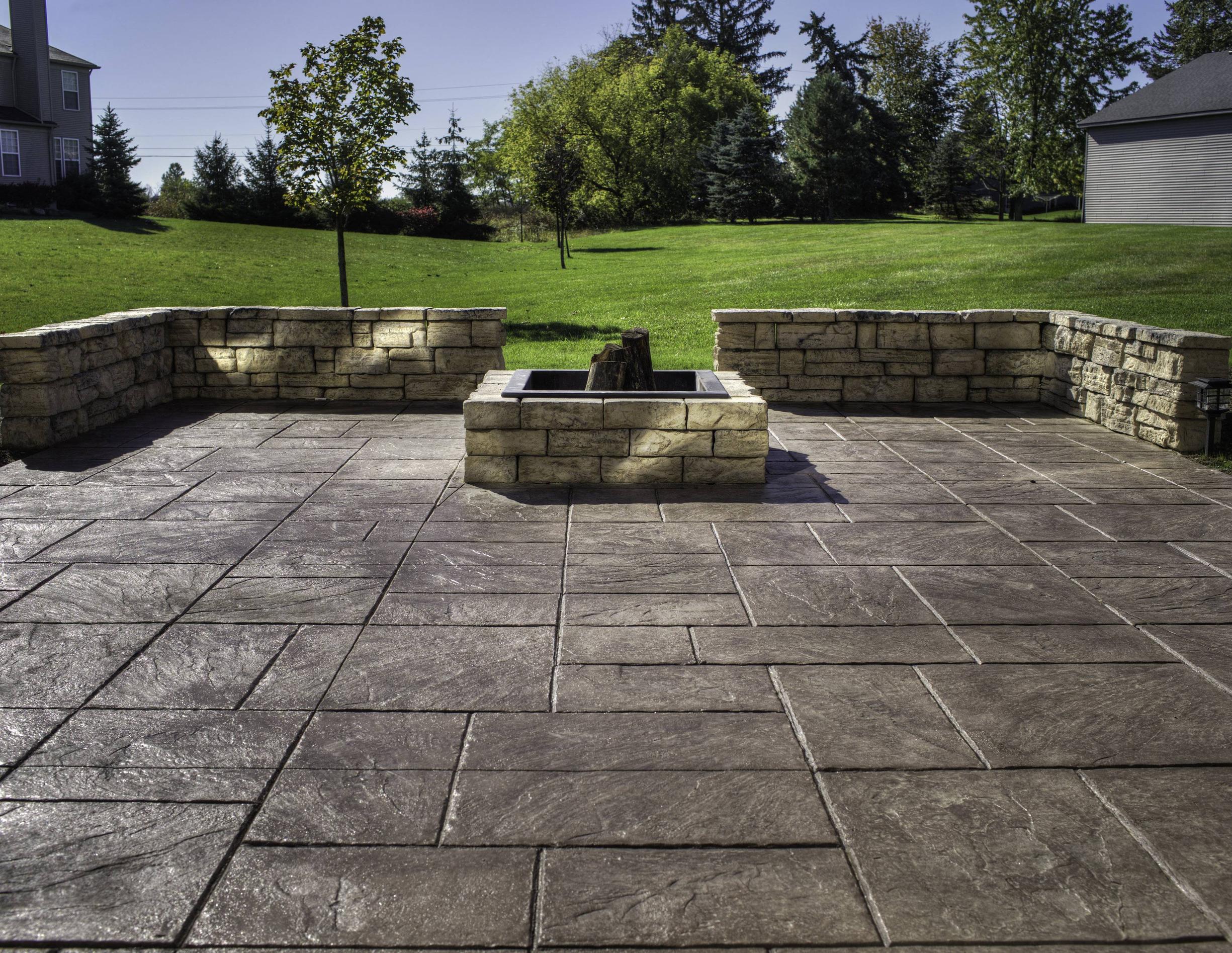
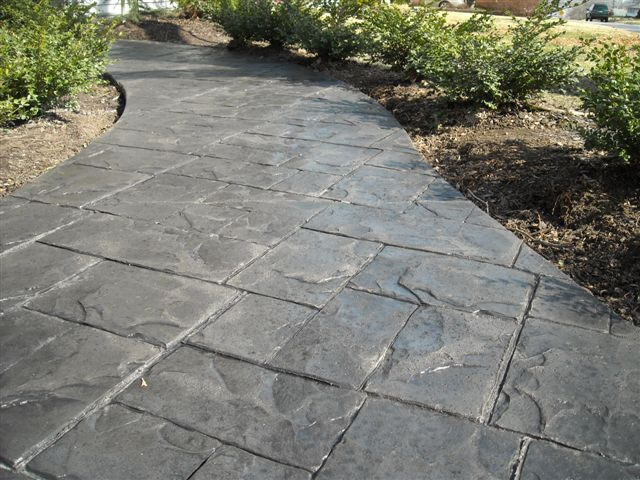
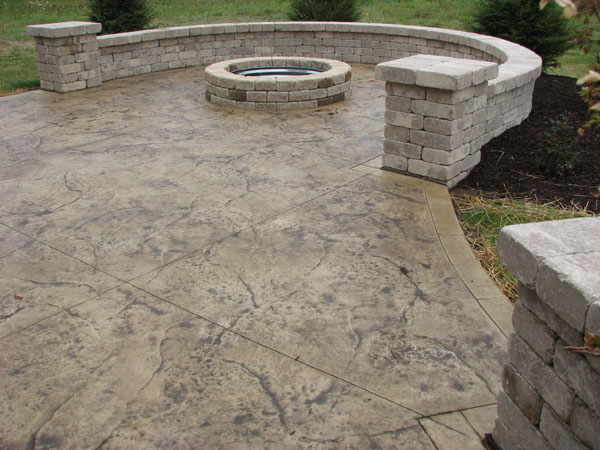
And it's not just the patterns, they also get lots of cool colors and color patterns. Here, we seem limited to mixing pigment in the mixer which doesn't give the same exciting results.
They use different methods, they throw out pigment in various colors on freshly poured concrete and wet it, which seeps into the concrete creating different patterns. Sometimes they use acid etching that is painted directly on. I've never seen that here, I wonder if it's just acid and pigment and something you can do yourself.
Is there anyone here who does similar work, I want to know more about how it's done and where you can get the products and if it's possible to make your own? There are rollers that you can use to roll over concrete to give patterns and it seems like a convenient method, but the ones I've found online are insanely expensive, making your own could be interesting but how...
And it's not just the patterns, they also get lots of cool colors and color patterns. Here, we seem limited to mixing pigment in the mixer which doesn't give the same exciting results.
They use different methods, they throw out pigment in various colors on freshly poured concrete and wet it, which seeps into the concrete creating different patterns. Sometimes they use acid etching that is painted directly on. I've never seen that here, I wonder if it's just acid and pigment and something you can do yourself.
Is there anyone here who does similar work, I want to know more about how it's done and where you can get the products and if it's possible to make your own? There are rollers that you can use to roll over concrete to give patterns and it seems like a convenient method, but the ones I've found online are insanely expensive, making your own could be interesting but how...
Also interested

I also believe that concrete driveways are more common in the USA, I don't know why but one might suspect that their climate means that the groundwork doesn't need to be as rigorous as here due to frost heave.
I'm doing quite well in that regard, surely a meter of gravel, then it's rock. I think I have too much gravel in front of the house, I'd like to create a small grass area and maybe later cast concrete slabs on site, about 1x1m and pattern them. I have a concrete mixer so I'll probably do several concrete projects in the future...
First, I will cast sleepers for a small pergola I'm building, I've also thought that an exposed slab could be nice (would be about 250x150cm) if I could pattern and color it as mentioned above.
Then I have an outdoor kitchen in progress... We'll see if I'm still at it in 10 years with all sorts of things.
First, I will cast sleepers for a small pergola I'm building, I've also thought that an exposed slab could be nice (would be about 250x150cm) if I could pattern and color it as mentioned above.
Then I have an outdoor kitchen in progress... We'll see if I'm still at it in 10 years with all sorts of things.
Started pouring a little last weekend, on the back of the house and made the foundation for the outdoor kitchen. But it didn't go all the way... I was about one cement bag short of finishing...
I mixed C12/15 (K15) standard according to the bag's own recipe which is:
60L 0-8
60L 8-16
1 cement bag (25kg)
13L water
I halved the recipe because my mixer can't take more than that. What I did was use only 0-16 gravel that I had bought but I realized that the result is too coarse and difficult to work with. I'll have to get sand when I continue.
I made the foundation 10cm thick and will lay cinder blocks on top after it's finished. Then it will be time to tackle the countertop... cast in place or cast in form and flip into place? I think I'll cast in place because it will be such a large slab and I want to cast an integrated concrete sink:

I don't know what kind of concrete I should use here. Expanding concrete, or maybe regular cement mixed to K20 or K25 standard. I don't think it will be as dark as in the picture either. Considering acid-etching the concrete. Iron sulfate is said to work well for homemade acid-etching formulas.
I mixed C12/15 (K15) standard according to the bag's own recipe which is:
60L 0-8
60L 8-16
1 cement bag (25kg)
13L water
I halved the recipe because my mixer can't take more than that. What I did was use only 0-16 gravel that I had bought but I realized that the result is too coarse and difficult to work with. I'll have to get sand when I continue.
I made the foundation 10cm thick and will lay cinder blocks on top after it's finished. Then it will be time to tackle the countertop... cast in place or cast in form and flip into place? I think I'll cast in place because it will be such a large slab and I want to cast an integrated concrete sink:
I don't know what kind of concrete I should use here. Expanding concrete, or maybe regular cement mixed to K20 or K25 standard. I don't think it will be as dark as in the picture either. Considering acid-etching the concrete. Iron sulfate is said to work well for homemade acid-etching formulas.
Finja no longer recommends countertops longer than 2.5 meters due to the risk of cracks, especially if there are cutouts for sinks, etc.
With expanding concrete, you get an almost pore-free concrete without vibrating. However, the open time is short for that concrete, so it's difficult to achieve a good surface if you're working alone. If you cast and flip it, you get a very fine surface, but even the slightest warp in the mold means the countertop doesn't quite sit flush with the surface underneath.
With expanding concrete, you get an almost pore-free concrete without vibrating. However, the open time is short for that concrete, so it's difficult to achieve a good surface if you're working alone. If you cast and flip it, you get a very fine surface, but even the slightest warp in the mold means the countertop doesn't quite sit flush with the surface underneath.
The longer the slab, the greater the risk of cracks since it is a thin concrete construction. As I mentioned, the recommendation was to divide it into multiple slabs when I talked to them before casting my 3-meter slab. Therefore, I made 2 pieces of 1.5-meter slabs because I'd rather have a seam than a crack  .
.
.46 mm, with 60 mm you might be able to with a little effort fit 2 pieces of 12 mm rebar on top of each other, thereby improving the strength somewhat, but the distance between the bars might be cutting it a bit close....
I don't have the distance memorized but I know the tiles are 45x45cm so it’s about 2m where there’s no support under the tile.
I had thought that area could have chairs stored underneath, and then you could take out the chairs and sit and eat there in the summer, so you don’t have to set up outdoor furniture and the chairs are protected from rain.
I had considered a row (vertically) of maybe 4-5 thick rebar over the part lacking support underneath, maybe welding them together and also attaching the construction directly to the lecablock.
I could probably create a joint roughly in the middle of the entire outdoor kitchen counter, so it would be 2 slabs each around 2.5m long.
Or I might have to build a support pillar in the middle of the span.
I had thought that area could have chairs stored underneath, and then you could take out the chairs and sit and eat there in the summer, so you don’t have to set up outdoor furniture and the chairs are protected from rain.
I had considered a row (vertically) of maybe 4-5 thick rebar over the part lacking support underneath, maybe welding them together and also attaching the construction directly to the lecablock.
I could probably create a joint roughly in the middle of the entire outdoor kitchen counter, so it would be 2 slabs each around 2.5m long.
Or I might have to build a support pillar in the middle of the span.

It looks like it's going to be very nice Keep in mind that the proportions for the amount of cement in the mixture change if you replace with sand instead of larger aggregate (to avoid getting too low strength).
Keep in mind that the proportions for the amount of cement in the mixture change if you replace with sand instead of larger aggregate (to avoid getting too low strength).I'm also pondering what to do with the front of the house again. I've been thinking about casting everything in one large slab... But if I cast concrete on site, I probably need a thickness of 10cm, and that requires quite a lot of material...
If I make slabs, I could get away with less. I'm considering building my own mold and casting 100x100x6cm slabs (60l volume, roughly one mix in the cement mixer with half a bag of cement). They would be more resistant to cracks than on-site casting for almost half the material usage.
If I make slabs, I could get away with less. I'm considering building my own mold and casting 100x100x6cm slabs (60l volume, roughly one mix in the cement mixer with half a bag of cement). They would be more resistant to cracks than on-site casting for almost half the material usage.