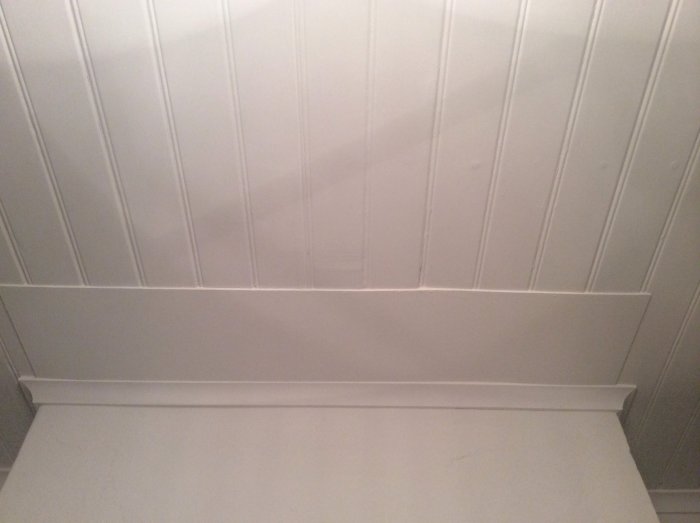
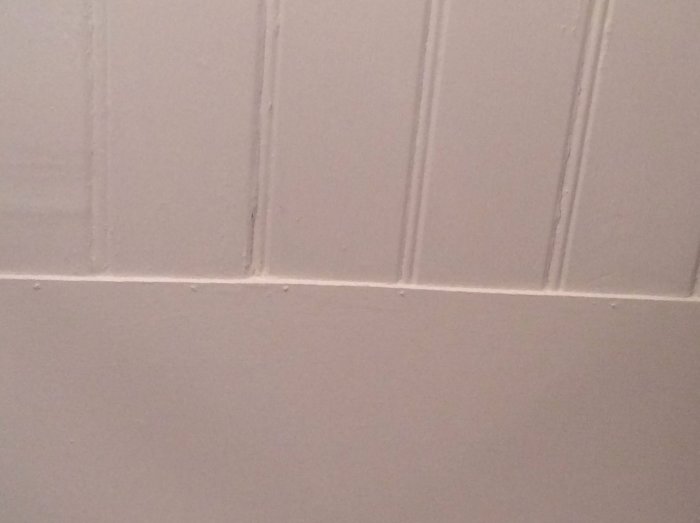
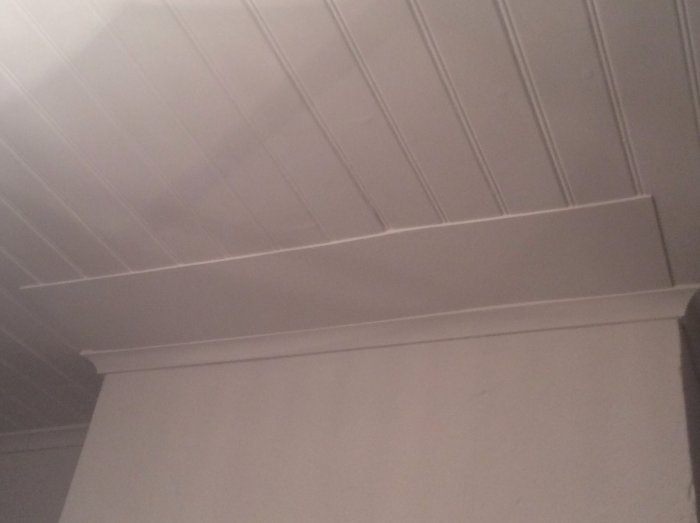
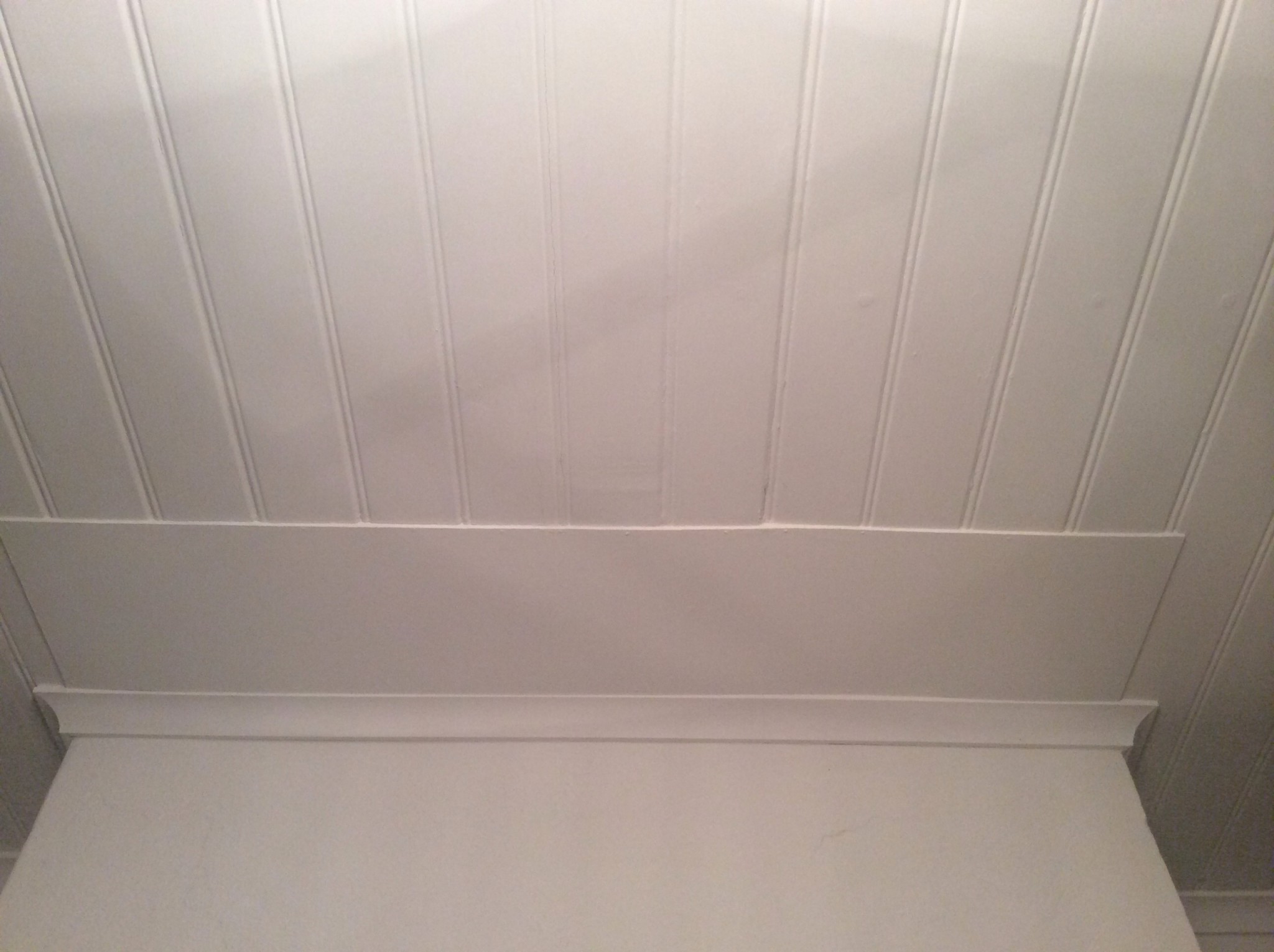
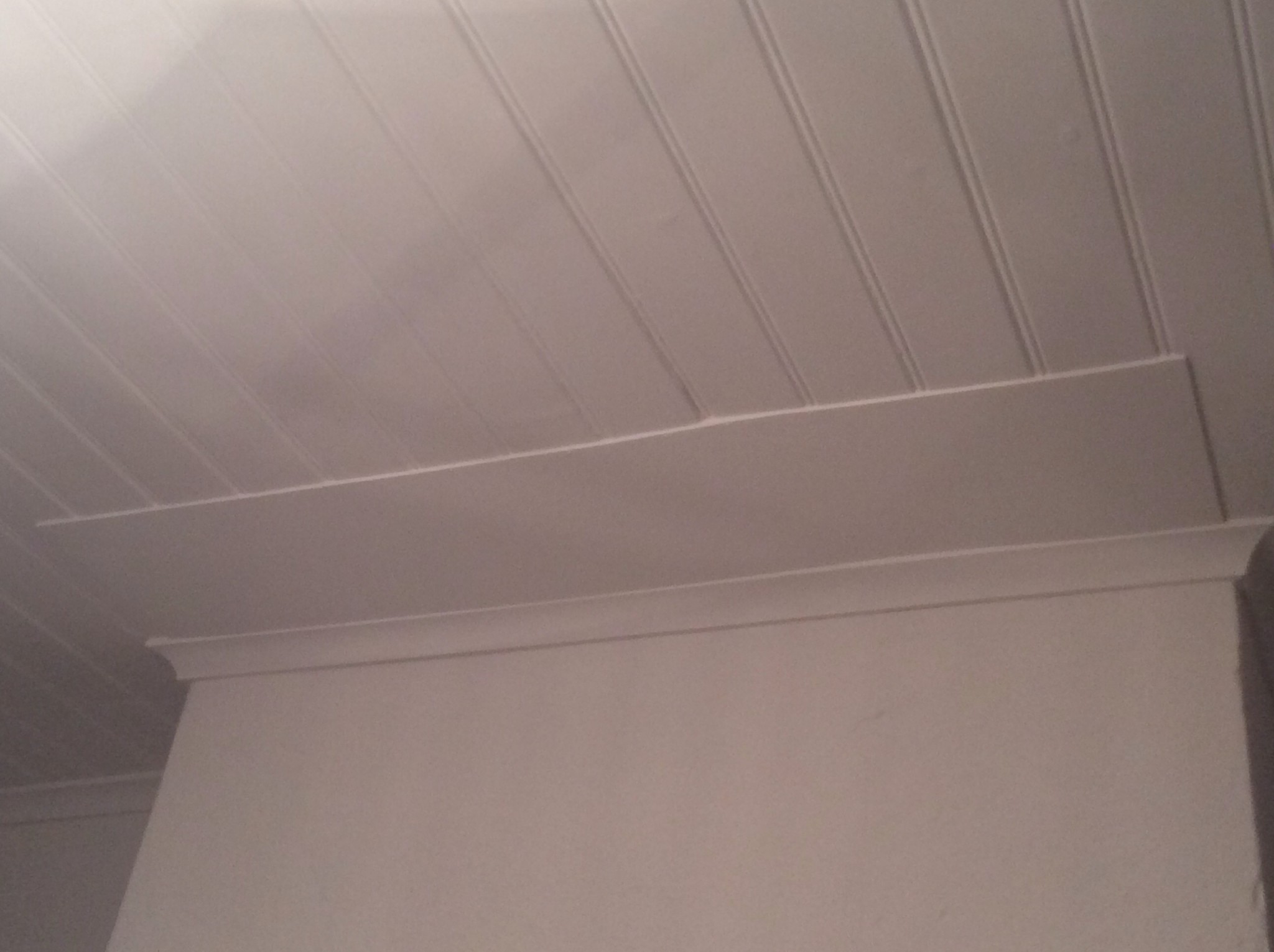
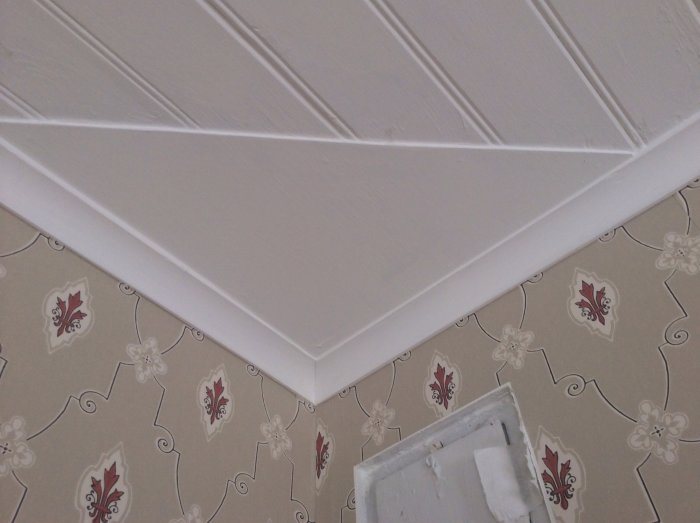
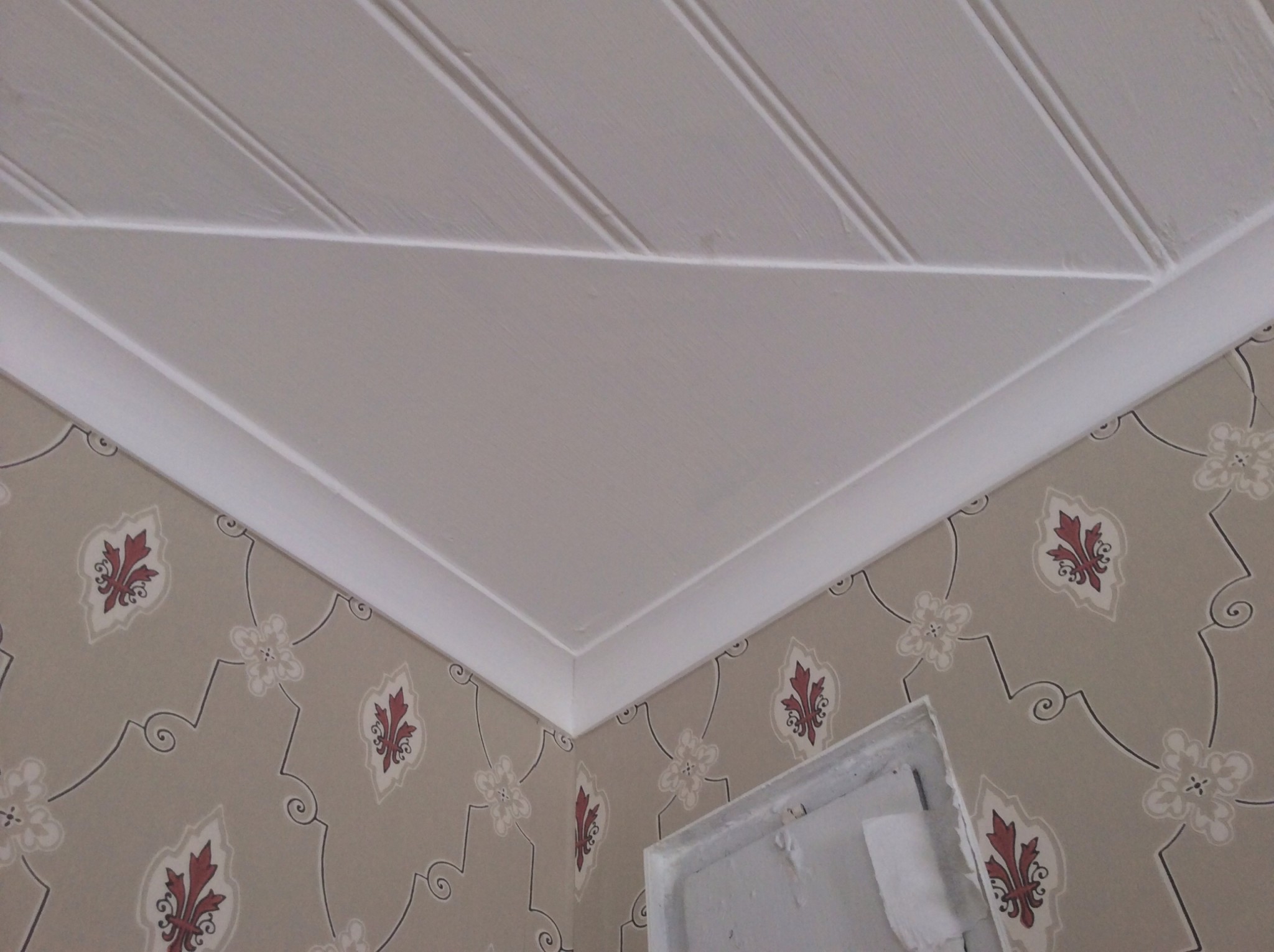
There is some kind of board in the ceiling by the chimney in my bedroom. It was painted with a thin layer of water-based paint during the renovation. Unfortunately, no one remembers what type of board it was.
When you see these pictures, what do you think the board is?
I think it might be asbestos cement because there was probably a tiled stove here before, and the asbestos cement board was put up as fire protection. Otherwise, what purpose/reason would there be for a board here? Or could it be that at some point in ancient times, a hole was made in the wooden ceiling (for some reason) and then the ceiling was simply patched with some form of board? So, the hole was filled. I can see in the chimney itself that it looks like there are different types of mortar/plaster, meaning that a previous smoke entry or similar has been closed off.
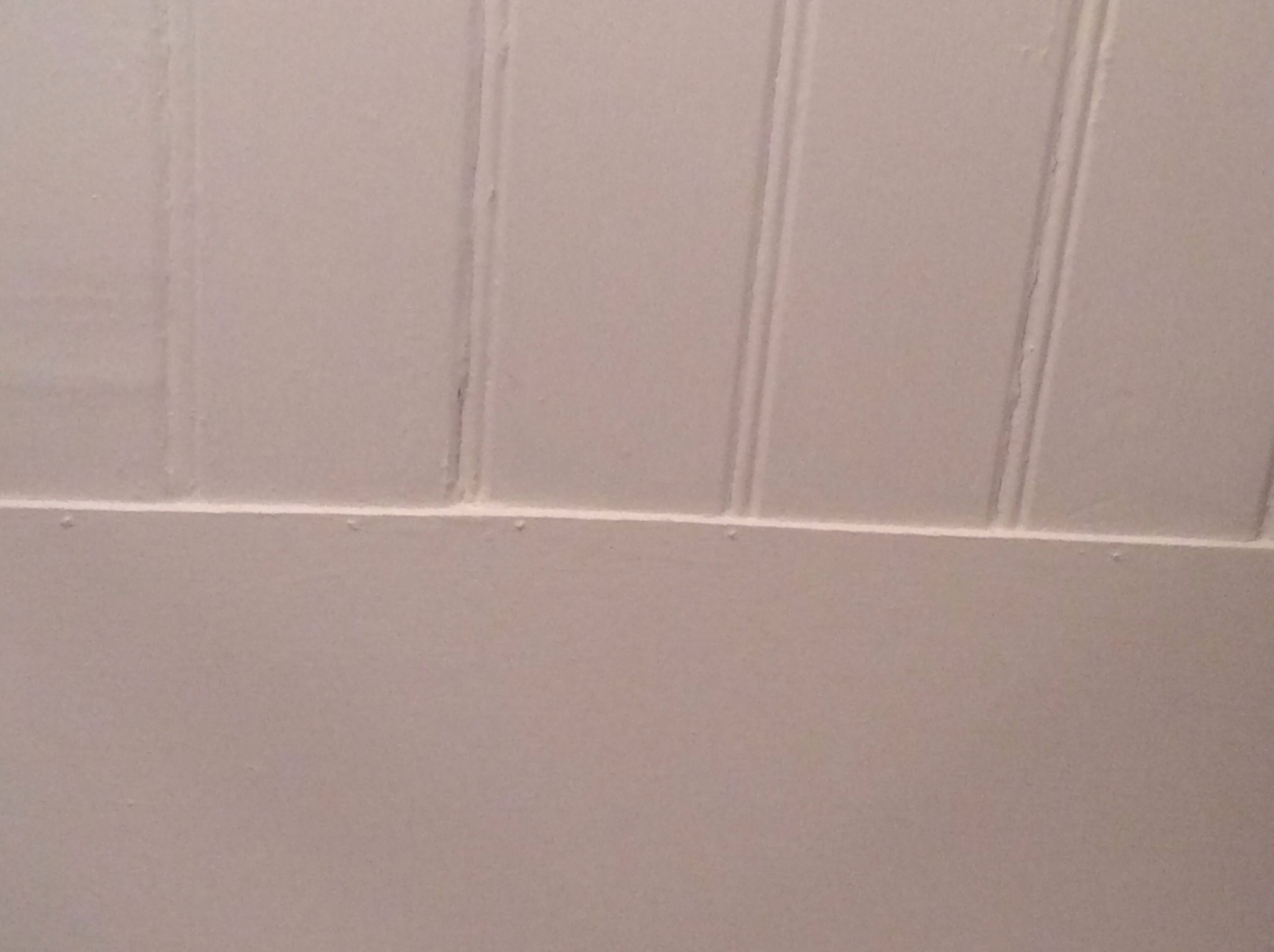
Is there anything in the pictures that suggests the board is/isn't asbestos cement? Personally, I think the edge of the board looks a bit "uneven." Could an asbestos cement board look like that or be more straight in lines? The nails are there at irregular intervals. I remember that asbestos cement boards had pre-drilled holes at regular intervals, but I might be wrong. But of course, more holes could have been pre-drilled in the asbestos cement board. By the way, were there any maximum dimensions for how long an asbestos cement board could be and how thick such a board was?
This is not a concerned question about asbestos but rather asking what you think the board is, in case I want to remove it in the future. I sleep in this room every night and have done so for many years now, so perhaps I should paint the board with a more binding paint. If it is indeed asbestos cement, that is. At the same time, I want to avoid wearing it down with a brush unnecessarily.
something fire protection it certainly is not.......even if the pipe has gone in close to the ceiling, the board should have been further out in that case, but I have never seen anything like that in any ceiling. It looks more like masonite.
Thanks for the response Corre! Haven't had the chance to knock yet...
Why a board here at all? What do you think?
Patch and repair a broken wooden ceiling (why would it need to be broken up here then?) or some kind of board for fire protection? If it's about fire protection, it seems like the crown molding must have been added afterward... Because it's made of wood and goes over the board. Not much of a fire protection then.
Do the nails, the size of the board, and the waviness give you any feeling as to which direction it leans?
If you were to make a guess.
Have another place with some form of board, in the ceiling by the same chimney, but on the lower floor.
Next to a duct that is now used as an exhaust duct (see white hatch in the picture), but where I believe it was previously a flue, because I found a lot of charcoal remnants, etc. at the bottom of the current ventilation duct.
I believe that the ceiling panel did not reach all the way to the chimney and corner when there was a tiled stove or another heat source. So they patched with masonite to easily make the interior ceiling whole.
Aha, smart thinking thomas33! Are we talking about the late 1800s now, I wonder?! That's when the house was built, and I imagine the ceiling panel might be from then, but maybe it's not likely, now that I think about it...
The ceiling panel may be that old, but the Masonite probably arrived there in the 1960s during some renovation when bad tiled stoves were thrown out and replaced with electric heating!
In connection with chimneys, there's a high probability that it's something with asbestos. In the picture, it mostly looks like masonite since it follows the panel in a way that regular hard eternit wouldn't. But there are softer variants. It could be a change in the chimney that left a hole patched up with a piece of masonite if it was done after a possible stove or similar was removed. Or some previous water damage that's been covered over. Can you see it from above (attic)? Either way, it looks harmless where it is well painted. If you are going to remove the board, you should examine it more closely.
I also believe in masonite. It's the dense nailing and flexibility of the board that makes me believe in it. An eternit board is thicker and stiffer and would have been screwed with a convex screw much more sparsely than what you have in the picture.
I also believe in masonite. It is the tight nailing and flexibility in the board that makes me believe in it. An asbestos board is thicker and more rigid and would have been screwed with a rounded screw much more sparsely than what you have in the picture.
or nailed with larger heads
Click here to reply
Vi vill skicka notiser för ämnen du bevakar och händelser som berör dig.