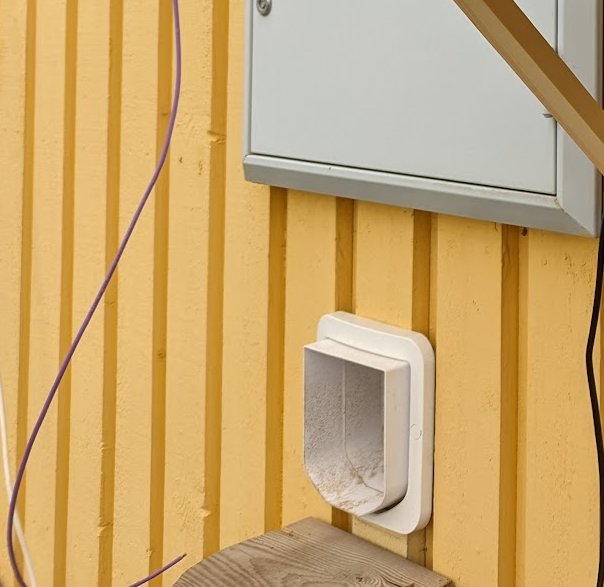
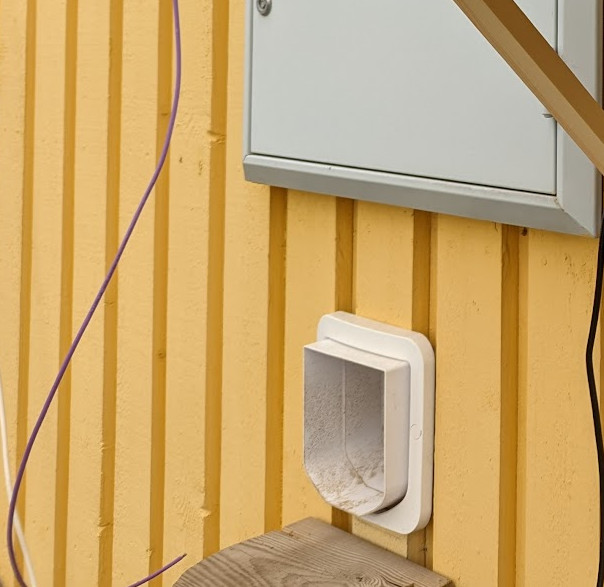
After much deliberation, we have come to the conclusion that we need to install a cat flap in our newly built and well-insulated wooden house. I had hoped we could avoid it, but it's not possible (for various reasons).
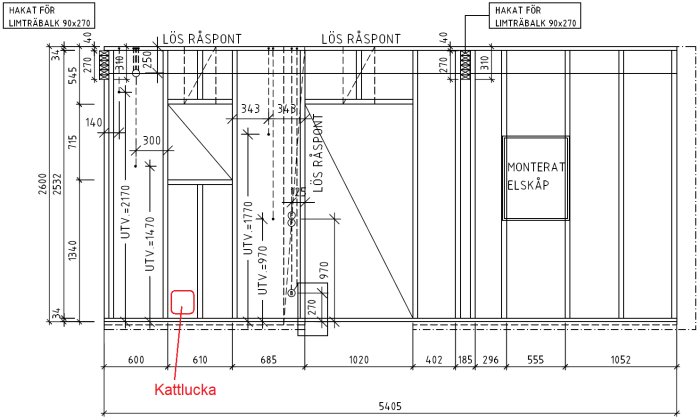
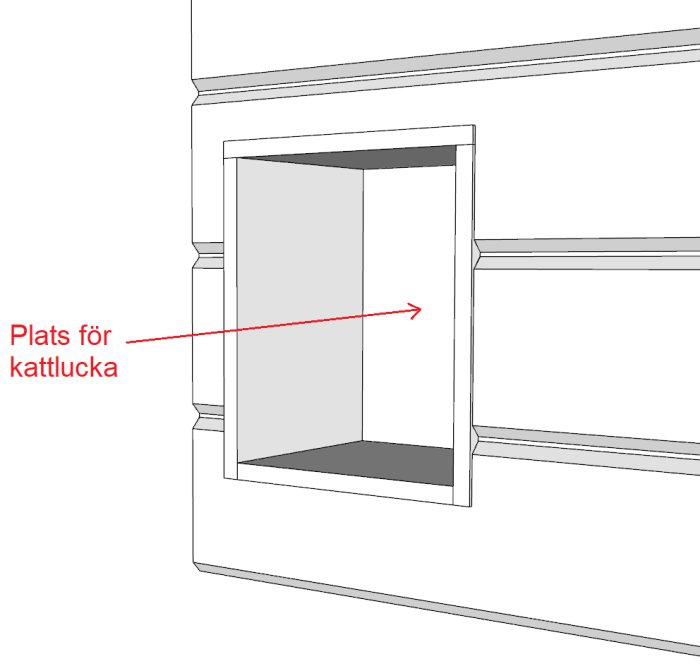
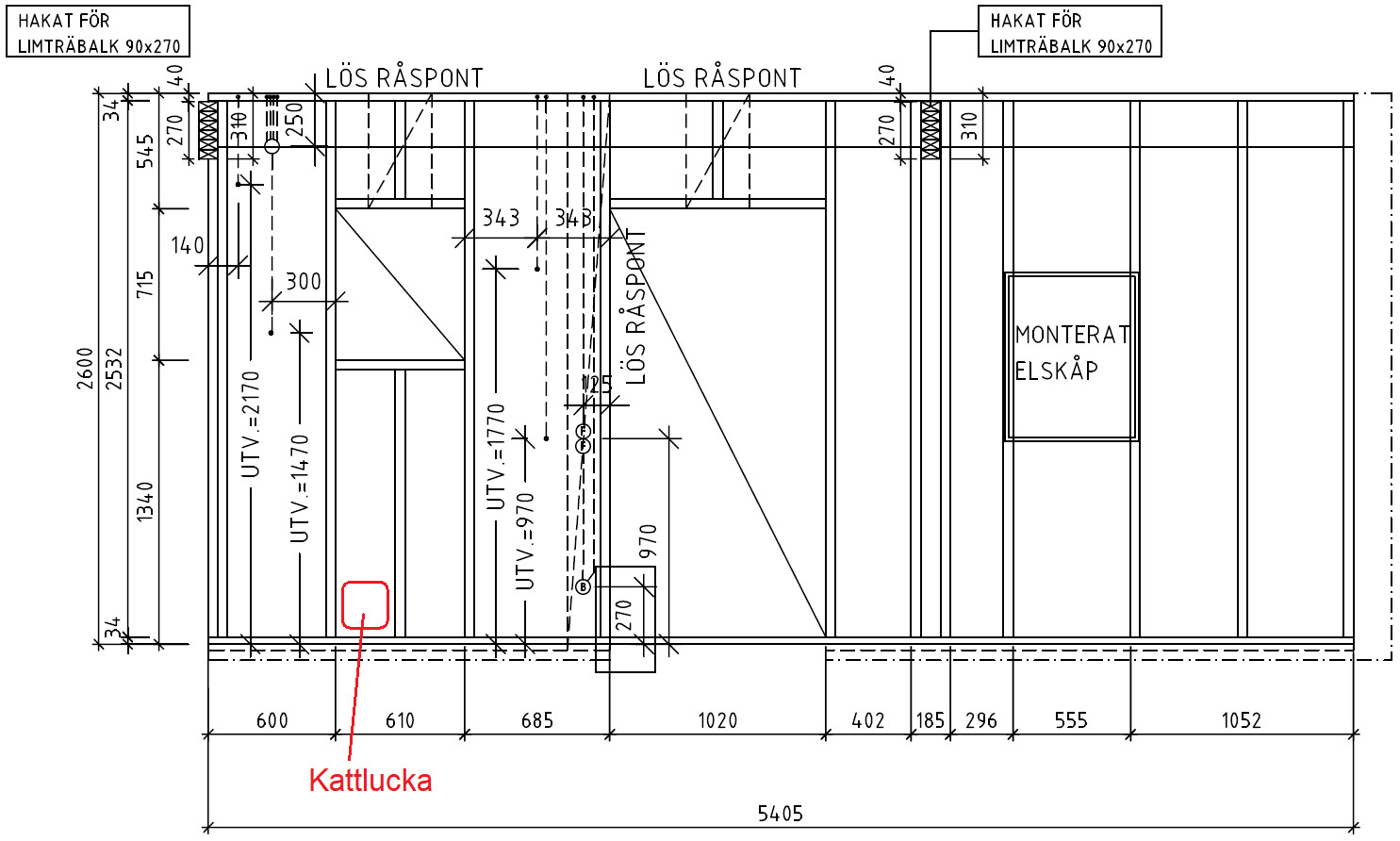
We have also gone back and forth about whether to put it in an exterior door (utility entrance) or in the wall next to it and have decided to put it in the wall, mainly because we think it looks better. We have a small window in the utility entrance and plan to place the flap under this (see image).
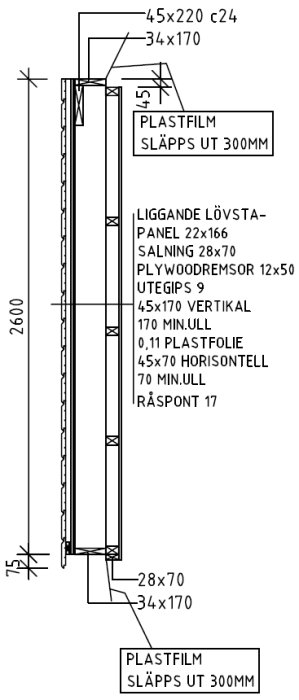
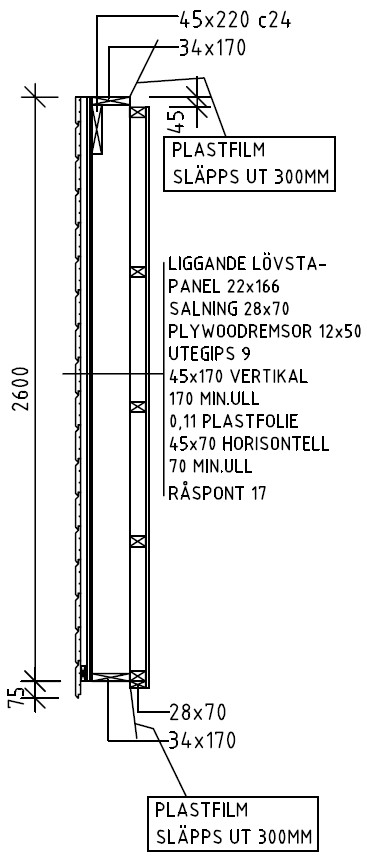
The wall consists of (from the outside): 22 mm cladding, 28 + 12 mm air gap, 9 mm exterior gypsum board, 170 mm studs/insulation, vapor barrier, 70 mm studs/insulation, 17 mm rough paneling, 13 mm gypsum board
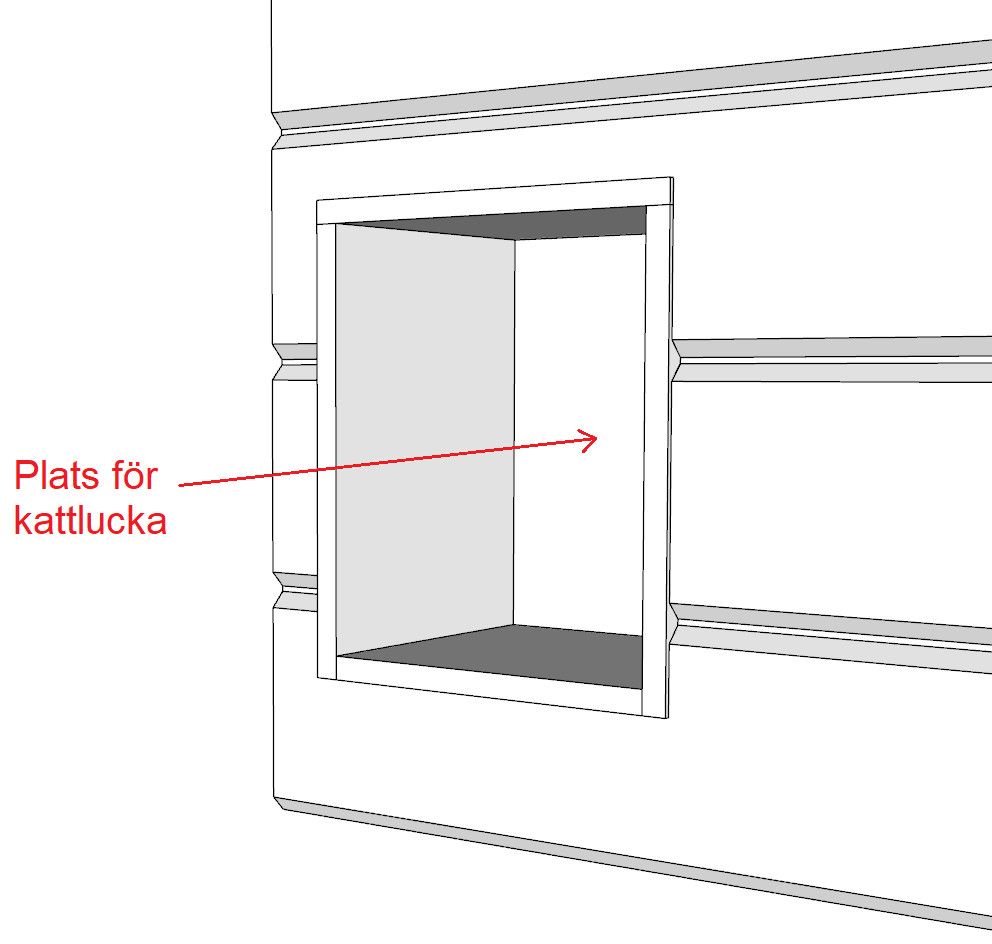
I have been considering creating a built-in section in the wall from the outside (so the wall becomes thinner there) and installing the flap in this (see image). My thought was to keep the insulation in the inner frame and allow the wall to have that thickness in the built-in section, but I'm unsure about what to do with the vapor barrier then.
Can I implement such a solution in some way without causing condensation problems? How should I handle the vapor barrier and sealing?
I can't tell you exactly how to do it in the wall, but I recommend you set up a double system with two hatches to reduce draft from the hatch. Also, consider that it should be easy to remove the hatch/hatches and clean! For example, a fairly heavy Styrofoam-insulated box with a hole at one end and a hatch at the other end that stands on the inside.
Exactly how you should do it in the wall I cannot answer, but I recommend you set up a double system with two flaps to reduce the draft from the flap. Also, make sure that it is easy to detach the flap/flaps and clean them! For example, a fairly heavy Styrofoam insulated box with a hole in one end and a flap in the other end that sits on the inside.
Yes, the idea is to have some form of airlock later (double flaps), but that is the next step. First, I need to get the flap in the wall in place.
Replace the window with a smaller one and install the cat flap there? That way you don't have to tear down parts of the wall or possibly try to restore the wall in the future.
Replace the window with a smaller one and install the cat flap there? Then you won't need to tear down parts of the wall and possibly try to restore the wall in the future.
Then the cat will need some sort of ramp, both on the outside and inside. It’s also a pivot window equipped with an integrated magnetic contact for an alarm, so it becomes complicated. No, we want the flap in the wall where I've marked on the drawing. What I'm wondering is if it's possible to create a structure as I have in mind.
One option is to build the structure from the inside and dress with trims and moldings as if it were a window. This way, you can tuck in the flashing and seal against the studs, and the actual "wall block" with the cat flap (similar to a window frame with a window) ends up on the outside of the vapor barrier.
The downside of building the structure from the inside is (besides it not looking as good) that the structure would have to be much larger for us to reach the buttons and display on the interior part of the cat flap.
Another option is, of course, not to build any structure at all, but I think it could lead to condensation problems because you're making a hole in the vapor barrier and also have no way to tape/seal it in any way.
We have a cat flap in our exterior wall. It leads into the laundry room where I've built a box out of MDF that they have to jump up and out of. This way, I catch the cold air, which is heavier, preventing it from flowing out onto the floor. It works relatively well for now.
The flap for us is located directly under the facade cabinet. I knew where the studs were, but of course, the cut hole ended up right on the pipe for the cables going to the central unit inside, so I had to make some changes in the wall. In the box I've built, I also have a camera, so I can see when the cats come and go and what they bring in.

Anna_H said:
Exactly how you should do it in the wall I cannot answer, but I recommend you set up a double system with two flaps to reduce the draft from the flap. Also, make sure that it is easy to detach the flap/flaps and clean them! For example, a fairly heavy Styrofoam insulated box with a hole in one end and a flap in the other end that sits on the inside.