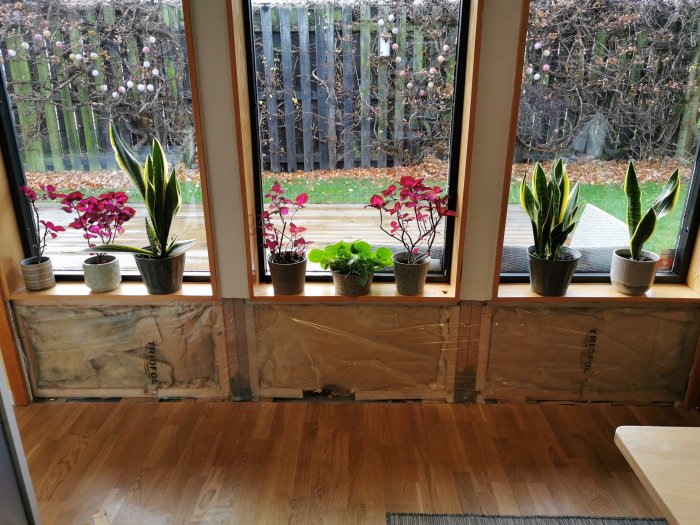
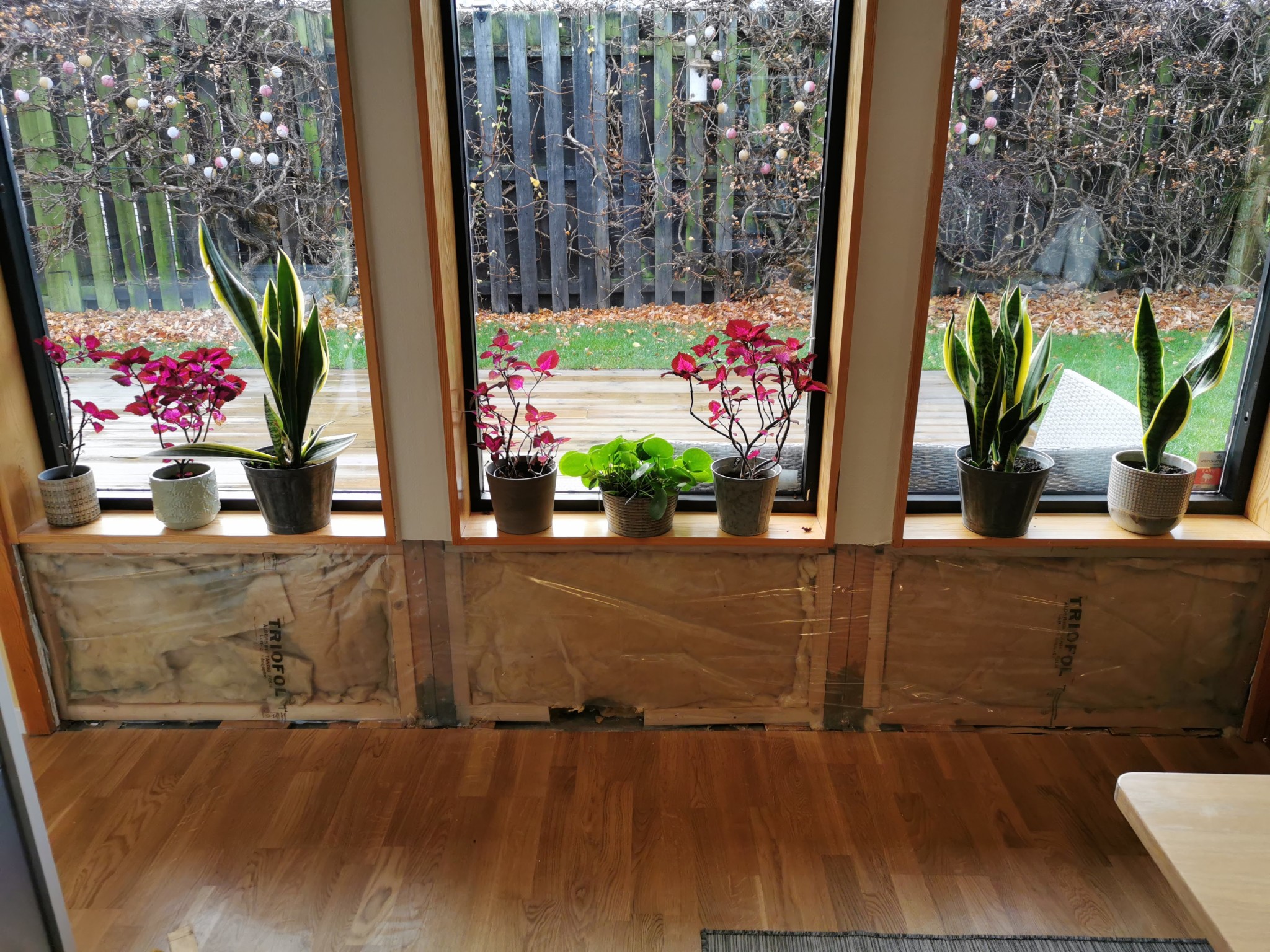
Since we moved in 2018, we have had a bad smell emanating from both a window section in the kitchen and a window section in the living room.
Yesterday, when I got down on all fours and smelled under the baseboard, I discovered an incredibly strong chemical odor. It was the first time I had smelled this type of odor, so I suspect it might have something to do with all the precipitation we've had recently. We know we have impregnated outer wall sills, but in true naivety, we hoped they wouldn't be a problem.
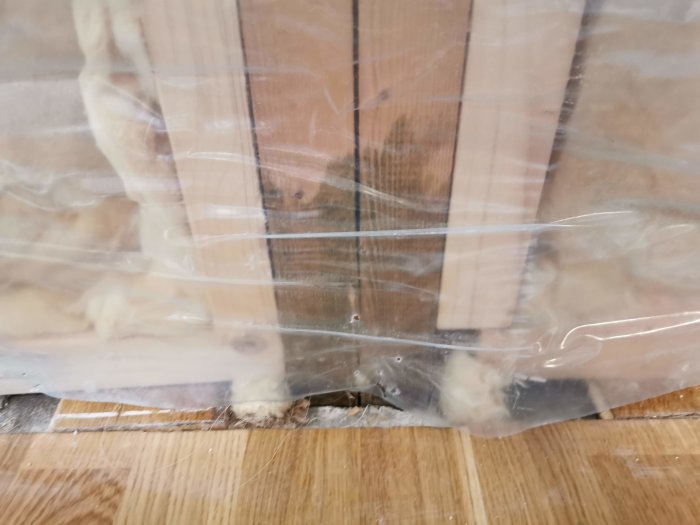
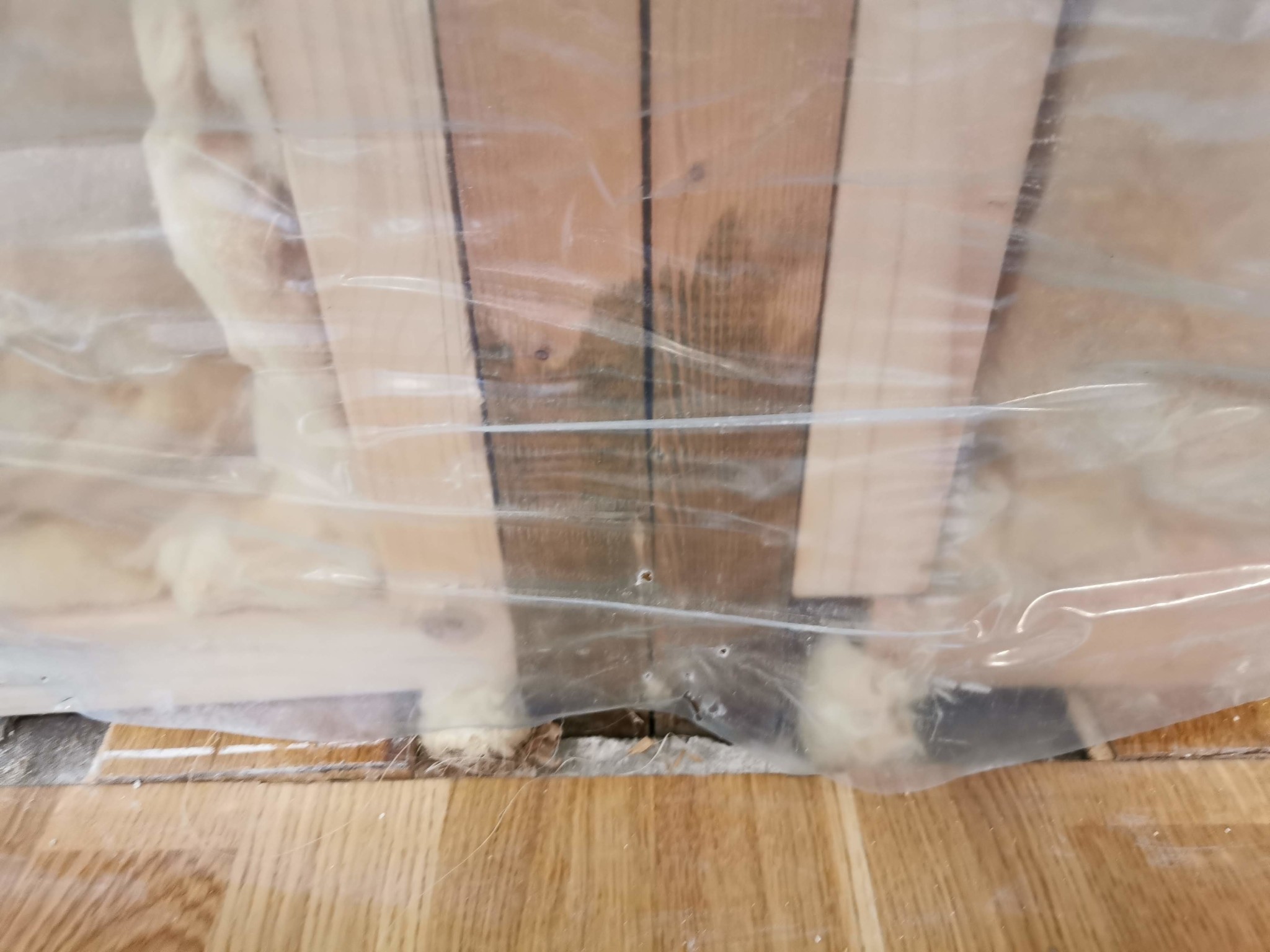
Today, when I decided to open the wall to see if they were damaged and if I could easily saw them off to replace with new ones, I discovered they were cast in. See pictures:
The studs coming up from the sill do not feel damp, but when I smell from the gap or on the brown part, there is a strong chemical odor.
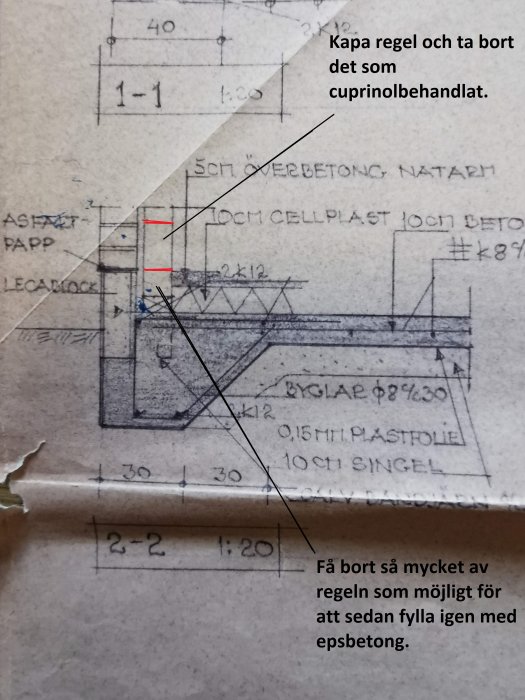
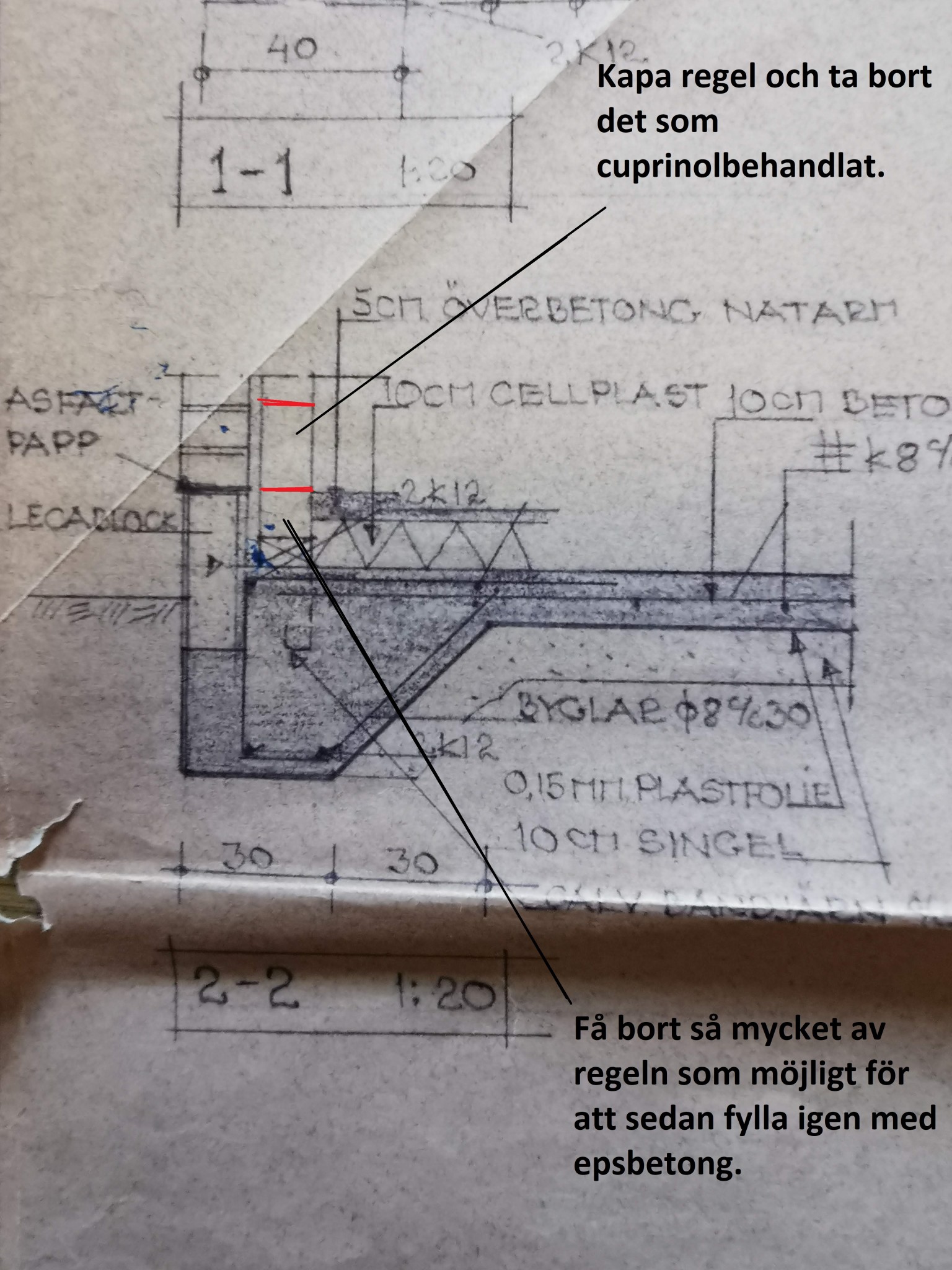
Since I'm not very keen on breaking up the concrete to remove the sill, I wonder if I'm completely wrong in thinking that one can cut the studs below and above the visible impregnation. Remove as much of the existing stud going down towards the sill as possible. Fill the hole from the treated stud with EPS concrete and place a new stud on top of the newly cast concrete with a galvanized metal piece as a base?
Something like this:
Admittedly, this would enclose the problem, but I'm unsure how else to solve it. I'm open to suggestions. What do you think? How would you do it?
Sealing again feels like it increases the risk of further problems. The smell will probably not disappear, plus the sill ends up in an even worse position as it becomes harder to dry out if it is encased in concrete. I would think that replacing the sill is the best option, even if it might not be the most enjoyable project to start...
I have had a company come over to look at our issue. The company is one of the established firms specializing directly in sill replacement. Their proposal is to remove a few layers of bricks, cut the lightweight concrete blocks, and then extract the outer wall sill.
After treating the surface, the plan was to pour concrete back into the foundation, install a new sill on the slab, and close it up.
My concern is that this might involve pouring concrete around the interior wall sills, which are also embedded in the slab. These have also been treated. Will this create bigger problems in the future by potentially "encasing" them? Or is this the right approach to take?
Click here to reply
Vi vill skicka notiser för ämnen du bevakar och händelser som berör dig.