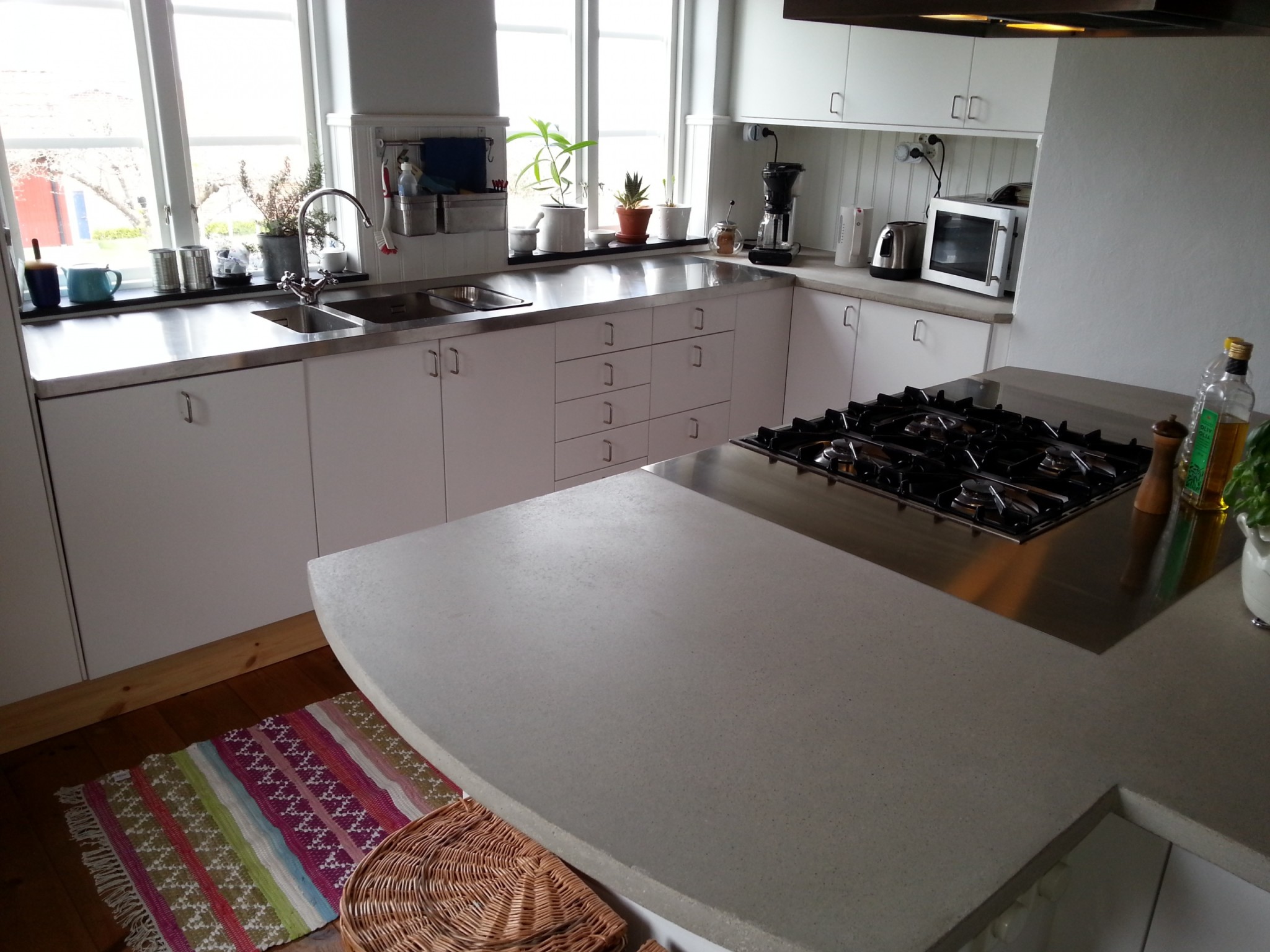
Freestanding stove with oven and stainless steel sink, so chic, so retro.
(Just kidding, we also have a stainless steel sink)
Protte
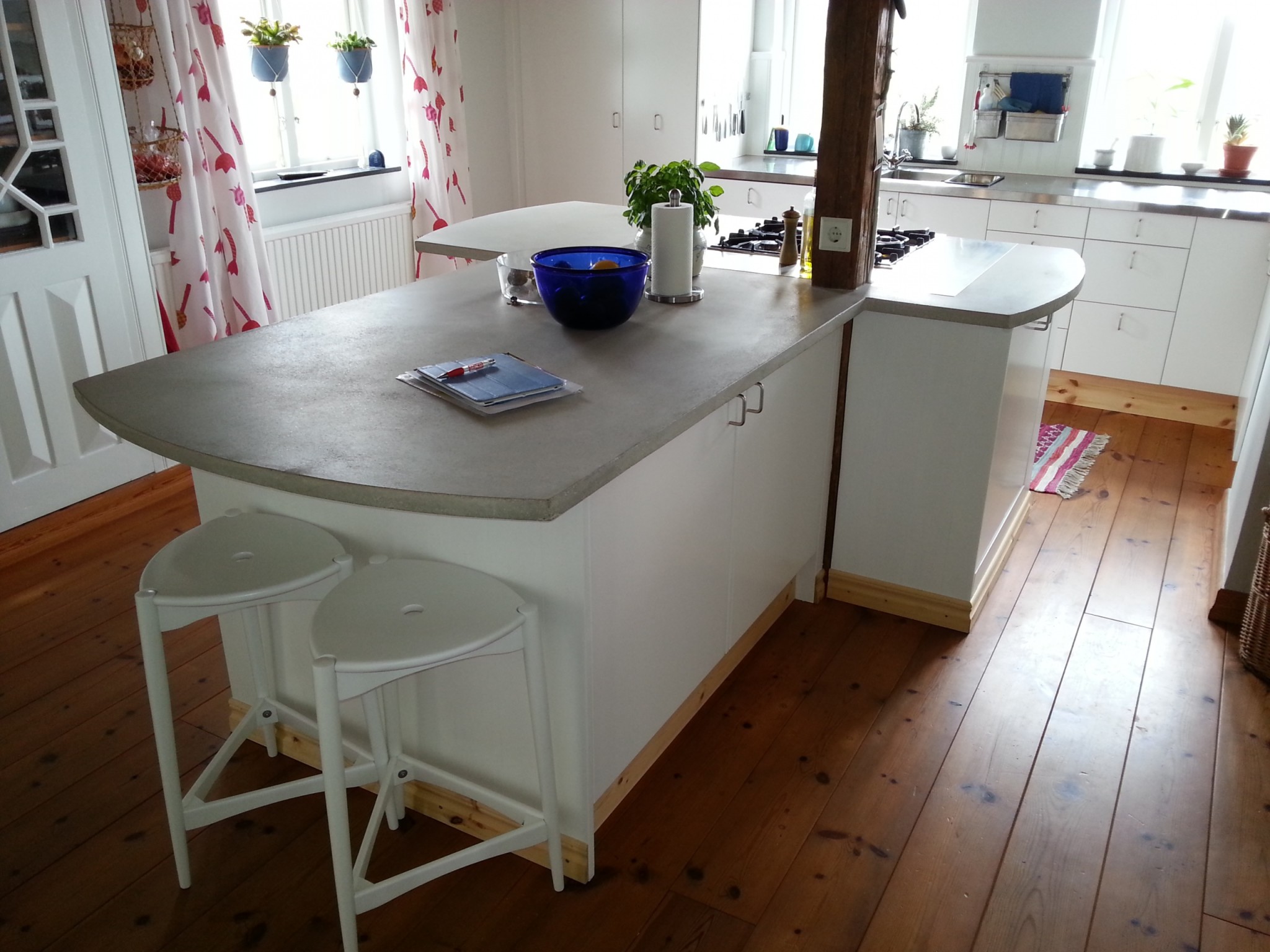
Hobs & stoves embedded in composite slabs are for simpler dwellings like apartments. Those with taste use the real stuff. Steel & concrete.
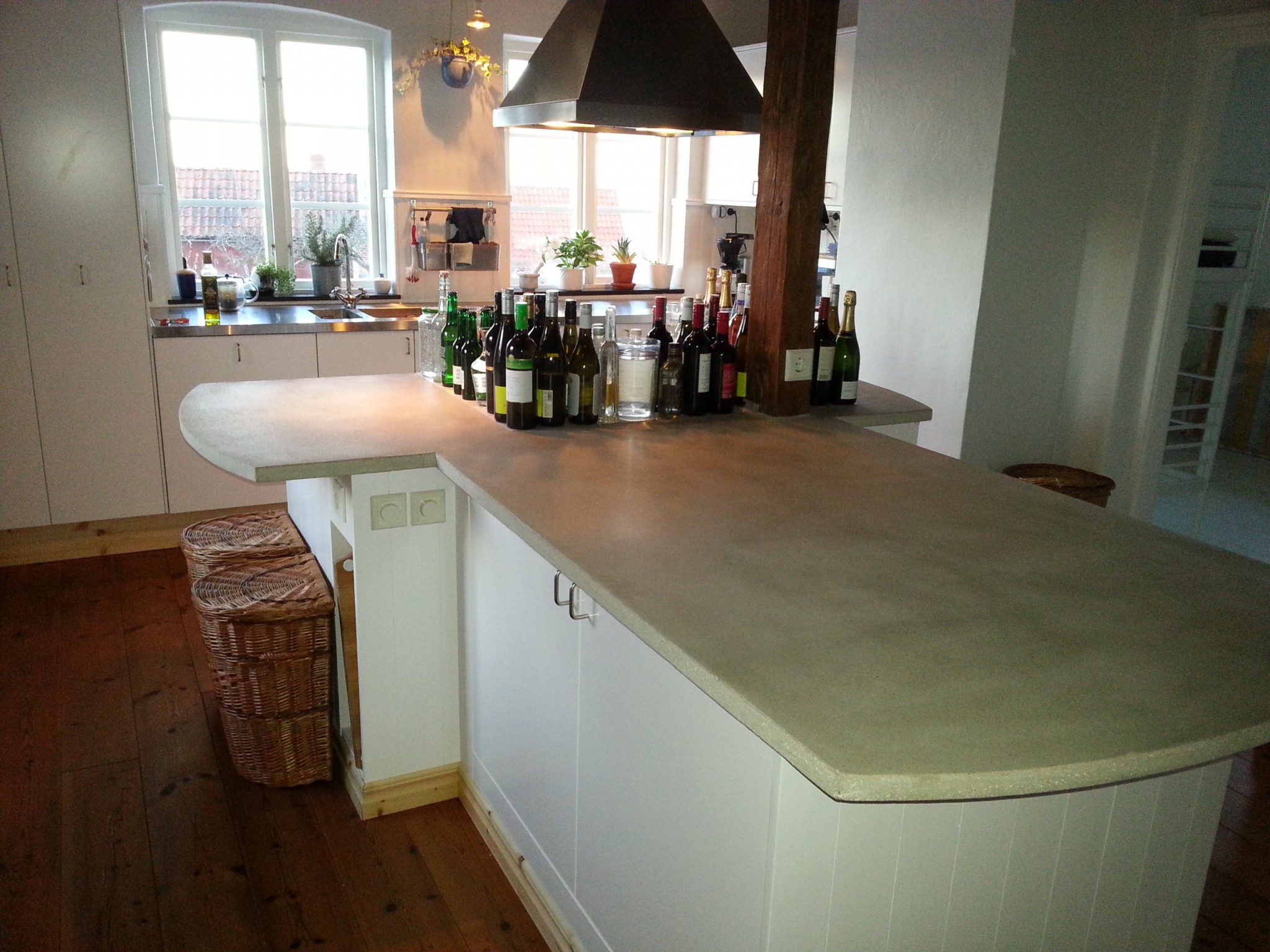
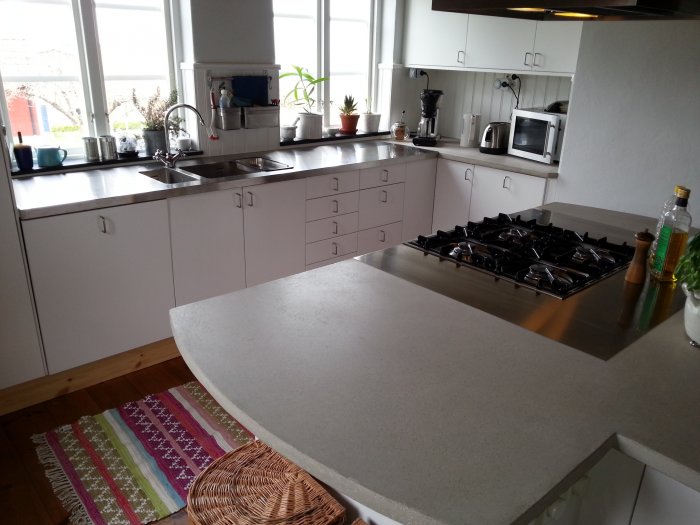
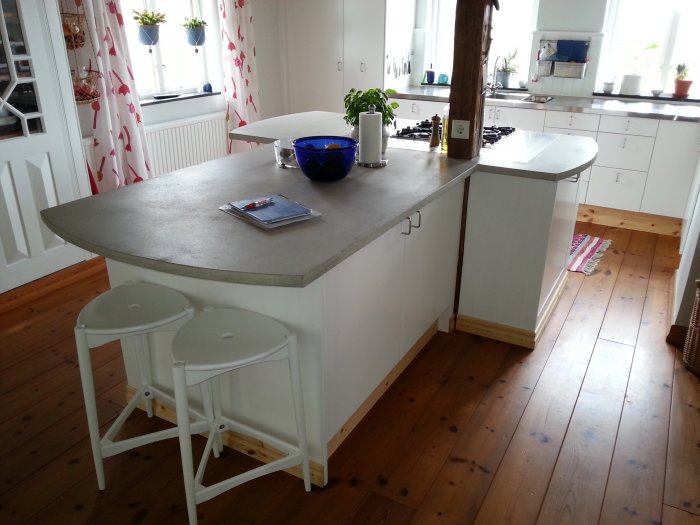
Joking aside, it's a matter of preference. My purpose in publishing the project was to show that it's not particularly difficult to cast countertops on site. Not even for me, who has never done it before.
If I were to point out the two most important steps as I see it, they would be:
- Be extremely careful to build the mold stable & precise.
- Mix the concrete thoroughly according to the instructions and use a plasticizer.
The kitchen has been in operation for just over a month now. It works as expected. The concrete slabs are treated with a stone impregnation from Bauhaus (blue one-liter plastic can, can't remember the brand).
A positive surprise was that the concrete withstands grease and other substances much better than expected.
A very unexpected problem is that guests must be supervised at all times when they prepare food. People avoid using the large stainless steel, and extremely durable, preparation surfaces at all costs. Many seem to have an almost compulsive need to place all sticky objects on the concrete. Explaining doesn't help. Placing a huge cutting board on the concrete doesn't help. Within a few minutes, butter packages, cooking oil bottles, and frying pans are still placed directly on the concrete.
It must be because people perceive stainless steel as "fragile & clean" and concrete as "dirty & durable." This happens no matter how much you explain and nag. Strange!
Now, you have indeed already impregnated; otherwise, I have heard (not tested yet, am in the preliminary stage of casting) that steinfix 100 as impregnation + steinfix 60 as daily cleaning soap is the right way to go. http://www.steinfix.com/se/produkter/förbehandling-impregnering-5698263
It should cost around 200kr per liter for the impregnation, and ~100kr per liter for the soap.
A question,
We would also need to cast our countertops in place, so this was great. Could you describe the mold a little more thoroughly? And especially how you managed to get the concrete all the way out (overhang), how did you do with the mold then?
Thankful for an answer
"A very unexpected problem is that guests must be monitored all the time when they are preparing food. People avoid at all costs using the large stainless steel, and extremely durable, preparation surfaces. Many seem to have an almost compulsive need to place all sticky items on the concrete. It doesn't help to explain. It doesn't help to put a huge cutting board on the concrete. Within a few minutes, butter packages, cooking oil bottles, and frying pans are placed directly on the concrete.
Must be because people perceive stainless steel as "fragile & clean" and concrete as "dirty & durable". That's regardless of how much you explain and nag. Strange!"
Fantastic bench you've achieved, I'm impressed, not just with the work but the behavior of "going against the current" regarding the site-casting.
I've also forwarded the arguments to my mother-in-law concerning under-mounted sinks vs real countertops!
I'll have that too when I remodel the kitchen. Right now, I have an inset sink from above, resulting in a nuisance edge AND a countertop edge that's rounded to ensure everything flows onto the floor.......
Seven years later. Any thoughts?
I need to cast my bench in place as it is long and in a U shape.
Anyone with more experience in casting in place?
How do you achieve a good surface?
håemerr said:
Now the kitchen has been in operation for just over a month. It works as intended. The concrete slabs are treated with a stone impregnator from Bauhaus (blue one-liter plastic canister, can't remember the brand).
A positive surprise was that the concrete withstands fat & other things much better than expected.
A very unexpected problem is that guests must be supervised all the time when they prepare food. People avoid using the large stainless steel, and extremely durable, preparation areas at all costs. Many seem to have an almost compulsive need to place all sticky objects on the concrete. It doesn't help to explain. It doesn't help to place a huge cutting board on the concrete. Within a few minutes, butter packages, cooking oil bottles, and frying pans are still placed directly on the concrete.
It must be because people perceive stainless steel as "fragile & clean" and concrete as "dirty & durable". This is regardless of how much you explain and nag. Strange!



 is that guests must be monitored all the time when they are preparing food. People avoid at all costs using the large stainless steel, and extremely durable, preparation surfaces. Many seem to have an almost compulsive need to place all sticky items on the concrete. It doesn't help to explain. It doesn't help to put a huge cutting board on the concrete. Within a few minutes, butter packages, cooking oil bottles, and frying pans are placed directly on the concrete.
håemerr said:
Now the kitchen has been in operation for just over a month. It works as intended. The concrete slabs are treated with a stone impregnator from Bauhaus (blue one-liter plastic canister, can't remember the brand).