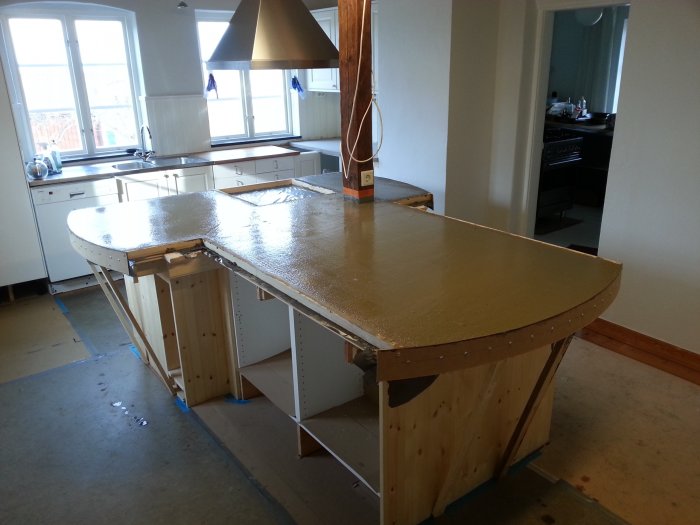
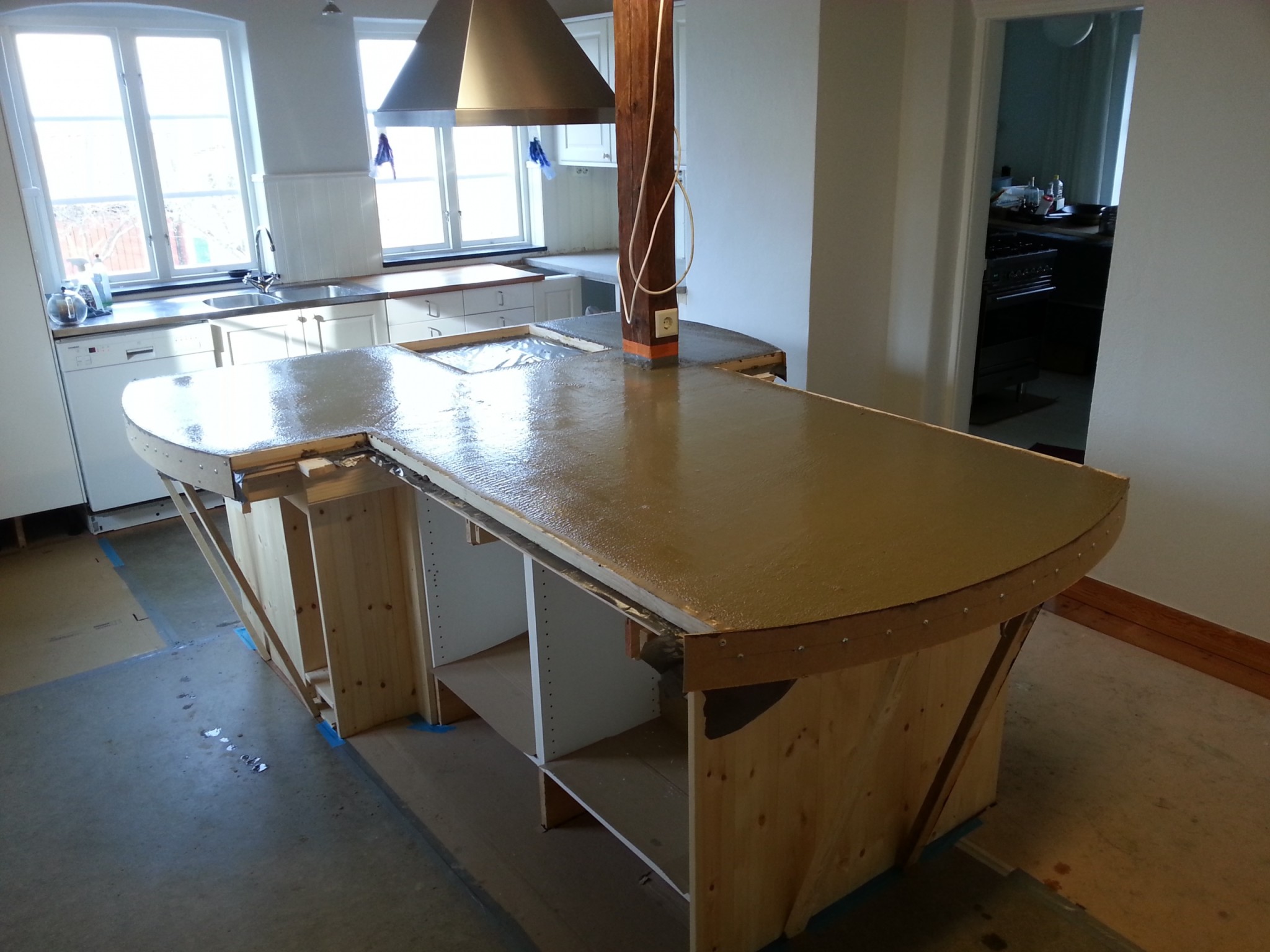
I have cast a countertop for my kitchen, finished it with Epoxy...easy to keep clean but shiny...not as "rough" looking as I would have liked, but I'm lazy too, so simplicity won over appearance...
As a hobby, I have poured about 750 m2 of concrete flooring, so I have some understanding of the material.
I can't comprehend that you are planning to bring in concrete and pour it on the countertop.
I also can't understand how you expect to get a good surface, if you're casting upside down, the side against the mold will be fairly smooth.
If you're planning to grind the slab in place, good ventilation is needed, and it's tricky to reach the corners.
To achieve a really good surface, wet grinding is necessary (feels like it would cause water damage to the frames).
If concrete is truly that trendy, then pour it outside, upside down (top side against the mold) using glass fiber reinforced concrete, making it strong and manageable.
Sand, finish and polish, invite the neighbors, carry in the slabs, and then serve lasagna.
Hello!
It's an interesting idea aesthetically, but I'm thinking about the usability of a cast slab.
Consider what the slab will be used for, will there be spills on it? It absorbs quite a bit of liquid which causes stains, and the surface can be difficult to keep clean unless polished, but then you'll have to grind, polish, and then varnish.
Getting the surface as smooth as you want can be difficult too, the side against the mold is usually the smoothest and nicest.
I could imagine a procedure something like this: of course, start with a test piece about 1x1 meter to get a feel for it and to make mistakes on it.
1. Buy smooth and fine form plywood, or alternatively a sheet metal as a mold.
2. Make all recesses and edge strips (to get beveled edges) etc., oil the mold with form oil, reinforce with a stainless steel mesh.
3. Before you cast, make sure you have attached strong beams under the mold so that you can lift with them without breaking your slab.
4. Then you cast,
5. After the concrete has set, nail a "lid" over the entire casting with the mold still in place; that lid should be reinforced beforehand with beams as strong as those under the mold.
6. Then you turn the whole block over by handling the beams, mount the slab in place now with the lid facing down, and the beams become the supportive structure of the slab when it is in place.
Then you just remove what was previously the bottom and sides of the mold; now you should have a smooth, nice, moderately rough appearance on your slab.
Keep in mind that concrete is extremely heavy, weighing 2.4 tons per cubic meter, compared to water which weighs 1 ton.
If you bring this to reality, I'd love to see pictures of it
<<Then you flip the entire cake by managing the battens, mount the board in place now with the lid down, and the battens become the supporting structure of the board when it is now in place.
Hmmm, what cabinet frames do you have under a bunch of battens and an additional wooden board? It might be a bit high on the counter.
Casting on site has its advantages. A 275 kg slab measuring 220 x 240 can't be lifted into place.
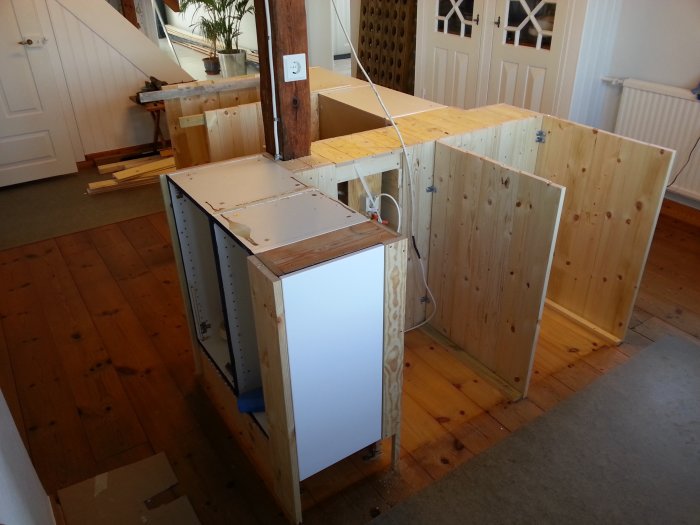
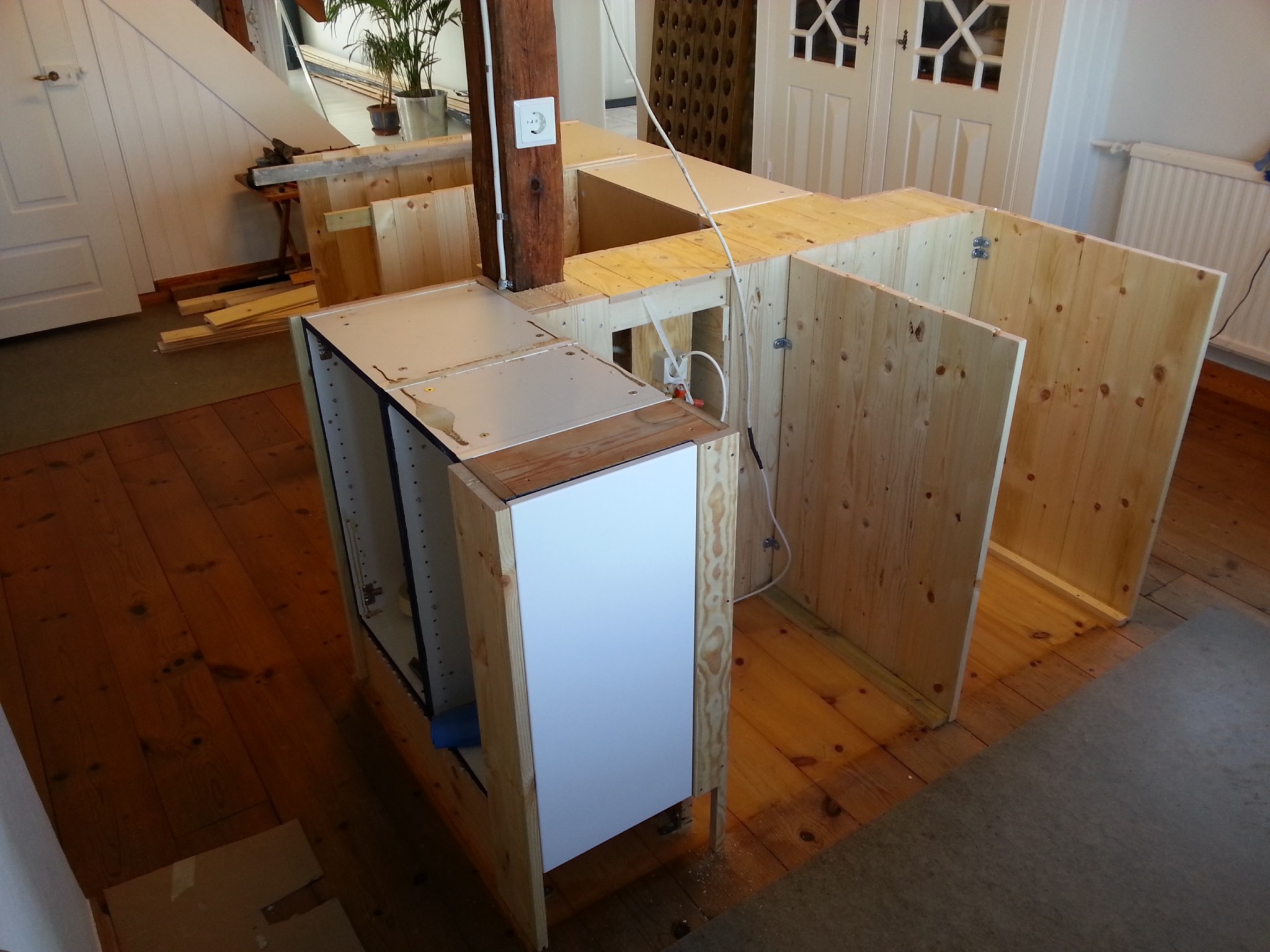
I'm building a structure consisting of four compartments for appliances, four IKEA frames, and two homemade frames. Partition walls of 21 mm floorboards/raw paneling to carry the weight.
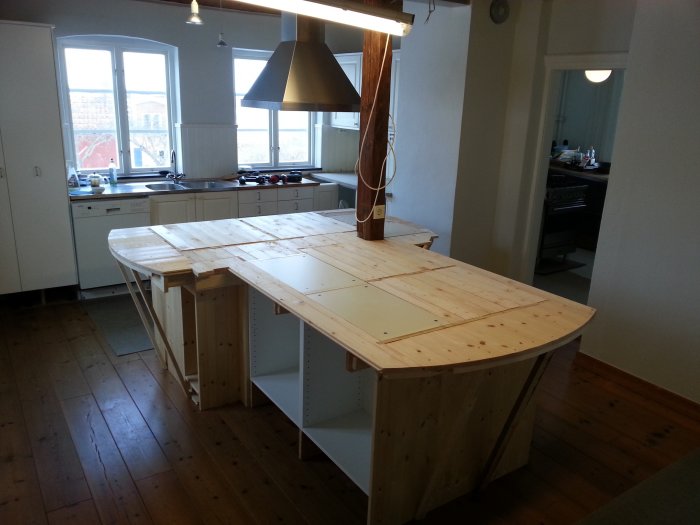
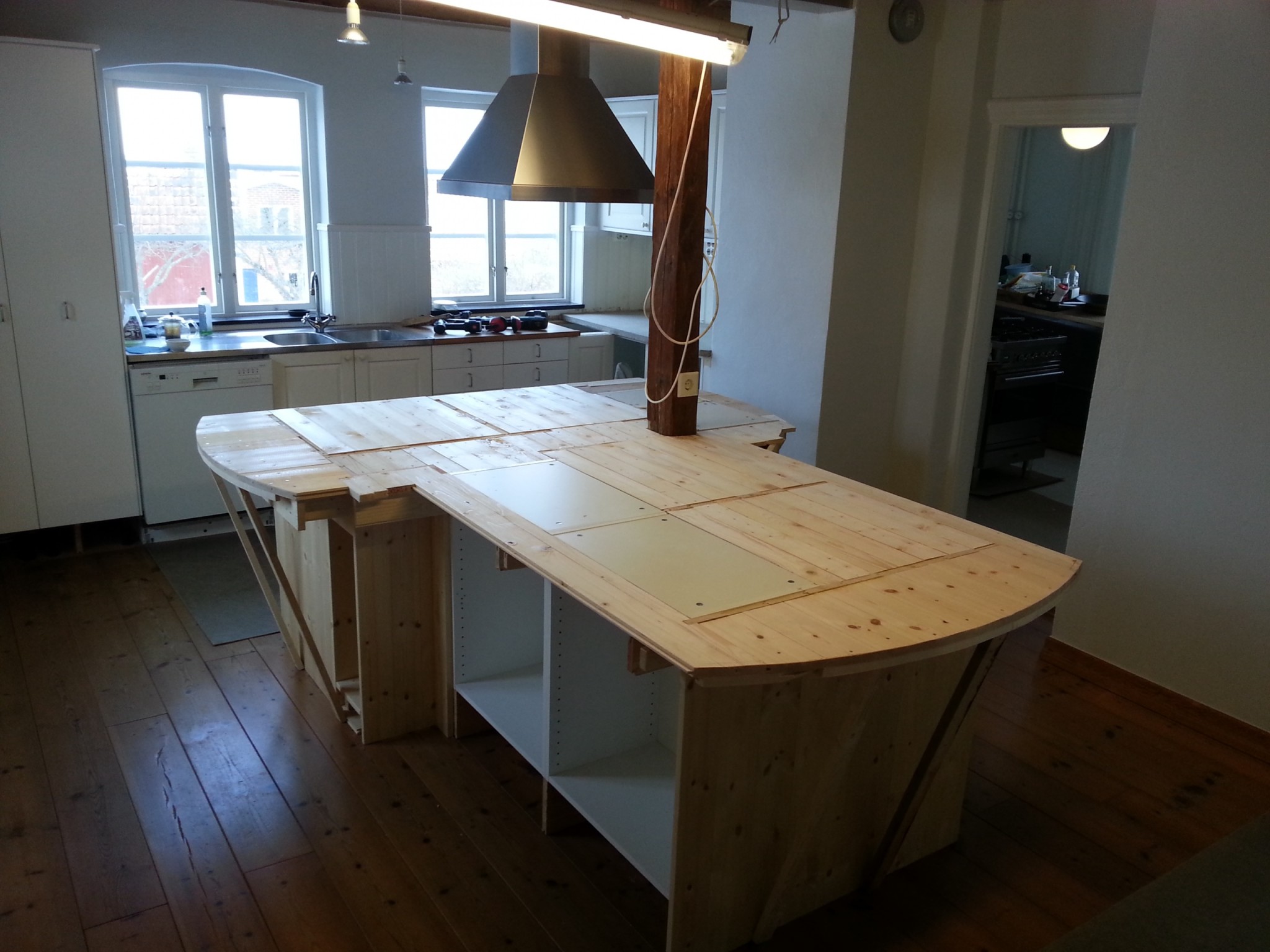
Then I build a mold. The bottom looks like this. Precision of ± 1 mm in height.
The mold bottom is strong enough that a person can stand anywhere on it. The formwork for the four compartments can be removed from underneath afterward.
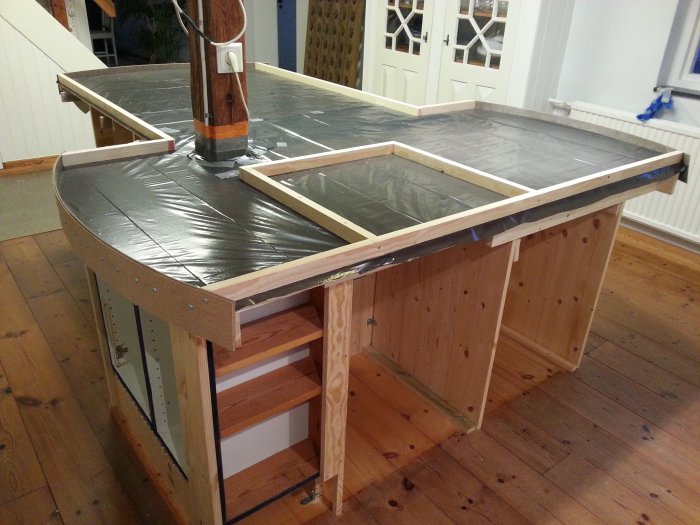
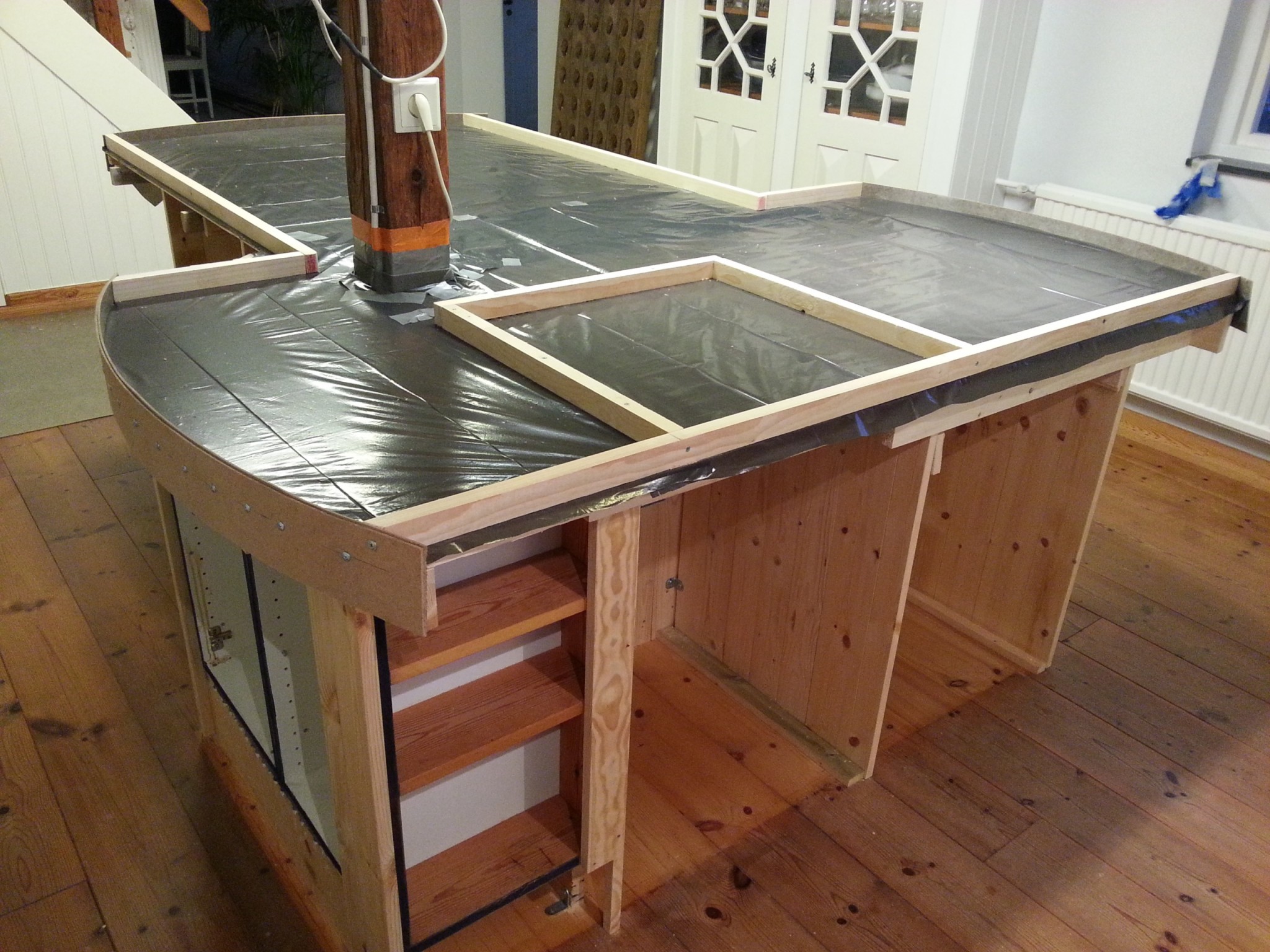
The finished mold. The slab thickness will be 35 mm. It's actually too thin. It should be at least 45 mm.
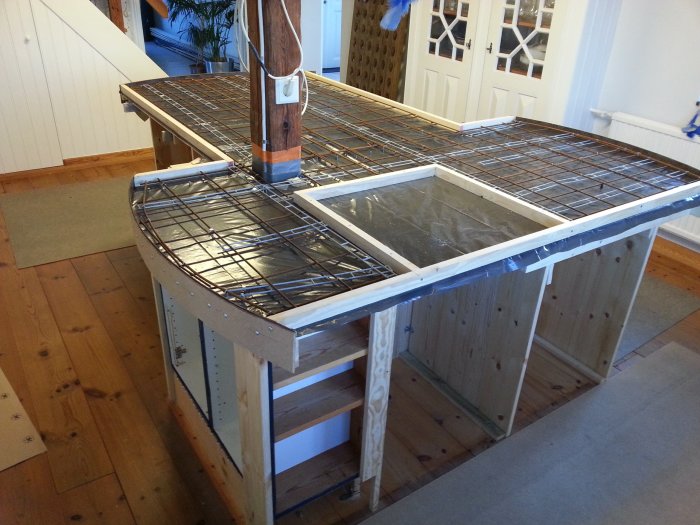
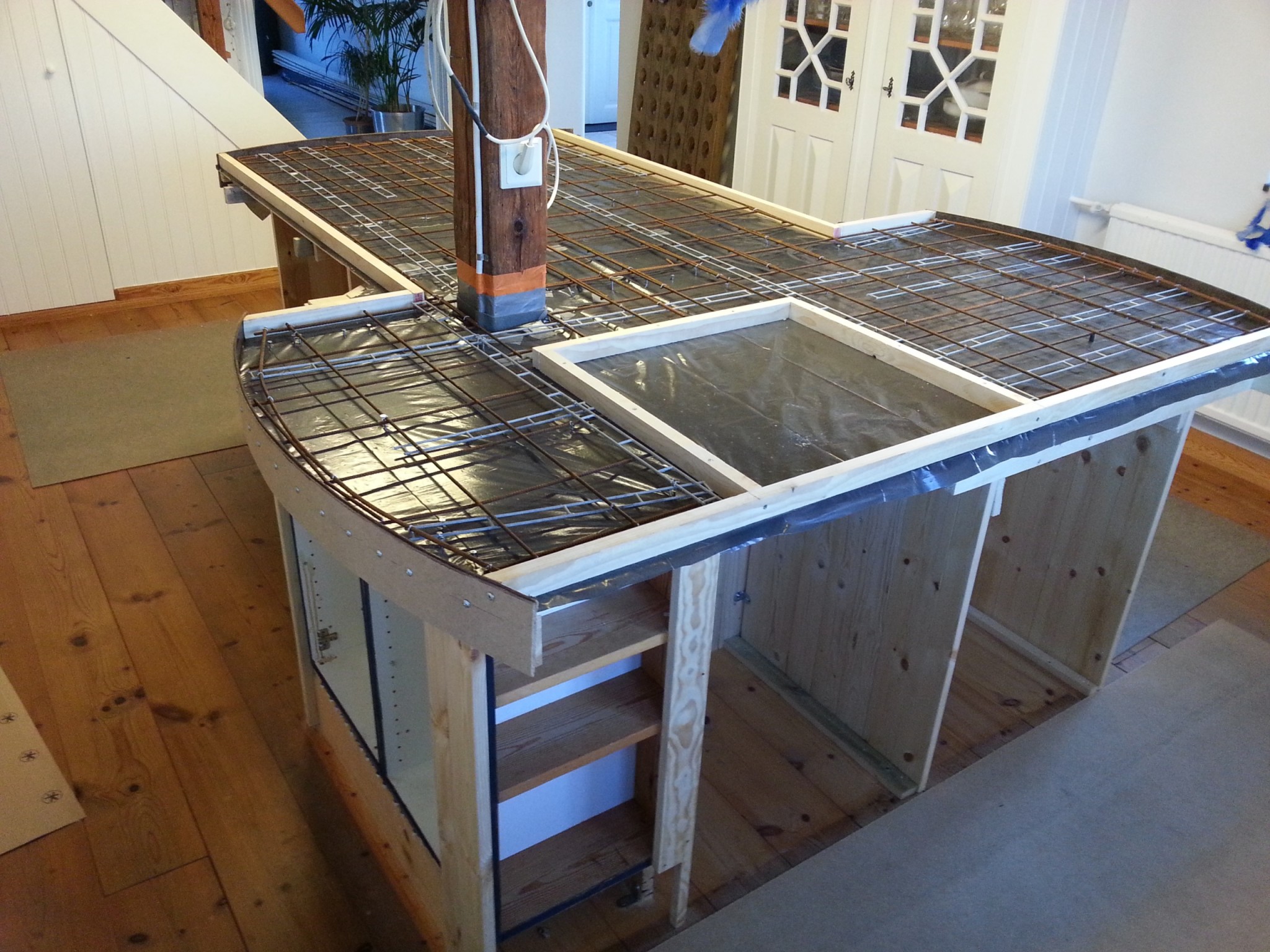
Reinforcement. It's important that the reinforcement is positioned exactly right in height.
Tomorrow I'll start casting. Using regular fine concrete from Byggmax.
In a few hours, I will scrub the surface with a scrub board. After two days, I rough sand and patch with fine concrete screened to an aggregate size of 0 - 1 mm. Two days later, I remove the form, sand again, and rub in fine concrete screened to about 0 - 0.3 mm. Then the slab cures for a few days, after which I remove the protective plastic, let the slab dry for a few days, and then sand to the finish I want.