
4,710 views ·
10 replies
5k views
10 replies
Cast concrete countertop - patchy
Hello,
about 1.5 weeks ago, I poured a countertop with Finja expanding concrete fine that we will have for the outdoor kitchen. The mold was made of plywood and 45x45 studs on the sides, galvanized reinforcement. When I removed the form and turned the slab, I saw that it is patchy. You can see where I poured in the concrete. Improved a bit after hand sanding but still not good.
Does anyone know what this could be due to and if it can be sanded down if using a diamond grinder for example?
about 1.5 weeks ago, I poured a countertop with Finja expanding concrete fine that we will have for the outdoor kitchen. The mold was made of plywood and 45x45 studs on the sides, galvanized reinforcement. When I removed the form and turned the slab, I saw that it is patchy. You can see where I poured in the concrete. Improved a bit after hand sanding but still not good.
Does anyone know what this could be due to and if it can be sanded down if using a diamond grinder for example?

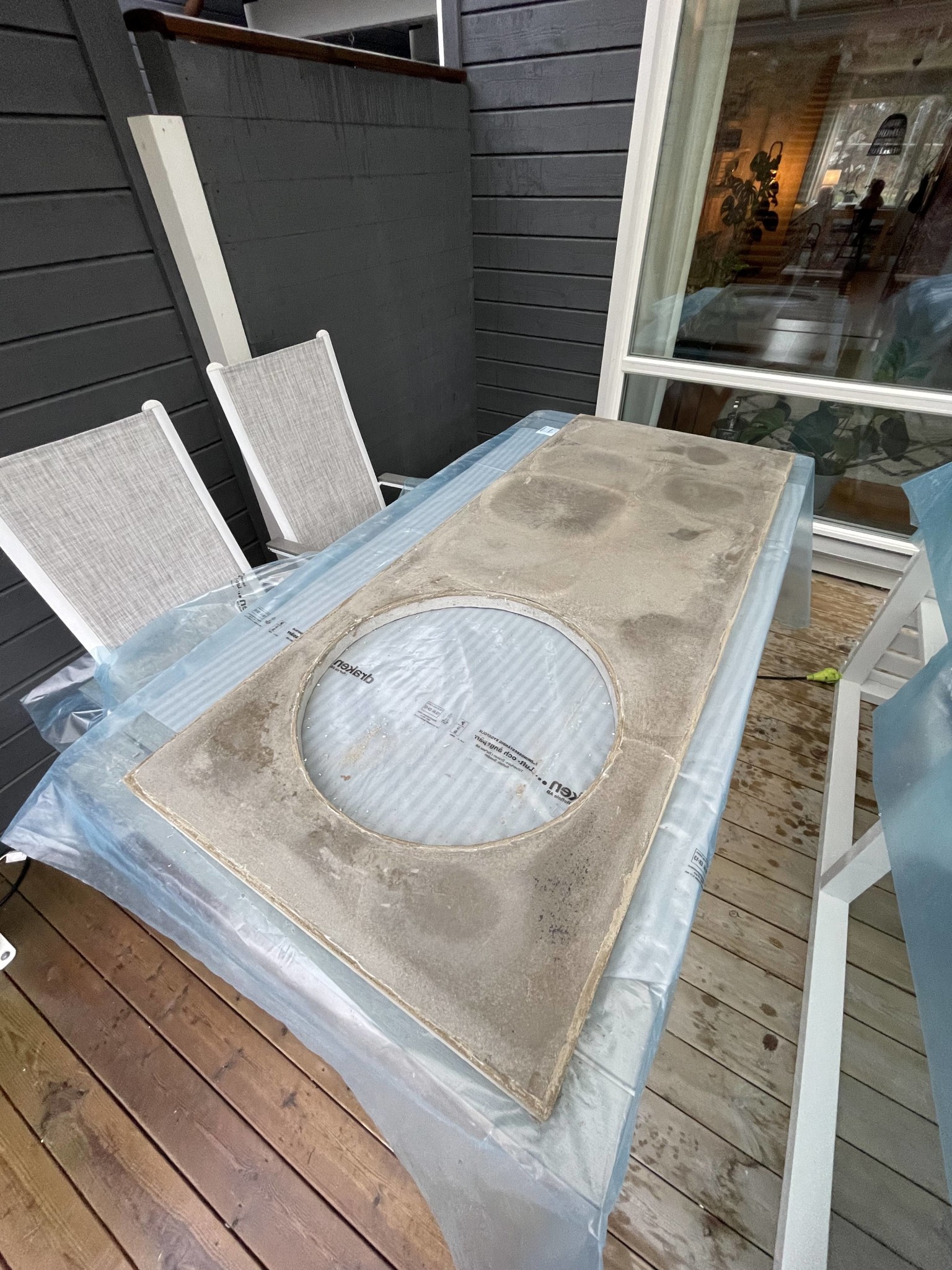
I think you would have needed to make a larger batch for the first pour - you should cover the entire bottom with a few centimeters to avoid seams. And expander concrete doesn't need to be vibrated at all/much. With the caveat that I've only cast one table - but it turned out well. 

M mkristensson said:
Thanks for all the answers. Pretty sure it's a combination of too small a first batch and that I added 2 dl of water to the second one. It'll have to do this year, and I'll see if I cast a new one next year.M mkristensson said:
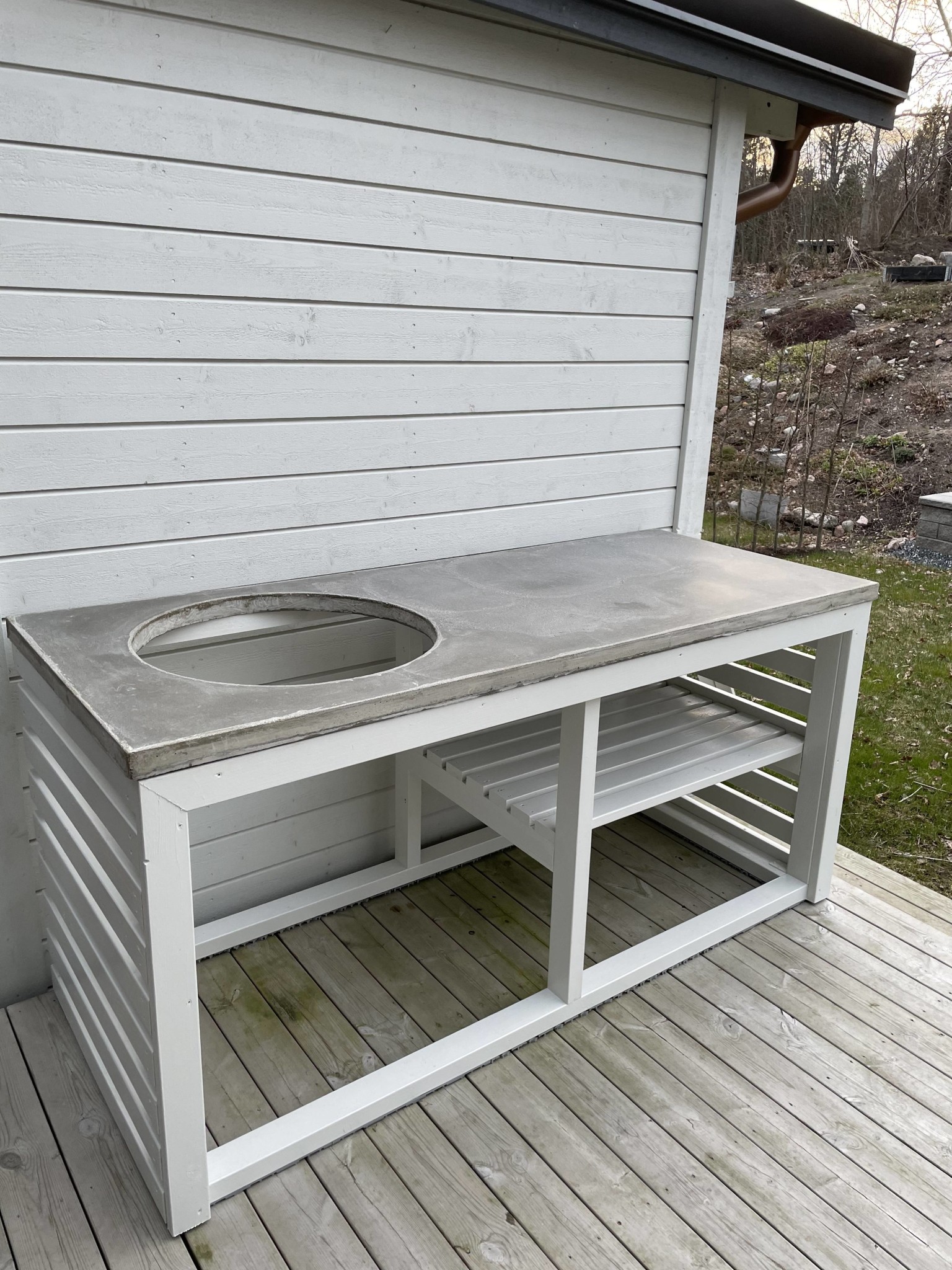
If it's going to be left out like that, it will disappear on its own, or at least get so many other marks that you won't think about it anymore.
I've just cast two slabs (240x39x4 and 60x39x4) and they didn't turn out exactly the same color despite using the same amount of water, vibrating, etc. But that's also part of the charm of concrete, it's not supposed to be completely perfect!
I've just cast two slabs (240x39x4 and 60x39x4) and they didn't turn out exactly the same color despite using the same amount of water, vibrating, etc. But that's also part of the charm of concrete, it's not supposed to be completely perfect!
And I think the whole idea of a cast table outdoors is that it should be a bit "rough"!
But; have you sealed the surface? I used Heydi Top on.
But; have you sealed the surface? I used Heydi Top on.
Click here to reply