Happy Friday to all DIY enthusiasts and professionals!
In our basement, between an all-too-small garage and a hobby room that just accumulates a lot of crap (I don't understand where it all comes from??) we have a partition wall.
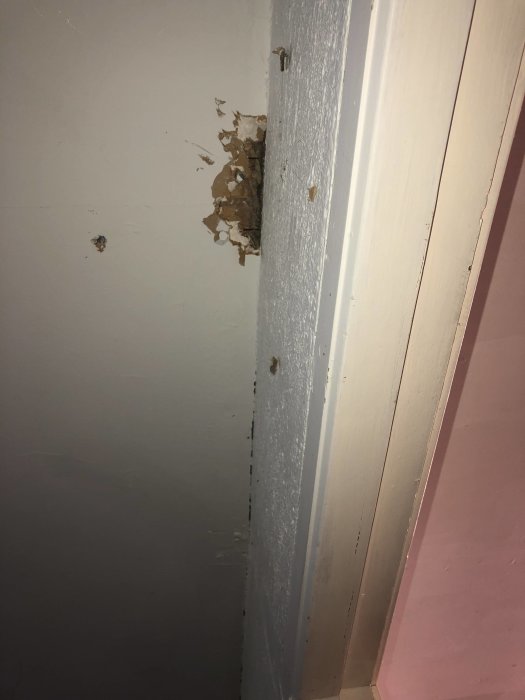
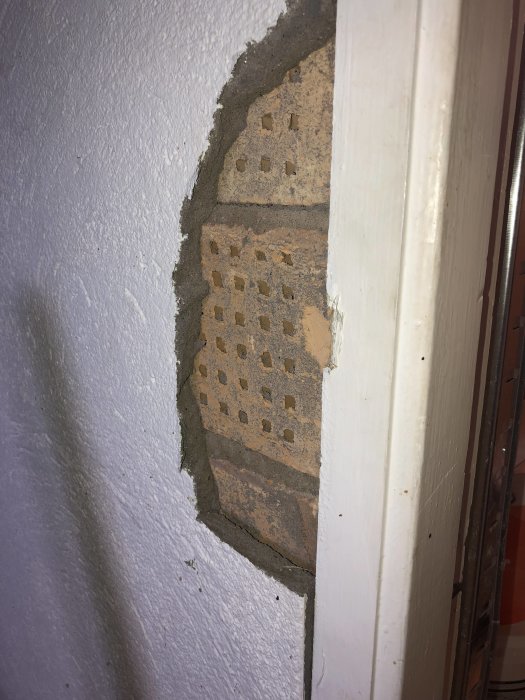
It's made of brick or something similar with concrete plaster on each side. Total thickness is about 90mm. In the first picture is the wall, in the second I've removed some plasterboard from the ceiling to see the floor of the above floor. It looks like there's a tongue and groove ceiling (looks the same in the rest of the house). This is perpendicular to the wall, which should mean that the floor joists run in the same direction as the wall, meaning that the floor structure is not supported by the wall, right? The nearest parallel wall on the above floor is over a meter away from this one. I want to be able to take down the wall to better utilize the space in the basement, and actually be able to get a car in without having to leave the door open
The wall consists of plastered hollow bricks placed on edge. That wall is guaranteed not to be load-bearing. Plaster can be cement plaster, lime-cement plaster, and lime plaster. Concrete is a mixture of cement, water, and aggregate material (stone in various fractions). Plaster is quite soft and loose, concrete is rock-hard.
The wall consists of plastered hollow bricks placed on their sides. That wall is definitely not load-bearing. Plaster can be cement plaster, lime-cement plaster, and lime plaster. Concrete is a mixture of cement, water, and aggregate materials (stone in various fractions). Plaster is fairly soft and loose, concrete is rock-hard.
Okay, thanks for the answer! I also noticed that the tongue and groove boards used as the ceiling are laid without joints straight across the top of the wall, which indicates that it was built after the structure above it. Time to roll up my sleeves and grab the sledgehammer then
Wonder if the partition wall is made of stone for fire spread prevention reasons. But they haven't considered that the roof is wood.
could very well be so! The entire ceiling is covered with some really thick gypsum, much thicker than the 12-13mm used today. Next to the garage is an old boiler room, obviously it used to be powered by oil here before! But now we've had geothermal heating for almost 8 years
could very well be the case! The entire ceiling is covered with some really thick plaster, much thicker than the 12-13mm used today. Next to the garage is an old boiler room, so of course, they used oil for heating here in the past! But now we've had geothermal heating for almost 8 years
The spread protection is probably for the garage rather than for the boiler room in this case.
Is it some asbestos-containing board?
They were widely used as fire protection in boiler rooms.
If it is to remain a garage, you should pay extra attention to fire safety. Garages have specific requirements as far as I know.
No, there's no asbestos in the house, everything was checked when we bought it. All the doors in the basement are fire doors for some reason, even to the laundry room. Then the ceiling is the weak point in all the rooms, gypsum with tongue-and-groove wood underneath.
The spread protection is probably in this case for the garage rather than the boiler room.
Very possible. But all other walls are load-bearing and 3dm thick, and all the doors in the whole basement are heavy fire doors. So there should be no danger anyway.

 ) we have a partition wall.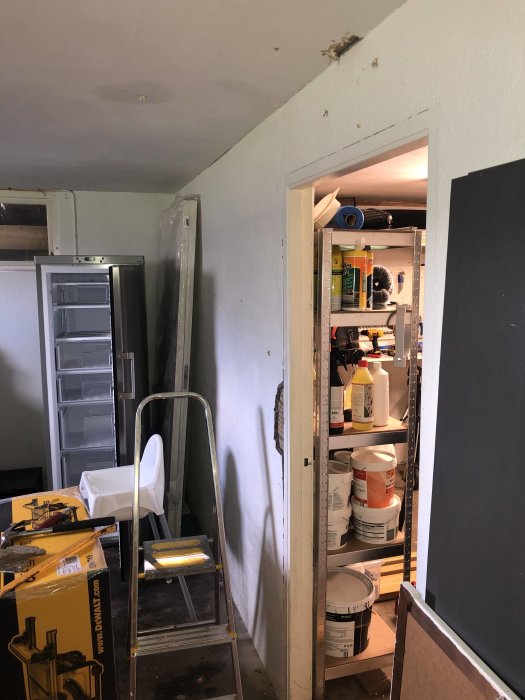




Oskerien said:
BirgitS said: