I'm planning to "bring in" the eaves to nearly nonexistent on a 70s 1.5-story house. I know there are divided opinions about having eaves or not, but I have chosen to go without (if possible).
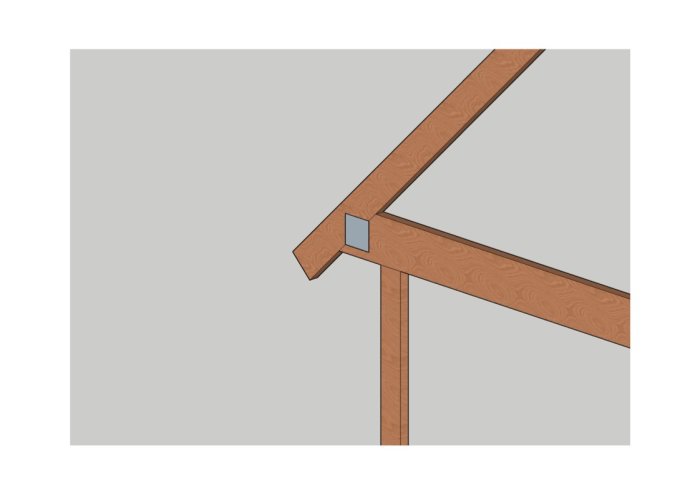
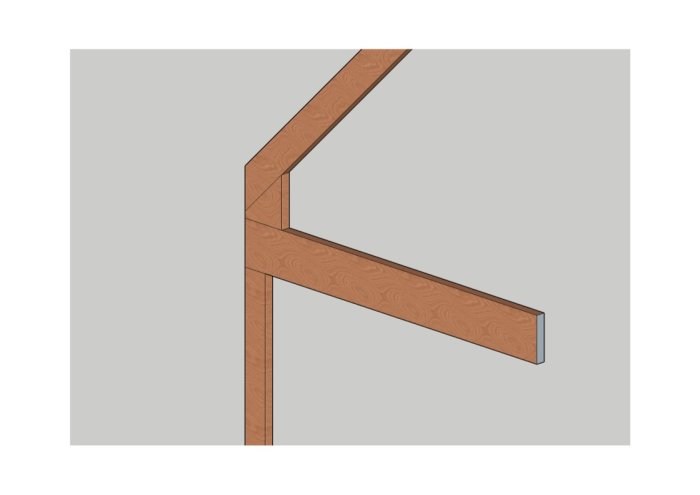
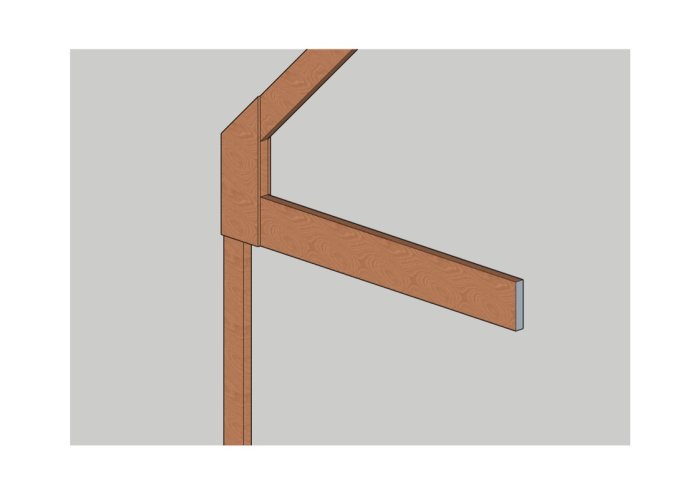
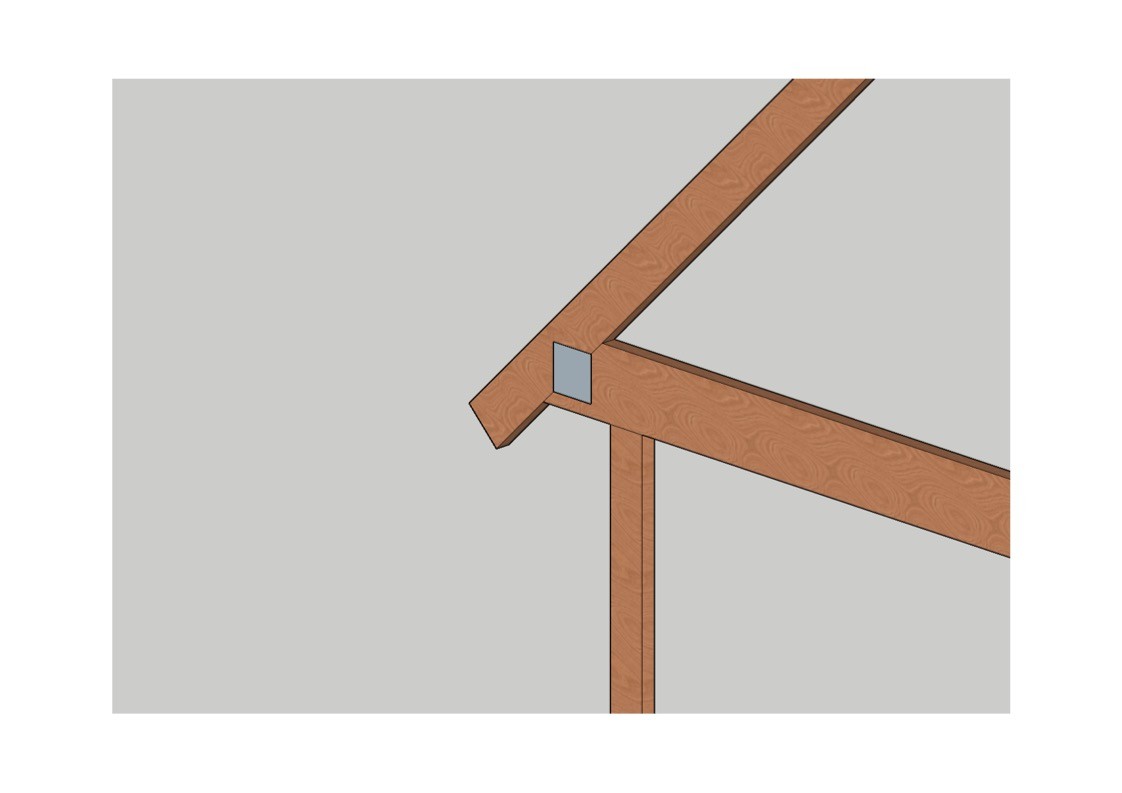
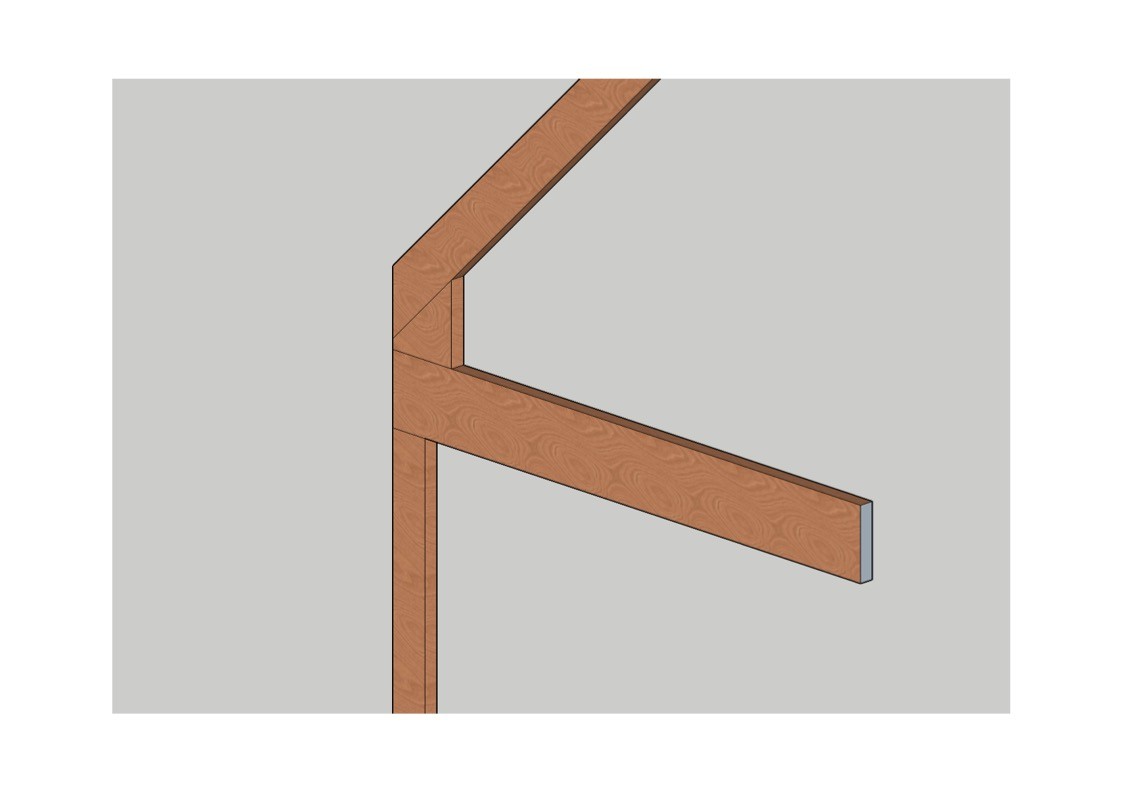
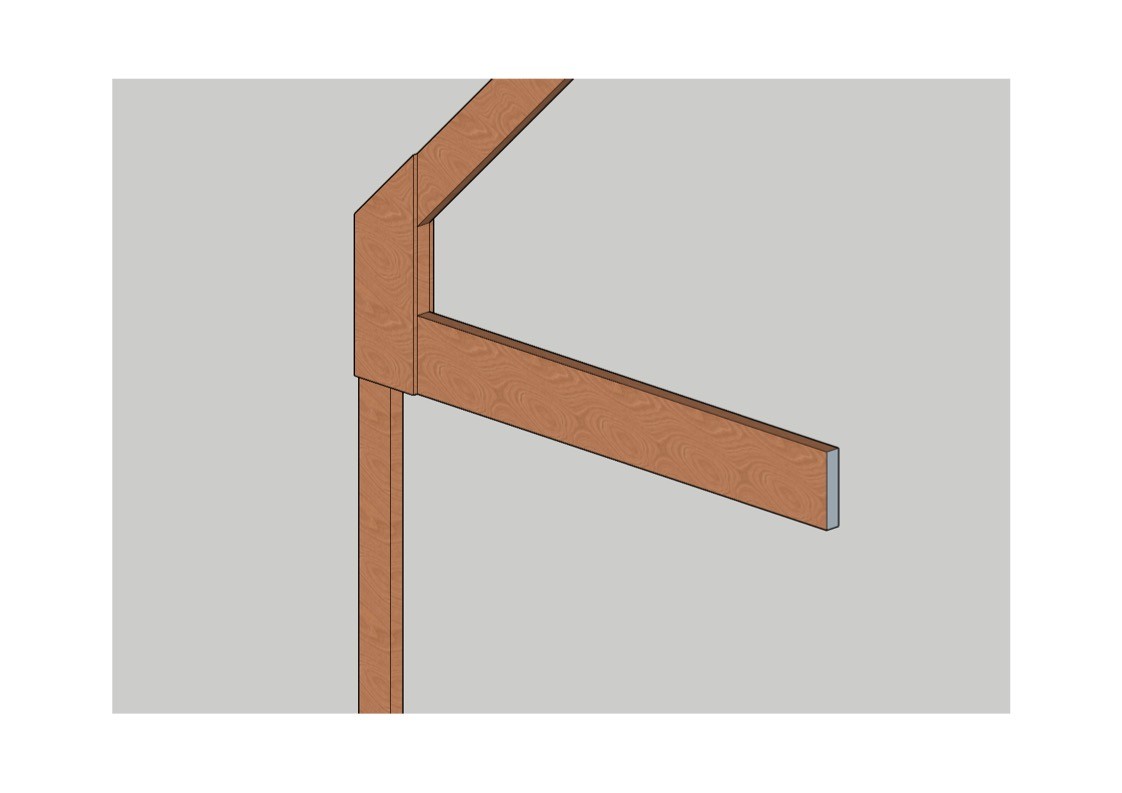
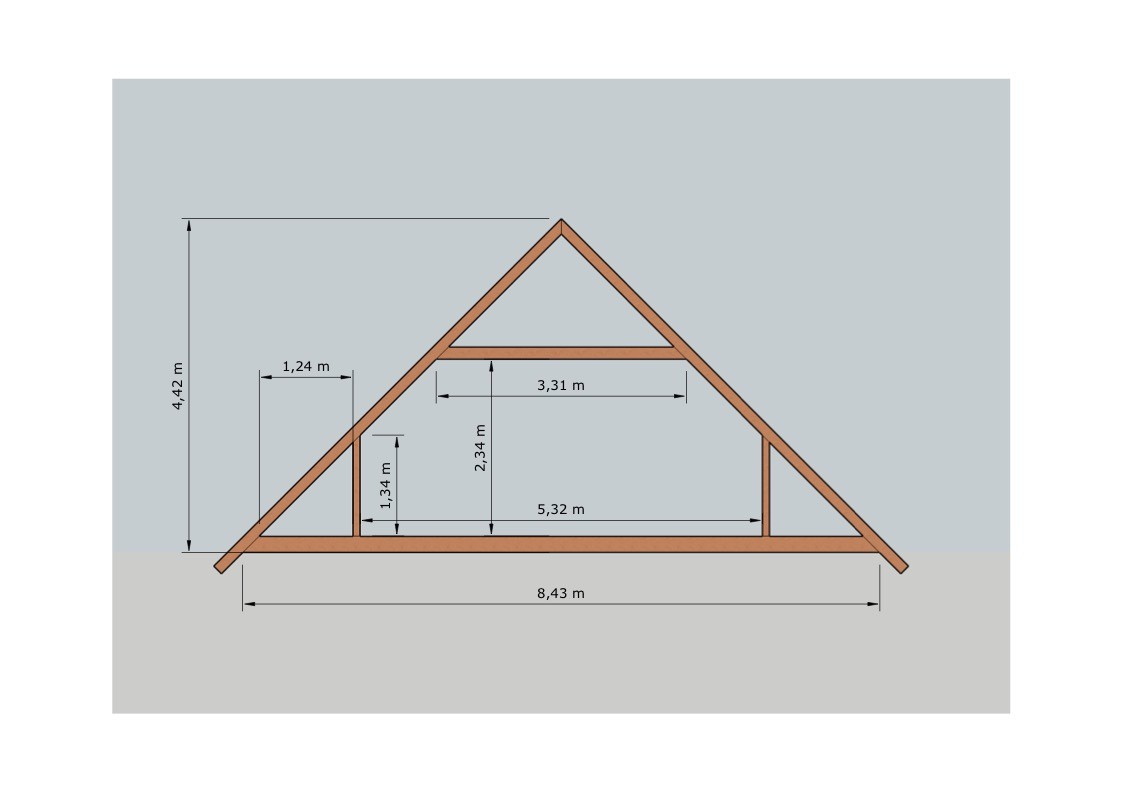
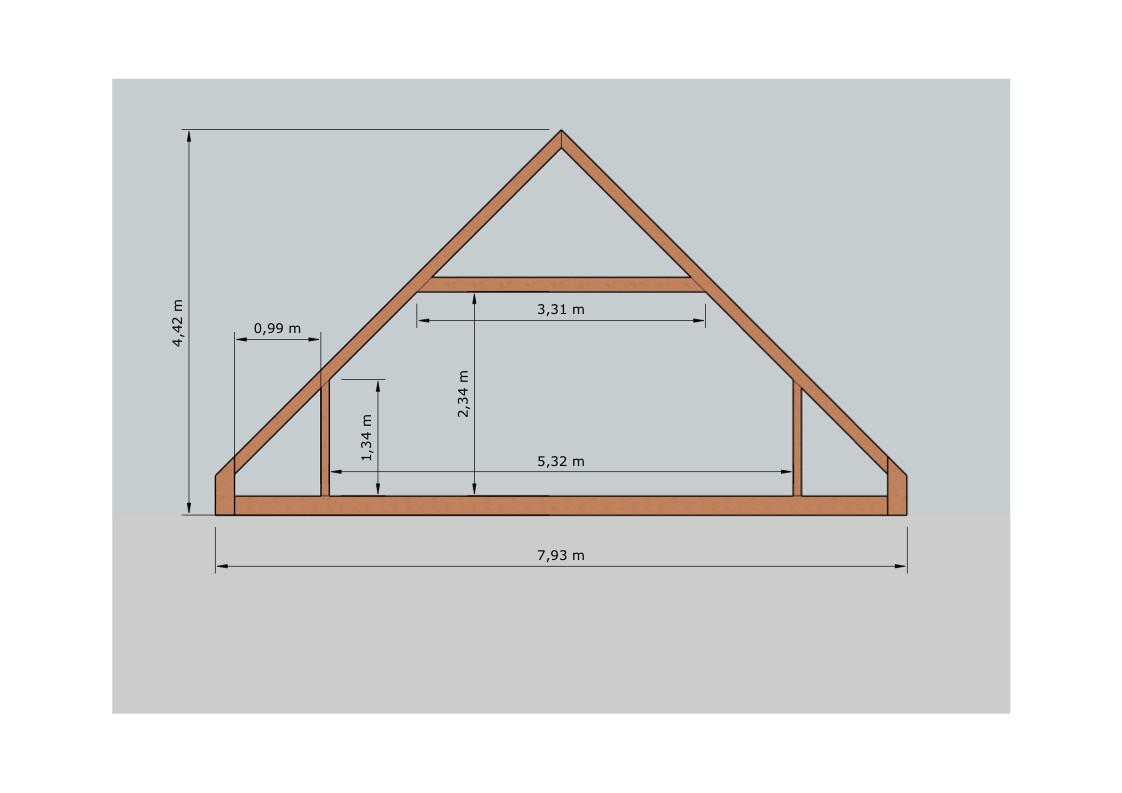
The problem to solve is that the rafter's (truss) upper and lower arms currently meet just outside the exterior walls. I want to change this by adding a wedge and screw-gluing plywood as shown in the images below.
This is how it looks today.
With the wedge.
With the wedge and screw-glued plywood.
Is it feasible? If not, how can I proceed? Let the comments flow and thanks in advance!
The construction you have drawn is not stable and therefore unsuitable. Theoretically, you could extend the vertical studs in the outer wall with splice pieces and let the rafters' top chords meet them, but aren't there any wall plates in the way? Building without eaves is reckless. I can give you several examples of that.
The wall has a top plate, it was just me being a bit lazy when I drew it. I just wanted to show where the outer wall is located in relation to the rafter.
If we disregard the disadvantages of not having an eave, can what I have in mind be carried out?
An honest answer: No. The hammarband is in the way. If you remove it, the wall loses stability. To solve the problem, you need to properly rebuild the trusses and essentially make a new roof.
The reason is purely aesthetic. We want to achieve a more modern design of the house that we like.
So if it's then technically inferior, with more rain on the walls and problematic roof drainage, it plays a subordinate role?
It's not really a modern design. Seems more like the 1930s and 1940s functionalist houses.
Well, I guess I'm old and stupid, not understanding the beauty of a small house without eaves
If it's technically worse, with more rain on the walls and problematic roof drainage, does it play a minor role then?
It's not a modern design anyway. Seems more like the 1930s and 40s functionalist houses.
Well, maybe I'm just old and dumb for not appreciating the beauty of a small house without eaves
I'm aware that it might technically be worse, but the question was if it was possible to make such an alteration to the truss.
Tastes differ, and I can find it nice with or without extended eaves, but in this case, I didn't want them.
I haven't claimed that you're old or dumb; rather, I'm grateful for those of you who take the time to respond
But I also don't understand JustusAndersson's objections to cutting down the roof overhang and reinforcing the connection between the upper frame and lower frame with glue-screwed plywood, and how the top plate comes into play. His brief technical explanation is beyond my understanding.
But I also don't understand JustusAndersson's objections to cutting down the eaves and reinforcing the connection between the upper frame and lower frame with glued and screwed plywood, and how the wall plate plays into this.
His brief technical explanation goes over my head.
No, I don't understand either, but I can't claim to be well-read on the subject, so I eagerly await what JustusAndersson has to say about this
Fun with discussion!
If you disregard the purely aesthetic aspect - which I find difficult to comment on since I haven't seen the house - there shouldn't be any major concerns? The cut in the eaves simply serves the function of channeling downward force from the upper frame to tension in the lower frame. However, I would have chosen a diagonal brace instead of straight plywood sheets.
Vi vill skicka notiser för ämnen du bevakar och händelser som berör dig.



KnockOnWood said:
If it's technically worse, with more rain on the walls and problematic roof drainage, does it play a minor role then?