Nice! Short and concise answer! Damn, that's nice! Now I have all the info to complete the back wall with fabric and stuff. It will probably be finished today! Then it's just the sections left! Thanks for all the help!
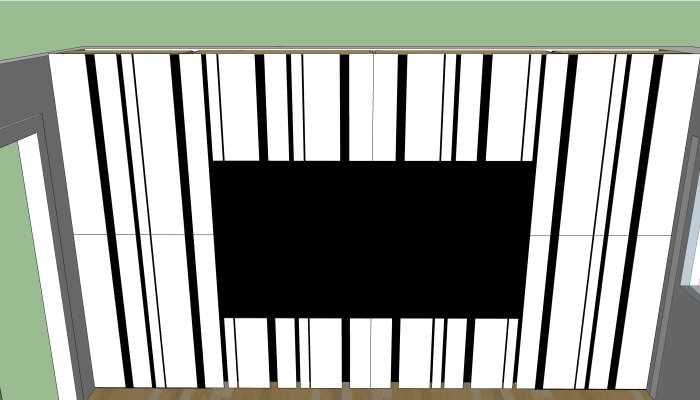
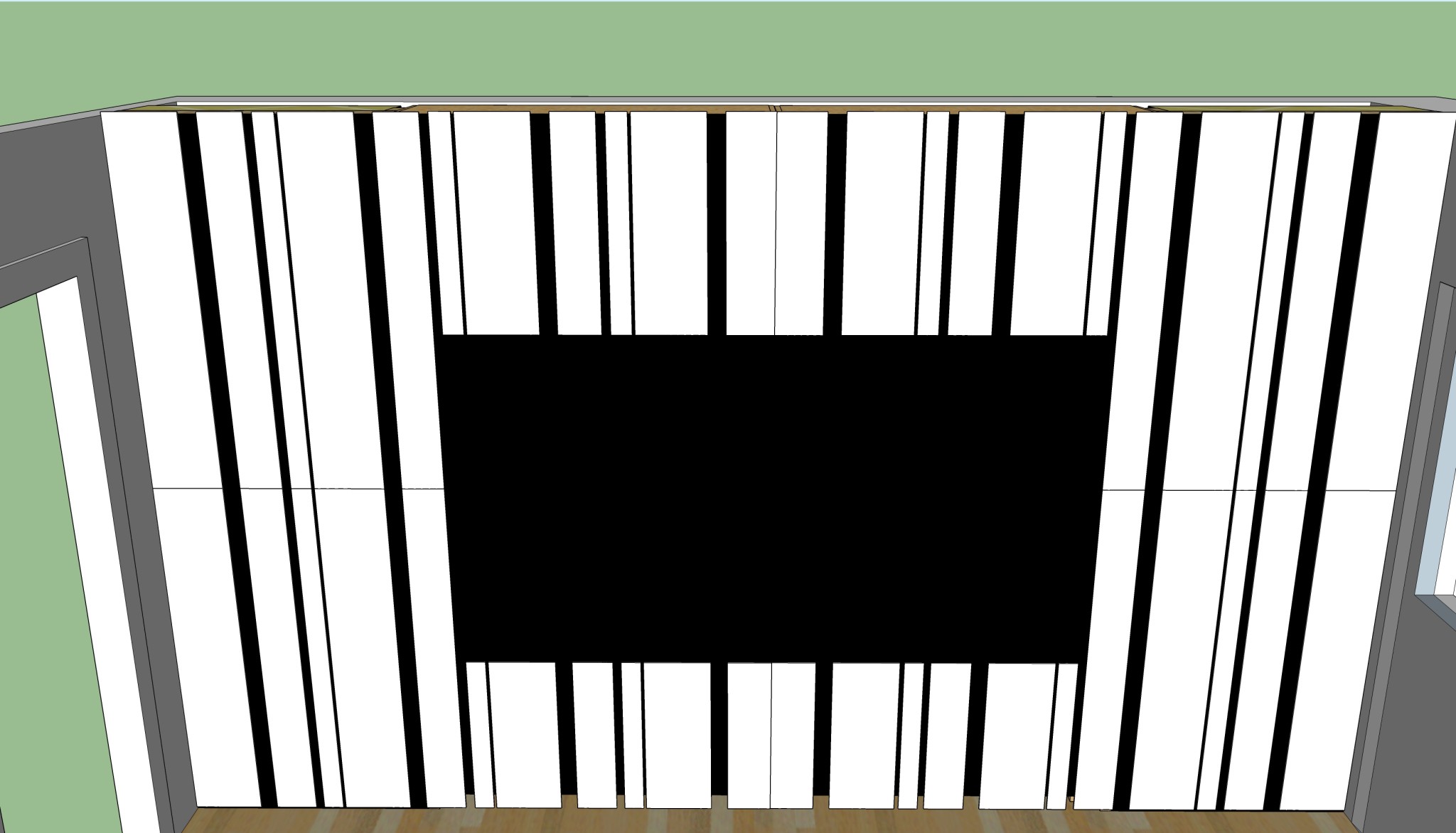
Hello again! A quick question. The fabric stretches over the entire wall, but the slats do not.
That is, in the middle section, there are slats down towards the floor and up towards the ceiling, but in the middle it's just fabric. Is it possible to attach the slats to the fabric? That is, by drilling through the fabric?
Ok! Awesome! So the brad nail goes through the fabric then? I guess I need a brad nailer?
I've put up chicken wire on half of the wall, and it's turning out so bad. It's not even at all and can't be tightened. If I pull on a corner or side, the unevenness just shifts. I'm considering if mason's line is better, but how does that work, do you staple it too, or do you screw in some kind of brackets and attach it? String seems like it could be easier to stretch and get it even.
Hehe now I'm starting another monologue. I'm super thankful that you're helping me!
But would screw eyes work? I'm thinking about screwing a bunch of those into the inside of the studs and zigzagging the masonry string between them. However, I don't know if it's possible to screw in a screw so close to the edge of the stud. It might crack? Or you could pre-drill the hole.
Maybe you could screw it in at an angle into the stud and then tap the eye so it's aligned? Or what do you think?
Can you "sew on" the chicken wire with the masonry string through the insulation and attach it on the back?
Edit: I don't believe in zigzagging with the masonry string, it takes so little force for it to bulge in the middle. (if that's how you were planning on doing it)
If you are careful when cutting the insulation, you shouldn't really need any additional support. You have the spaltpanelen as support afterwards. You can cut strips of the hönsnätet if you find it cumbersome with the whole net. Hålband, najtråd or snöre also work well. You tighten the snöre between screws on the back of the stud.
I have got the fabric up now, the only thing left to do before the wall is finished is to attach the MDF slats. Checked with K-Rauta, they could cut them for me for a bit more than 500. So I'll go with that. I also checked with a painter about the cost to have them painted white and he gave me a quote that was way over my budget, so I plan to do it myself.
Found this video:
He is using a "wood primer undercoat" and then a "gloss or satinbased topcoat". The question is, what is this in Swedish? Which products should I look for?
I'm not finished yet, but the fabric is up and the only thing left is to paint and place the spalterna, I will do this after Christmas though, I have too much to do until then. But it already sounds really good in here now. And with the spalterna, it will be even better!
This is how it looks now:
The seams will be covered by the spalterna.
/Jens
Hello! I'm about to get the first panels painted. Now I want to set them up. A few questions!
What nails should I use? Is 2 mm enough? Can I just nail directly into the MDF or do I need to pre-drill first? Should I reinforce the fabric with extra staples where the nail holes will be, or does it matter?
/Jens
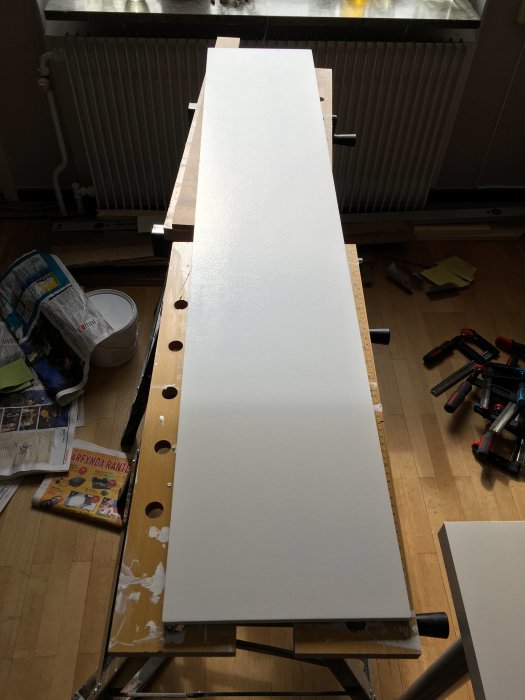
Awesome! Thanks for the reply! How many do you think are needed per column? Some columns are 240x1260mm (picture below). Do I need two at each end or is one enough?
Vi vill skicka notiser för ämnen du bevakar och händelser som berör dig.


 Damn, that's nice! Now I have all the info to complete the back wall with fabric and stuff. It will probably be finished today! Then it's just the sections left! Thanks for all the help!