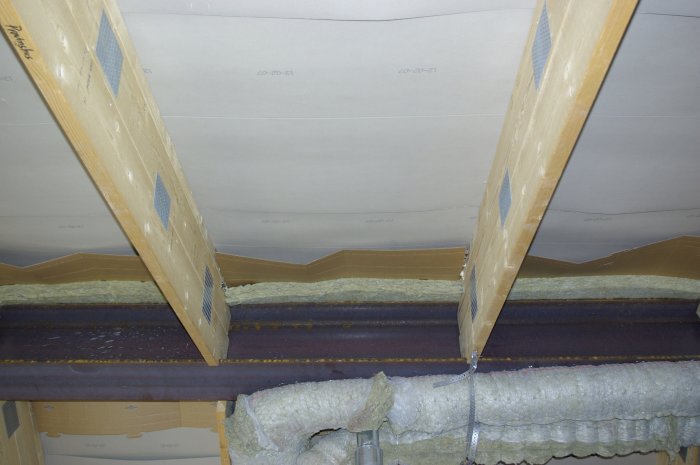
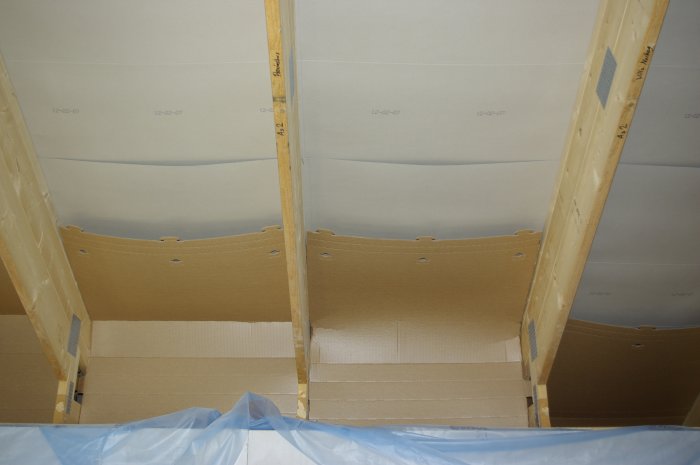
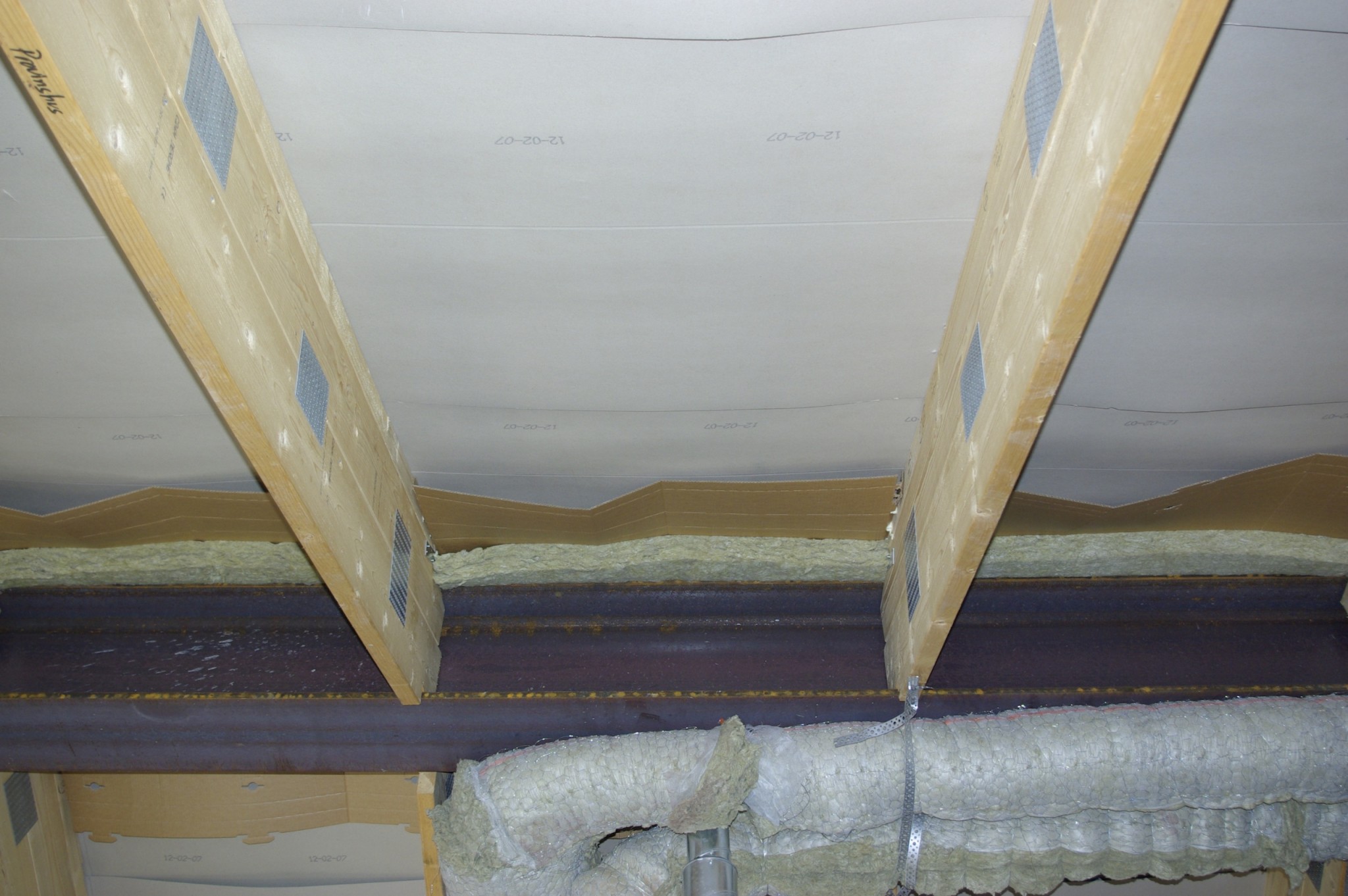
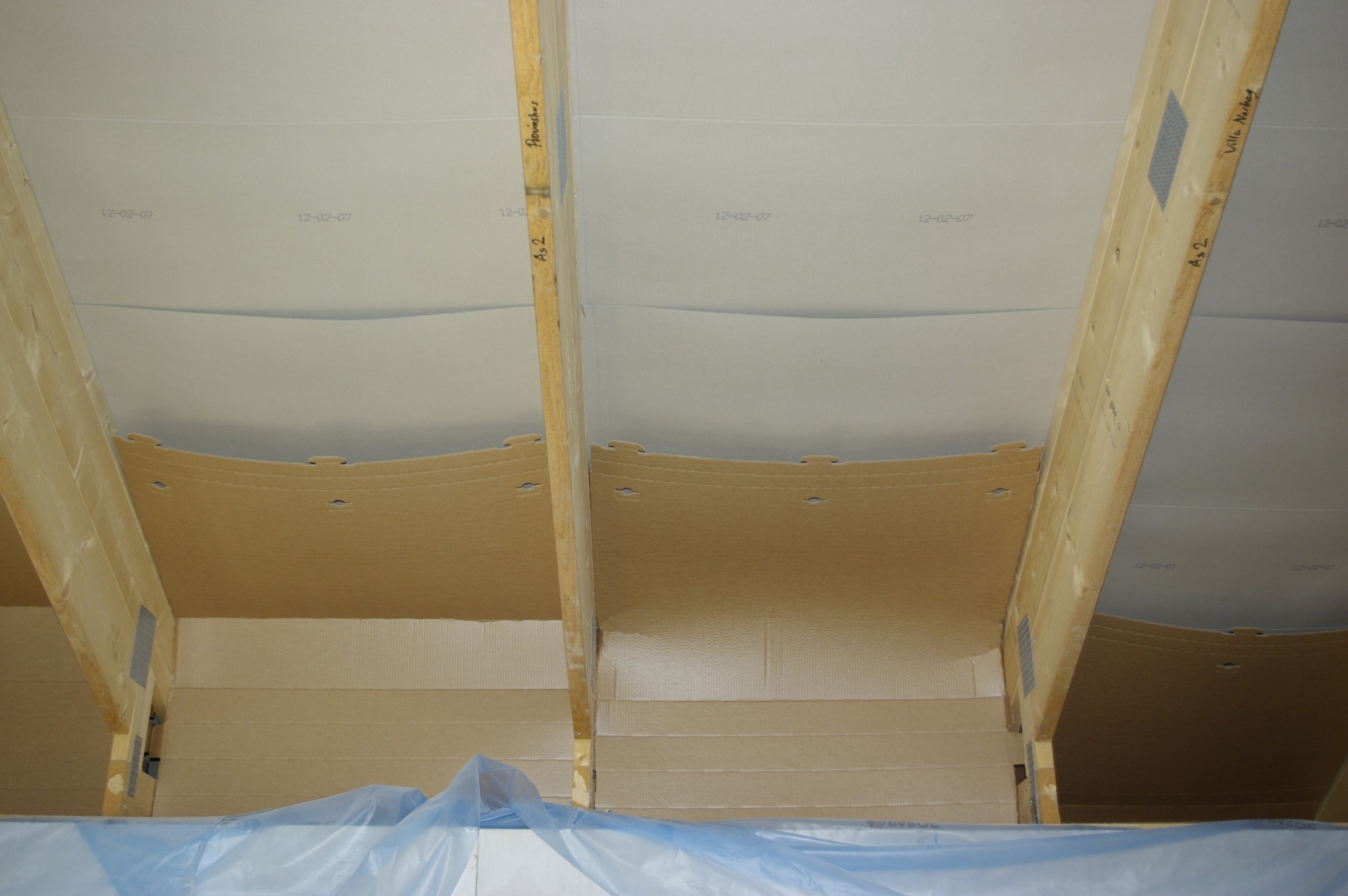
My friend and I are about to build a couple of the non-load-bearing interior walls on the upper floor of a two-story house (new construction). The ceiling insulation and a couple of the larger walls are being done by a company.
Background: 23-degree roof pitch. Lightweight concrete outer walls, and a steel beam at the ridge. The construction company will build a 20 cm air gap and then 30 cm board insulation between the rafters. On the rafters, they will then place a vapor barrier, battens, 10 cm insulation, and gypsum board.
We, of course, need to attach our interior walls to the rafters in some way before the company adds the gypsum board.
We're a bit uncertain about the construction but thought it could be done like this:
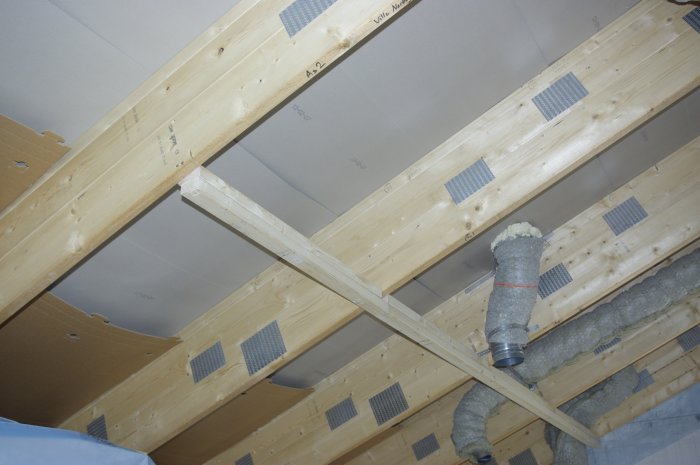
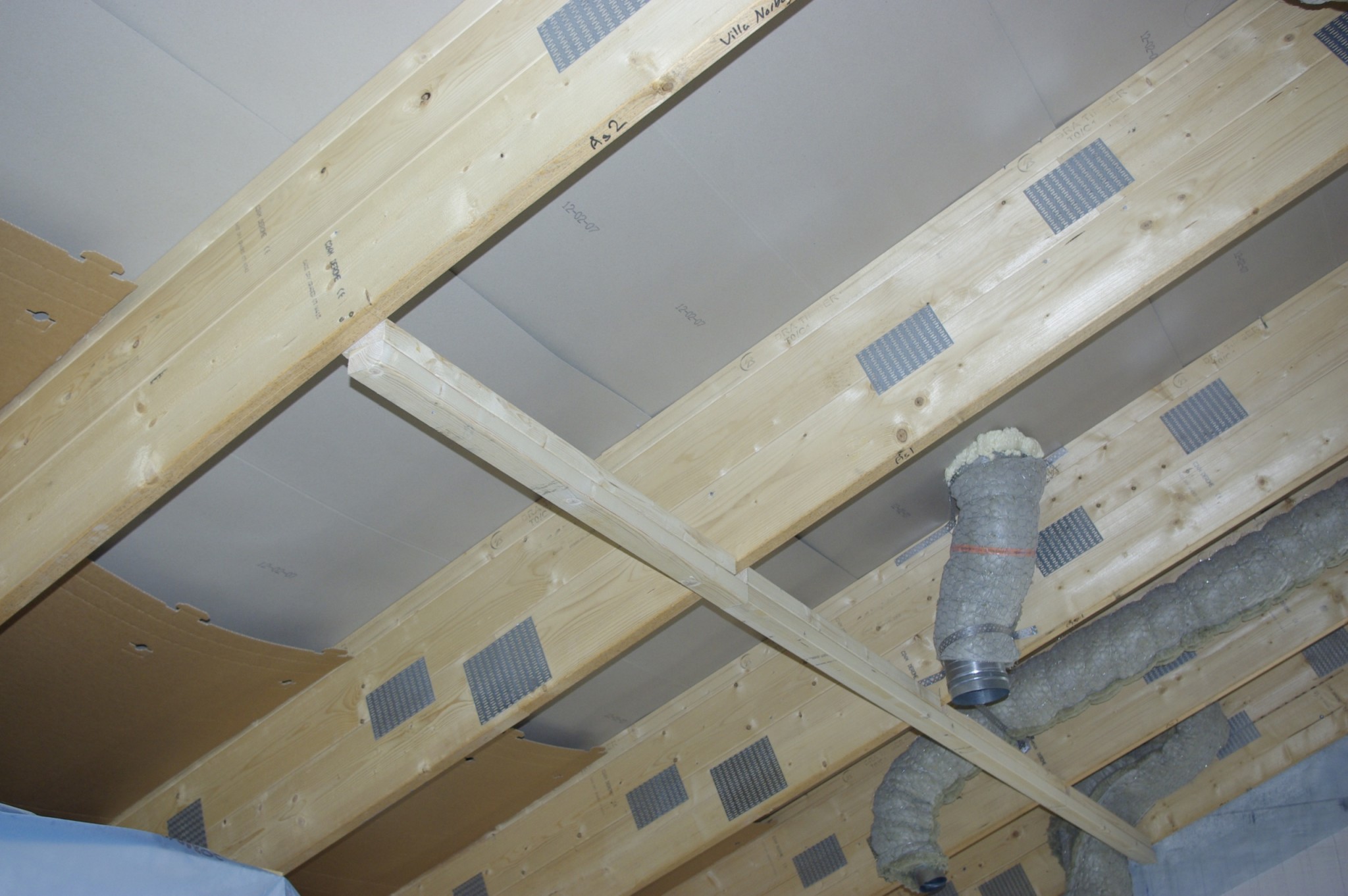
A wooden beam needs to be laid from the lightweight concrete outer wall to the steel beam at the ridge, at the same level as the rafters, where the wall will go. We thought of using the same wooden beams used for the intermediate floor (45x220 I believe) - concerning length, I think they fit perfectly. (I hope they are not too large and cause any issues for the company)
We need to anchor the beam to the rafters with cross battens and angle brackets.
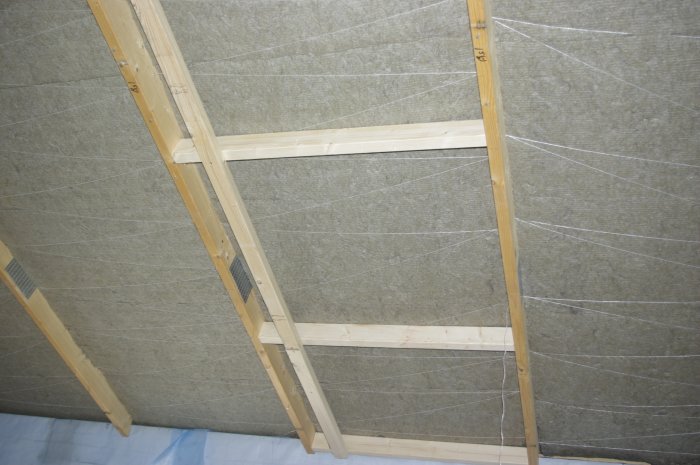
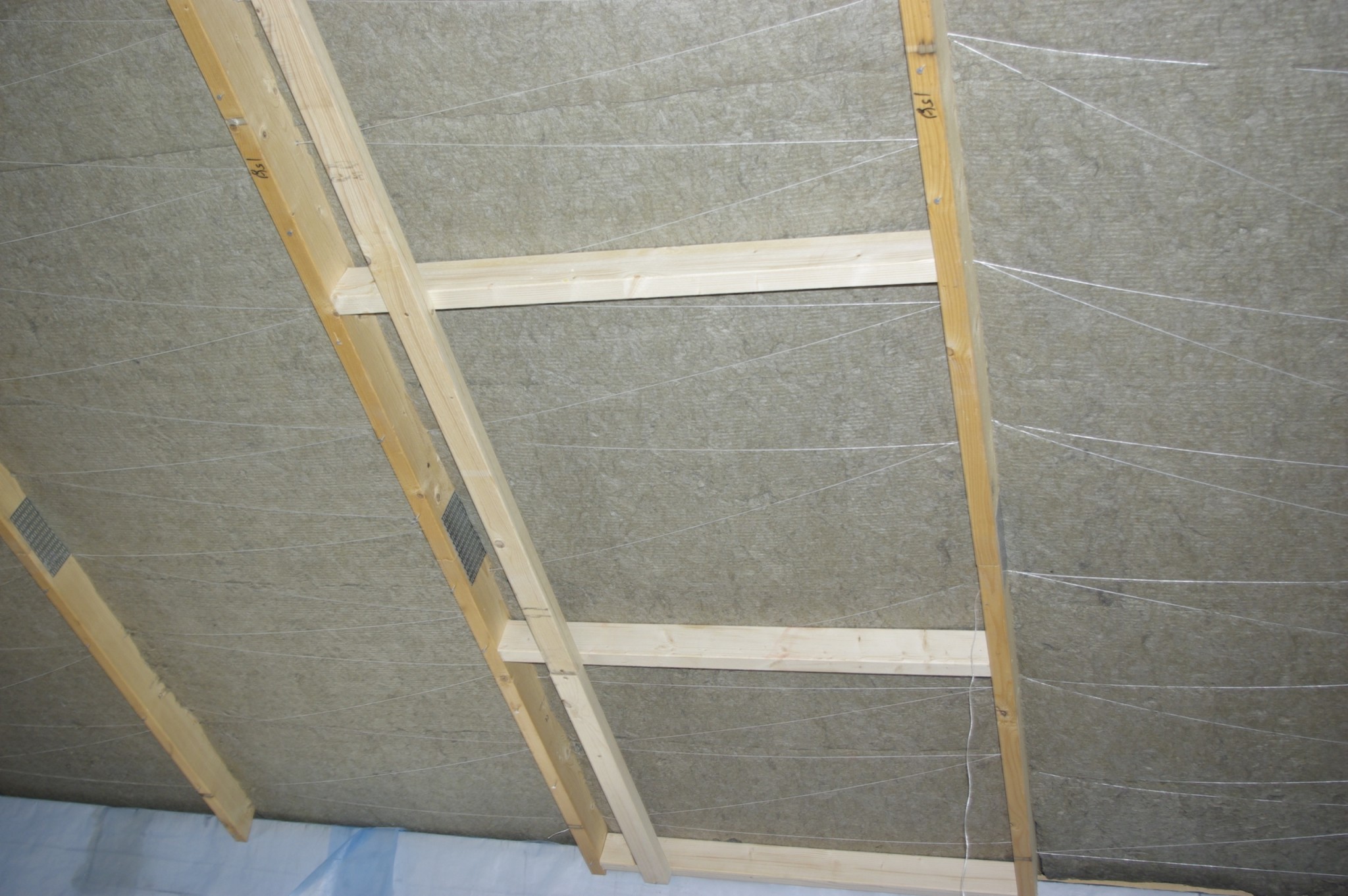
Then we would build a rectangle with battens for the part that is at the bottom towards the floor, and on top of that, fill with battens in the "triangle," with appropriately sized distances between the battens for insulation and to attach OSB boards and gypsum later.
Does this sound reasonable? Any tips and suggestions? Easiest to use wooden battens here, right? Dimensions?
If I understand it correctly.
Wait to attach the wall until the construction company has installed the framing, or even drywalled.
If you want to do it before, mount something like 45x95 between the rafters, on edge about 90-120mm apart.
Then attach the top plate to those.
Skip angles and fasteners, drive in 2 4" nails through the rafter into the end of the beam.
But the construction company will definitely have a bit more to do, as there will be more work with the plastic, framing, and drywall.
Östlund, do you mean that the 45x95 studs should be mounted so they line up with the rafters, or should they sit further in? The insulation outside the rafters is supposed to be 10 cm thick - does that mean that the wall plate (the uppermost stud above the wall) should also ideally be 10 cm thick?
Missed that you were going to have 10cm of insulation too.
Hmm,
Why 20cm air gap? Not 20mm?
How are you planning to extend an additional 10cm on the rafters downward?
Are you just adding 45x95 on the rafters and then sparse paneling on that as usual?
It's that construction company that handles the insulation. The air gap is so wide because the rafters are so deep. (if we had a small air gap against the outer roof, it would instead create another air gap further in, since we insulate with panels)
I might have mentioned something about the height of the sloped ceiling. It goes from 2.25 m on the light concrete outer wall to 4.0 meters at the steel beam in the ridge.
We started setting up noggings between the rafters, but the inspector who was there for something else said that we at least needed to remove the top plates we had installed because they stick out and interfere with the upcoming installation of the vapor barrier. He seemed to think it would be better if we mounted the walls after the ceiling is plastered.
The company installing the insulation and plastering the ceiling will use steel profiles/studs to attach the plasterboard and not the usual battens (which perhaps the inspector thought). (as mentioned before with an additional 10 cm of insulation on the rafters)
We would prefer to build the partition walls after the plastering is done, but it might be good to have the noggings and top plates within the insulation, providing more to screw and attach to than just the steel ceiling profiles holding the plasterboard. What do you think? What is best for us to do?
Let them finish plastering as I wrote in the previous post. There is absolutely no problem attaching the wall plate after the plastering is done. I guess the steel studs will run horizontally, and in that case, there are no problems. If not, you can throw in some noggings of plywood between the steel studs before they put up the plaster. Right where the wall is intended to go.
Click here to reply
Vi vill skicka notiser för ämnen du bevakar och händelser som berör dig.