
2,097 views ·
6 replies
2k views
6 replies
Building Ceiling and Cladding Walls
Hi!
I'm renovating for a new kitchen and living room with an open floor plan. I'm basically done with the demolition and will start building the ceiling and covering the walls.
I'm planning to lower the ceiling by 70 mm with 45 x 70 that I'll attach 13 mm gypsum to, then plaster and paint. For the walls, I'm planning to make grooves for new electrical wiring and then place 6 mm renovation gypsum directly on top of the wood.
Two questions have come up that I'd like to get help with.
Firstly, should I install a vapor barrier on the ceiling and walls before I begin framing? I hadn't planned to originally, but after binge-watching various renovation videos on YouTube, I see it's often installed on both ceilings and walls. We've had mold issues in the attic space above the living room, likely because we've replaced the pellet boiler with geothermal heating and renovated the bathroom on the middle floor, adding a shower that was previously only in the basement.
Question two. Should I frame the walls and use 13 mm gypsum instead of my initial plan to place renovation gypsum directly on the existing surface? My father-in-law thinks I should frame the walls.
The house is 1.5-story with basement built in 1952. The renovation is happening on the middle/entrance floor.
Any advice would be greatly appreciated!
I'm renovating for a new kitchen and living room with an open floor plan. I'm basically done with the demolition and will start building the ceiling and covering the walls.
I'm planning to lower the ceiling by 70 mm with 45 x 70 that I'll attach 13 mm gypsum to, then plaster and paint. For the walls, I'm planning to make grooves for new electrical wiring and then place 6 mm renovation gypsum directly on top of the wood.
Two questions have come up that I'd like to get help with.
Firstly, should I install a vapor barrier on the ceiling and walls before I begin framing? I hadn't planned to originally, but after binge-watching various renovation videos on YouTube, I see it's often installed on both ceilings and walls. We've had mold issues in the attic space above the living room, likely because we've replaced the pellet boiler with geothermal heating and renovated the bathroom on the middle floor, adding a shower that was previously only in the basement.
Question two. Should I frame the walls and use 13 mm gypsum instead of my initial plan to place renovation gypsum directly on the existing surface? My father-in-law thinks I should frame the walls.
The house is 1.5-story with basement built in 1952. The renovation is happening on the middle/entrance floor.
Any advice would be greatly appreciated!
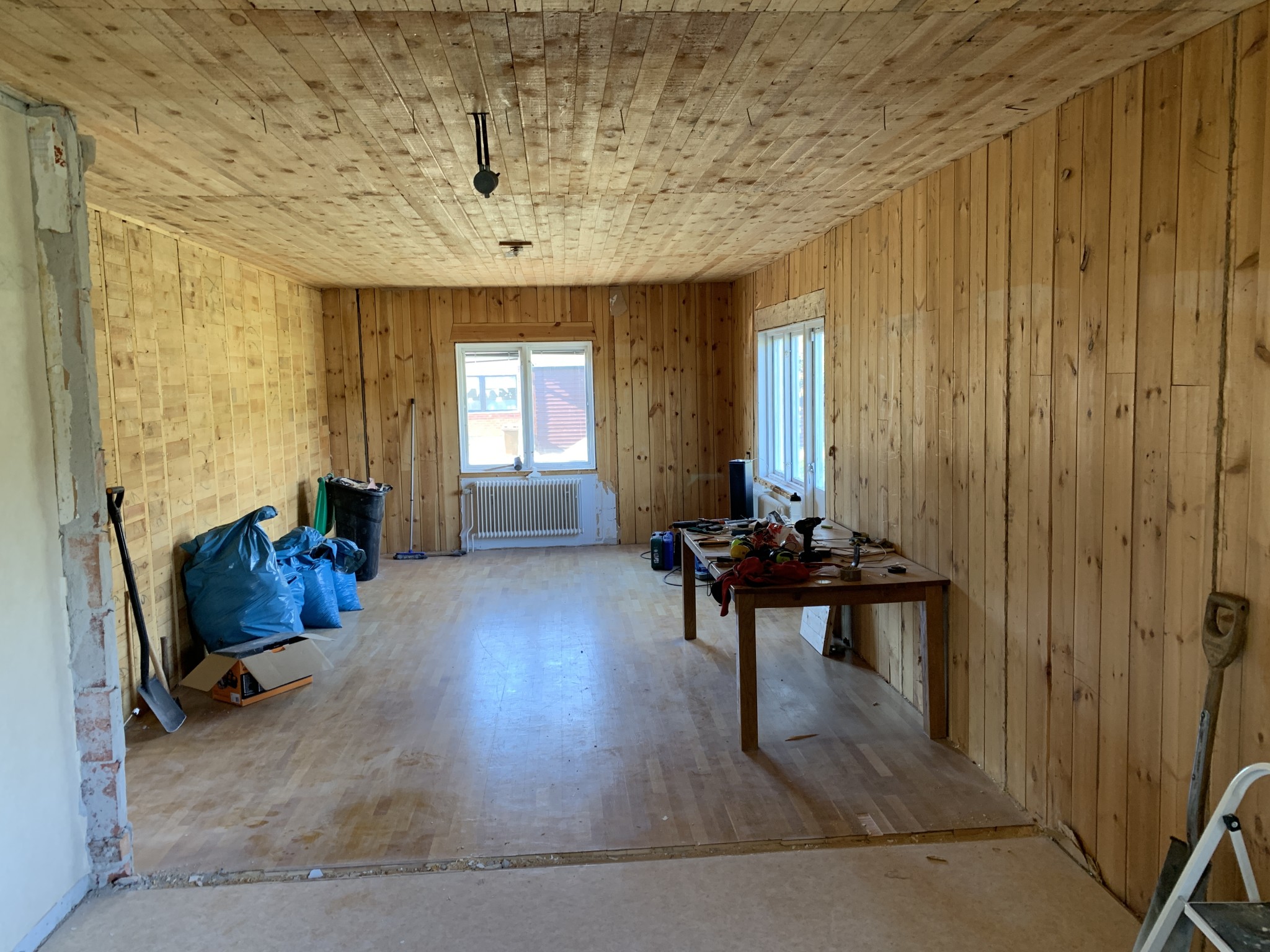


Why lower the ceiling? Install ceiling panels directly without plastic. Risk of cracks at joints if you install gypsum, wood moves. Plus a lot of blasted work with sanding, plastering x 3. If the walls are straight, thin gypsum is enough, no plastic.
Will lower to facilitate new electrical wiring and install spotlights.
Run surface-mounted spots or something instead, recessed is overrated and a lot of unnecessary work and money down the drain if you ask me. It's also possible to mill for cable in the raw boards in the ceiling.

Electronics enthusiast
· skåne
· 712 posts
If you're going to have spotlights, embed them and preferably no ceiling panel.
Now there are many different opinions, so here is my solution!
Ceiling
Space out the ceiling with 28x70. Now you have room to reroute some wiring to new junction boxes (from the old ones you have in the ceiling). Skip the plastic.
In the battening, you then attach the ceiling panel. CC60 is more than enough for the ceiling panel. If you buy pre-painted and dried, it will move minimally!
Wall
If you want to take the opportunity to add insulation or install new junction boxes, go with 45x45, otherwise, you can make a frame out of 28x70. This way, you can measure to ensure the corners for the kitchen are straight, neat, and nice. I would use OSB behind the surface layer (Gypsum or Panel).
Ceiling
Space out the ceiling with 28x70. Now you have room to reroute some wiring to new junction boxes (from the old ones you have in the ceiling). Skip the plastic.
In the battening, you then attach the ceiling panel. CC60 is more than enough for the ceiling panel. If you buy pre-painted and dried, it will move minimally!
Wall
If you want to take the opportunity to add insulation or install new junction boxes, go with 45x45, otherwise, you can make a frame out of 28x70. This way, you can measure to ensure the corners for the kitchen are straight, neat, and nice. I would use OSB behind the surface layer (Gypsum or Panel).
Click here to reply