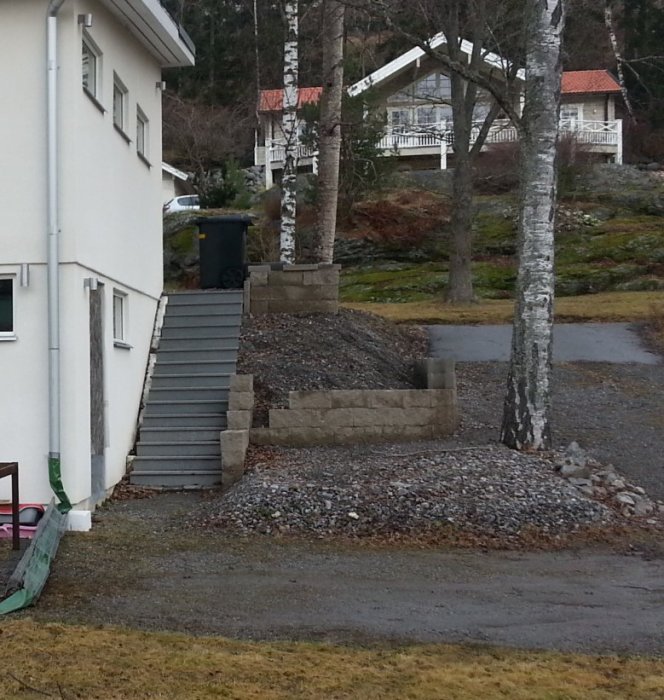
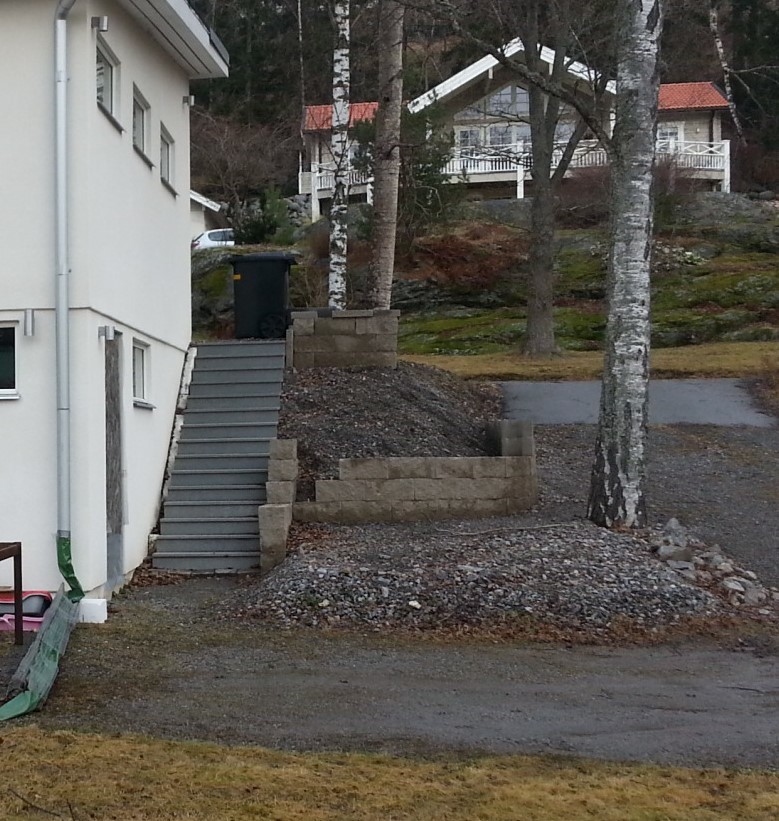
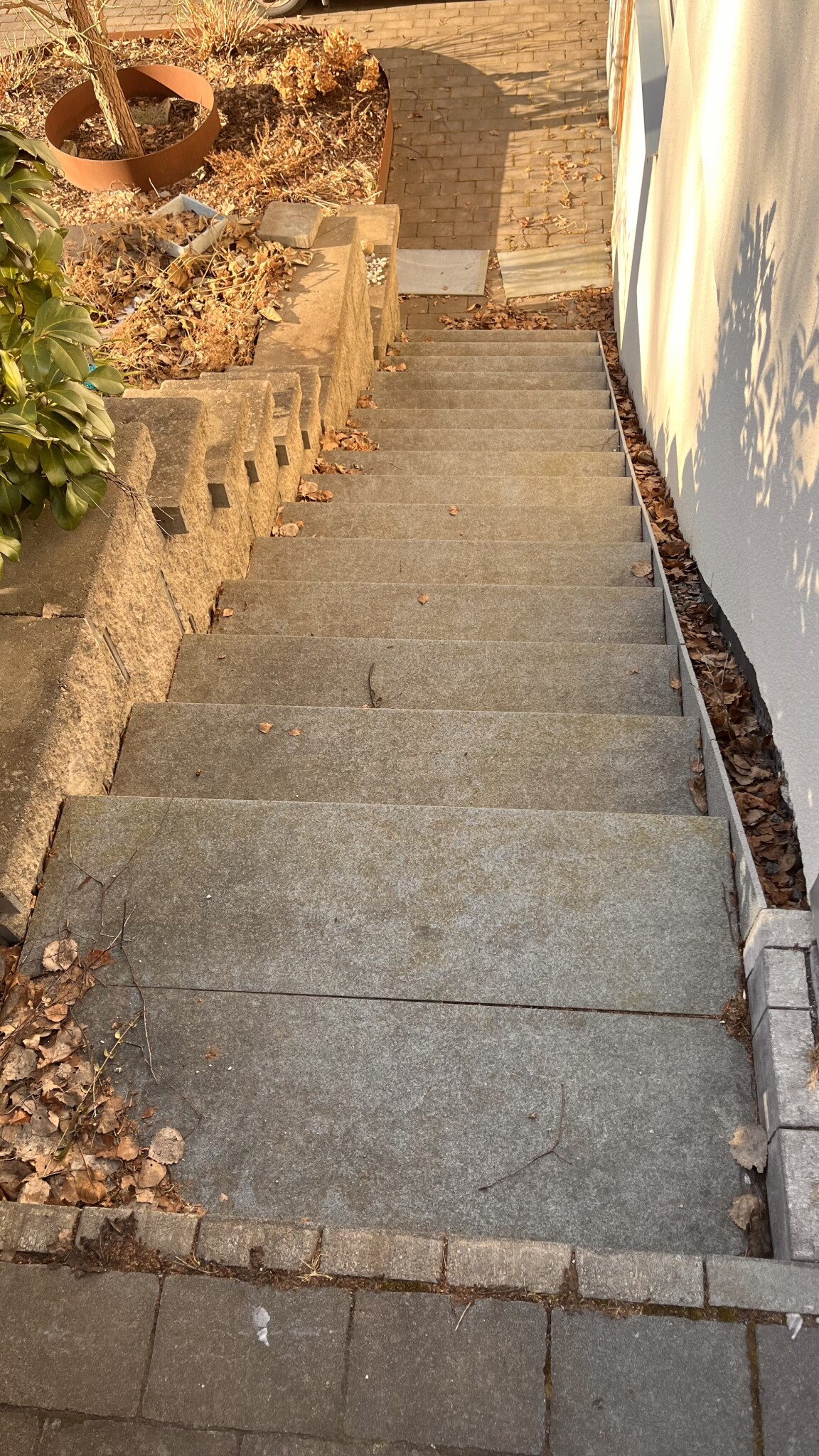
At home, we have built an entrance staircase in wrought iron, with granite slabs (30mm) on the steps. It is completely OK. But then I laid similar granite slabs all the way out to the street, with regular paving stones beside. Since I wanted to ensure that the granite slabs would sit well, I cast a concrete slab of 100mm where the slabs are, and to reduce the risk of frost heave, I placed styrofoam beneath the concrete slab.
This has had the unintended effect that when it gets a bit cold outside, we immediately get ice formation on the granite towards the street, where one is supposed to walk. Meanwhile, it is bare and dry on the regular paving. This is because there is usually heat from underneath that keeps it ice-free until it becomes real winter. But where the styrofoam insulates, the stone cools down very quickly.
Not thinking about EPS concrete but EPS styrofoam.
Slipperiness can be a good point... Maybe installing electric heating cables is a good idea. Living in southern Sweden, so not many days with frost anymore....
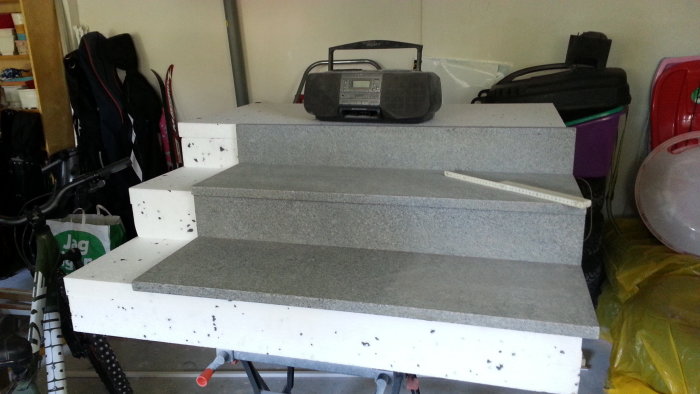
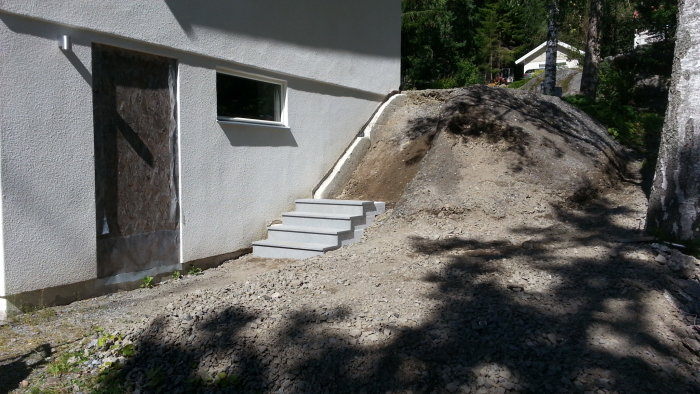
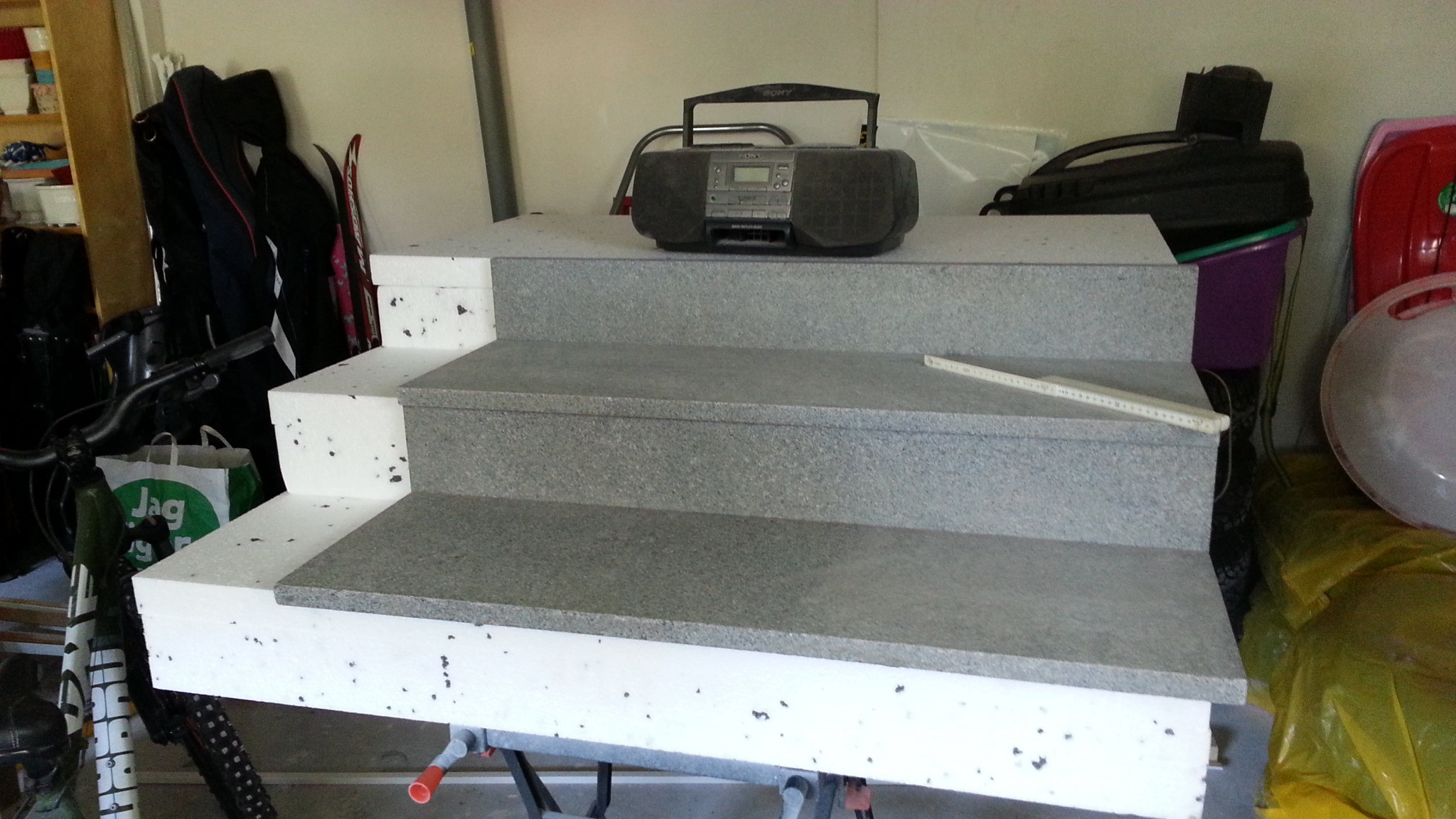
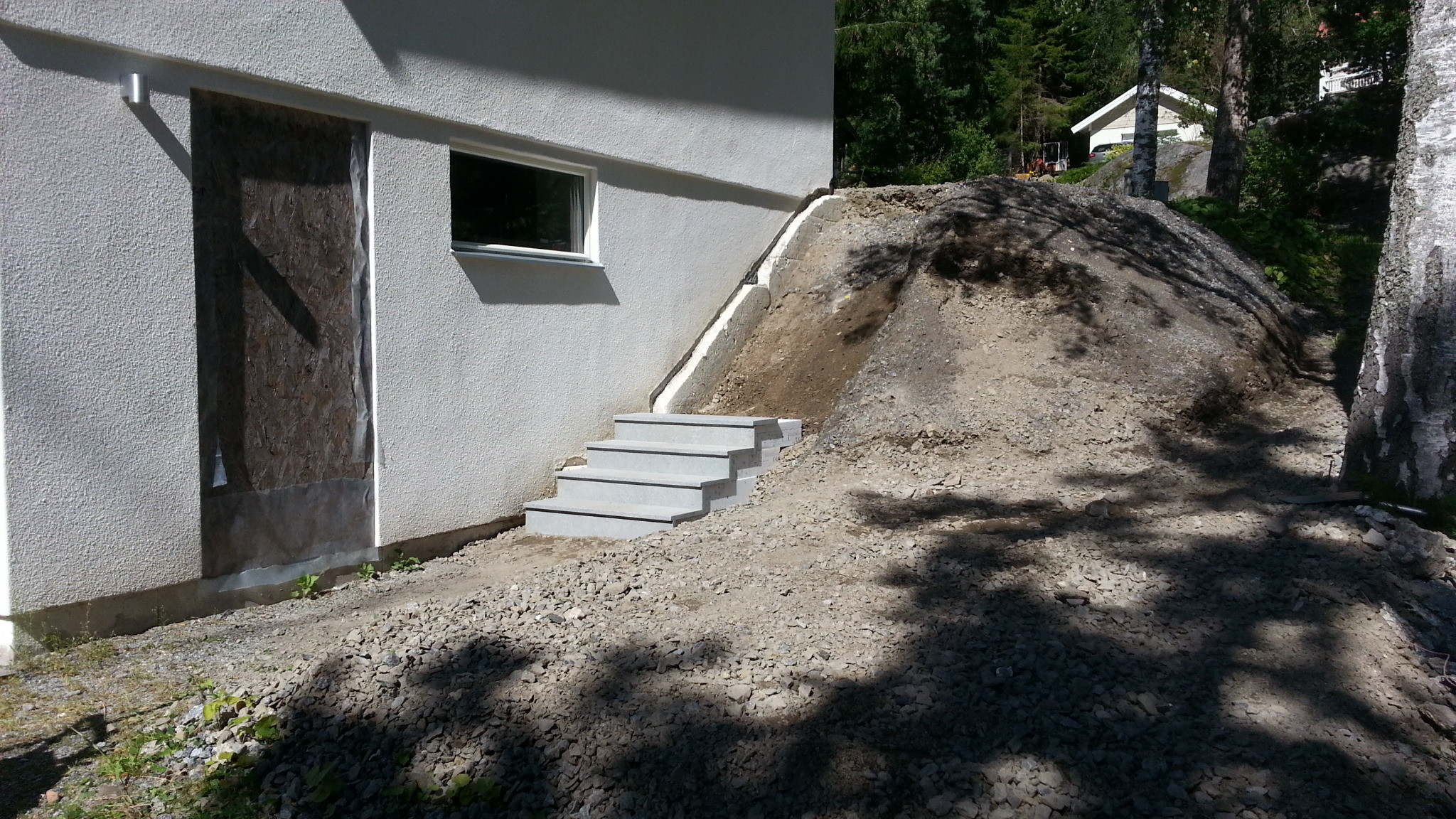
Built a staircase last season using EPS and granite tread. The purpose was to see if it was possible to avoid formwork and the heavy process of concrete. The construction has survived a rainy autumn and a winter with fairly low temperatures. A 100 mm EPS board + a 50 mm board make up the step, and it fit well with the 150 mm riser. Glued the EPS with stone adhesive (a polyurethane foam) and the granite with PL200. Don't know if it has been the cheapest solution. Around 600 SEK per step, but compared to hiring a professional to make the staircase, it's probably "cheap." The drainage from the steps was a bit tricky, but it was possible to manage. Haven't had any problem with ice on the steps other than what you generally have on driveways, entrances, sidewalks, etc. The construction is light and, in my opinion, sufficiently sturdy for the purpose. The foundation is, as usual, important and must remain stable for all the years the staircase is used. I should point out that the feeling when walking on the staircase is different from one cast in concrete. The footstep sound becomes prominent. Attaching some pictures of a still unfinished project... Next season I plan to build a wider staircase but with fewer steps in front of the house entrance
Really nice and smart. How has it held up, and how did it go with the entrance stairs that you were going to do in the same style? I have a similar project underway and it would be great to see how it went for you and how you did it.
Built a staircase last season in EPS and granite tread covering. The purpose was to see if it was possible to avoid formwork and the heavy task of concrete. The construction has survived a rainy fall and a winter with quite low temperatures. A 100 mm EPS board + a 50 mm board make up the step, and it fitted well with the riser steps at 150 mm. Glued the EPS with stone adhesive (a polyurethane foam) and the granite with PL200. I don't know if it's been the cheapest solution. Around 600 SEK per step, but compared to hiring a professional to make the staircase, it's probably "cheap". The drainage from the steps was a bit tricky, but it was achievable. Have not had any problems with ice on the steps other than what is generally on the driveway, entrance, sidewalk, etc. The construction is light and, in my opinion, sufficiently durable for the purpose. The substrate is, as usual, important and must remain stable throughout all the years the staircase is to be used. I should point out that the feeling when walking on the staircase differs from one cast in concrete. The footstep sound is more pronounced. Attaching some pictures of a still unfinished construction... Next season, I'm planning to build a wider staircase but with fewer steps in front of the house entrance [image] [image] [image]
Fun construction!
It's probably important to have good drainage underneath so it doesn't float away if it gets wet.
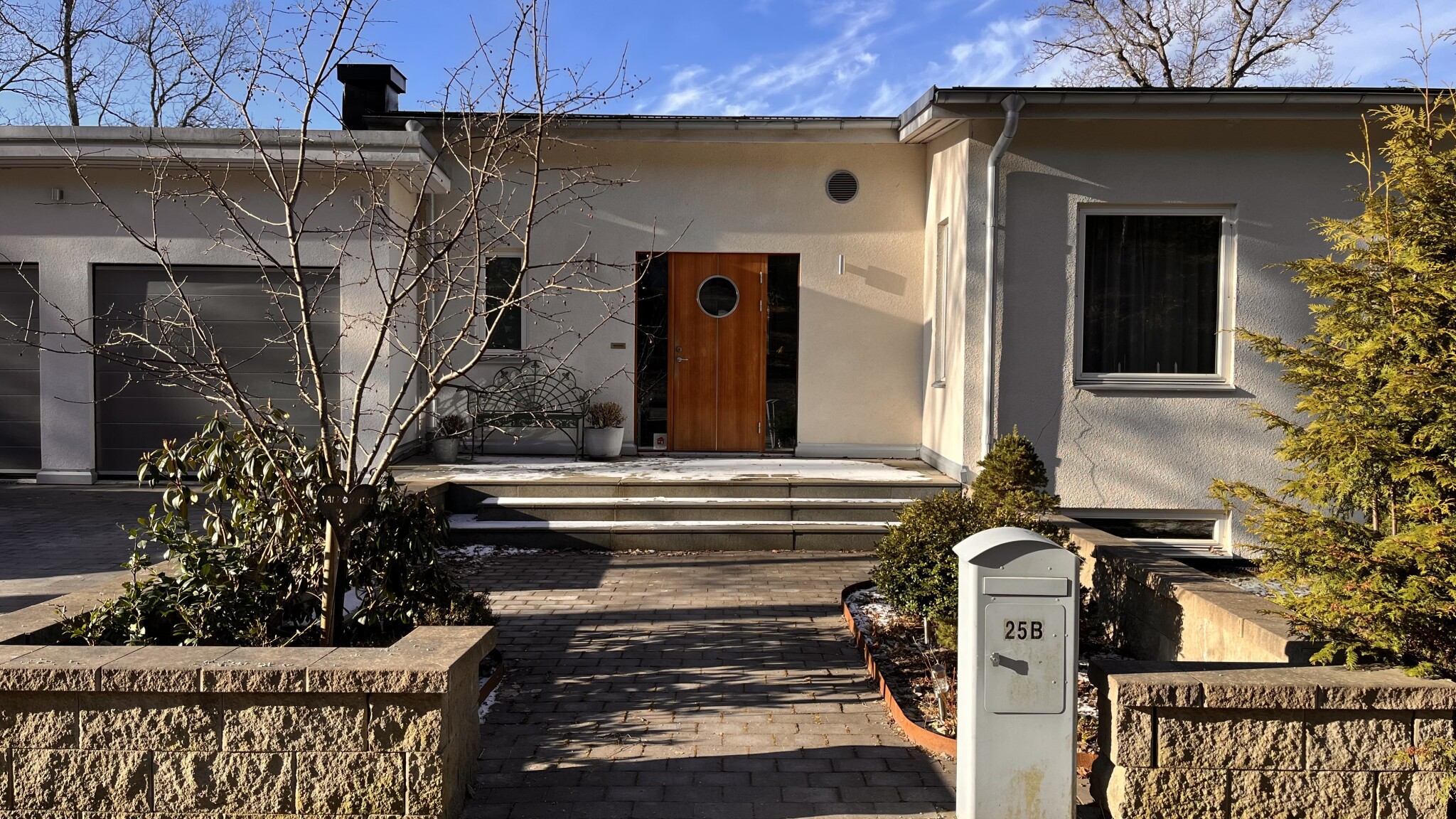
Fun that someone noticed my post. I've been waiting for about 8 years. 😀 The staircase next to the garage is still standing and works excellently. In front of the entrance, there is a similar construction since 2017. It also works excellently except for one point. I covered the landing with tiles, 600x400x20, and I haven't succeeded with the grout. I chose a grout that became hard after it dried. That grout broke into small pieces that I had to remove and replace with grout sand. The grout sand has performed better but needs to be refilled occasionally. The staircase and landing lie on a compacted bed of 0-15 if I remember correctly. The height inside at the front door that needed to be built up was around 700-800mm. The bed has a slight incline away from the house for good drainage. I built with EPS boards t=100mm, but the last layer consists of 50mm XPS to provide a more rigid surface for the tiles. I glued the board material together with stone adhesive and the tiles to the XPS with a mounting adhesive (polyurethane based). If I were to summarize it all, it probably turned out quite well. It might be a little easier to build stairs and landings this way compared to form and concrete. Perhaps cheaper, I haven't investigated further. I'm pondering a curved staircase in the garden, but there's always something else to do.
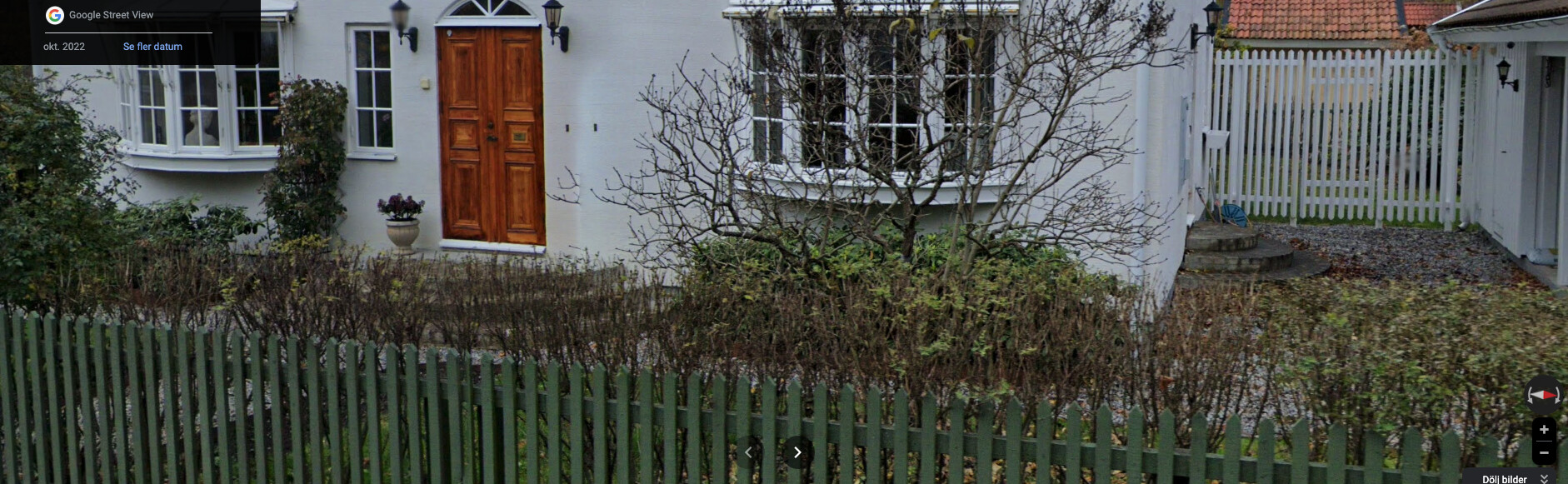
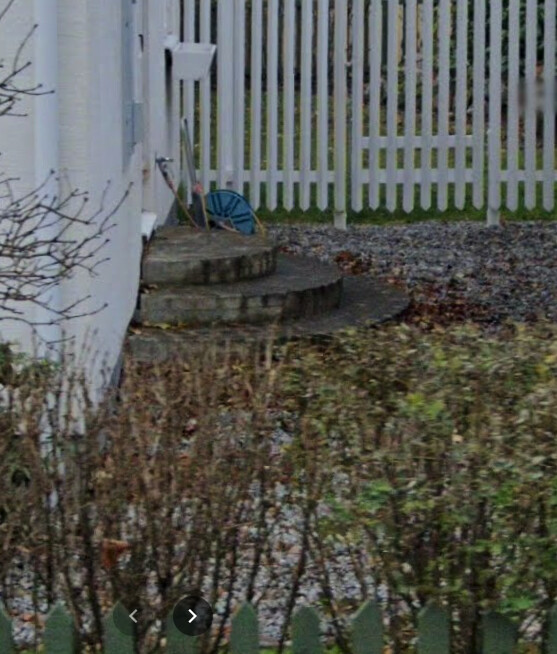
More than 30 years ago, I built semi-circular stairs with three steps made of small concrete stones (Rustik from St Eriks). The stones were actually intended as paving stones where circular patterns were desired. I also had problems with the joints and the underlying mortar cracking/frost-heaving after a few winters. But roughly 10 years ago, I reset a few outer rows that had been blasted away and grouted everything instead with EPS concrete. It has worked very well because the EPS can accommodate some movement.
The pictures are so-so; you can see two of my three stairs, these are the ones exposed to rain that were problematic.
Click here to reply
Vi vill skicka notiser för ämnen du bevakar och händelser som berör dig.