
1,876 views ·
6 replies
2k views
6 replies
Builder accidentally drilled into the foundation slab
I have created a new bathroom in the basement in a space that was previously just an empty room. When the builders started the work, they began chiseling to install the drainage pipes. I came in when they had chiseled part of it and noticed that they had gone deep enough to expose part of the foundation slab (saw rebar protruding, for instance).
Before the project started, I talked to a structural engineer about possibly chiseling down the entire floor to get higher ceiling height in the whole space. The current height is 215 cm, and I wanted to achieve a standard ceiling height of 240 cm. But his recommendation was that the foundation slab should not be removed, as it was load-bearing for the house, and he recommended not to make any interventions at all. So I abandoned that idea.
However, when I saw the chiseling for the drains, I mentioned this to the builders, and they said they would cast back with rebar so the slab would be whole again.
My question is as follows: Could this have created problems for the house's load-bearing capacity and foundation by doing so? Is it really possible to "fix" an intervention in a foundation slab this way by casting the hole back with new reinforcement? Showing an image of how it looked when they had chiseled. If not - what is the recommended action to fix this?
The question arises after I've noticed many cracks on the walls around the basement floor. However, this may be related to a beam installation in the same space where we removed a bearing wall and installed a steel beam. The cracks are almost on all walls, even on the other side of the house from where the beam installation occurred. We are now trying to determine the cause of this, and the thought of the foundation slab came up as a potential reason. The beam installation was done according to construction drawings.
Before the project started, I talked to a structural engineer about possibly chiseling down the entire floor to get higher ceiling height in the whole space. The current height is 215 cm, and I wanted to achieve a standard ceiling height of 240 cm. But his recommendation was that the foundation slab should not be removed, as it was load-bearing for the house, and he recommended not to make any interventions at all. So I abandoned that idea.
However, when I saw the chiseling for the drains, I mentioned this to the builders, and they said they would cast back with rebar so the slab would be whole again.
My question is as follows: Could this have created problems for the house's load-bearing capacity and foundation by doing so? Is it really possible to "fix" an intervention in a foundation slab this way by casting the hole back with new reinforcement? Showing an image of how it looked when they had chiseled. If not - what is the recommended action to fix this?
The question arises after I've noticed many cracks on the walls around the basement floor. However, this may be related to a beam installation in the same space where we removed a bearing wall and installed a steel beam. The cracks are almost on all walls, even on the other side of the house from where the beam installation occurred. We are now trying to determine the cause of this, and the thought of the foundation slab came up as a potential reason. The beam installation was done according to construction drawings.
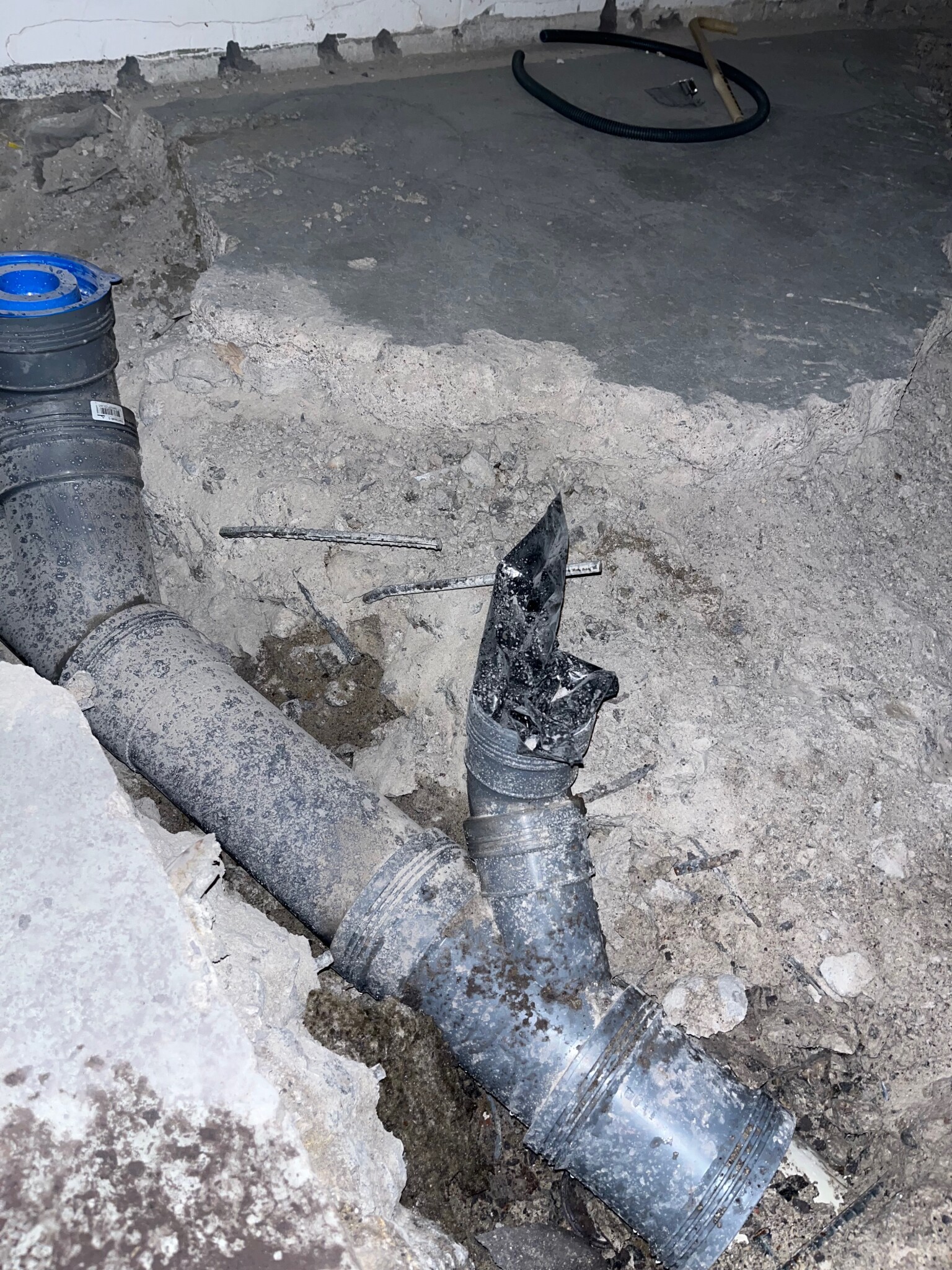
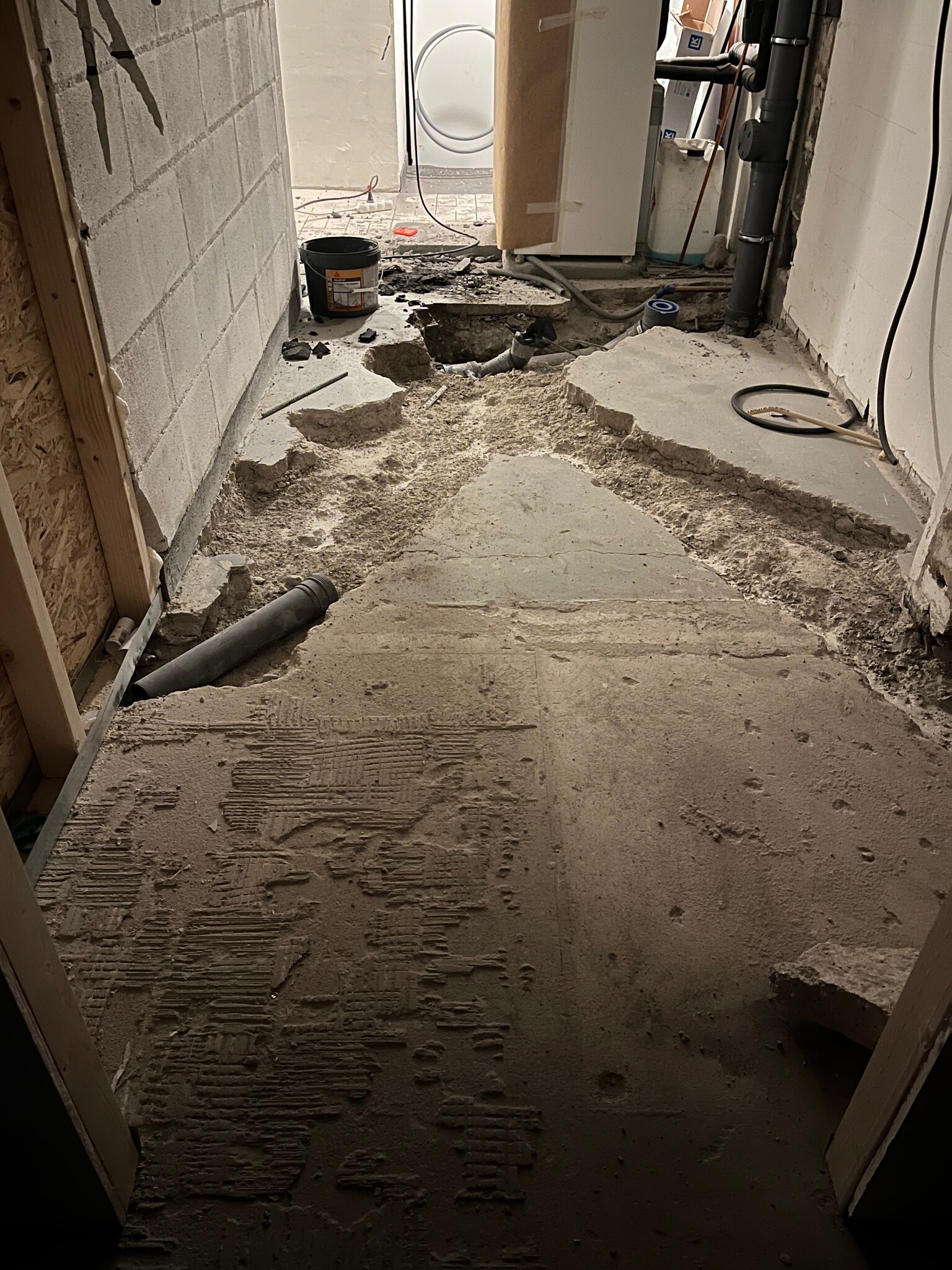

I'm all for chiseling for new pipes, they did that on the upper floor too.useless said:
But my question was more about the small part of the house's foundation slab that also disappeared, but was then filled again. The constructor meant that one should not make any alterations to it at all.

Sounds strange... It's the only way to do it and how it's always done for new drains...A asgardian said:

Just trying to get input from the experts here - so channels in the slab are OK without affecting load-bearing capacity or function? I'm thinking that it is designed to be whole, and while chiseling channels, the structure is weakened, even if temporarily.
In principle, yes
A standard slab is typically constructed with thicker edges that bear most of the house's load, and in some cases, thicker sections under load-bearing walls where certain loads are supported. Other sections are meant to support their own weight, some load from furniture, interior walls, etc. Exposing pipes as has been done is normal, and as long as it's re-cast as expected and bonding and, to some extent, reinforcement are restored, there is nothing abnormal. Creating a longer stretch under a load-bearing outer wall is a different matter, but normally sewer pipes are not laid in such a way that it poses a risk.
A standard slab is typically constructed with thicker edges that bear most of the house's load, and in some cases, thicker sections under load-bearing walls where certain loads are supported. Other sections are meant to support their own weight, some load from furniture, interior walls, etc. Exposing pipes as has been done is normal, and as long as it's re-cast as expected and bonding and, to some extent, reinforcement are restored, there is nothing abnormal. Creating a longer stretch under a load-bearing outer wall is a different matter, but normally sewer pipes are not laid in such a way that it poses a risk.
Click here to reply