
1,861 views ·
6 replies
2k views
6 replies
Bricklayer please help! Extension of wall.
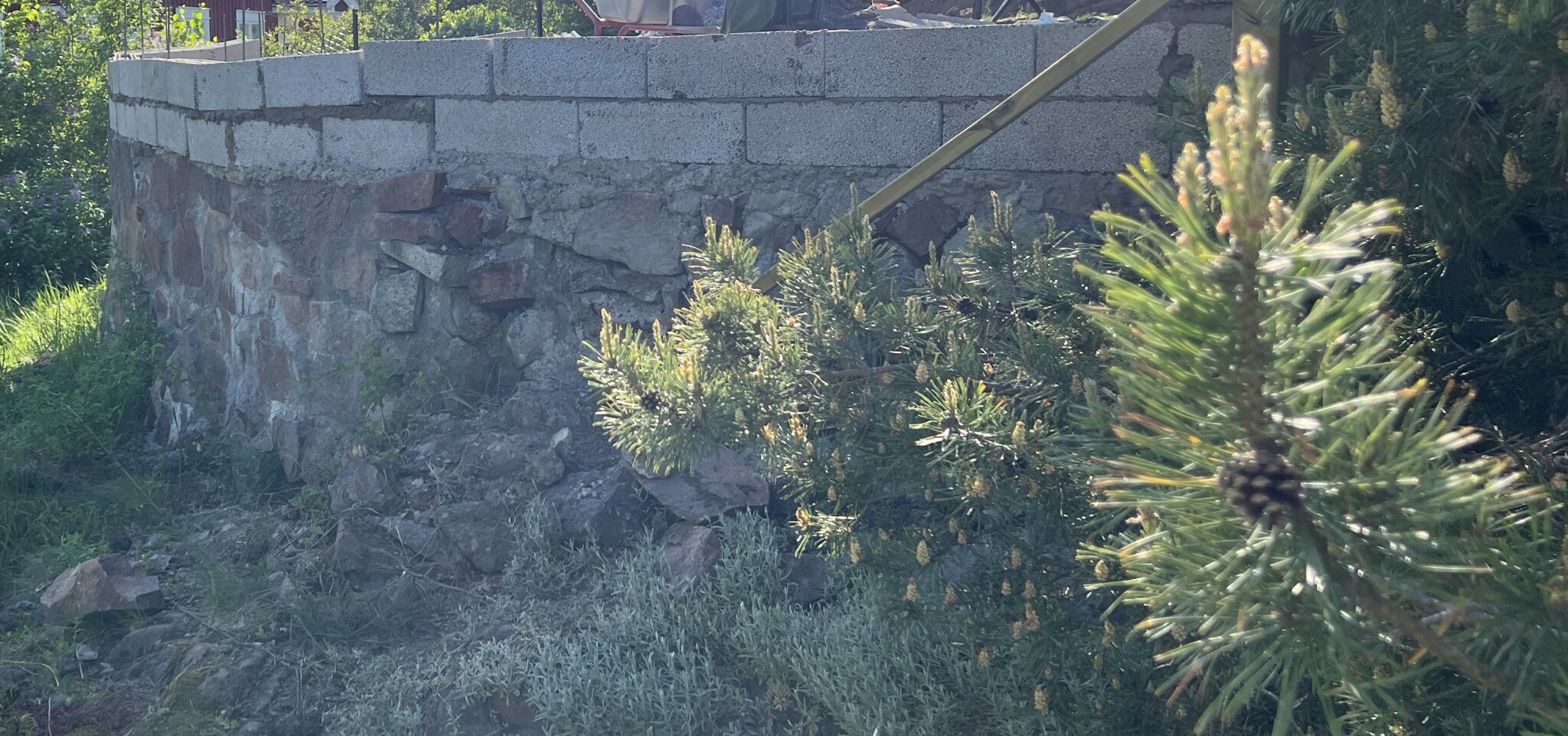
We are raising a wall to make the ground behind it level. Today, the ground slopes/sloped quite a lot. When it's zero on one side, there's nearly a 60 cm height difference on the other side. We're planning to have a flowerbed of 400 mm between the wall and the patio. So two walls need to be made with a 400 mm gap in between for soil and shrubs. The patio will have slate tiles.
We have hired a company to do the work for us, but it doesn't seem serious at all. They maintain that it's because there are no straight lines and the job isn't finished yet, but it doesn't feel right in my gut, and I have zero building experience. Please help us, is this okay but just ugly? Or should they tear it down and start over? Or can it be fixed? ....?
We have hired a company to do the work for us, but it doesn't seem serious at all. They maintain that it's because there are no straight lines and the job isn't finished yet, but it doesn't feel right in my gut, and I have zero building experience. Please help us, is this okay but just ugly? Or should they tear it down and start over? Or can it be fixed? ....?




Best answer
I'm not a mason, but this weekend I built a foundation for a greenhouse with masonry blocks of this type "leca-block", on sloping uneven ground. The key for it to be symmetrical, straight, and level is the groundwork; if there are dips in the existing wall, as in this case, you have to build up with concrete so it aligns *before* the masonry blocks are put in place. Obviously, this hasn't been done.
The vertical reinforcement seems quite sensible to my amateur eyes, the problem is the horizontal reinforcement with wire mesh that can hardly work with these enormous joint offsets and level differences all over the place. It looks like in some areas they've tried to cut the blocks decently, in other areas it looks absurd and it's very difficult to achieve a decent end result after plastering. Mortar is not meant to be used to fill huge gaps and that has completely failed here.
But as I said, I don't have much experience with this type of masonry, so it's good if a professional comes in and explains more.
The vertical reinforcement seems quite sensible to my amateur eyes, the problem is the horizontal reinforcement with wire mesh that can hardly work with these enormous joint offsets and level differences all over the place. It looks like in some areas they've tried to cut the blocks decently, in other areas it looks absurd and it's very difficult to achieve a decent end result after plastering. Mortar is not meant to be used to fill huge gaps and that has completely failed here.
But as I said, I don't have much experience with this type of masonry, so it's good if a professional comes in and explains more.

No, it shouldn't look like that.
I'm not a mason, but I've built a 40m retaining wall at home. As the writer above mentions, you have to prepare the foundation. I have cast a solid footing under all my walls, which makes it much easier to get the levels right.
I'm not a mason, but I've built a 40m retaining wall at home. As the writer above mentions, you have to prepare the foundation. I have cast a solid footing under all my walls, which makes it much easier to get the levels right.

Thank you for the reply. We complained, and they tore everything down the same day without discussion👍.
The company had hired personnel from another firm. Now they have poured a plinth, and then everything will be redone by the company's own craftsmen.
The company had hired personnel from another firm. Now they have poured a plinth, and then everything will be redone by the company's own craftsmen.
Click here to reply