I have just completed a year of renovating an apartment and have unfortunately gotten a taste for more, so now the old apartment is sold, and soon I'll be moving into my new renovation project.
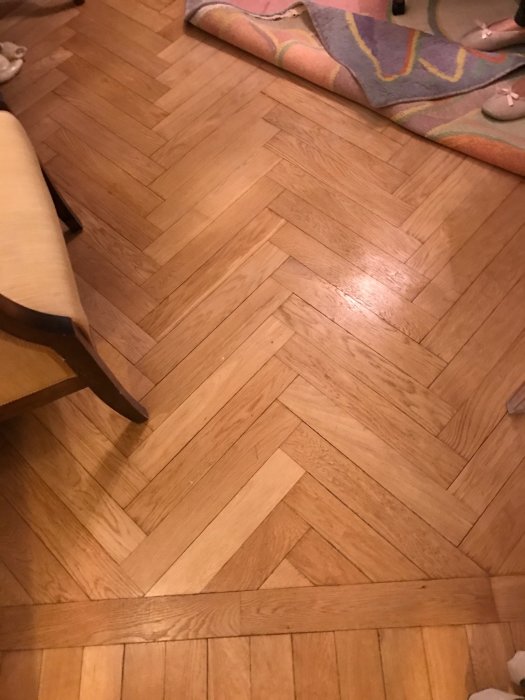
One of many steps is to tear down a wall between the kitchen and living room to create a brighter hallway and a more open kitchen/living area. In the living room, there is herringbone parquet, and in the kitchen there is linoleum flooring.
Since I'm planning to demolish the entire kitchen anyway, I'm considering chiseling down the concrete under the linoleum flooring and continuing with herringbone parquet in the kitchen area as well. The concrete needs to be lowered by about 5 cm to be level with the rest of the floor when the parquet is laid.
I spoke with a construction company that could take on the job, but they suggested chiseling about 15 cm and pouring a new foundation. I discussed this with an acquaintance who warned that it could affect the building's load-bearing capacity.
Does anyone have input on how I should think about this? Do I bring in a structural engineer to assess what's possible, or is it best just to accept the difference in level? It is not a large cost to accept the builder’s offer, so I'm very back and forth on what to do.
I would really appreciate your input, thanks in advance!
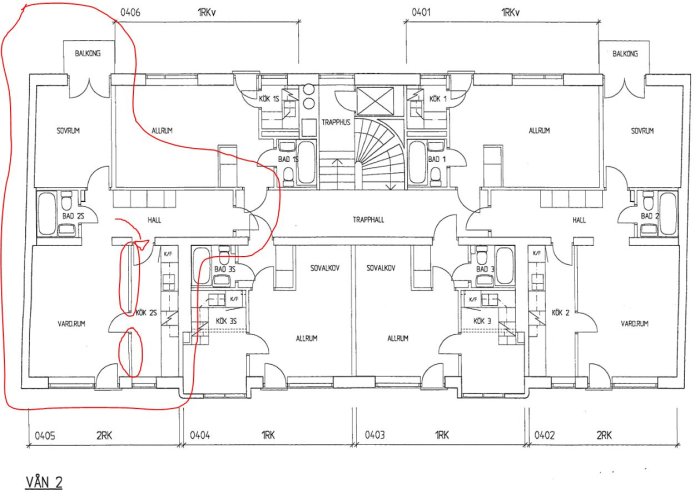
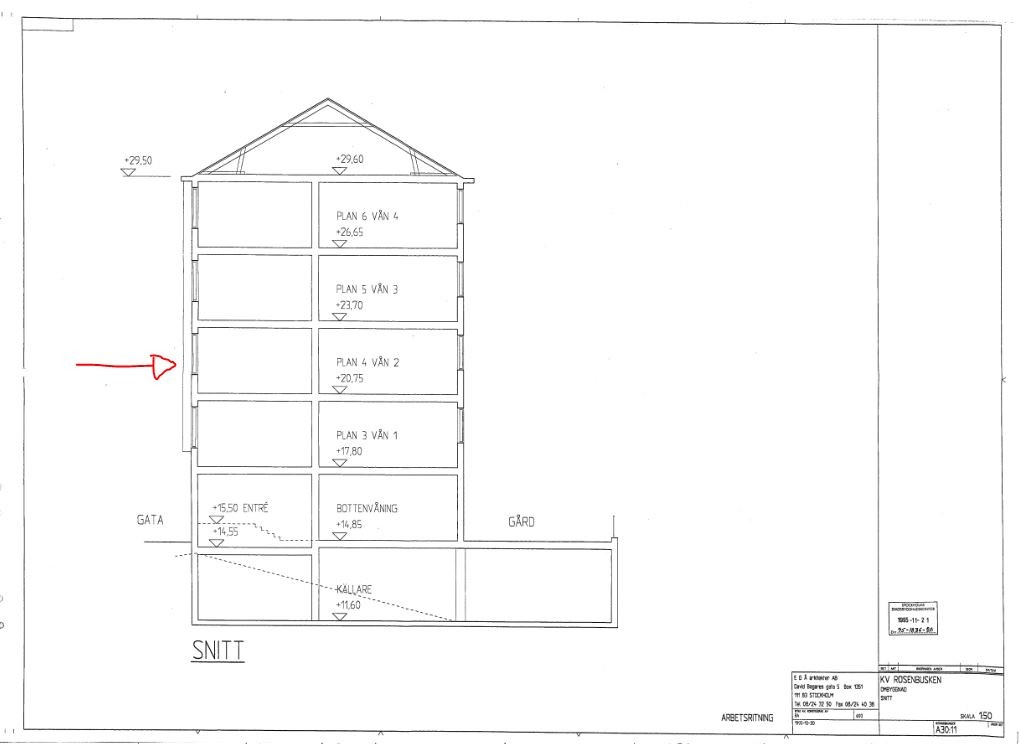
The apartment is located on floor 3 / level 2 according to the floor plan.
The linoleum flooring is laid on a concrete slab, which was either cast during the renovation in 1996 or at the construction in 1939.
I want to remove a few excess centimeters so that I can have a consistent floor level throughout the room. The alternative is a level difference of a few centimeters along a room that is 4.6 meters long.
I have discussed with the board and they cannot give an answer as no one has done a similar job before. Everyone who has renovated the kitchen has simply built on top of the concrete and installed a baseboard that handles the level difference. But they have kept the wall. My plan is to demolish it.
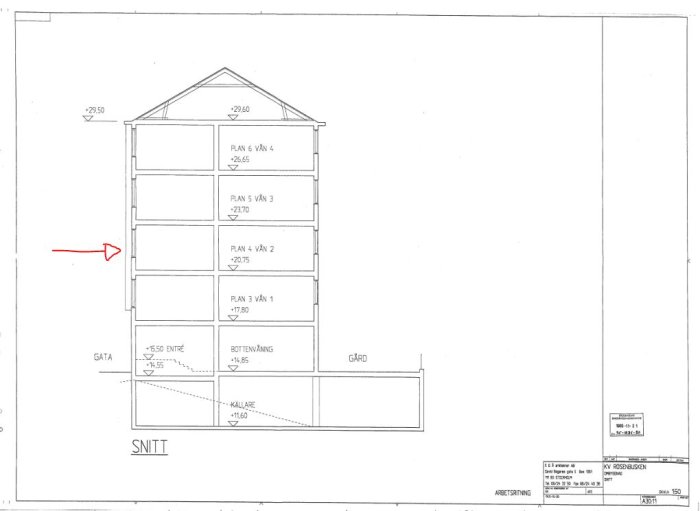
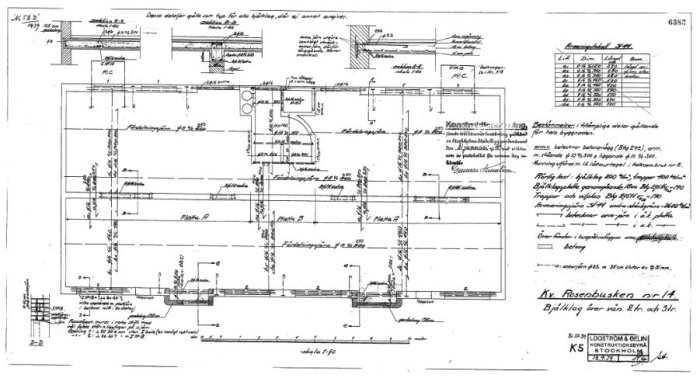
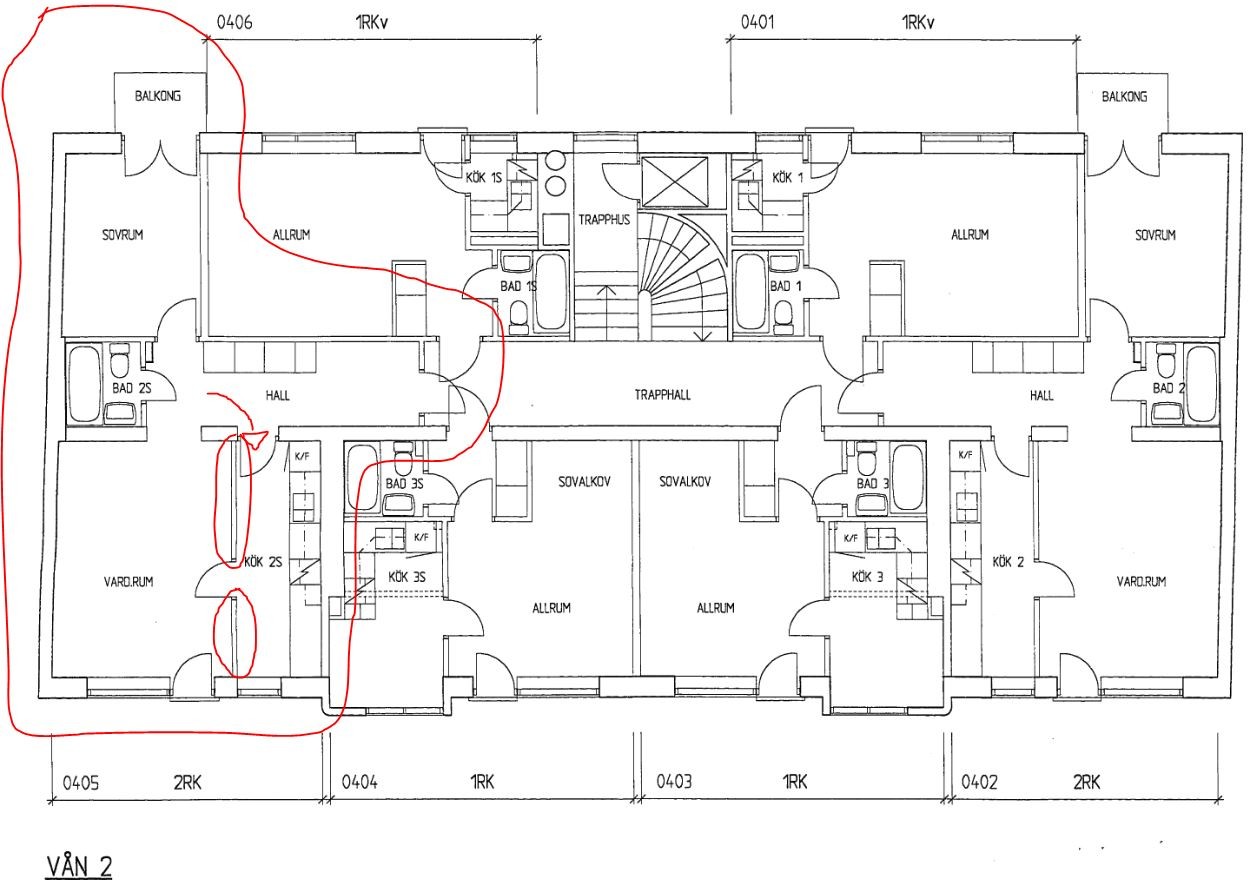
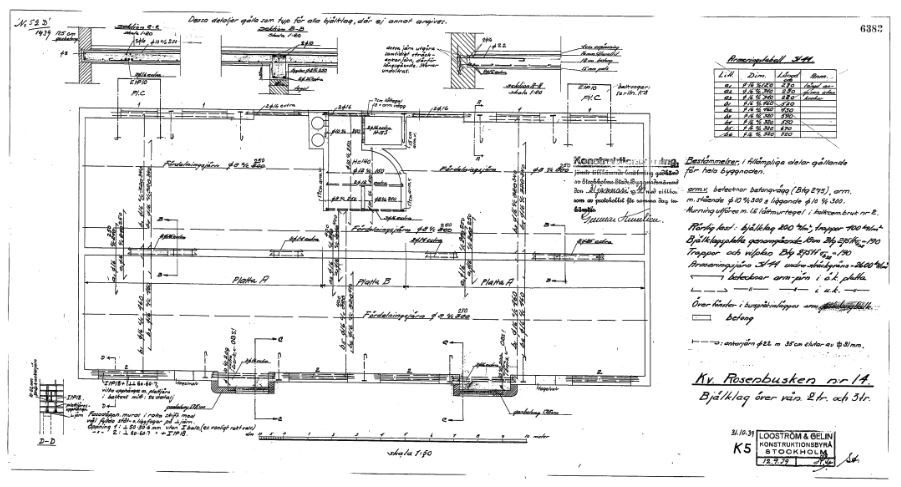
I am attaching three images, one of the apartment itself with a red arrow showing the kitchen with a raised floor and the walls intended to be taken down, as well as the joists and a cross-section of the facade.
Can anyone interpret these images? Who can you discuss this type of matter with - Is it a structural engineer?
Hello! I have renovated some apartments in a similar way, albeit built a bit later (1951 and 54). In these apartments, the load-bearing arches were cast flat and then an extra "layer" was poured to the correct level in the kitchen area. Blåsten/Ytong in the non-load-bearing walls. Is it possible to test chisel and see how it looks? Is there sand under the parquet? Is it a thick exclusive parquet floor, or could the alternative be to raise that floor and lay new uniform flooring throughout the room, or would you then have issues with certain doors/frames?
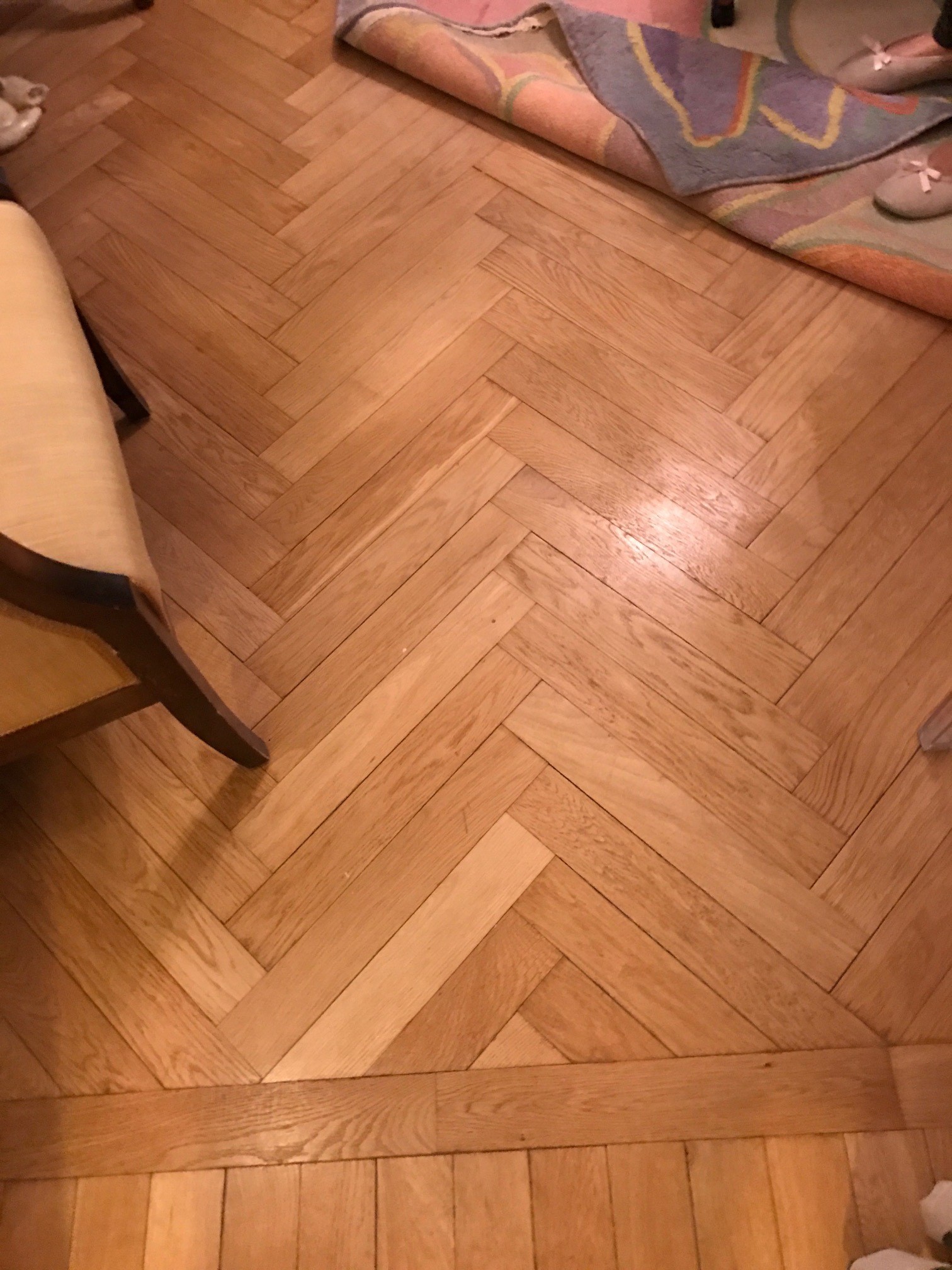
The rest of the apartment is clad in herringbone parquet which is probably nailed on pine or similar, it feels too stable to be sand. Raising that floor is no problem, it's just that it seems a shame not to highlight a nice herringbone parquet floor. The idea is to extend the floor into the kitchen and then sand and treat it.
Attached image:
The walls are made of "slaggplatta" according to a neighbor (I've tried cutting down a piece too). A very dark material, almost black. Stone-mixed. Is it the same as aerated concrete?
Interesting if there might be a possibility to chip away an upper layer of concrete! That could be just the small elevation I want to remove. I won't have access for another month so I'm trying to plan as much as I can before I get there with all the tools.
The other partition walls consist of so-called slag plates, a kind of simpler lightweight concrete material that was common at the time when the houses were built, and these can be drilled with an ordinary impact drill, but the material is not homogeneous, so if you encounter a harder part, a crater may occur.
The layer marked 4 cm leveling is on 16 mm glass wool. It is therefore not connected to the load-bearing concrete and can be removed...
However, there is a risk that the neighbor below will complain about the reduced impact sound insulation.
You should avoid chiseling anything from the 18 cm slab.
There was a lot of talk about tearing down walls in condominiums a while ago, after it was done with stability problems as a result. I don't remember how it ended, but personally, I think it shouldn't be allowed...
Personally, I think you should be on very solid ground, with contractors having insurance and neighbors and the board well onboard...
Vi vill skicka notiser för ämnen du bevakar och händelser som berör dig.