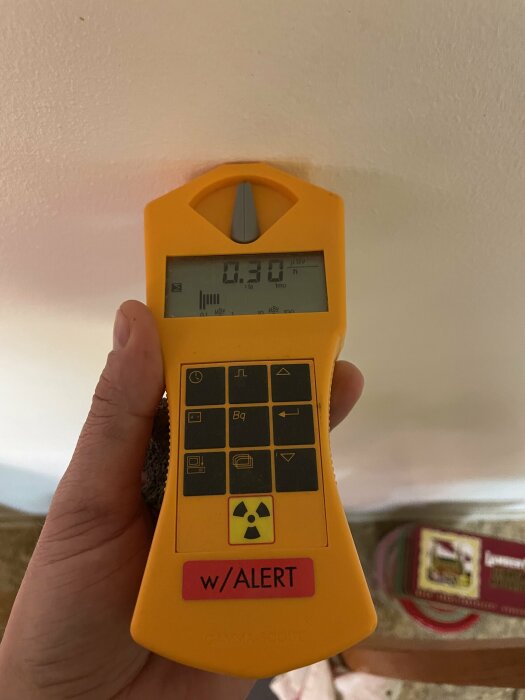
A meter that I normally use to indicate the presence of radiating aerated concrete has difficulty detecting radiation from a piece a few cubic centimeters in size, so I don't believe in the theory of using any handheld instrument on small fragments.
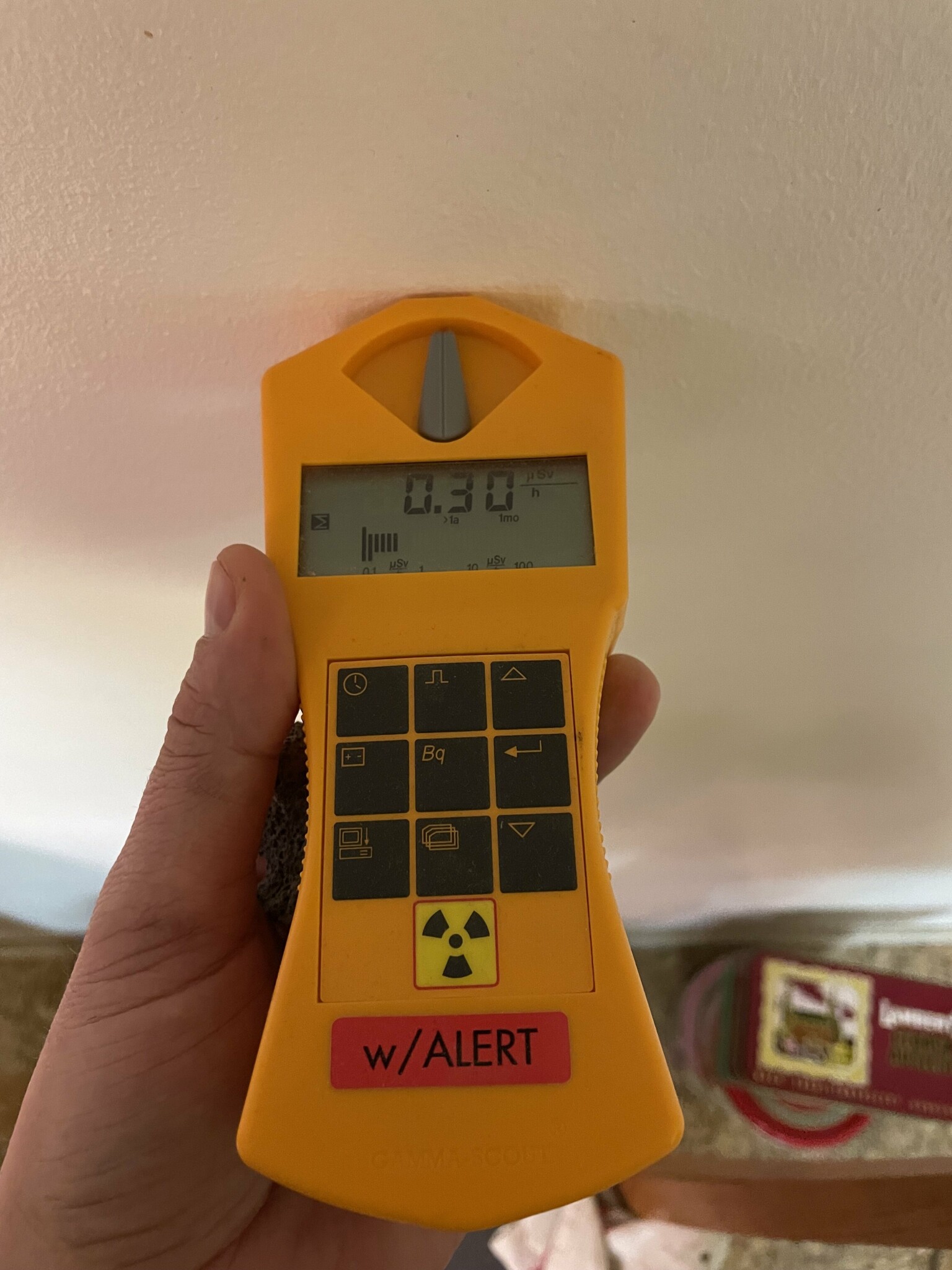
Image against the wall shows radiating aerated concrete.
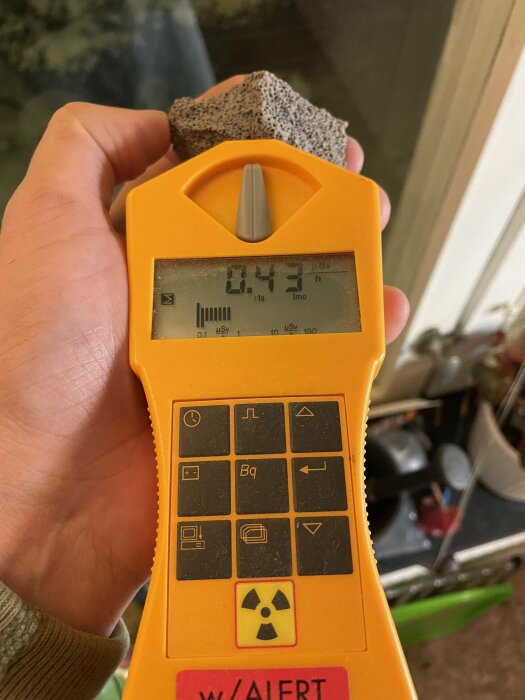
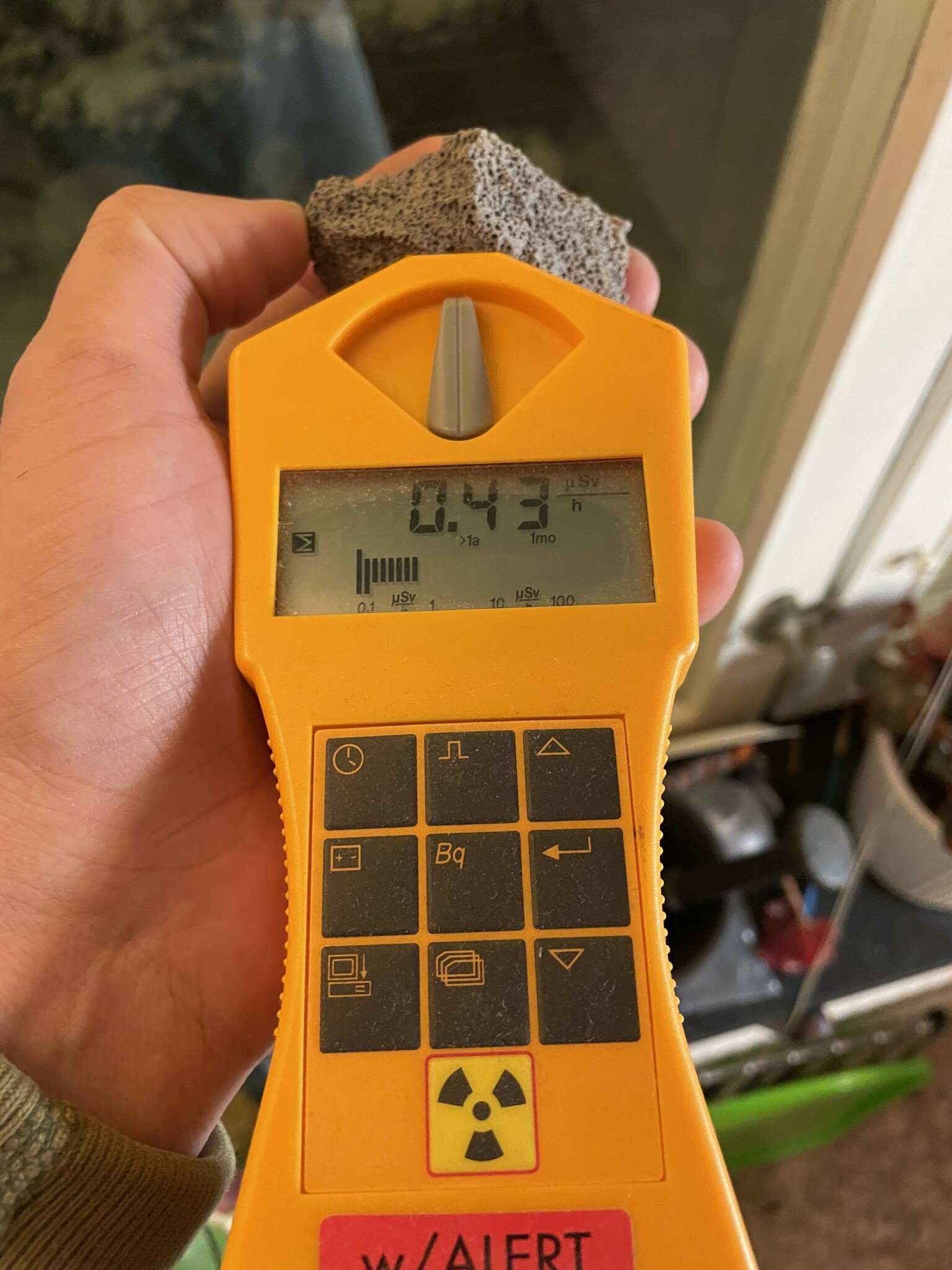
Since I didn't want to freeze my butt off, you can see an image against a small piece of blåbetong more indicative of how I met without the meter detecting the difference with and without aerated concrete. The picture was taken inside the warmth and as shown in proximity to aerated concrete, but the actual test was done out in the cold.
A meter that I normally can use to indicate the presence of radiating light concrete has difficulty detecting radiation from a piece of a few cubic centimeters, so I don't believe in the theory of using any handheld instrument on small fragments.
Picture against wall shows radiating light concrete.
[image]
Since I didn't want to freeze my butt off, you get to see a picture against a small piece of blåbetong more indicative of how I met without the meter being able to detect the difference with and without light concrete. The picture is taken indoors in the warmth and as shown in proximity to light concrete but the actual test was done out in the cold
[image]
Okay. Thanks for the test. Would you say the meter you have is reliable? I know that a real Geiger counter costs 70papp, so I'm wondering if such a device actually has the capability to read small fragments?
No, there are no historical measurements. I'm not particularly worried about blue concrete myself, but you can't ignore the fact that a house with blue concrete can scare away some future bidders. Even if it's completely harmless. Thanks for the tip about OCAB. I'll check with them if necessary.
We had Radea here to measure gamma just over a year ago, it cost 1400.
Okay. Thanks for the test. Would you say the meter you have is reliable? I know that a real Geiger counter costs 70 grand, so I'm wondering if such a one can actually read small fragments?
Most in the radon remediation industry don't run around with anything much more expensive than the one I use, it's like you're just looking for an indication. So I would say it's reliable for exactly this purpose but hardly for dissecting a smaller piece or guiding a safe path through Pripyat. Even though there's often a direct link between radiation and radon gas level with zero air exchange, the more expensive instruments from companies tend to be reliable data loggers and machines for sniffing through penetrations.
Now maybe that became a tangent, but given the insight I have in the industry, don't expect even an expensive company to necessarily show up with a much more expensive instrument, and for the purpose of getting an indication on-site in an object, it is completely reliable.
I had a small period of radiation anxiety after Fukushima, so I got a meter, Radex RD 1503+ from Quarta. Reasonably cheap, I recall. Calibrated for background radiation by measuring at several points around the neighborhood.
Concluded that it was slightly elevated at some basement walls but otherwise barely above background radiation. There were some old blue concrete interior walls down there before but they were removed many years ago, it's possible that there might also be some in the basement walls made of concrete blocks, who knows.
In any case, I then ordered one of those kits with trace film discs that you hang up for long-term measurement during the heating season, received a test report showing slightly elevated levels in the basement as expected but far below the threshold.
I do remember getting quite high readings on the dust in the filter of our heat pump, which I found a bit odd, and it gave me something to think about - since then, I clean these filters by rinsing them instead of vacuuming as before. I haven't been able to replicate these measurements later, but "better safe than sorry" as they say.
As previously mentioned, gamma radiation is just a rather weak indicator of any problems with radon. It takes quite a bit for it to prove to be a real problem; firstly, this gas must be able to find its way into living spaces, and secondly, the air exchange must be low enough to create concentrations that need action. None of these conditions were present in our home, so it was just a matter of putting this behind us.
Most in the radon mitigation industry don't run around with anything much more expensive than the one I use, as it's just an indication you're after. So I would say it's reliable for this purpose but hardly for dissecting a smaller piece or guiding one's way through Pripyat. Even though it's often a direct correlation between radiation and radon gas levels with zero air exchange, the more expensive instruments in the companies are usually reliable data loggers and machines for sniffing at penetrations.
Now, this might have been a digression, but given the insight I have in the industry, don't expect that even an expensive firm will definitely show up with a much more expensive instrument, and for the purpose of getting an indication on-site in an object, it's completely reliable.
Bumping this! What was the result? We’re looking at a 60s house where I suspect blåbetong. How did you handle the clause?
We brought in OCAB to check, they had gamma meters with them. No blåbetong that emitted radon. We didn't write a clause as we had already bought the house when the measurement was done.
Click here to reply
Vi vill skicka notiser för ämnen du bevakar och händelser som berör dig.