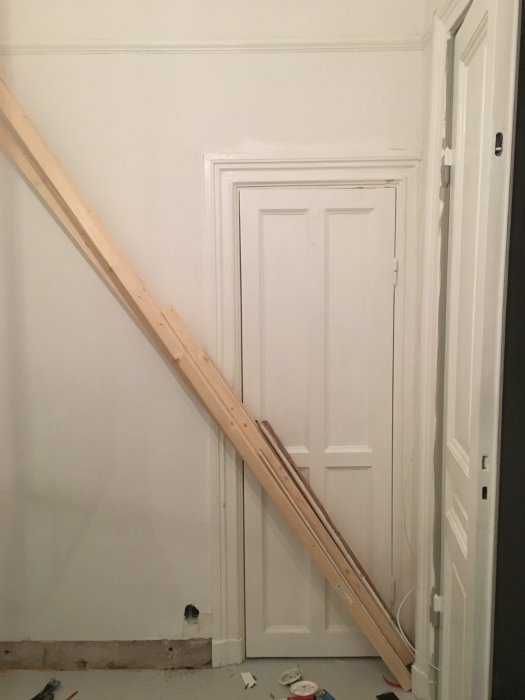
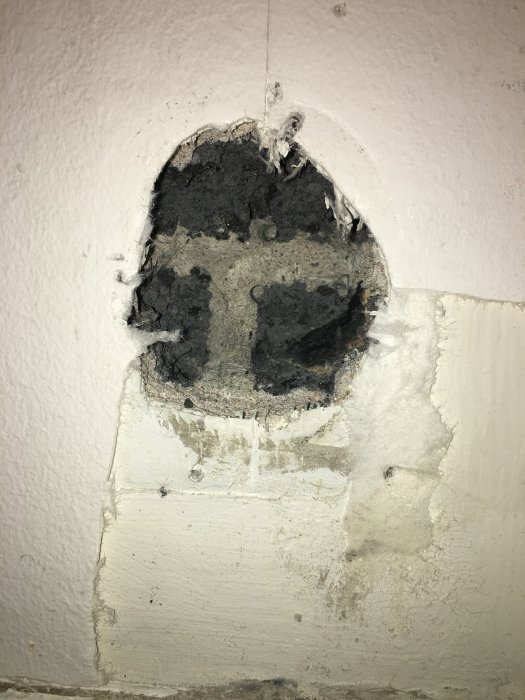
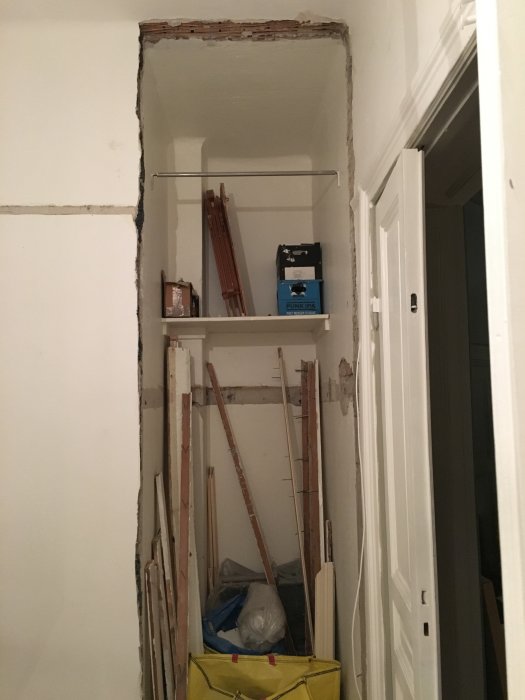
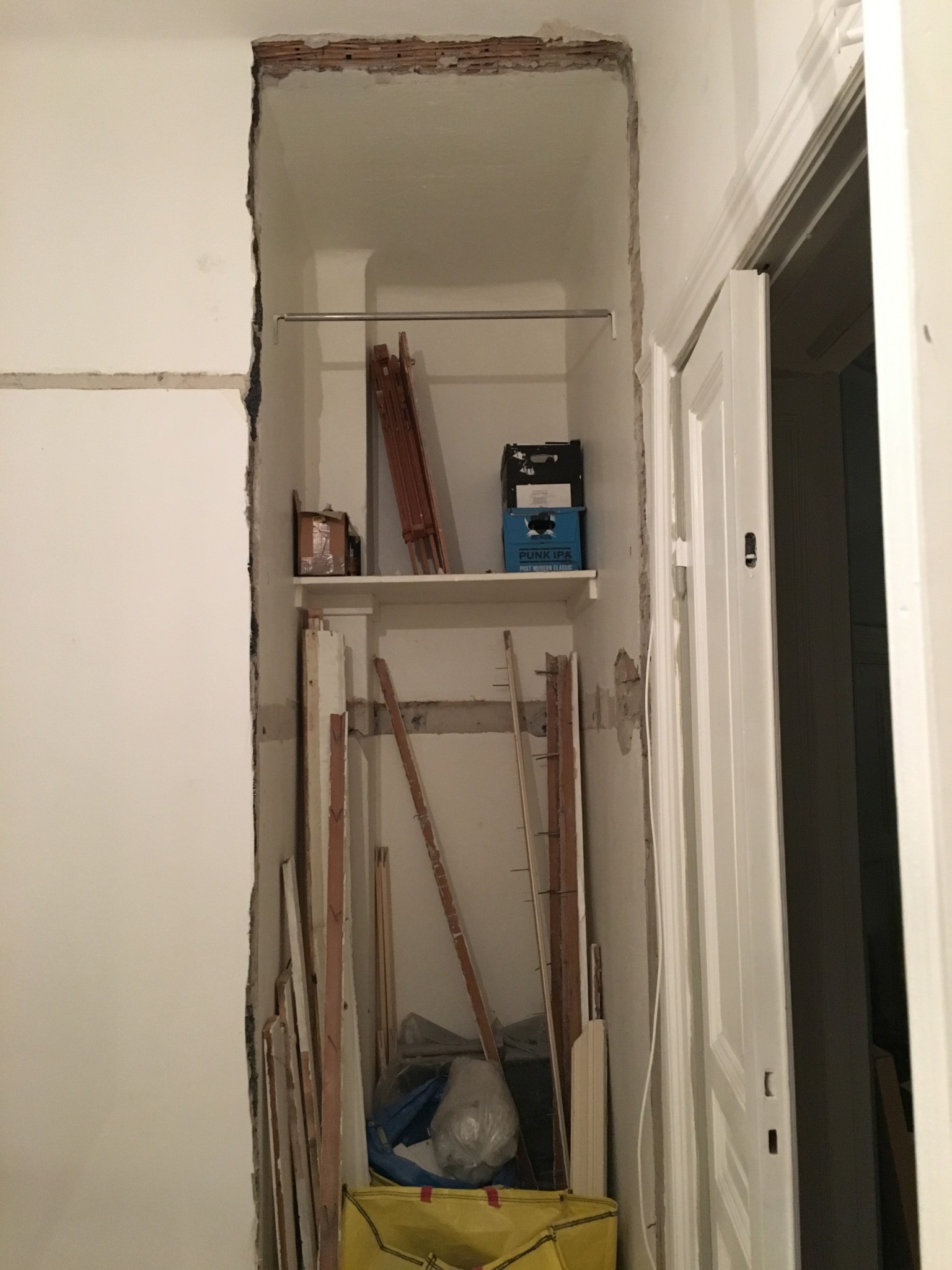
It's most likely slag stone. Very common as a building material during the 17th and 18th centuries up until the mid-20th century.
Inner walls of slag stone are often covered with reed mats and plaster.
So there's nothing to worry about. Except for the usual dust which you should preferably protect yourself against. Asbestos (which I guess you were worried about) became common much later, around 1940 and onwards.
aah that sounds like a pretty simple explanation. It didn't seem too hard, what do you think about cutting up the wall with a handsaw? Should work, right?
A handsaw works probably just fine, a reciprocating saw even better, except for the fact that it creates more dust. I have never personally needed to demolish whole or parts of slag stone walls, however, I know that a hole saw eats slag stone for breakfast.
It's slagstone. Don't use the fine saw because it's both extremely porous and at times rock-hard. A bit tricky to cut, don't expect any fine cuts. Then it surely contains various unpleasant elements, though not asbestos or anything else that requires any special protective measures.
Sawing seems difficult... it works pretty well to just knock down stuff like that with a sledgehammer and chisel, then you don't risk cutting any cables either. However, you don't get as clean a finish.
Warning for a truly vile black dust that is difficult to remove. "Ask me how I know..."
A handsaw works well on the actual slag brick, but quickly dulls on the mortar between the bricks. I eventually used a wide chisel in a hammer drill in chiseling mode. This provided an efficient yet controlled demolition of the wall.
As mentioned, the stone is not a problem, the mortar in the joint destroys all tools.
Saw/chisel carefully by hand, the dust is terrible. A new oiled oak floor had to be sanded again, it was covered by the wall, but got dirty several meters away, and it couldn't be cleaned.
I have cut down two walls in the same material. Both times with a reciprocating saw.
I can only confirm what others have already mentioned, it creates an incredible amount of dust and stains easily. Thoroughly cover the parts of your home that are not to be repainted.
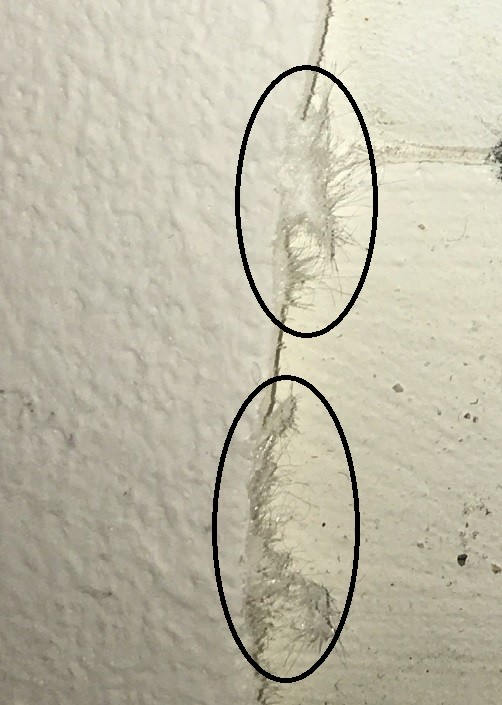
I myself was startled by this material and wondered about asbestos.
However, it looks a bit like fiberglass?
What is such a wall surface construction called?
academia: Well, I have a poor idea of what asbestos looks like, but I thought it was just some fiber mat to level the wall instead of skim coating it, like an older version of what’s available at hardware stores today, but maybe I'm completely wrong? Now I'm worried about that instead :eek:
Otherwise, I can just confirm what everyone else said, the grout kills tools, it took less than 20cm before over 1mm of the saw's teeth were gone. As someone else mentioned, it ended up being a hand chisel and hammer. Maybe not the most fun way to spend yesterday but it's down now anyway
Click here to reply
Vi vill skicka notiser för ämnen du bevakar och händelser som berör dig.