

We have just gained access to our renovation project and have a couple of days to fix the worst parts so the house becomes livable for me, my husband, and our two small children. We discovered a damaged chipboard in the exterior wall, so we removed it to put up new board. However, we noticed that behind the board, the framework is directly against the concrete, and the studs seem very "thin." The house is from the turn of the century, so there wasn't really any building standard back then. My question now is, how do we best temporarily solve this for the moment? (There will be a larger overhaul later when time and finances allow.)
Should we just put up chipboard where the old one was?
Should we add some studs before we put up the board?
The idea is that a radiator should be installed on that part of the wall, so we need a solution that can support a radiator.
Grateful for tips!
Should we just put up chipboard where the old one was?
Should we add some studs before we put up the board?
The idea is that a radiator should be installed on that part of the wall, so we need a solution that can support a radiator.
Grateful for tips!
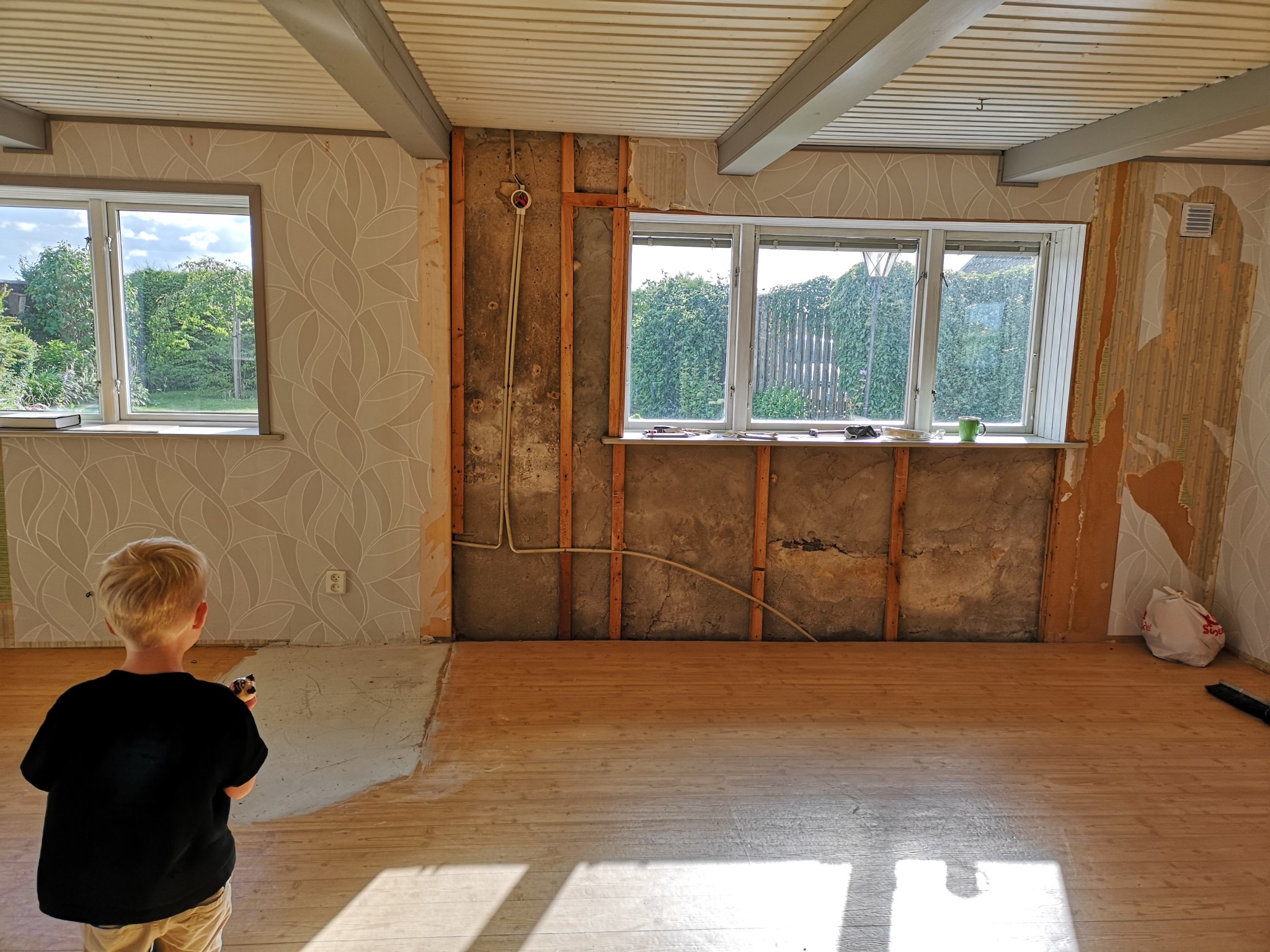


No moisture damage fortunately, but the board that was there seemed to not have been able to bear the weight of the radiator that was there before and had been affected by it. Maybe an OSB can better withstand the weight of a radiator.TomasJor said:

Map out where the element will be placed so that you can attach it directly to the stud (+sheet). Ensure the stud is well secured to the substrate and possibly goes down to the floor so it can handle the weight without issues.
Click here to reply