It appears to have no support at all, and if so, it probably doesn't carry any load. My guess is that it is installed just for show.
 
Or well, if it is unjacked as you say it certainly has an advantage. Hmm, a floor plan/sketch might provide more clues.
 
I solved the whole thing... took an inspection camera and sent it into the hole. A bit up, you could see how it was notched from the beam and the upper part disappeared into the wall/hammarbandet.
 
  • Like
Surly
  • Laddar…
Nissens
N NorthernLiving said:
Figured it out... took an inspection camera and sent it into the hole. a bit up you could see how it was cut out of the beam and the upper part disappeared into the wall/header
Quite strange, why have such a strong beam then?
 
Nissens Nissens said:
Quite strange, why have such a strong beam then?
I'm no expert at all in construction, but I think that even if not the "entire" beam rests on the support, it helps if it is stronger in other parts.

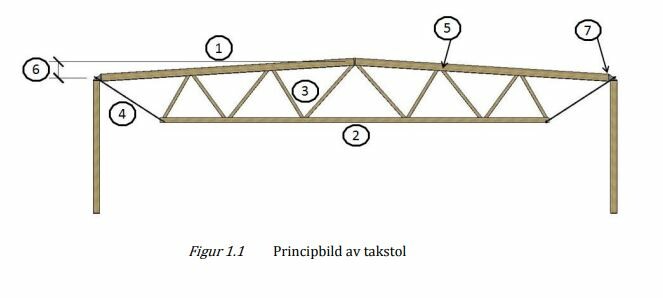
Compare with a truss beam where not the "entire" beam has support;
Diagram of a truss showing labeled parts including the top chord, bottom chord, vertical and diagonal members, showcasing structural support distribution.
 
It could be hinged, meaning suspended in intersecting beams.
 
Mikael_L
The beam can also rest on other/more supports, in the form of posts here and there.
There is no requirement that the support has to be at the very end.

S Styrman_jansson said:
I'm not an expert at all in construction, but I believe that even if not the "whole" beam rests on the support, it helps if it is stronger in other parts.
Yep, that's true.
But at the same time, there's an increased risk of the beam splitting if it's done that way.
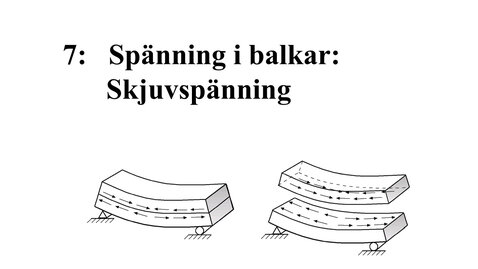
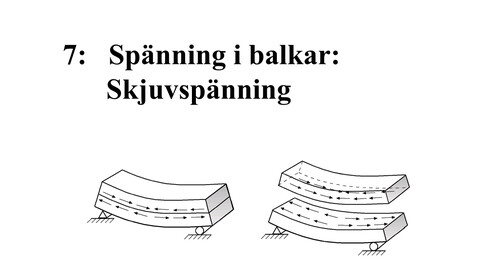
The shear stress is highest at the ends.
Diagram showing beams with shear stress at the ends, supported by posts. Swedish text: "7: Spänning i balkar: Skjuvspänning.
 
  • Like
karlmb and 1 other
  • Laddar…
Click here to reply
Vi vill skicka notiser för ämnen du bevakar och händelser som berör dig.