I want to straighten and reinforce the floor structure in my old Skånelänga but I'm a bit unsure how to proceed.
I've also sent an inquiry to a structural engineer but haven't received an answer yet.
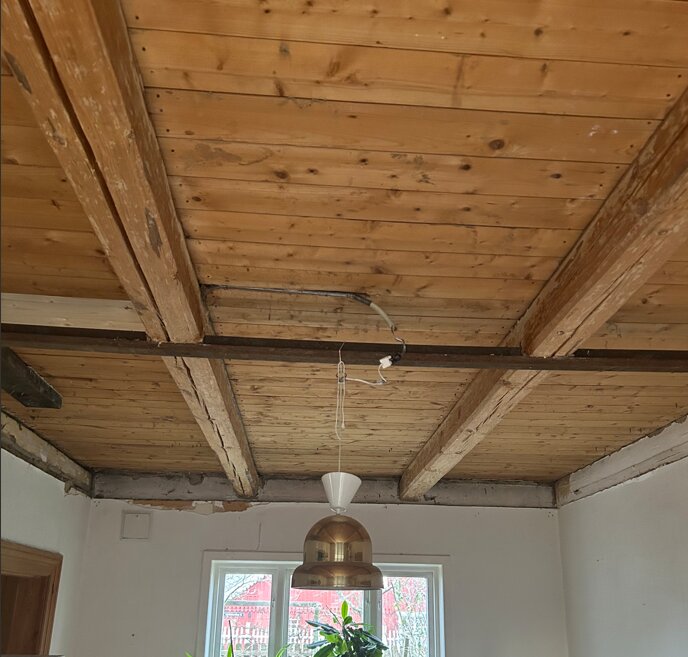
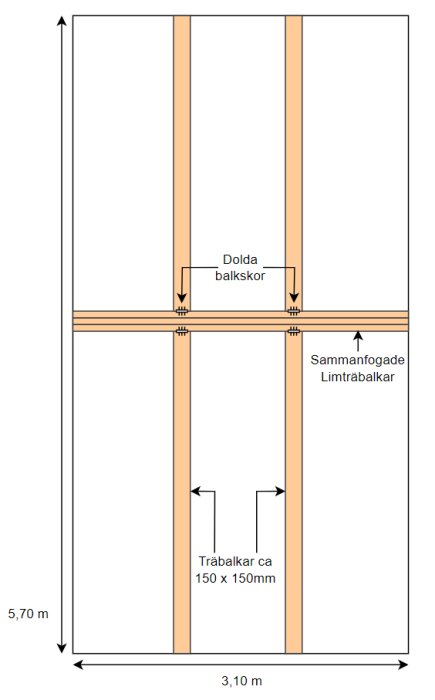
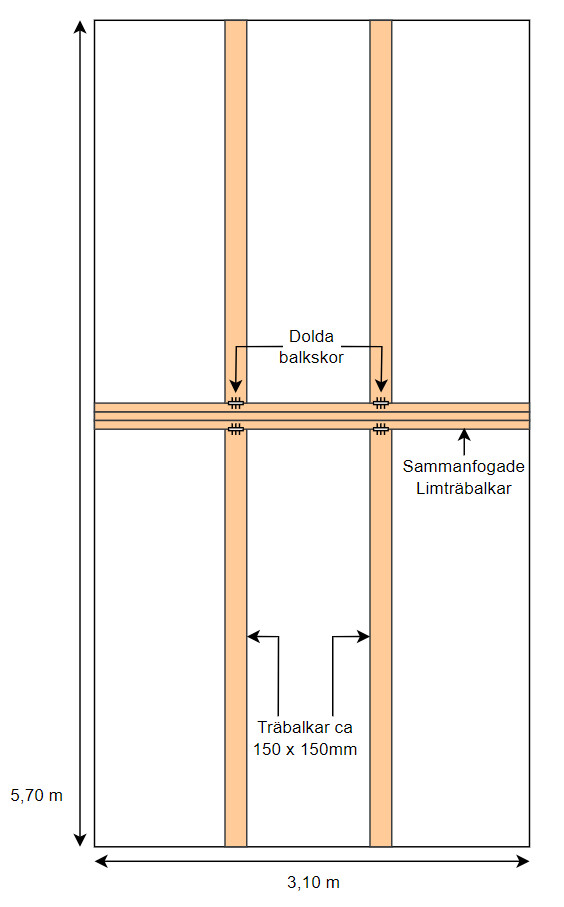
It's a room of about 5.70 m x 3.10 m with two longitudinal wooden beams approximately 150 x 150 mm with about 1 m between the beams.
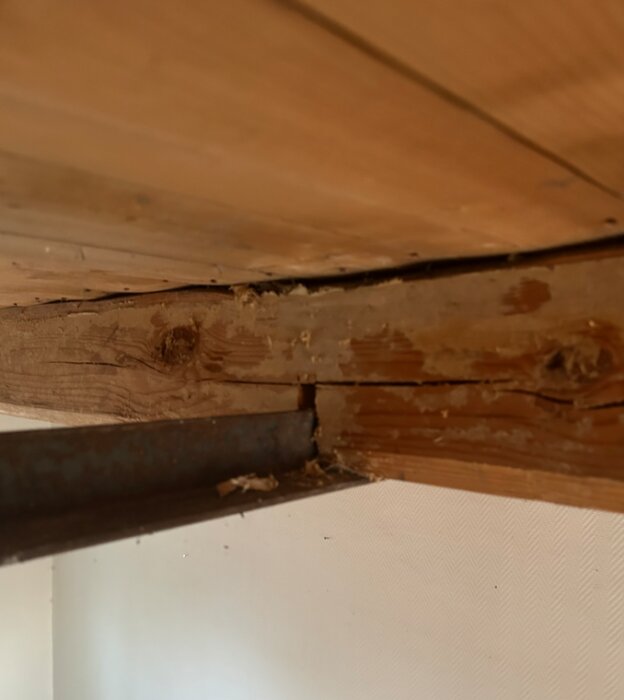
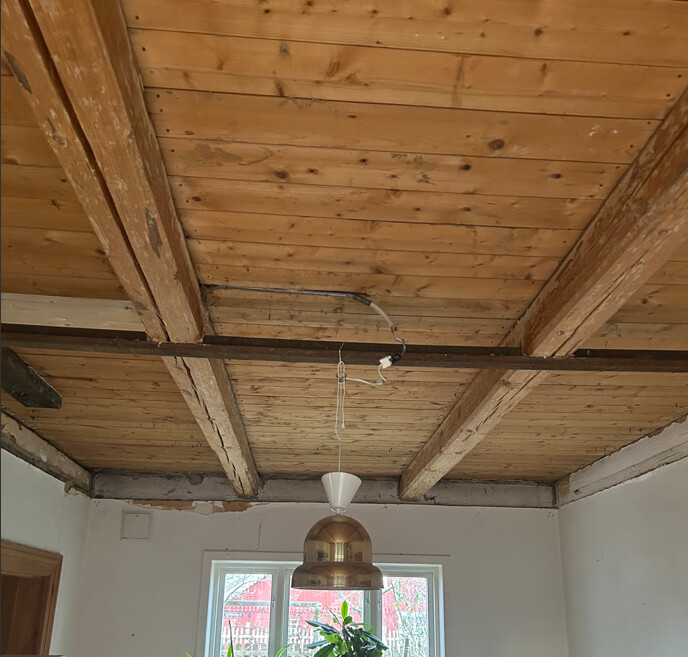
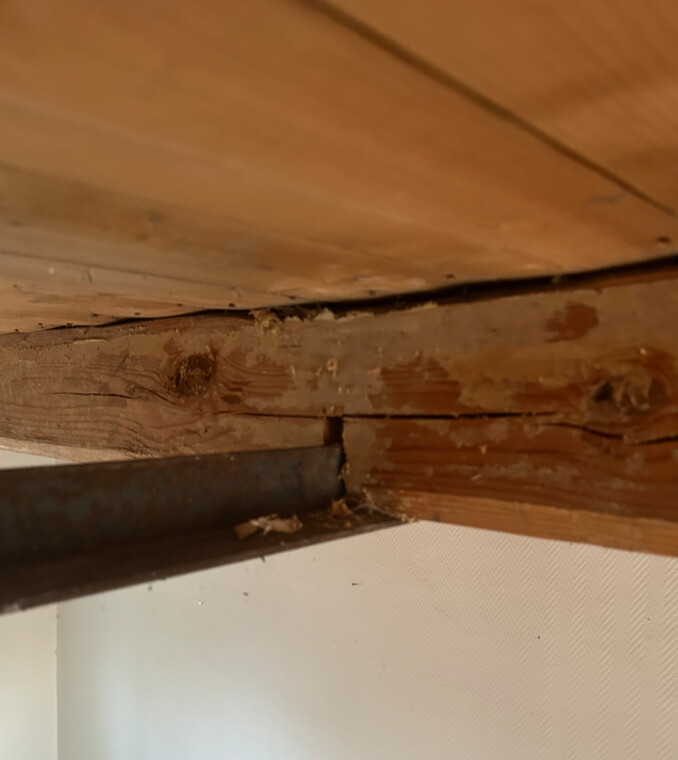
In the middle of the room, there are two transverse L-shaped iron beams 50 x 50 mm assembled as an upside-down T and they are recessed into the wooden beams. The thickness of the iron beams is 5 mm.
Overview:
Recess of steel beam into wood beam:
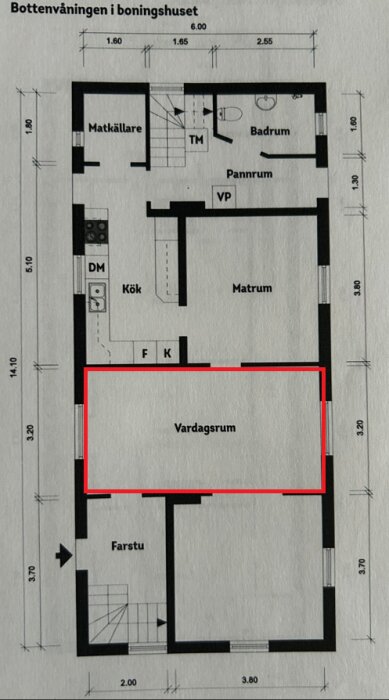
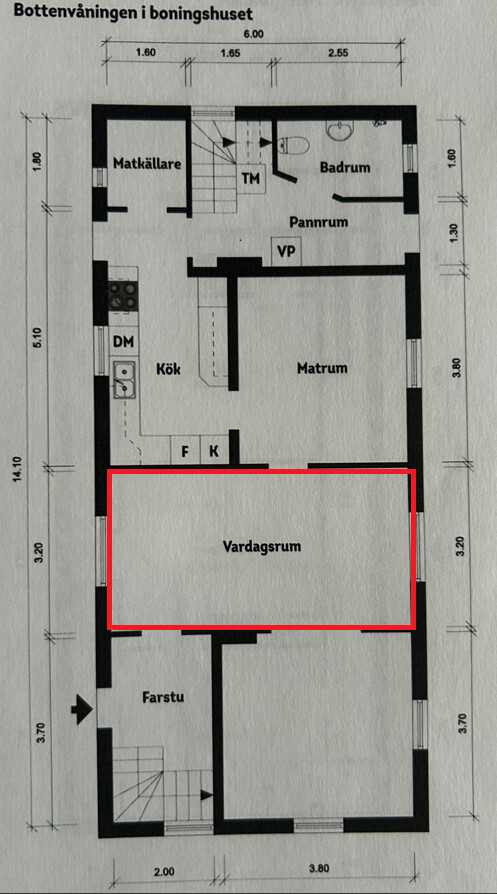
Floor plan of the ground floor where the room in question is within the red marking.
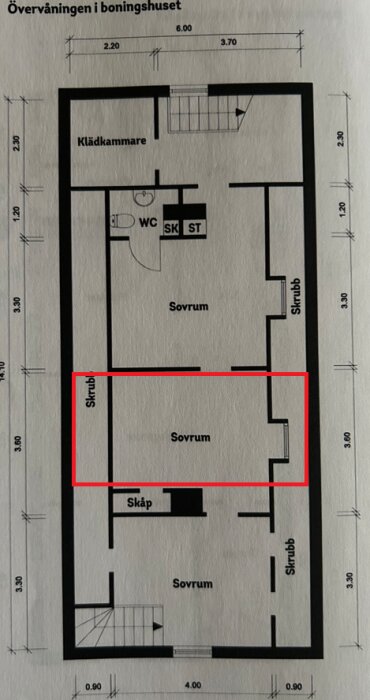
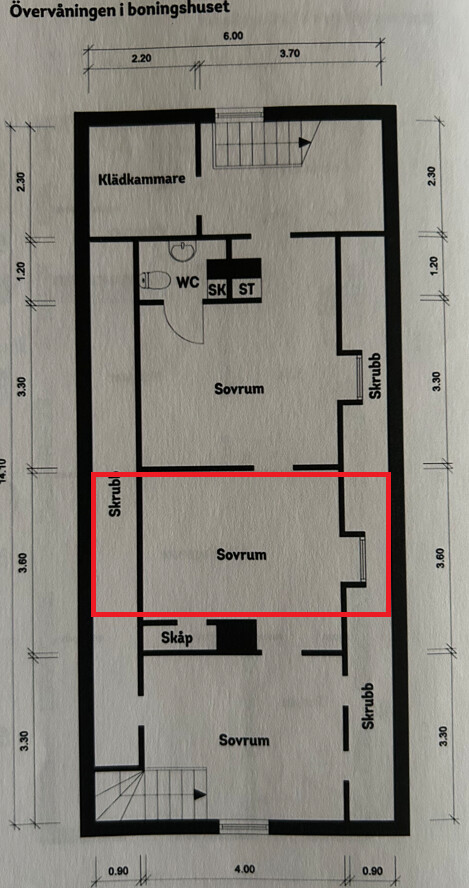
Floor plan of the upper floor. The room is currently used as a wardrobe.
My thoughts on the construction:
I want the beams to be visible to match the other rooms on the ground floor, so the solution also needs to be aesthetically pleasing.
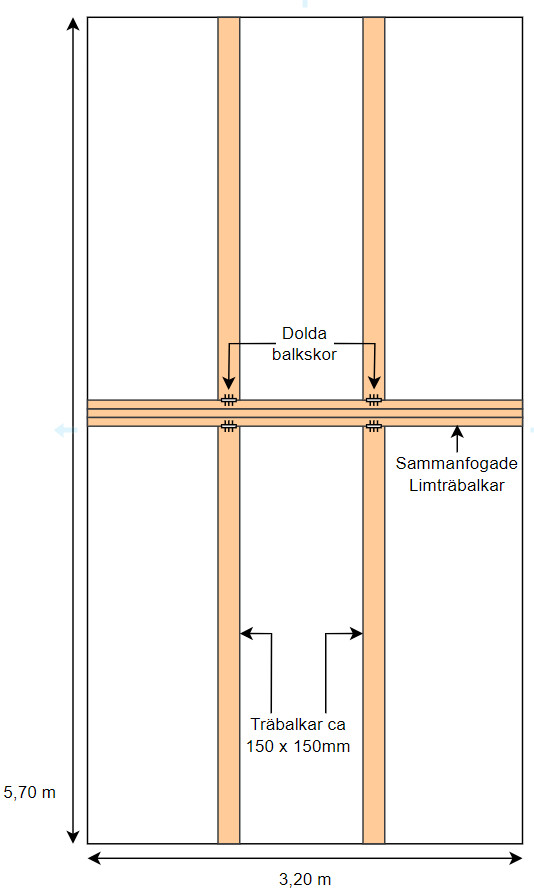
My idea is to replace the iron beams with one or more joined laminated wood beams and cut off and attach the old beams to the new one with hidden joist hangers if possible, though I'm unsure if that could be a reasonable construction.
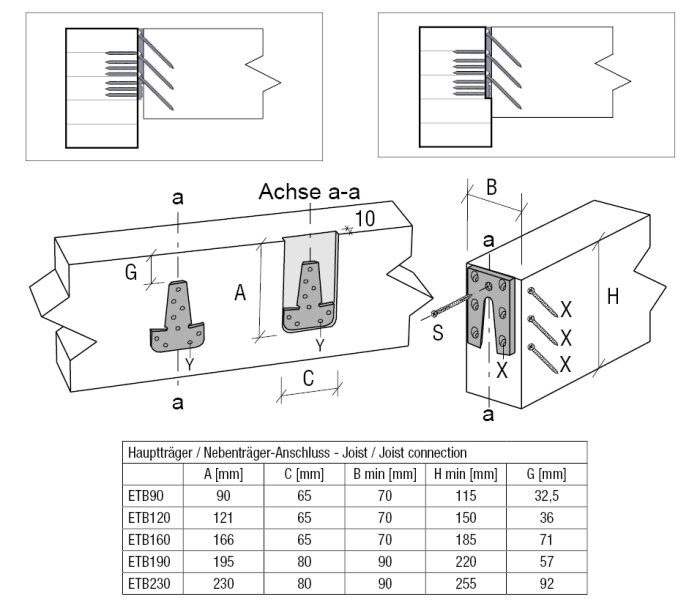
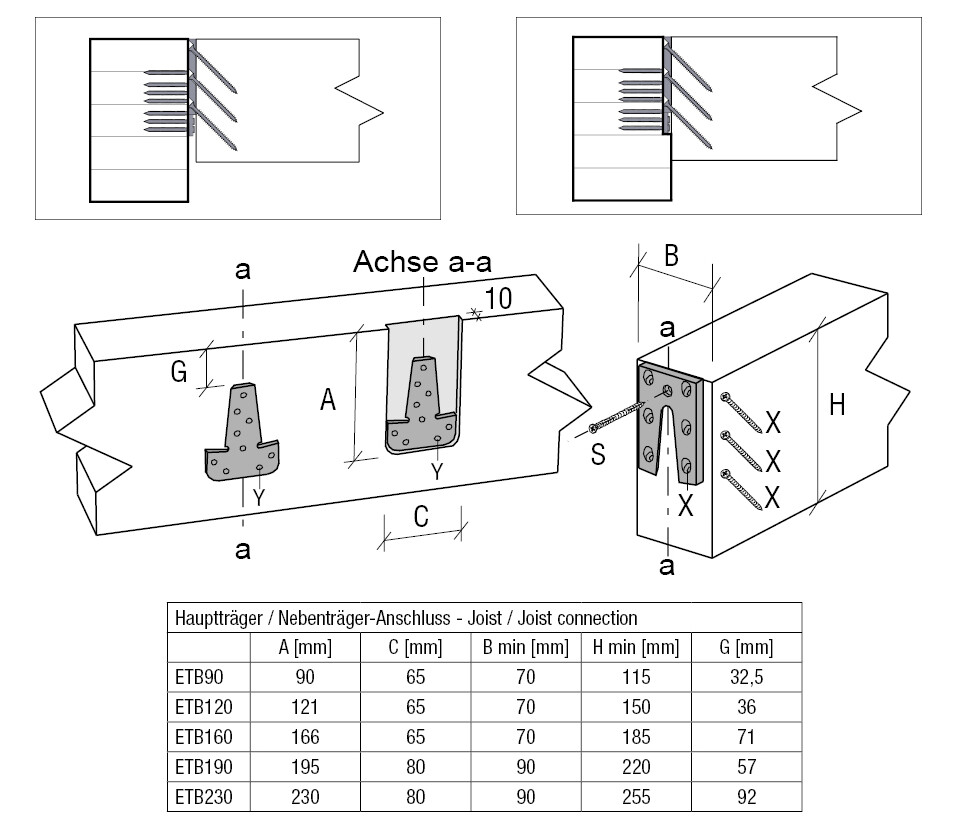
I've found a few different variants of hidden joist hangers, but I have no idea if they are suitable to use as I assume they are weaker than regular joist hangers.
The products you are showing are good for enclosure, but they require you to be able to lay down the beams. That is, you need to lift the floor. Without knowing how the existing beams are, Gunnebo SW-D could be an alternative for concealed fastening. Screws in a "cross.” Otherwise, there are other solutions, a gadget that looks like a T, which does not require you to lift the floor.
Placing a crossbeam underneath instead of cutting will increase the stiffness of the existing beams. An HEB underneath, could that be something? Made of steel.
Thank you so much for the tips! Yes, it would be best if I can avoid touching the floor on the upper level. The screws look interesting but seem to require diagonal screwing from above. The T-like one you linked seems to be the best option so far! I've also considered a new steel beam, but would prefer to avoid it if there are other options.
Hello
Those are not steel beams but angle irons.
I have no idea what the angle irons are doing there, other than that the notching has weakened the existing ceiling joists in the worst way.
Is it possible for you to consider another wooden ceiling joist that can "replace" the angle irons?
You can notch the existing ceiling joists as much as they are already notched, just wider.
The attachment for the new ceiling joist can be made in many ways, for example, embedding in the wall or supporting with "knees."
Good luck.
/Workingclasshero
Thanks for the input, angle iron is definitely a better term!
Yes, I wonder how they came up with that solution...
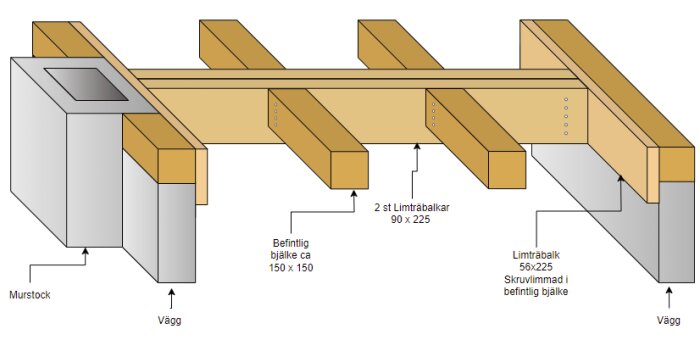
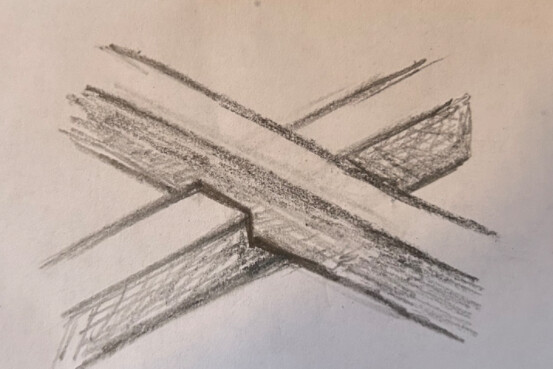
Yes, it could work! Like this if I understood correctly, i.e., the new beam is slightly lower than the old ones?
I assume notching the new beam at the top and setting the beams at the same height is a bad idea?
I've also been thinking about the fastening, what do you mean by 'knän'?
Thanks for the input, angle iron is definitely a better term!
Yes, I wonder how they came up with that solution...
Yes, that could work! Like this if I interpreted it correctly, i.e., the new beam sits slightly lower than the old ones?
[image]
I assume notching the new beam on top to set the beams at the same height is a bad idea?
I've also been pondering the attachment, what do you mean by 'knees'?
Regards, Linus
It feels like someone was afraid the beams would fall down, and the angle iron will serve as a "strap" during large deformations. But the floor joists have probably broken before that.
If the new beam is notched, it becomes weaker -> larger deformation. So correct. Bad idea.
Since they have been notched into the existing beams, they have been weakened quite a bit, so a crossbeam that is inserted between the existing cut beams seems like a reasonable solution. The last proposal in your question looks like it could work if you can screw them onto the new beam before setting it in place from underneath. The challenge will be attaching it at the ends without being able to slide it into place. There must be wall brackets, some form of beam shoe/bracket to hold it up. I don't know if it would look "better" than putting beam shoes at the junction between the new and old beams.
Otherwise, as Workingclasshero suggests, it's an alternative to place a crossbeam under the old ones, but that affects ceiling height, so it's a trade-off.
A steel beam, HEA, could be an option, but it will be difficult to install without taking down the existing beams...
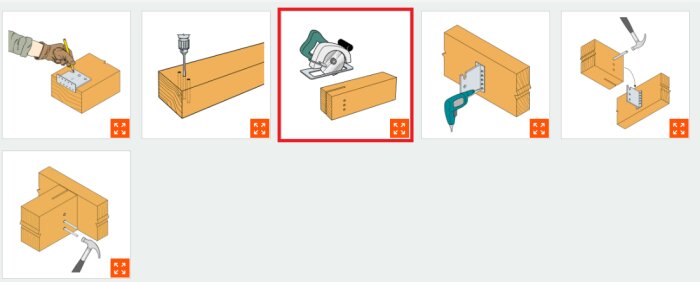
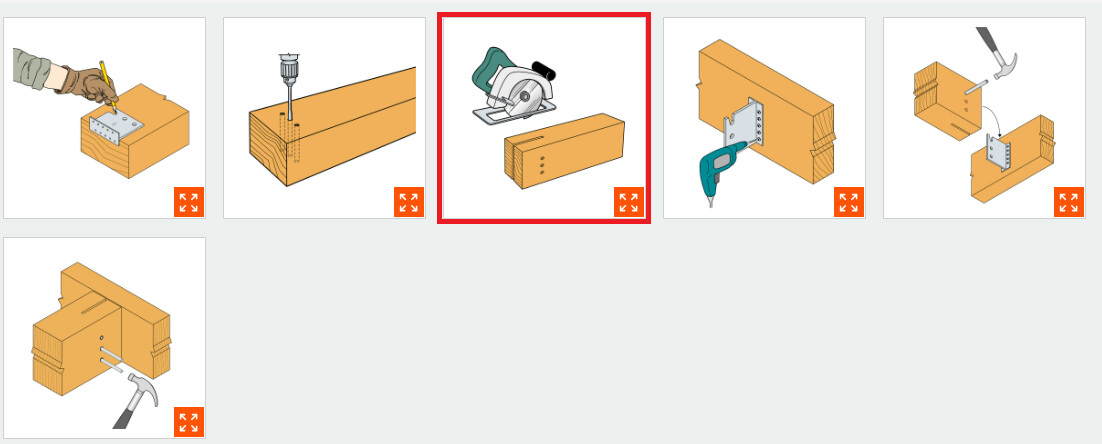
This is tricky, and I'm very grateful for your help so far! The option of cutting the old beams will probably be the most aesthetically pleasing, but more complicated to install. The T-like fitting looks promising, but it will be a challenge to access for sawing the groove where the flap should go. Maybe a multi-tool instead of a circular saw as in the picture.
The wall mounting will also be interesting to figure out, yes, will have to think about that a bit.
Cutting that track should go well with the multi-machine after you've cut the joists. "Just" place a prop on the joists and then cut.
The challenge is more likely to be getting the new one in place, depending on how you solve the support for it. It depends a bit on the walls and how much it can be visible as well as the intervention you want/can do.
I have examined the walls a bit more where the cross beam is to be attached.
On one side, there's a chimney breast so it's a bit problematic.
The rest of the walls consist of some old porous brick that is plastered over.
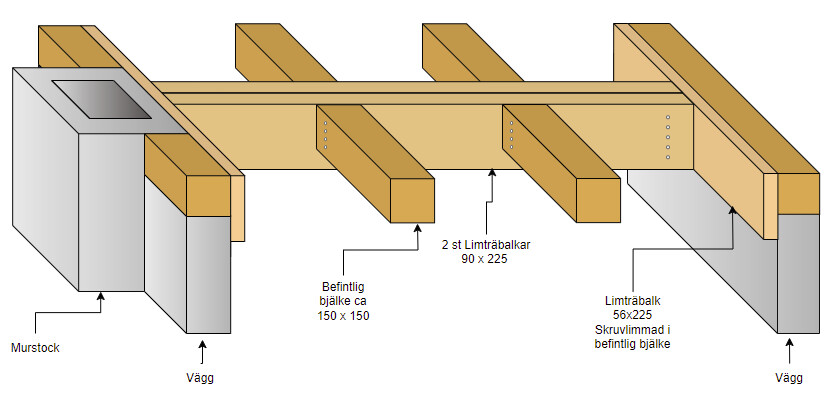
I've been considering if one could install additional beams along the walls as a mounting surface for the cross beam.
Something like this:
What do you think of this solution?
I received a response from a structural engineer who estimates the cost at about 10,000 SEK including VAT for a proposal with calculations from them. 8 hours at 990 SEK excluding VAT. Could that be reasonable?
If you have beams resting on the walls, it should be possible to screw a plank against them to have something more to attach your new beam to. The question is a bit how you plan to attach them without using joist hangers if you want a hidden fastening...? The T-shaped bracket should work here as well.
It's "only" a bit over a 3 m span, so having double 90x225 seems over-dimensioned, but I'm not an engineer, so I haven't done the calculations...
Regarding what the engineer wants to charge, it seems like 8 hours to draft this and calculate it is quite a lot - but as I said, I'm not an engineer
If it were my house, I would put a 45x220 stud against each side and then double studs of the same dimension (which are screwed and glued together) or a single glulam beam 90x225 horizontally without being afraid that it would fall down.
Then I would probably, since it's a basement, consider if I could set joist hangers that hold it together, but try to find someone who could weld something together and not use the ones bought at the hardware store. They're okay under a deck or inside a wall, but they're not very attractive...
Exactly, I was planning to use the same type of fittings there as well.
Yes, I've probably exaggerated a bit with the dimensions.
Everyone I've talked to also thought it seemed a bit hefty, the hourly rate is reasonable but the number of hours seems a lot.
Before, I was considering contacting a blacksmith to custom-make beam shoes in cast iron, could also look nice.
Getting hold of the beam holders was easier said than done, I couldn't find any retailer in Sweden that had them. Now I've managed to order from a store in Germany, lucky you can translate from German directly in the browser.
Another challenge I've realized now is that the grooves to be cut in the secondary beam need to be around 10 cm deep. I haven't managed to find a multi-saw blade that is that long. The maximum I've found is 8 cm, but with a Starlock Max mount, which I don't have on my tool. I'm considering if I could drill instead and chisel out with a chisel.
Another challenge I've realized now is that the grooves to be cut in the secondary beam need to be around 10 cm deep. I haven't managed to find any multi-saw blade that is that long. The longest I've found is 8 cm but with a Starlock Max fitting which I don't have on my tool.. I'm considering if I can drill instead and chisel out with a stämjärn.



riomontana said:
Thanks for the input, angle iron is definitely a better term!