
6,371 views ·
11 replies
6k views
11 replies
Beadboard in the ceiling, new construction
Hello everyone,
I'm going to install beadboard on the ceiling in a new build. And I have a question now, if I want to install beadboard in the same direction as the long side of the house, meaning across the ceiling joists.
What is the best way to fasten the beadboard?
I'd prefer to have a bit of leeway for wiring too. Otherwise, one could fasten it directly to the joists, but then you would have to drill through for the wiring and water, etc.
I read somewhere about installing the slat panel at a 45-degree angle on the ceiling and then the beadboard on top of that, but how will that look with the nail lines, does it not seem strange?
Or should you install slat panels and add cross pieces at cc60?
I want to put up real beadboard and not the panel board, at least that's what I was thinking
Hope someone has a good tip? Because I can't come up with anything good....
Best regards, Martin
I'm going to install beadboard on the ceiling in a new build. And I have a question now, if I want to install beadboard in the same direction as the long side of the house, meaning across the ceiling joists.
What is the best way to fasten the beadboard?
I'd prefer to have a bit of leeway for wiring too. Otherwise, one could fasten it directly to the joists, but then you would have to drill through for the wiring and water, etc.
I read somewhere about installing the slat panel at a 45-degree angle on the ceiling and then the beadboard on top of that, but how will that look with the nail lines, does it not seem strange?
Or should you install slat panels and add cross pieces at cc60?
I want to put up real beadboard and not the panel board, at least that's what I was thinking
Hope someone has a good tip? Because I can't come up with anything good....
Best regards, Martin

Setting them at 45 degrees was actually quite a nice trick, except for the nail rows It depends on whether you can live with diagonal nail rows or not. But with 45 degrees, there might still be some cutouts/drilling for the electricity?
If the alternative was to space and then set noggings at cc60, I might have considered just adding an extra layer of spacing instead, it would probably feel both sturdier and save work compared to having to squeeze in noggings. Of course, it uses more lumber, and it lowers the ceiling by another 28mm, which might not be desirable, depending on your current ceiling height.
If you set double spacing, you also get a very good space to run the electricity, allowing you to run it in both directions of the house without having to mess with cutouts/drilling, and without going up into the roof trusses if you set/have set/there is any plastic/lining and insulation there.
Personally, I might have considered drilling in the trusses for electricity if you have larger quantities to run, of course.
So hum, no, I haven't really contributed much more than what you've already concluded, just a few opinions perhaps
It depends on whether you can live with diagonal nail rows or not. But with 45 degrees, there might still be some cutouts/drilling for the electricity?If the alternative was to space and then set noggings at cc60, I might have considered just adding an extra layer of spacing instead, it would probably feel both sturdier and save work compared to having to squeeze in noggings. Of course, it uses more lumber, and it lowers the ceiling by another 28mm, which might not be desirable, depending on your current ceiling height.
If you set double spacing, you also get a very good space to run the electricity, allowing you to run it in both directions of the house without having to mess with cutouts/drilling, and without going up into the roof trusses if you set/have set/there is any plastic/lining and insulation there.
Personally, I might have considered drilling in the trusses for electricity if you have larger quantities to run, of course.
So hum, no, I haven't really contributed much more than what you've already concluded, just a few opinions perhaps
Came up with an idea last night when I was trying to fall asleep...
Would this work, first put up sparse paneling and then place a beam on top that is cut out for each sparsely. A real hassle to do it. But then you only need to place that beam on cc80 or even sparser.
Then you have something to lay the electricity on.
But then there’s a bit of a problem with the vapor barrier instead, which must be placed on top of those beams.
This got complicated...
Hope there's someone who knows this, there must definitely be an obvious way to do it that I can't think of at the moment...
/Martin
Would this work, first put up sparse paneling and then place a beam on top that is cut out for each sparsely. A real hassle to do it. But then you only need to place that beam on cc80 or even sparser.
Then you have something to lay the electricity on.
But then there’s a bit of a problem with the vapor barrier instead, which must be placed on top of those beams.
This got complicated...
Hope there's someone who knows this, there must definitely be an obvious way to do it that I can't think of at the moment...
/Martin
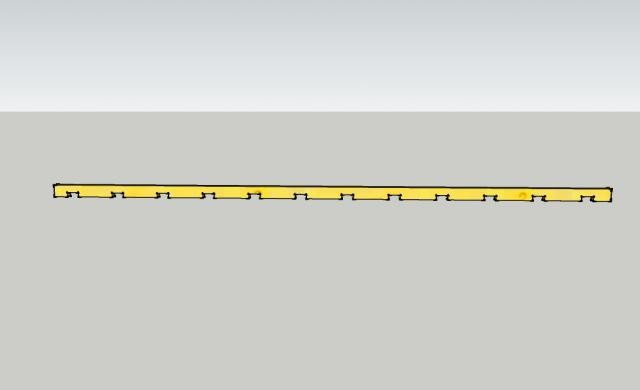
now I understand what you mean... it might be easier as you say...
you don't need to set cc 30 on the battens where you will attach the beadboard, cc 80 should be enough there. and then 22*45 or something similar would probably suffice. there won't be a huge weight in that batten.
but should the first batten be on cc30 or can it also be spaced further apart if it's just for the beadboard?
And the ceiling height won't be an issue, it'll be high anyway.
you don't need to set cc 30 on the battens where you will attach the beadboard, cc 80 should be enough there. and then 22*45 or something similar would probably suffice. there won't be a huge weight in that batten.
but should the first batten be on cc30 or can it also be spaced further apart if it's just for the beadboard?
And the ceiling height won't be an issue, it'll be high anyway.
Is there anyone else with more suggestions?

don't know if mats means to put 22*45 on the roof truss so you build it down 22 or if it's meant as a sparse panel.
But if you mean to build down, I've already decided against it; it's no fun with electrical work, having to run up to the attic to lay out cables, since you can only lay them out after you've set the paneling, otherwise electrical conduits would hang all over the ceiling. And then you have to drill through the beam as well, which just takes time
But thanks anyway for your advice..
It'll probably be 28*70 alt. 22*70 as sparse on cc40.
Then in the other direction 22*70 alt. 22*45 on cc60 alt. cc120 not sure if that's enough to set the tongue and groove in.
/martin
But if you mean to build down, I've already decided against it; it's no fun with electrical work, having to run up to the attic to lay out cables, since you can only lay them out after you've set the paneling, otherwise electrical conduits would hang all over the ceiling. And then you have to drill through the beam as well, which just takes time
But thanks anyway for your advice..
It'll probably be 28*70 alt. 22*70 as sparse on cc40.
Then in the other direction 22*70 alt. 22*45 on cc60 alt. cc120 not sure if that's enough to set the tongue and groove in.
/martin
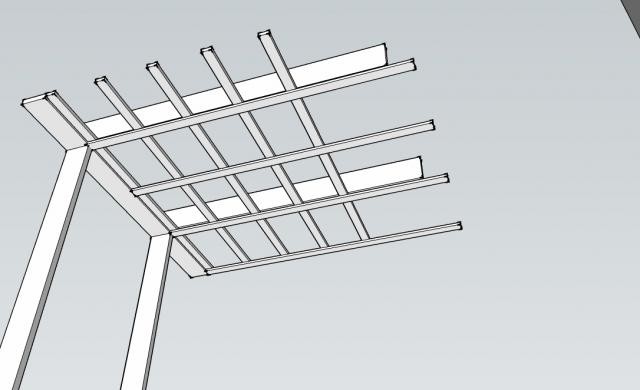
I won't give up that easily I thought you were going to attach them to the underside of the rafters, yes. Where you need to have conduit, just leave a gap, and you should secure the conduits to the rafters. They should definitely not be loose. Therefore, they need to be installed before the sheathing. Above the conduits, there is plastic, so you can't access them from above regardless.
However, I assumed one thing, and that is that you have sheathing that can handle cc120.
I thought you were going to attach them to the underside of the rafters, yes. Where you need to have conduit, just leave a gap, and you should secure the conduits to the rafters. They should definitely not be loose. Therefore, they need to be installed before the sheathing. Above the conduits, there is plastic, so you can't access them from above regardless.However, I assumed one thing, and that is that you have sheathing that can handle cc120.
Going along the same lines, two questions arise: what c-c measurement should I use for 17mm tongue and groove paneling (probably beadboard), and what kind of nails should I use? I have a nail gun that handles 1.2 mm brads, but I would probably have preferred 1.4 mm. What do you think, can 1.2 mm handle more than just trim and paneling, like a ceiling?
Last edited:
Click here to reply