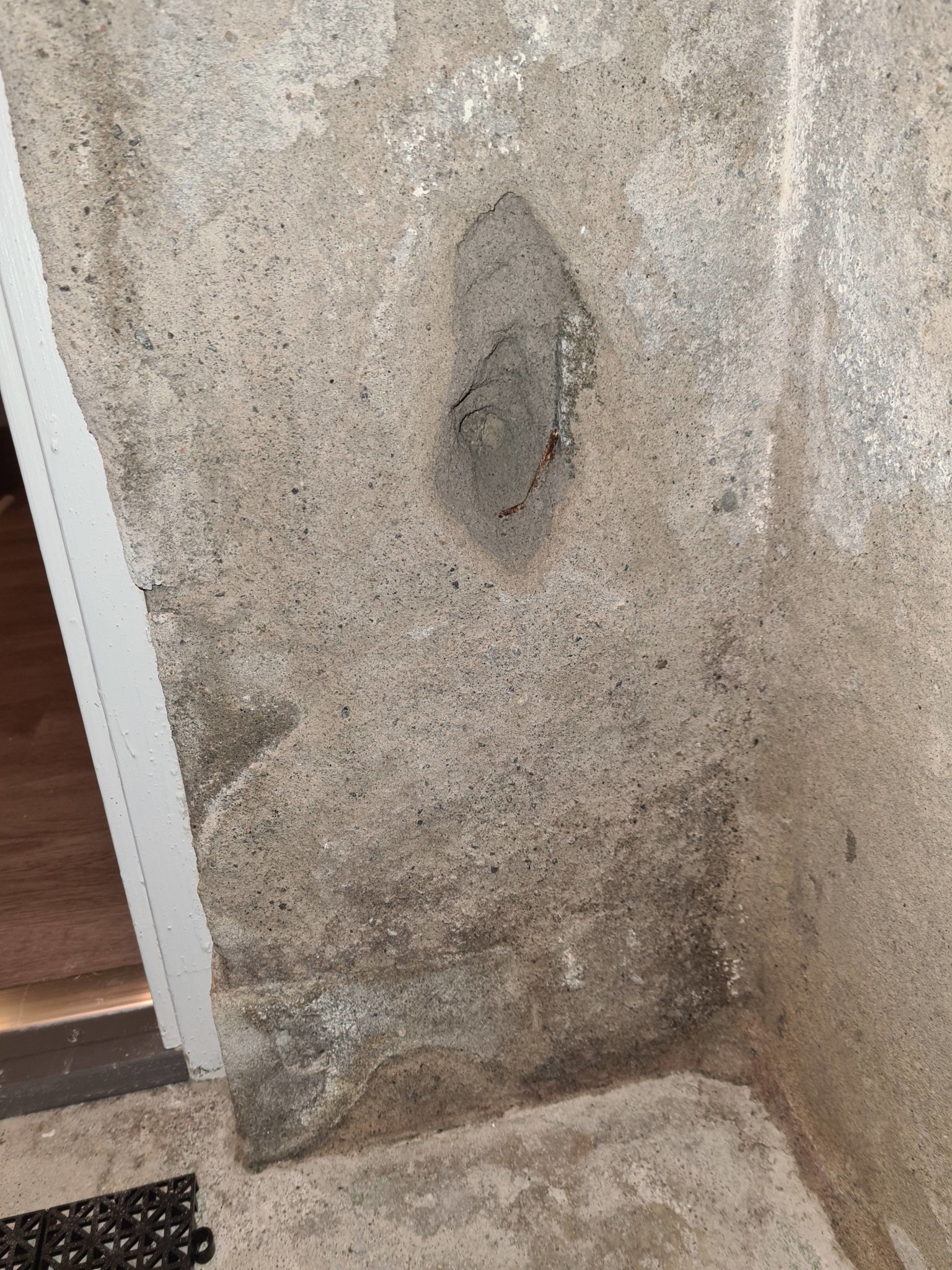
I think the plaster has served its time and may have been affected by moisture over the decades. Have you drained or are you sure the drainage works? If not, you can fix this as much as you like, the problems will still persist. Sure, you can remove the plaster and apply new, perhaps a better material than plaster, but the moisture will seep through and discolor the surface. If it's not a living space but a rough basement, it might not matter, but if you want to furnish it, it's unfortunate if the wall finishes crumble. Hopefully, there's nothing wrong with the frame, so it won't collapse entirely this century at least.
Drainage in the 60s was often done (for example, when my house was built) so that clay pipes were laid approximately level with the slab/basement floor (pipe center and slab were the same). This means the slab is constantly in water, absorbing moisture and spreading it to the walls, half a meter to a meter up, depending on ground conditions. If the clay pipes hadn't been clogged by sand after a decade or two, which almost all have, the drainage would have been a little better, but it is often completely clogged.