
Hello,
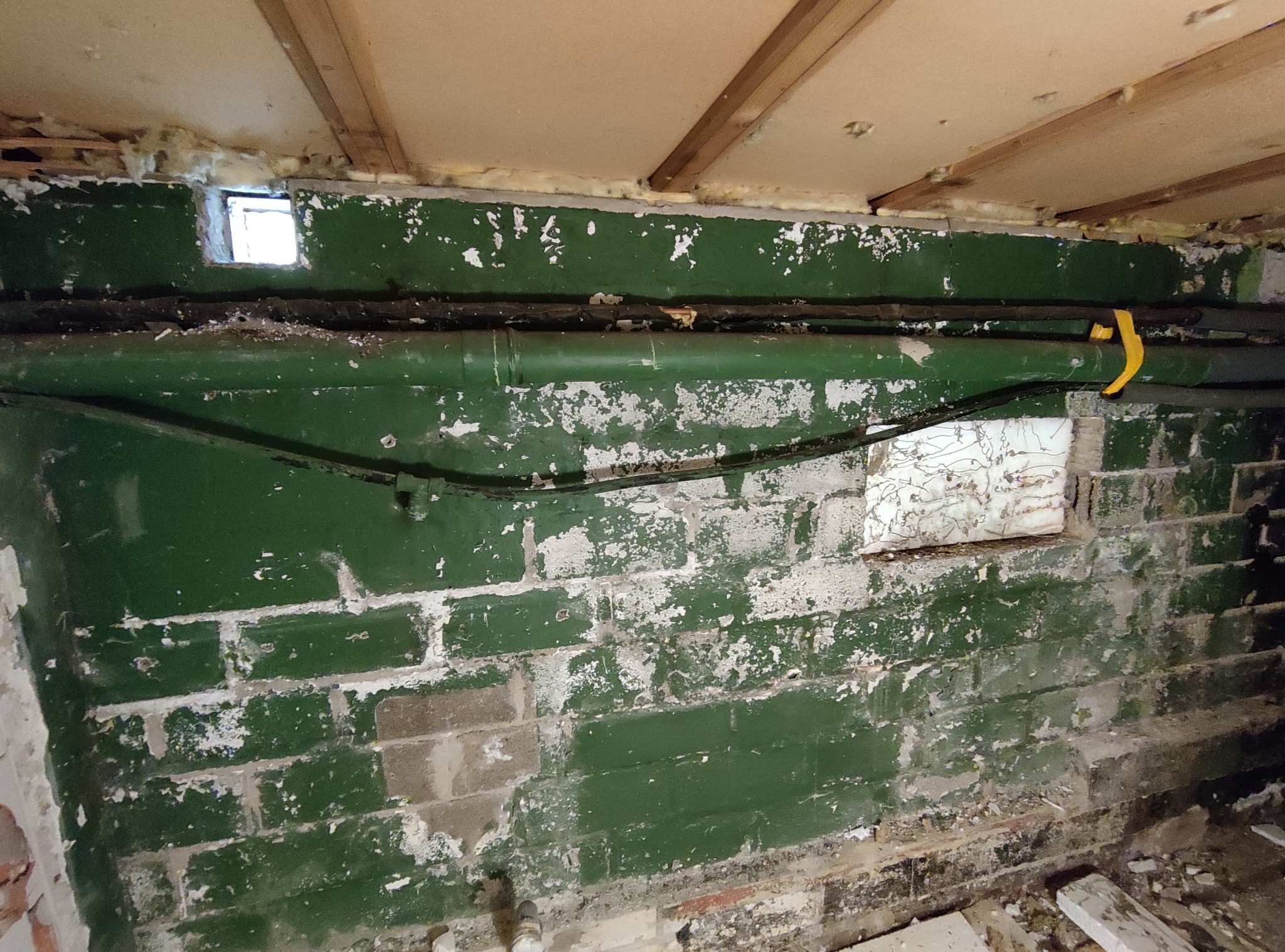
I'm renovating a basement, it's a split-level. I've removed all organic material in the laundry room, plastered, and painted with silicate paint. The basement is built on leca blocks.
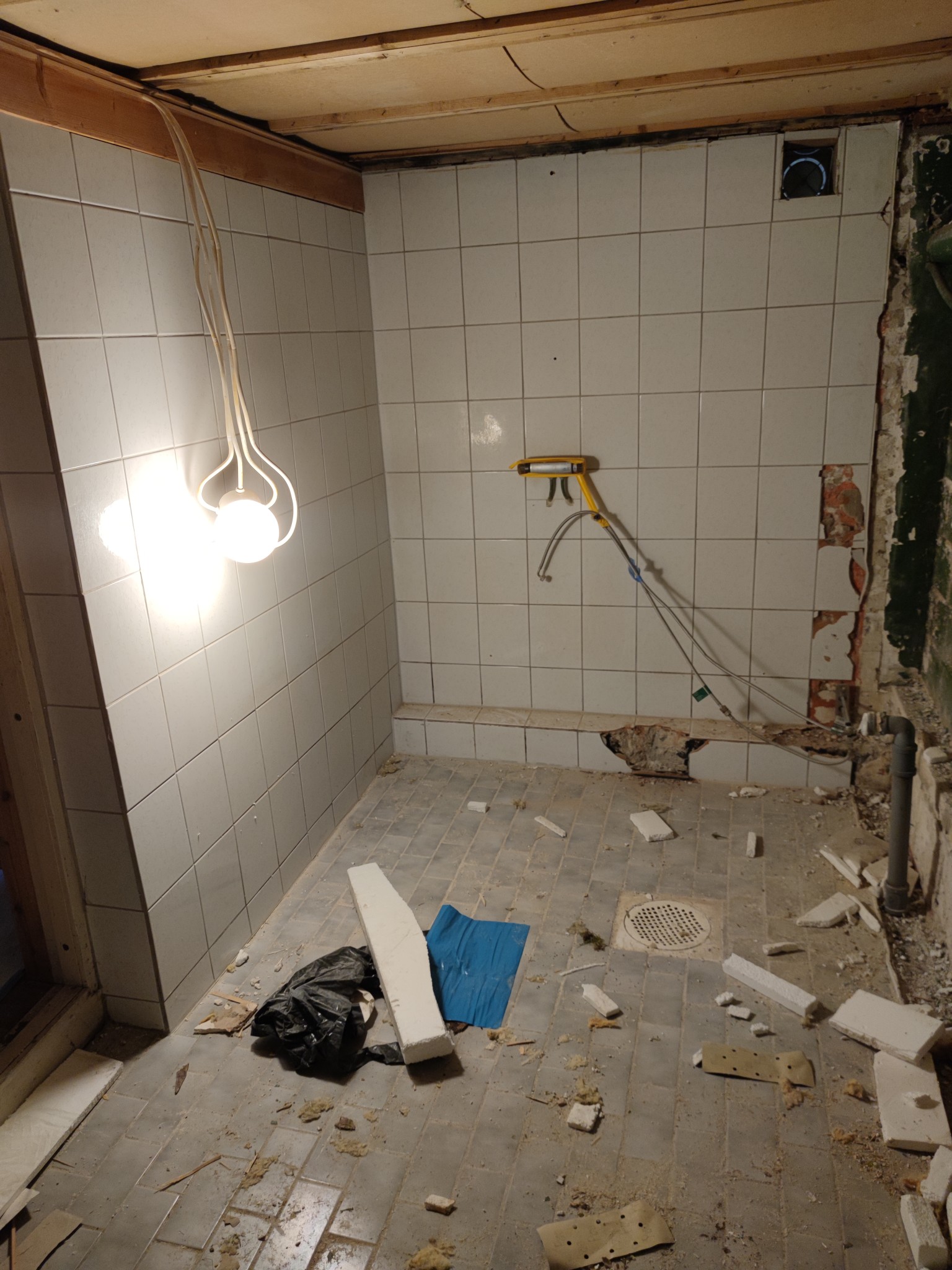
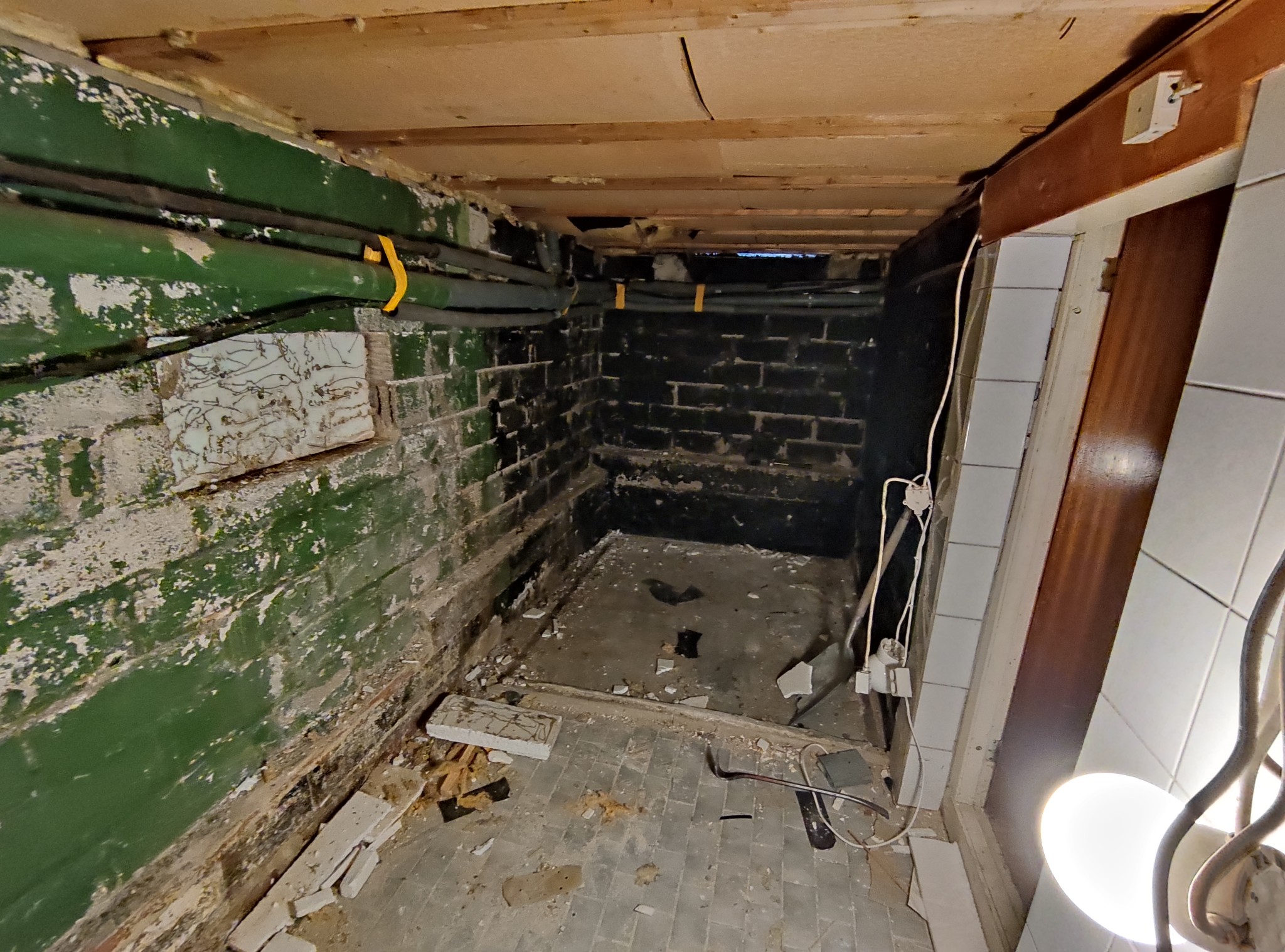
Now it's time for the bathroom, where the outer wall is tiled, and there's wood framing with plywood, and then tiles on that (done in 1990).
I will have a shower cabin in the bathroom.
So my question is;
1. Tear everything down, plaster the leca, and paint with silicate paint.
2. Tear down, frame with steel, insulate with styrofoam, add fiber cement board, waterproofing layer, and then tiles.
Option 1 seems better spontaneously as it allows control over potential moisture.
To clarify, it'll only be the outer wall where I do plaster and silicate paint; the rest will be tiled, and the shower cabin will stand against the other wall, first post on Byggahus
How would you do it and most importantly, why?
I'm renovating a basement, it's a split-level. I've removed all organic material in the laundry room, plastered, and painted with silicate paint. The basement is built on leca blocks.
Now it's time for the bathroom, where the outer wall is tiled, and there's wood framing with plywood, and then tiles on that (done in 1990).
I will have a shower cabin in the bathroom.
So my question is;
1. Tear everything down, plaster the leca, and paint with silicate paint.
2. Tear down, frame with steel, insulate with styrofoam, add fiber cement board, waterproofing layer, and then tiles.
Option 1 seems better spontaneously as it allows control over potential moisture.
To clarify, it'll only be the outer wall where I do plaster and silicate paint; the rest will be tiled, and the shower cabin will stand against the other wall, first post on Byggahus
How would you do it and most importantly, why?
Last edited:
Option 1 works fine, but you will probably end up with a fairly raw and cold basement bathroom.
If I'm going to answer what I WOULD have done (and actually HAVE done), it is as follows:
Chisel away the basement floor and dig out so you can lay foam insulation under the floor, preferably at least 20 cm.
(You might still need to chisel the floor to install new plumbing for the bathroom.)
Pour a new floor with underfloor heating.
And if/when you drain the house, insulate the basement wall on the outside.
If I'm going to answer what I WOULD have done (and actually HAVE done), it is as follows:
Chisel away the basement floor and dig out so you can lay foam insulation under the floor, preferably at least 20 cm.
(You might still need to chisel the floor to install new plumbing for the bathroom.)
Pour a new floor with underfloor heating.
And if/when you drain the house, insulate the basement wall on the outside.

Voting for option 1.
Thanks for the response! Breaking up is currently ruled out because we've done relining on the existing wells. I'm considering whether to dare to install underfloor heating in the bathroom, just self-leveling compound and lay the coil and new tiles on it.B b8q said:Option 1 works well, but you will likely end up with a rather raw and cold basement bathroom. If I were to answer what I WOULD do (and actually HAVE done), it is as follows:
Break up the basement floor and dig out so that you can lay down rigid foam insulation under the floor, preferably at least 2 dm. (You might still have to break up the floor to lay new plumbing for the bathroom.) Pour a new floor with underfloor heating. And if/when the house is re-drained, insulate the basement wall on the outside.
What’s relevant is that the foundation has been excavated, and we laid a membrane and carried out drainage in conjunction. There's a heat pump in the basement, but I want it warm underfoot in the bathroom. The question is whether one should worry about moisture migration when the foundation is drained?
You can always install underfloor heating, and if it doesn’t work well, you can just turn it off.
Is there anything to worry about regarding moisture migration then? Do you have, for example, non-organic walls and floors in the rest of the basement?
As I mentioned, I dug up the floor in my basement, but the walls are still in direct contact with the ground. But since it's only concrete hollow blocks, plaster, and brick, there’s nothing that could be directly damaged if it absorbs a little moisture, as long as it’s not trapped behind some plastic paint or similar.
Is there anything to worry about regarding moisture migration then? Do you have, for example, non-organic walls and floors in the rest of the basement?
As I mentioned, I dug up the floor in my basement, but the walls are still in direct contact with the ground. But since it's only concrete hollow blocks, plaster, and brick, there’s nothing that could be directly damaged if it absorbs a little moisture, as long as it’s not trapped behind some plastic paint or similar.
There is an adjacent wall that has old paneling that is lacquered, but that shouldn't be a major problem, just keep an eye on if moisture appears, and if so, remove it if necessary.B b8q said:You can always install underfloor heating, if it doesn't work well you can just turn it off.
Is there anything to worry about regarding moisture movement then? Do you have, for example, non-organic walls and floors in the rest of the basement?
As I said, I chipped up the floor in my basement, but the walls are still in direct contact with the ground. But since it's just concrete hollow blocks, plaster, and bricks, there's nothing that can be directly damaged if it absorbs some moisture, as long as it’s not trapped behind some plastic paint or such.
Or should I perhaps remove it now?

Click here to reply