
Hello,
My partner and I recently bought a 1970s split-level house.
We have just started tearing out based on it being considered a risk construction.
However, we are wondering what to consider when insulating against the outer wall and what is best for the wall and the house in regard to moisture.
Should it be plastered or should you install drywall? Similarly, we are wondering about the flooring since we only have 2.05m in ceiling height, we are keen on every centimeter. We want to install wall-to-wall carpet (intended for basements) can it be laid directly on the slab? Should we consider anything extra, such as ventilated baseboards or similar?
Today there is paneling on the ceiling, we think drywall would look nicer, is there any constructional reason to switch or is it only aesthetic?
Many questions from us, hope someone has some good tips.
I am attaching some pictures so maybe someone has some advice.
Best regards,
Johnas
My partner and I recently bought a 1970s split-level house.
We have just started tearing out based on it being considered a risk construction.
However, we are wondering what to consider when insulating against the outer wall and what is best for the wall and the house in regard to moisture.
Should it be plastered or should you install drywall? Similarly, we are wondering about the flooring since we only have 2.05m in ceiling height, we are keen on every centimeter. We want to install wall-to-wall carpet (intended for basements) can it be laid directly on the slab? Should we consider anything extra, such as ventilated baseboards or similar?
Today there is paneling on the ceiling, we think drywall would look nicer, is there any constructional reason to switch or is it only aesthetic?
Many questions from us, hope someone has some good tips.
I am attaching some pictures so maybe someone has some advice.
Best regards,
Johnas
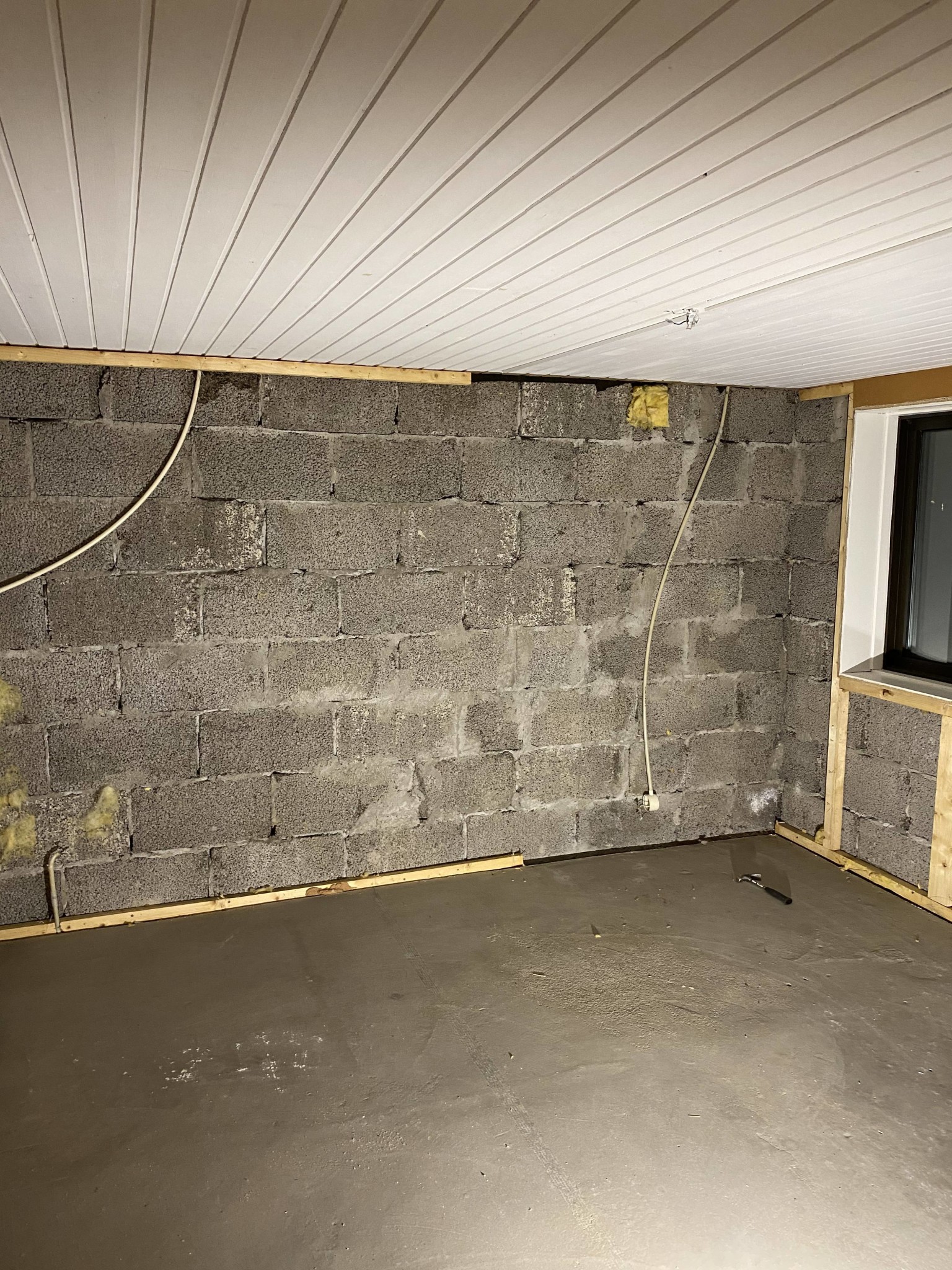
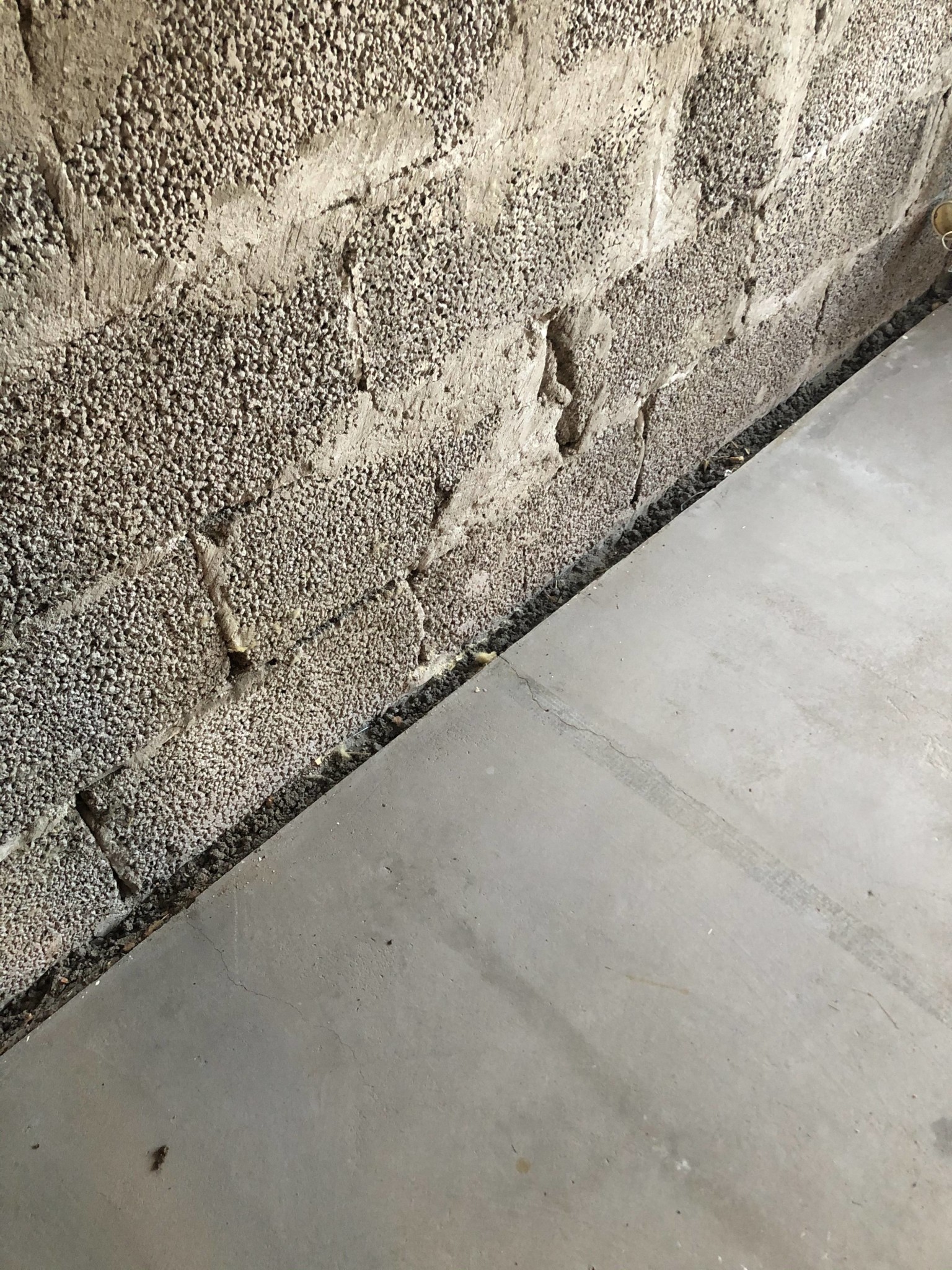
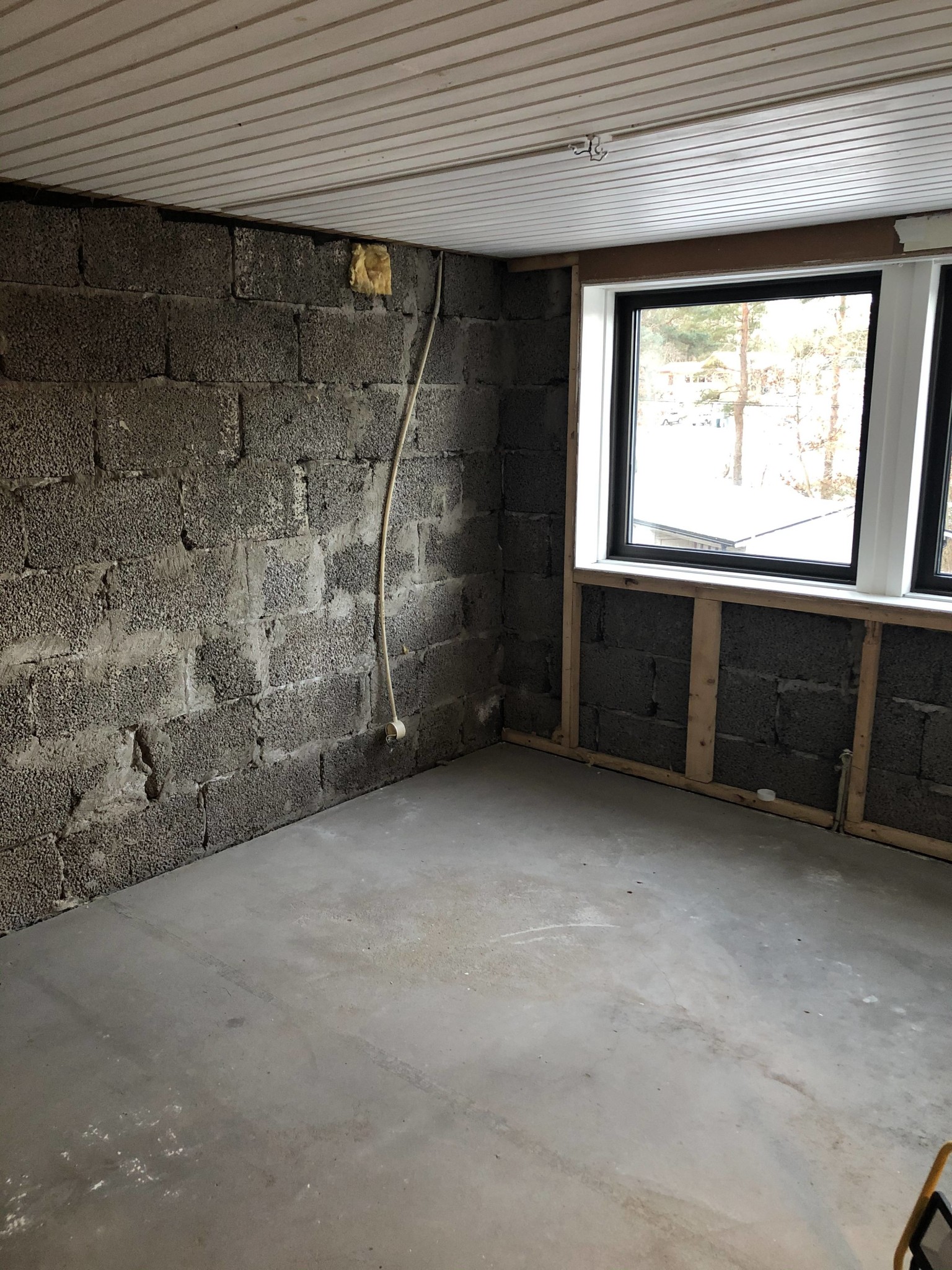
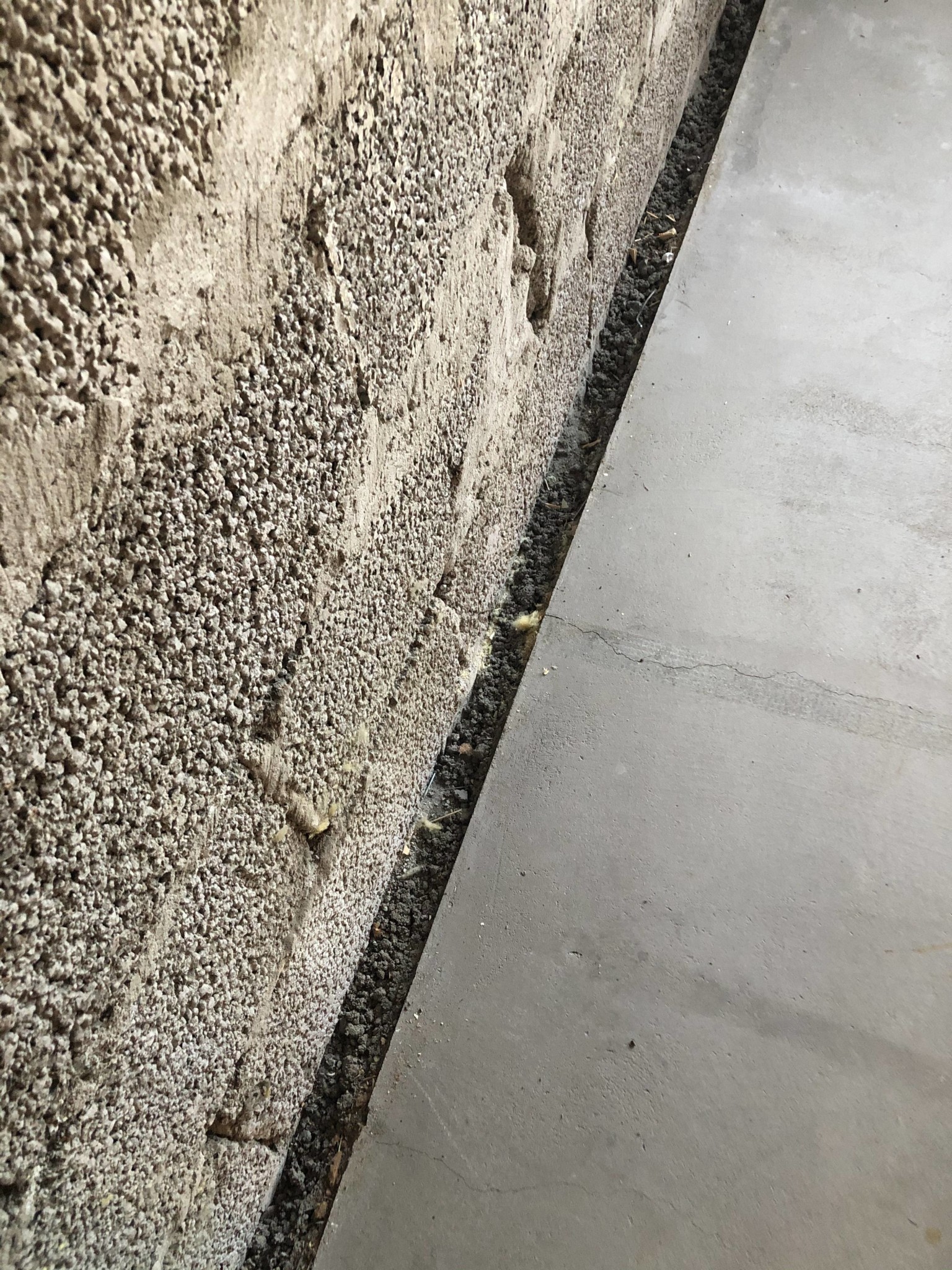
The inspector pointed out that it was likely a risk construction and that we should tear everything out. But no odor or anything like that has been the issue. So really, we just want to create a more modern look with the right construction.
That's correct, half of the room is at ground level.
That's correct, half of the room is at ground level.
Hi, It looks bone-dry on the walls, but maybe missed something. If the space is on a slope from the house, there should be no risk of moisture. Rooms below ground are usually accessed from outside and have drainage performed and the outer wall insulated, like isodrän. Then you take on the inside.
If the outside isn't fixed or if the risk is minimal for groundwater to reach the wall, try to avoid wooden studs and switch to steel studs with an air gap before the rest of the layers. You can always plaster the wall according to all the rules of art. Ceiling material is an aesthetic thing. There should probably be a vapor barrier (plastic) there as well against the basement space.
If the outside isn't fixed or if the risk is minimal for groundwater to reach the wall, try to avoid wooden studs and switch to steel studs with an air gap before the rest of the layers. You can always plaster the wall according to all the rules of art. Ceiling material is an aesthetic thing. There should probably be a vapor barrier (plastic) there as well against the basement space.
Insulating the outer wall is done from the outside according to practice.T Toffeln85 said:
Plaster is proven, mineral-based, can get damp and dry out without problems.
Plasterboard is organic (the paper) and can mold.
Since you've torn out everything due to risky construction, I assume you don't want to build new risky constructions? Build non-organically and insulate from the outside and you have done what you can.

Wow, that was ambitious.
Can you describe how the wall was constructed before: e.g., inside - 13 mm plasterboard, plastic, 70 mm wood frame, mineral wool, xx cm leca blocks, 5 cm styrofoam, plaster - outside. Then you can surely get good advice from someone who usually writes here.
Wall-to-wall carpet for basements is optimal. I don't think a ventilated baseboard adds much. The floor may need to be leveled if you're particular about it.
The panel ceiling can probably be torn down. It may be nailed onto a wooden batten. You could install plasterboard instead, but there's probably not much ceiling height to gain; it also needs a batten. There might be wiring and other pipes in the gap that need to fit. You can try to find out if there's a concrete ceiling on the basement or some other kind of joists.
In general: below ground, insulate preferably on the outside. Above ground, insulating on the inside works fine if needed. You have some wooden details in the pictures; that's probably the only thing that could rot. To be absolutely sure, you might want to replace it with steel or stone.
There are many ways to do this. Loads of threads here on the forum. One method is to frame with steel studs, possibly with a gap against the wall, and use fiberboard or another moisture-resistant board. Insulation is possible above ground. If you had insulation before and it worked, why not continue? Another is to build a new wall out of insulating lightweight concrete. If you're super particular, you might dig up outside, insulate below ground with draining boards, and above ground with styrofoam and re-plaster the whole base. The latter sounds entirely unreasonable if you don't have any problems.
If you're not concerned about insulation and want a simple moisture-secure construction, you can plaster the existing walls. A bit tedious to recess the wiring, but entirely possible. The wall will get a little colder, which needs to be compensated with more heat.
Do you have any moisture problems? Measure the moisture content in the studs to find out. If it’s bone dry, you can probably do anything. Later on, you can dig up the outside and check the drainage and insulation outside, which is much more critical.
I have a similar house. Wooden studs directly against concrete, insulation in between. NO drainage or insulation outside. Regular paper-covered plasterboard. Super-risky construction. But there are no moisture issues. There are about a hundred houses with similar constructions around here. I haven't heard of anyone having any problems. That's why I think, as long as I don't have any problems, I just do as I please. If the house is well-situated in terms of terrain and ground moisture, it works nonetheless. Keep in mind that a surveyor must write like that. All types of studded basement walls are risk constructions, and he has to say that to protect the insurance company and the seller from responsibility. But that doesn't mean there are or will be problems. The surveyor can only say the drainage is 40 years old and worn out; he can't check if it actually works. If you have no signs of moisture, take it easy, surf around for good solutions for you, and build a reasonably moisture-secure construction that doesn't break the bank. If problems arise, focus on the outside. Of those I know who have had damp basements, all have seen a total improvement with insulation and drainage outside. But it's costly and not fun, as it involves removing all the lovely plants and other things.
Can you describe how the wall was constructed before: e.g., inside - 13 mm plasterboard, plastic, 70 mm wood frame, mineral wool, xx cm leca blocks, 5 cm styrofoam, plaster - outside. Then you can surely get good advice from someone who usually writes here.
Wall-to-wall carpet for basements is optimal. I don't think a ventilated baseboard adds much. The floor may need to be leveled if you're particular about it.
The panel ceiling can probably be torn down. It may be nailed onto a wooden batten. You could install plasterboard instead, but there's probably not much ceiling height to gain; it also needs a batten. There might be wiring and other pipes in the gap that need to fit. You can try to find out if there's a concrete ceiling on the basement or some other kind of joists.
In general: below ground, insulate preferably on the outside. Above ground, insulating on the inside works fine if needed. You have some wooden details in the pictures; that's probably the only thing that could rot. To be absolutely sure, you might want to replace it with steel or stone.
There are many ways to do this. Loads of threads here on the forum. One method is to frame with steel studs, possibly with a gap against the wall, and use fiberboard or another moisture-resistant board. Insulation is possible above ground. If you had insulation before and it worked, why not continue? Another is to build a new wall out of insulating lightweight concrete. If you're super particular, you might dig up outside, insulate below ground with draining boards, and above ground with styrofoam and re-plaster the whole base. The latter sounds entirely unreasonable if you don't have any problems.
If you're not concerned about insulation and want a simple moisture-secure construction, you can plaster the existing walls. A bit tedious to recess the wiring, but entirely possible. The wall will get a little colder, which needs to be compensated with more heat.
Do you have any moisture problems? Measure the moisture content in the studs to find out. If it’s bone dry, you can probably do anything. Later on, you can dig up the outside and check the drainage and insulation outside, which is much more critical.
I have a similar house. Wooden studs directly against concrete, insulation in between. NO drainage or insulation outside. Regular paper-covered plasterboard. Super-risky construction. But there are no moisture issues. There are about a hundred houses with similar constructions around here. I haven't heard of anyone having any problems. That's why I think, as long as I don't have any problems, I just do as I please. If the house is well-situated in terms of terrain and ground moisture, it works nonetheless. Keep in mind that a surveyor must write like that. All types of studded basement walls are risk constructions, and he has to say that to protect the insurance company and the seller from responsibility. But that doesn't mean there are or will be problems. The surveyor can only say the drainage is 40 years old and worn out; he can't check if it actually works. If you have no signs of moisture, take it easy, surf around for good solutions for you, and build a reasonably moisture-secure construction that doesn't break the bank. If problems arise, focus on the outside. Of those I know who have had damp basements, all have seen a total improvement with insulation and drainage outside. But it's costly and not fun, as it involves removing all the lovely plants and other things.
C camelspin said:Oh, that was ambitious.
Can you describe how the wall was constructed before: e.g., inside - 13 mm gypsum, plastic, 70 mm wood stud, stone wool, xx cm lecablock, 5 cm styrofoam, plaster - outside. Then you might get good advice from someone who usually writes here.
Wall-to-wall carpet for the basement is optimal. I don't think a ventilated baseboard adds much. You may need to level the floor if you're careful.
The panel ceiling can probably be torn down. It might be nailed up on wooden battens. You can put gypsum instead, but there is probably not much ceiling height to gain, as it also requires battens. There might be electricity and other pipes in the space that need to fit. You can try to find out if it's a concrete slab on the basement or another type of deck.
In general: below ground, preferably insulate on the outside. Above ground: insulation on the inside is fine if needed. You have some wooden details in the pictures; that's probably the only thing that can rot. To be absolutely sure, you can remove it and replace it with steel or stone.
There are many ways to do this. Lots of threads here on the forum. One method is to frame with steel studs, possibly with spacing against the wall, and set fiberglass or another moisture-resistant board. Insulation is possible above ground. If you had insulation before and it worked, why not. Another option is to build a new wall of insulating lightweight concrete. If you're extremely careful, you dig up outside, insulate below ground with draining boards, and above ground with styrofoam and plaster the entire plinth. The latter sounds completely unreasonable if you don't have any problems.
If you're not concerned about insulation and want a simple moisture-proof construction, you can plaster up the existing walls. Slightly tricky to embed electricity, but entirely possible. The wall will become a bit colder, which must be compensated with more heat.
Do you have any moisture problems? Measure the moisture content in the studs to know. If it's completely dry, you can do almost anything. Later on, you can dig up the outside and check the drainage and insulation outside, which are much more important.
I have a similar house. Wood stud directly against concrete, insulation in between. NO drainage or insulation on the outside. Regular paper drywall. Super risky construction. But there are no moisture problems. There are about a hundred houses with similar construction around here. I haven't heard of anyone having any problems. Therefore, I think that as long as I don't have any problems, I'll do as I please. If the house is well-situated in the terrain and relative to ground moisture, it still works. Remember that a surveyor has to write like that. All types of framed basement walls are risk constructions, and he must say that to release the insurance company and the seller from responsibility. But that doesn't mean there are or will be problems. The surveyor can only say that the drainage is 40 years old and worn out; he cannot check if it actually works. If you have no symptoms of moisture, take it easy, research good solutions for you and build a reasonable moisture-proof construction that doesn't cost a fortune. If problems arise, focus on the outside. Of those I know who have had damp basements, all have seen a total improvement with insulation and drainage on the outside. But then all the nice plants and stuff go. Not fun. And expensive.
C camelspin said:Oh, that was ambitious.
Can you describe how the wall was constructed before: e.g., inside - 13 mm gypsum, plastic, 70 mm wood stud, stone wool, xx cm lecablock, 5 cm styrofoam, plaster - outside. Then you might get good advice from someone who usually writes here.
Wall-to-wall carpet for the basement is optimal. I don't think a ventilated baseboard adds much. You may need to level the floor if you're careful.
The panel ceiling can probably be torn down. It might be nailed up on wooden battens. You can put gypsum instead, but there is probably not much ceiling height to gain, as it also requires battens. There might be electricity and other pipes in the space that need to fit. You can try to find out if it's a concrete slab on the basement or another type of deck.
In general: below ground, preferably insulate on the outside. Above ground: insulation on the inside is fine if needed. You have some wooden details in the pictures; that's probably the only thing that can rot. To be absolutely sure, you can remove it and replace it with steel or stone.
There are many ways to do this. Lots of threads here on the forum. One method is to frame with steel studs, possibly with spacing against the wall, and set fiberglass or another moisture-resistant board. Insulation is possible above ground. If you had insulation before and it worked, why not. Another option is to build a new wall of insulating lightweight concrete. If you're extremely careful, you dig up outside, insulate below ground with draining boards, and above ground with styrofoam and plaster the entire plinth. The latter sounds completely unreasonable if you don't have any problems.
If you're not concerned about insulation and want a simple moisture-proof construction, you can plaster up the existing walls. Slightly tricky to embed electricity, but entirely possible. The wall will become a bit colder, which must be compensated with more heat.
Do you have any moisture problems? Measure the moisture content in the studs to know. If it's completely dry, you can do almost anything. Later on, you can dig up the outside and check the drainage and insulation outside, which are much more important.
I have a similar house. Wood stud directly against concrete, insulation in between. NO drainage or insulation on the outside. Regular paper drywall. Super risky construction. But there are no moisture problems. There are about a hundred houses with similar construction around here. I haven't heard of anyone having any problems. Therefore, I think that as long as I don't have any problems, I'll do as I please. If the house is well-situated in the terrain and relative to ground moisture, it still works. Remember that a surveyor has to write like that. All types of framed basement walls are risk constructions, and he must say that to release the insurance company and the seller from responsibility. But that doesn't mean there are or will be problems. The surveyor can only say that the drainage is 40 years old and worn out; he cannot check if it actually works. If you have no symptoms of moisture, take it easy, research good solutions for you and build a reasonable moisture-proof construction that doesn't cost a fortune. If problems arise, focus on the outside. Of those I know who have had damp basements, all have seen a total improvement with insulation and drainage on the outside. But then all the nice plants and stuff go. Not fun. And expensive.
Thanks for the input
We haven't encountered anything that would indicate there was/is moisture in the walls. The moisture meter showed dry. Only an area of just over 1 m2 on the slab showed more moisture; we saw this when we tore out the parquet with underlying paper and plastic. Now the area is dry, but what it means further down in the slab is unknown.
Should any measures be taken, or can a more ventilated floor (wall-to-wall carpet) than before help with moisture that might come from the slab?
Drainage and insulation on the outside feel far away since it would involve demolishing extensions/patio, among other things. So we hope that since we haven't discovered any moisture with the previous risk construction, there is a possibility to just improve it with the right materials.
Previously, the wall was constructed as follows:
inside - glued wood panel, 13 mm hard board (it seems), 45 mm wood stud, stone wool, 25 cm concrete hollow block, plaster - outside.
We've thought a little like this:
Level the floor so that the "inner slab" meets the outer wall
Set steel stud with air gap - should there also be an air gap underneath?
Some form of insulation, foam?
Gypsum
We would like to install underfloor heating in the hallway and then tiles. Since it's a limited area and ground level, we think it's possible. Yes or no on that?
If it ain't broke, don't fix it - I think you're reasoning wisely! If you want a better climate in the basement, it can be solved with a heat pumpT Toffeln85 said:We haven't encountered anything that would indicate there was/is moisture in the walls. The moisture meter showed dry.
...
Draining and insulating on the outside feels far off since it would involve demolishing extensions/deck among other things. So we hope that because we haven't detected any moisture with the previous risk construction, there is the possibility to just make it better with the right materials.
Just plastic and parquet in the basement might not be ideal, so it's a very good measure to remove it and lay down a breathable carpet. Those basement carpets are supposed to withstand moisture, and the floor can constantly dry into the room.
Walls with air gaps are probably also good. A ventilated strip at the top and bottom can have some function, and the panels should not be tightly closed against the floor and ceiling. Some kind of insulation between the studs is probably good to avoid poor acoustics and drum sounds in the walls. I would choose mineral wool, mostly because I'm used to it, easy to cut, good soundproofing, fire-resistant.
Someone else can surely give a good example of how to build such a wall. I've thought about it myself—but I don't quite understand the principle. The stone wall can dry inward with an air gap, so that's good. But what about condensation? There will likely be a cold stone wall behind the panels—and if humid warm air enters the gap, it should condense on the wall. In winter, when the indoor air is really dry, maybe it's not a problem. But in early summer, the foundation is colder than the air. It can be warm and humid outside, but cool in the basement. Then the humidity in the basement rises if you ventilate with fresh air from outside. There should be a risk of lots of condensation in the gap then? I notice it clearly in my basement. Around 20% RH in winter, 60% towards June running a dehumidifier, it can rise further during summer depending on the weather. Can someone enlighten me about air gaps and condensation?
Walls with air gaps are probably also good. A ventilated strip at the top and bottom can have some function, and the panels should not be tightly closed against the floor and ceiling. Some kind of insulation between the studs is probably good to avoid poor acoustics and drum sounds in the walls. I would choose mineral wool, mostly because I'm used to it, easy to cut, good soundproofing, fire-resistant.
Someone else can surely give a good example of how to build such a wall. I've thought about it myself—but I don't quite understand the principle. The stone wall can dry inward with an air gap, so that's good. But what about condensation? There will likely be a cold stone wall behind the panels—and if humid warm air enters the gap, it should condense on the wall. In winter, when the indoor air is really dry, maybe it's not a problem. But in early summer, the foundation is colder than the air. It can be warm and humid outside, but cool in the basement. Then the humidity in the basement rises if you ventilate with fresh air from outside. There should be a risk of lots of condensation in the gap then? I notice it clearly in my basement. Around 20% RH in winter, 60% towards June running a dehumidifier, it can rise further during summer depending on the weather. Can someone enlighten me about air gaps and condensation?
Regarding underfloor heating, I remember that the uninsulated slab is the problem; moisture movement can occur if you heat the ground beneath. How sensitive it is and how small an area is "ok" I don't know.
If it's a smaller area, it might be reasonable to do the work of chiseling away, tidying up underneath, and installing modern insulation before pouring it with the underfloor heating embedded. As far as I understand, there should be less risk if you insulate underneath.
If it's a smaller area, it might be reasonable to do the work of chiseling away, tidying up underneath, and installing modern insulation before pouring it with the underfloor heating embedded. As far as I understand, there should be less risk if you insulate underneath.
Click here to reply