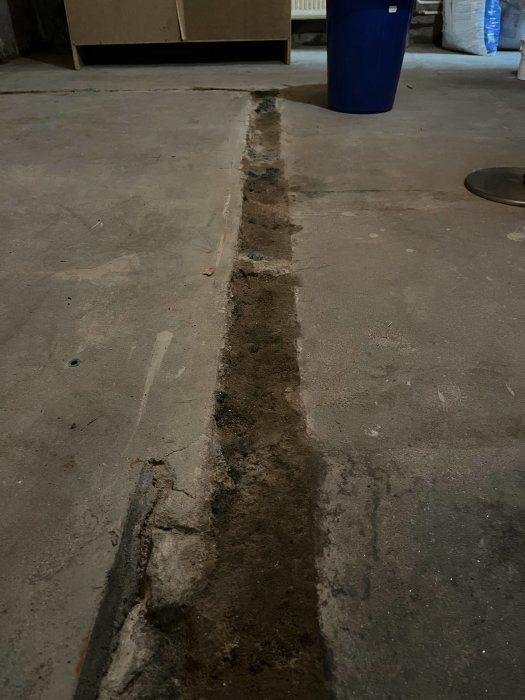
The concrete floor in the basement of my house (built in 1936) is dry, but there is some moisture in the walls, especially at the bottom near the floor. Even the brick interior walls have or have previously had some moisture problems. In some places on the floor, small damages have occurred when I, for example, pulled out a nail that took some of the concrete with it. In these small holes, it is damp. There are also "tracks" in the floor where walls have previously stood and were later removed. These tracks are also damp. This makes me wonder if it could be that the floor has been covered with material that doesn't allow water vapor to evaporate, causing the moisture to instead rise into the walls. The house is old, and the layout has changed countless times, so it's very possible that the current flooring was installed long after 1936.
If that's the case, what should be done? Remove and redo? Or live with moisture in the walls? The basement is used as a basement and not as living space.
Live with the moisture.
You probably have the same moisture in the floor as in the walls, but the floor's moisture evaporates more easily.
The slab in houses as old as yours (and mine) is uninsulated, so moisture rises up, that's just how it is.
I have the same "problem" and live with it. Don't place any moving boxes directly on the floor because they will absorb moisture and collapse.
A dehumidifier used occasionally as needed helps enormously to keep the moisture in check.
Here it might become a little clearer what I mean:
The concrete slab is bone dry, but in the track of the old wall, it is wet, which presumably indicates that the concrete slab isn't letting through the moisture that is clearly there? But maybe it's like this with all concrete floors?
Click here to reply
Vi vill skicka notiser för ämnen du bevakar och händelser som berör dig.