
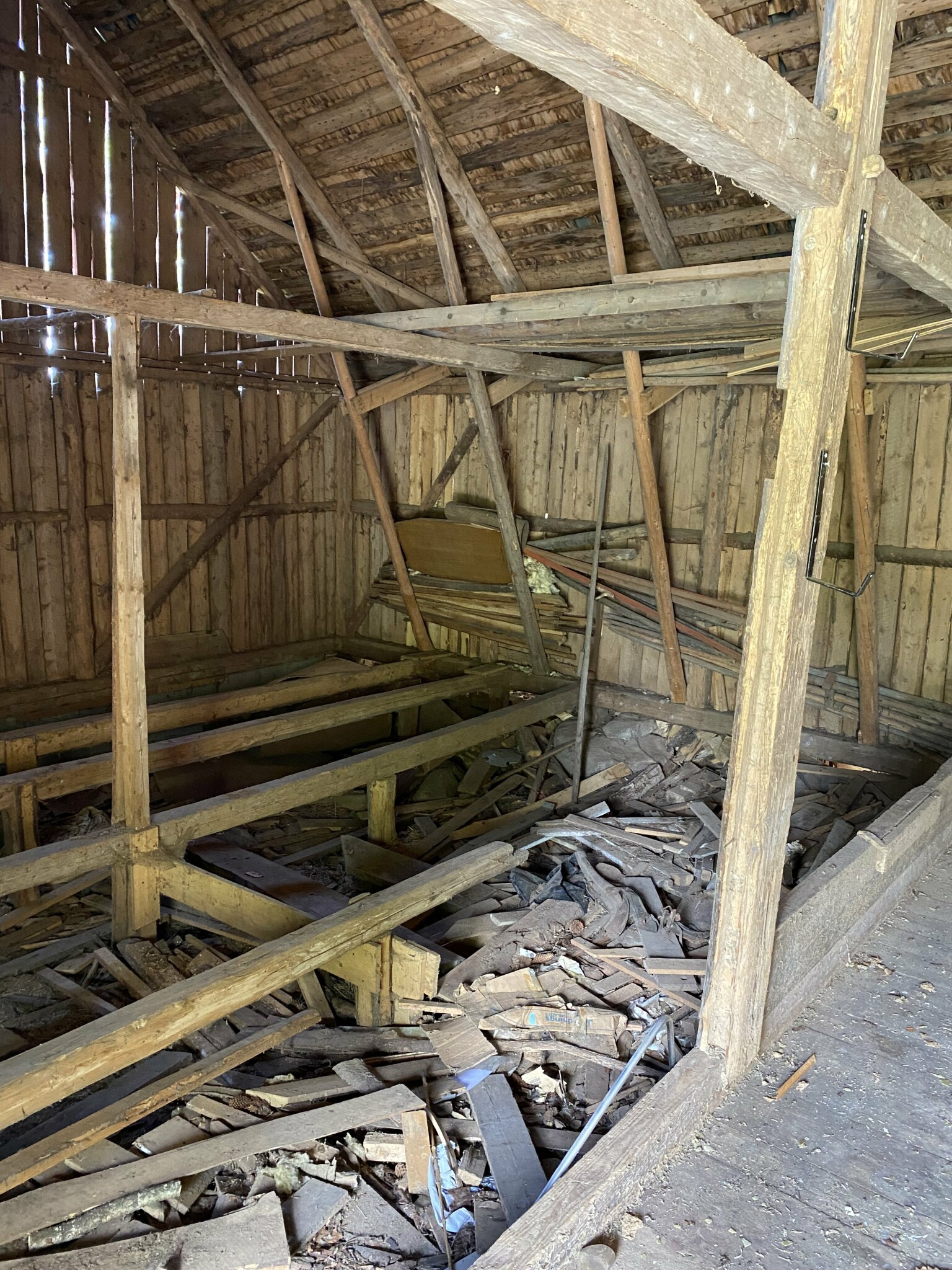
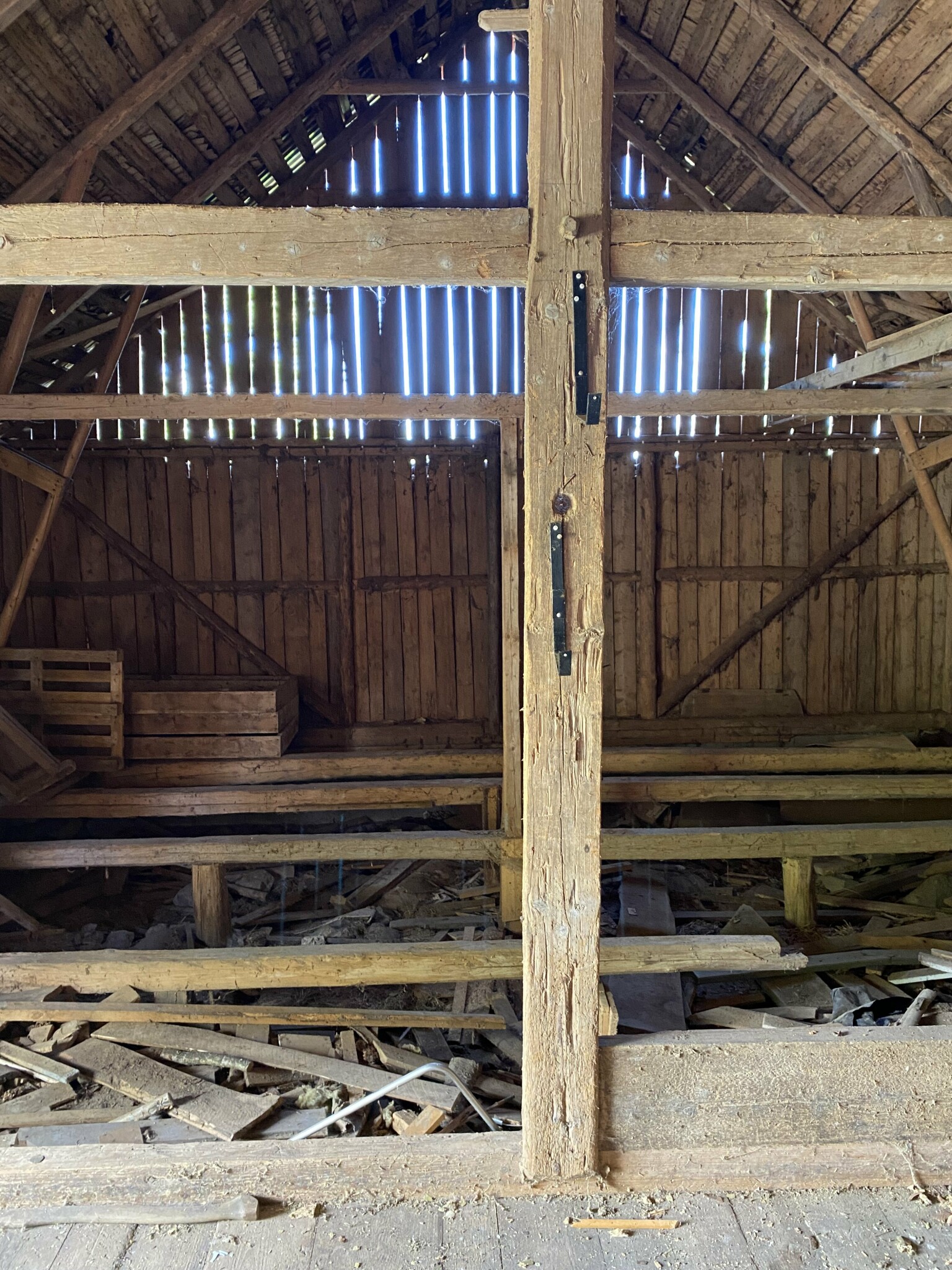
We have a barn that is not in use, and there we would like to build some simple rooms (not insulated) for overnight summer guests. First, we need to arrange a floor, and our question is what we need to consider there? Does all organic material need to be removed before we lay the floor? What can we do to keep moisture away? Should we put something on the ground, and if so, what? We gratefully welcome all tips and suggestions. The floor area to be laid is approximately 7 x 6 meters.
I would do as follows:N NetteP said:We have a barn that is not being used, and we would like to build some simple rooms there (not insulated) for overnight summer guests. First, we need to arrange a floor, and our question is what do we need to consider there? Does all organic material need to be removed before we lay the floor? What can we do to keep moisture away? Should we lay something on the ground, and if so, what? We gratefully accept all tips and suggestions. The floor area to be laid is about 7 x 6 meters.
Remove all organic material, lay a layer of gravel 0-16, compact it thoroughly, level it, lay insulation, pour concrete. Then you'll have a good moisture-insulated floor that will last a long time.
Another alternative is to lay plastic on the ground and make a wooden framework, more risk of moisture then but faster/cheaper.

What type of ground is under the rubble? Normally it's enough to clear and level it out, and lay a solid wooden floor. A bit drafty in the summer doesn't really matter. Get rag rugs and furnish old-style = success 
FlugfiskarniJämtland said:
I would do as follows:
Remove everything organic, lay a layer of macadam 0-16, pack thoroughly, level it, lay cell foam, pour concrete. Then you have a well moisture-insulated floor that will last a long time.
Another option is to lay plastic on the ground and make a wooden frame, more risk of moisture then but faster/cheaper.
@FlugfiskarniJämtland you should remove the word 'Allvetare' from your profile if you persist in claiming there is such a macadam
Absolutely,
F fribygg said:
Absolutely, the building height doesn't seem to be a problem so a layer of singel under the foam board would be great.F fribygg said:
F fribygg said:
F fribygg said:
Does this benefit the thread creator's question? I don't think so. Maybe you have better knowledge than me about soil and stone aggregates, if so, give advice to the thread creator's consideration instead.F fribygg said:
When the thread starter provides more information, perhaps I can contribute something, but as of now, we know too little about the circumstances.Absolutely,
Absolutely, the building height doesn't seem to be a problem so a layer of gravel under the foam board would be ideal.
Does this benefit the thread creator’s question? I don’t think so. You might have better knowledge than me about ground and stone fractions, so give advice to the thread creator’s query instead.
@FlugfiskarniJämtland your advice to use material with 0 fraction under the foam board is very questionable, and you also don't seem to know the difference between macadam and crushed rock, so I suggest you remove 'Allvetare'
There is an old beam structure and posts holding up the roof, crossed to keep the walls together. Starting with macadam and then casting a floor is probably not a good idea, as the posts will rot. A layer of macadam of 10 cm and maybe a plastic, then building up a proper floor with joists. It can be insulated by making a double floor about 20 cm thick. If it's supposed to be possible to be there in the winter, it will be necessary to build an almost proper house in the barn. Not entirely wrong, seen it before, and it becomes draft-free from the outside. Now the barn is still standing because it likely blows straight through and even underneath, so all the ground moisture goes away.

If it is an old barn/barn loft and it is likely located in the countryside, avoid anything like polystyrene and glass-/rock wool, unless it's absolutely rodent-proof. Those of us who live in the countryside and have old stables/barns with old concrete flooring know that rodents settle there. So, solid massive materials and very careful construction work stop rodents. This applies to the entire building. Rodents come from all directions.
Since it's an old barn that is guaranteed not to be straight and/or at right angles anywhere, materials and methods should be chosen accordingly to make the job easier. For example, strong tongue-and-groove boards are an excellent material for this purpose.
Based on the photos, I would probably choose to use tongue-and-groove boards on the inside of the outer walls and build the wall inward. Traditional wooden floor framework.
A lot of the solutions, constructions, methods, and materials that are chosen depend on...
TS's knowledge, conditions, possibilities, as well as the local building tradition, and not least how the space will be used. More input is needed from TS here.
Since it's an old barn that is guaranteed not to be straight and/or at right angles anywhere, materials and methods should be chosen accordingly to make the job easier. For example, strong tongue-and-groove boards are an excellent material for this purpose.
Based on the photos, I would probably choose to use tongue-and-groove boards on the inside of the outer walls and build the wall inward. Traditional wooden floor framework.
A lot of the solutions, constructions, methods, and materials that are chosen depend on...
TS's knowledge, conditions, possibilities, as well as the local building tradition, and not least how the space will be used. More input is needed from TS here.
Thank you for all your input.
Casting a floor is not an option; it's too expensive and it's not the style we want.
If you lay a layer of macadam on the ground (soil) and then plastic to protect against moisture, how do you fasten the plastic, just with the help of macadam? There will be more than 50 cm of level difference between the ground and the floor.
Should the beams be made of pressure-treated wood?
Then we'll lay plank flooring, perhaps double as @jonaserik suggested. Do you lay these two layers in different directions then?
Eventually, we will also build walls and a roof, so that it becomes like a room inside the barn. I will surely have many more questions then.
Casting a floor is not an option; it's too expensive and it's not the style we want.
If you lay a layer of macadam on the ground (soil) and then plastic to protect against moisture, how do you fasten the plastic, just with the help of macadam? There will be more than 50 cm of level difference between the ground and the floor.
Should the beams be made of pressure-treated wood?
Then we'll lay plank flooring, perhaps double as @jonaserik suggested. Do you lay these two layers in different directions then?
Eventually, we will also build walls and a roof, so that it becomes like a room inside the barn. I will surely have many more questions then
.There are probably no storm winds underneath. Just a little sand on the plastic along the edges and in the middle, splashes here and there. The joists don't need to be pressured, they're suspended in the air and no water on them. Laying in the same direction depends on how the first layer is, but it's not entirely wrong. The double floor allows you to insulate the floor, just think about how thick you want it. About 20 cm is a good benchmark. Plan ahead a little and draw some sketches. The room should have walls and under these, there should be a joist. If you think the joists carrying the floor/house become too long, you can place concrete slabs on the compacted gravel (no large items that need compacting) with a joist to hammer on, preferably an asphalt felt between the support and the concrete slab.
Feels unnecessary to lay gravel/macadam and plastic when you have such an airy foundation. Solid and thick floor planks on regular joists will suffice. Not impregnated.N NetteP said:Thanks for all your input.
Pouring a floor is not an option; it will be too expensive and it's not the style we want.
If you lay a layer of macadam on the ground (soil) and then plastic to protect against moisture, how do you attach the plastic, just with the help of macadam? There will be more than a 50 cm level difference between the ground and the floor.
Should the joists be made of pressure-treated lumber?
Then we will lay a plank floor, perhaps double as @jonaserik suggested. Do you lay these two layers in different directions then?
Eventually, we will also build walls and a ceiling so that it becomes like a room inside the barn. We will surely come back with many more questions then

I agree here.Jonatan79 said:
If the floor is to be insulated, you should plan for a sub-floor and fill with suitable material.
You should err on the side of caution so you don't end up with too weak a floor if you don't know how you want to furnish it, thick floorboards as previously suggested.
Just make sure to clear away all the debris from the ground first.
Good luck.
/W
Click here to reply