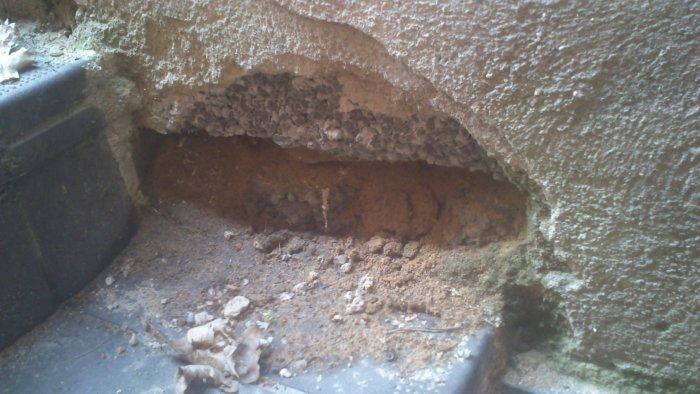
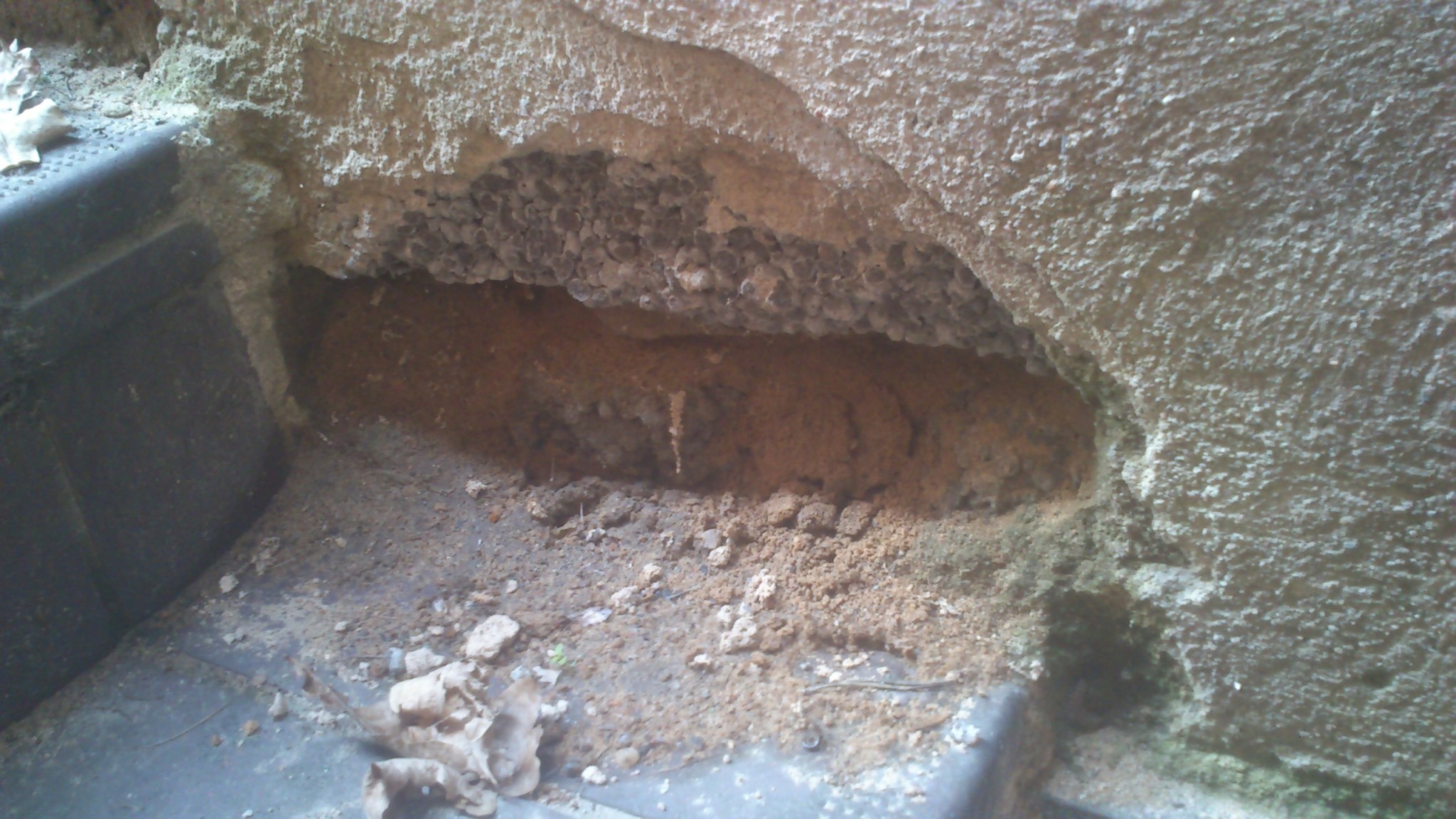
On our basement stairs at the back, we have an outer wall built of Leca blocks and mortar. The wall is then plastered. The problem is that the mortar between the Leca blocks has now started to erode, mainly at the bottom of the wall and most damaged at the bottom of the stairs. It's quite a humid environment here which probably means it never really dries out. It might also be that the outside of the wall is not moisture-protected. However, it looks good at the higher part of the wall, so some moisture protection might be in place. Is there any possible permanent solution for this, replacing the mortar with something else? If the outside is moisture-protected, perhaps one could scrape out the loose mortar, apply new, and seal with plaster again and hope it lasts for a few years?
An old thread this, but now it has weathered more, of course. It's not just the mortar that's disappearing; the Leca blocks are also dissolving. I'm wondering from which direction the moisture might be coming. Could it be from the ground behind the wall, or is it from the stairwell itself? It's only at the bottom near the steps that there are problems, so perhaps this indicates that the moisture is coming from the stairwell. Maybe one should put on a Steniskiva or something similar that could prevent the moisture from entering the wall? Attaching an image of how it looks.
There is a slight slope, but only at most one to two millimeters over half a meter. Perhaps the steps should be slightly concave, so the water can run in the middle instead of along the walls? We have salted once or twice but we avoid it.
There should be a bit more slope on a stone staircase with wall contact, preferably in both directions so that no water remains standing. If you have salted and the slope is poor, the damage may very well be due to this, as mortar, plaster, and leca are very sensitive to salt (more so than concrete). Usually, a couple of winters of salting is enough to cause these damages, never salt the staircase again. The poor drainage itself contributes to the porous leca and plaster absorbing water, resulting in frost damage.
My suggestion is that you repair the wall (with similar materials) and either clad the staircase with, for example, tiles and create more slope, or bring in a sheet metal worker to install metal against the wall (a poorer solution but works aesthetically since potential damages are not as visible).
If the moisture comes from the stairs, can't you brush water glass on the plaster against the steps?
Water glass (which is also the base in silicate paint) unfortunately does not provide better protection than the paint the wall is already coated with. Since the stairs rest directly against the wall, the water will pass through any waterproof surface layer by capillary action. I believe that the problem with drainage must be solved.
Yes, salt is not good. I've only used it a few times when there was a lot of ice. Sometimes some snow can also accumulate along the edges that you might not remove right away. The slope I measured was sideways and is probably not ideal. A downward slope is good. Thanks for the tips!
Click here to reply
Vi vill skicka notiser för ämnen du bevakar och händelser som berör dig.