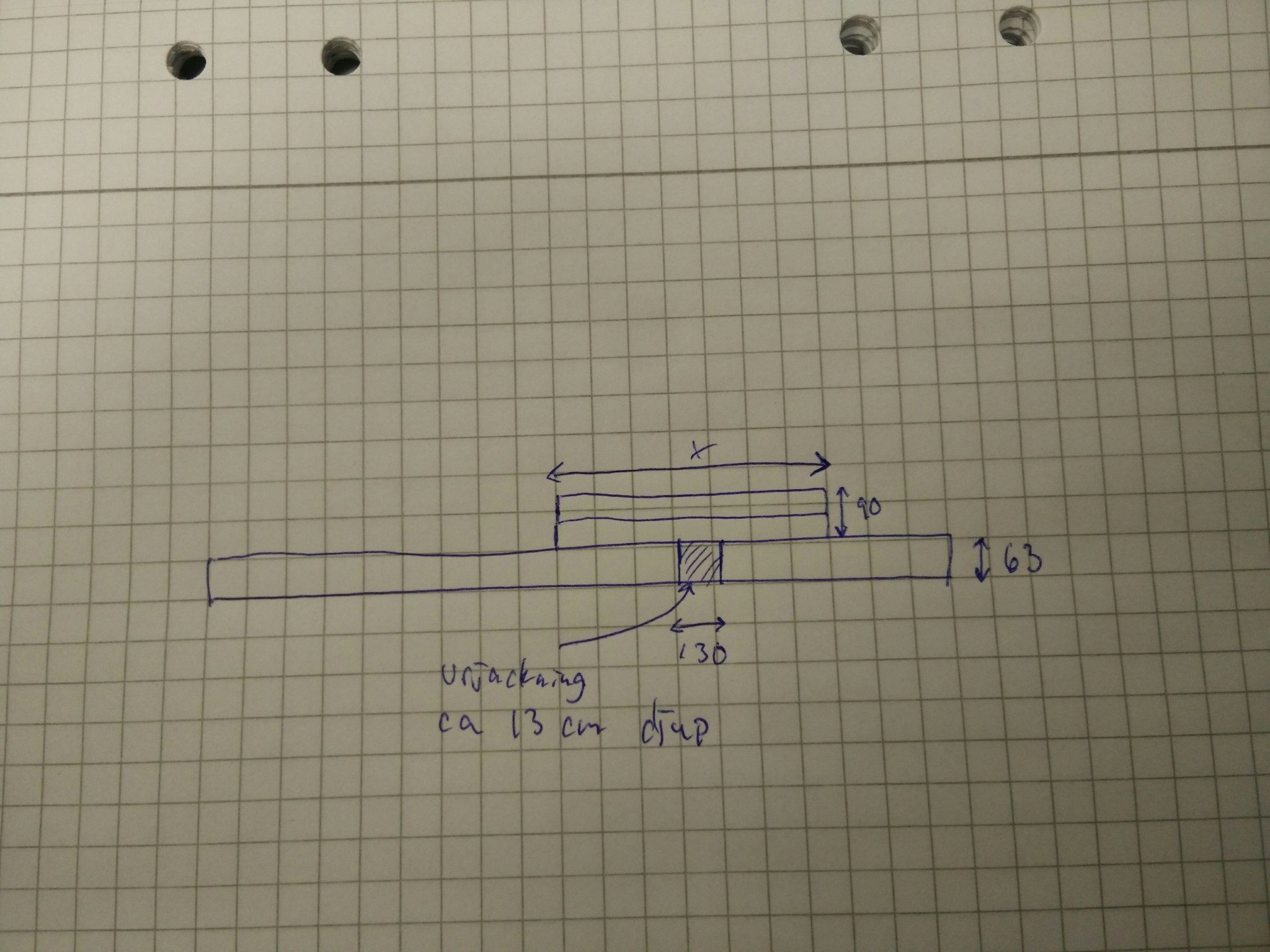
The longer the better. In old wooden structures, such splice joints could have a length of 1 meter on both sides, but then they were spliced with bolts.
The longer the better. In old wooden constructions, such splice pieces could have a length of 1 meter on both sides, but then they were spliced with bolts.
I'll go as long as possible, it's just material
With sufficiently long reinforcement, can the beam's strength be considered intact?
I assume the thickness of the reinforcement should be at least as thick as the existing beam?
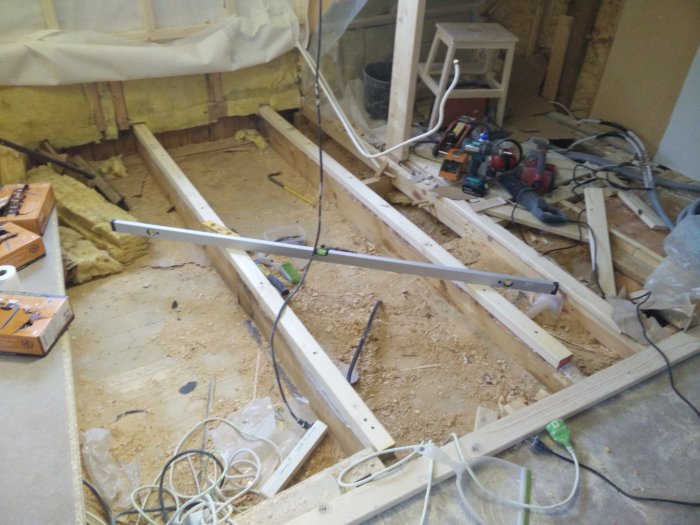
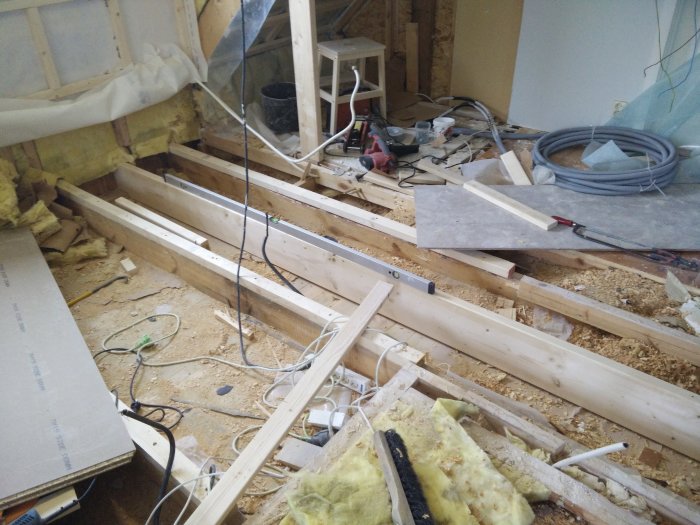
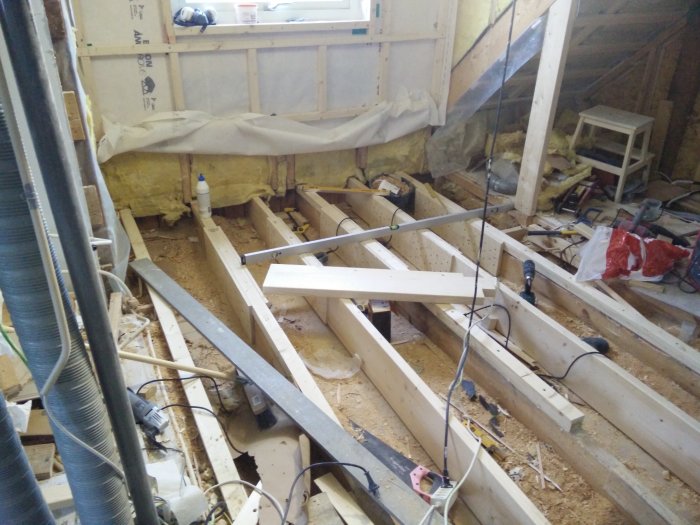
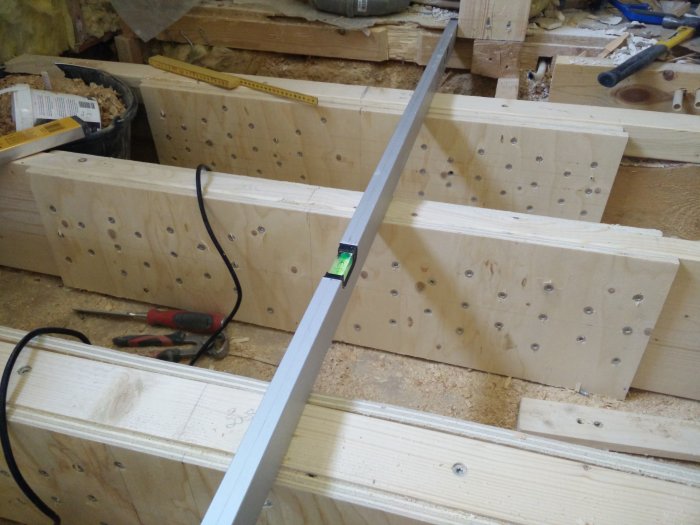
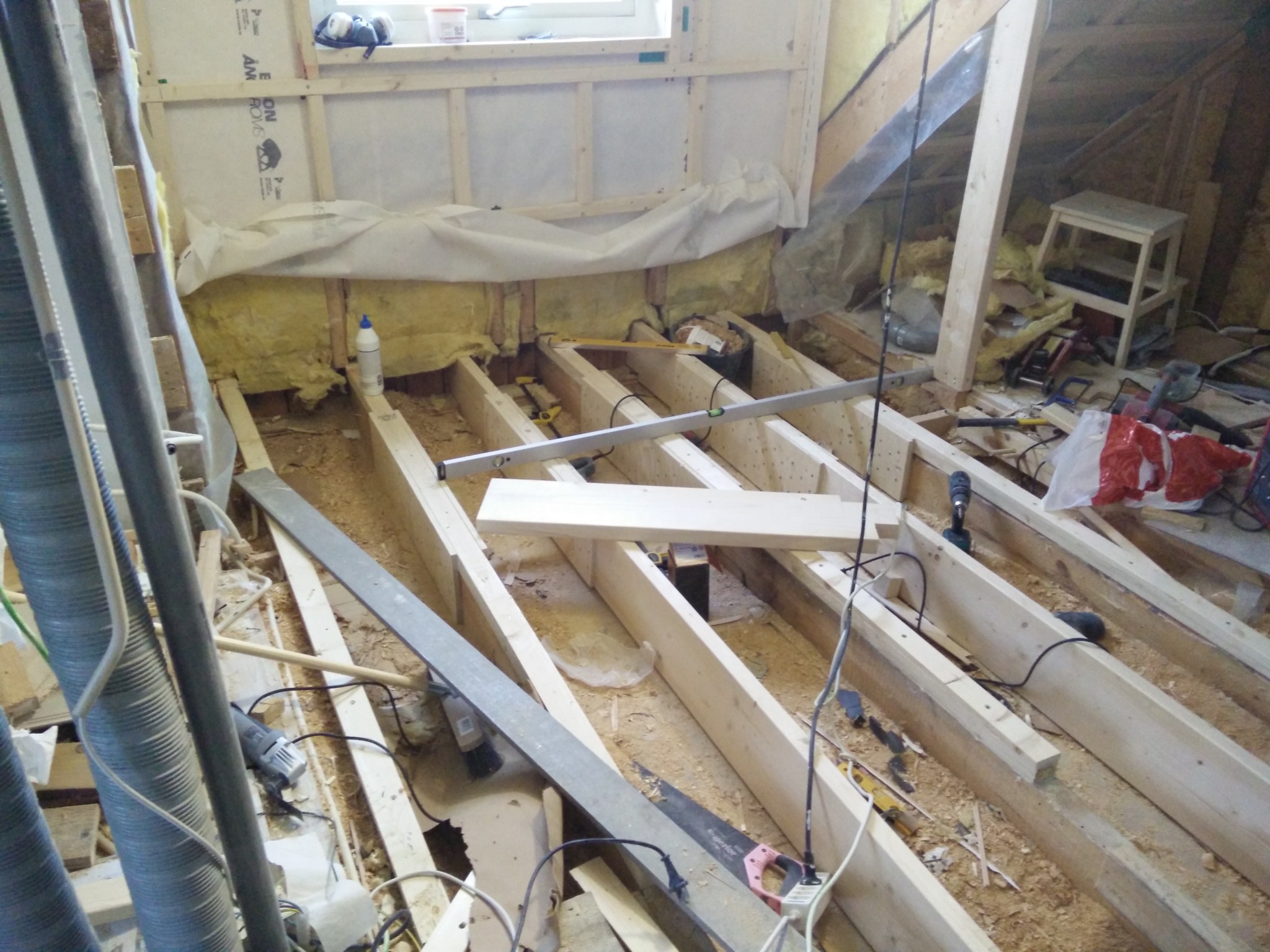
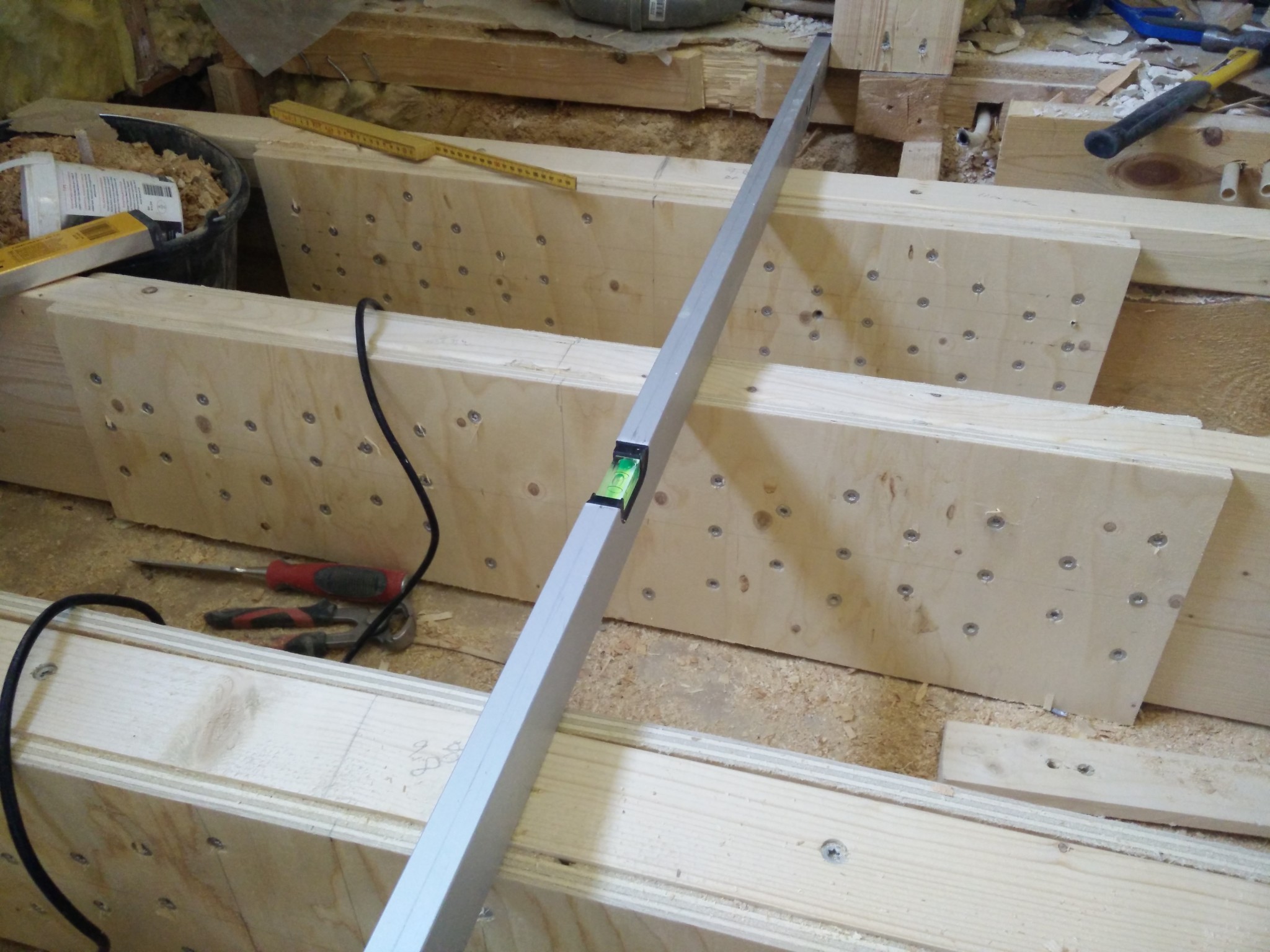
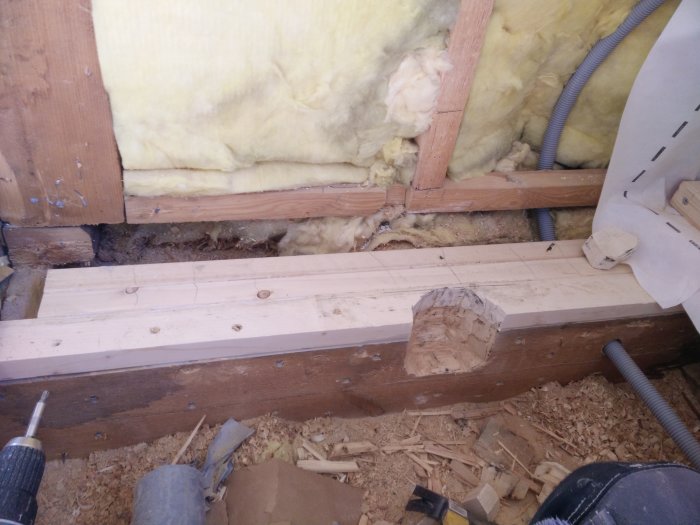
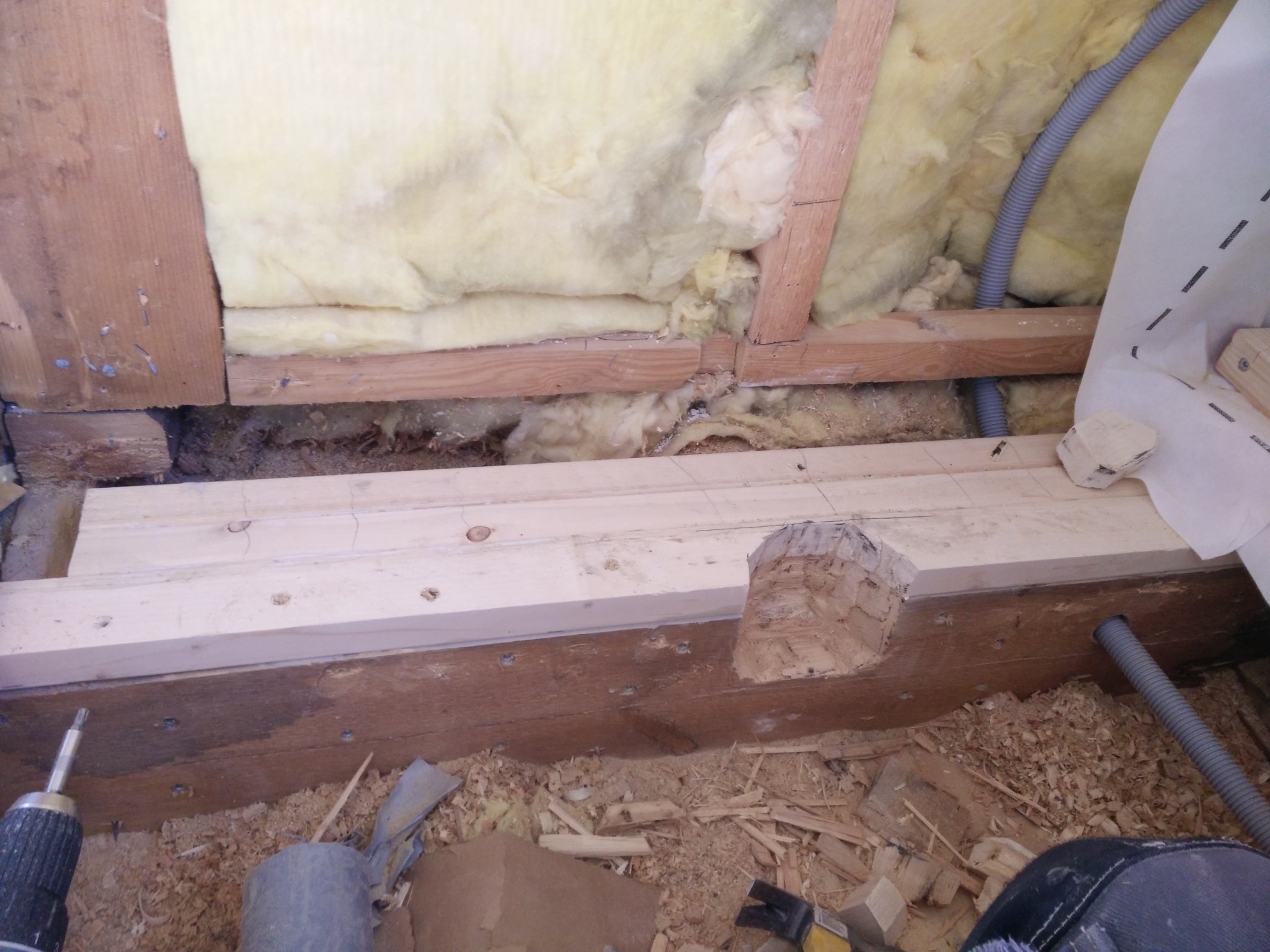
The reinforcement has now begun; I have screw-glued 2.5m long pieces of 45x63mm onto the existing beams (after breaking away the old elevation). I started with 5x80 screws but felt they weren't gripping well, so I switched to 6x90 after two screws. Screwed at about cc40 and glued with winter glue.
I have temporarily placed one of the new beams to see what level it ends up at.
However, it seems as if one of the beams is higher than the others, so my original plan to check the lowest point and cut accordingly with the circular saw is on hold because I feel too much of the height reinforcement is lost.
So my "new" plan is to cut off "just enough" from the beam that is the highest. Cut all other beams so that they are level and not sagging in the middle. Then, split regular straight shims or plywood strips to get exactly the same level on all beams.
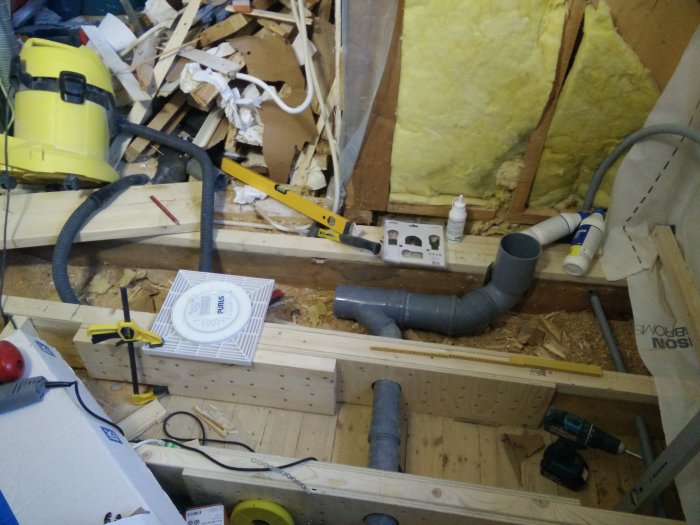
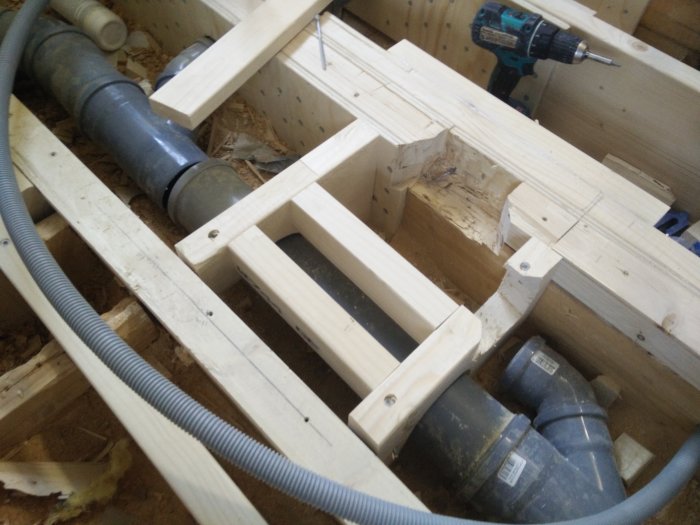
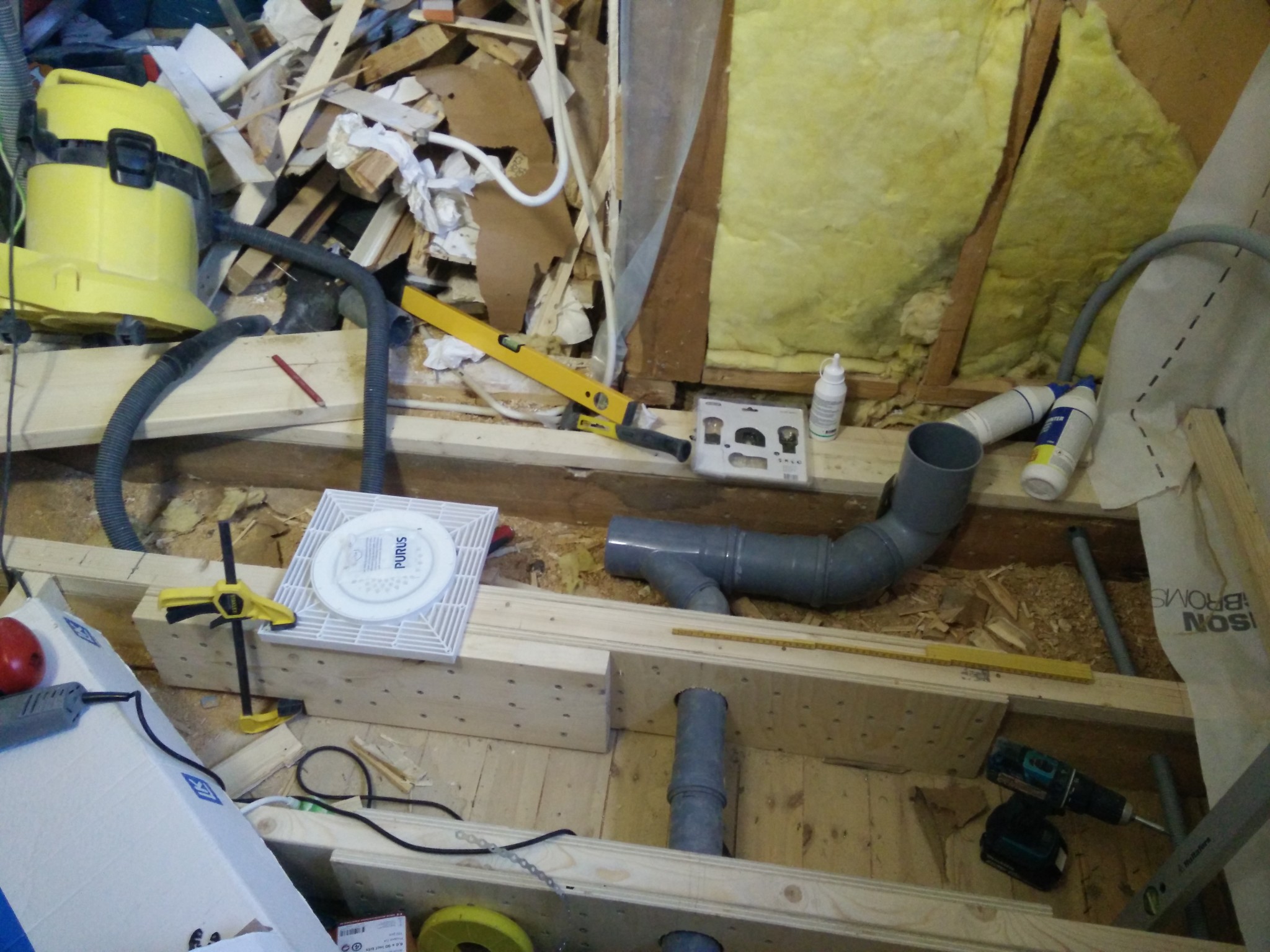
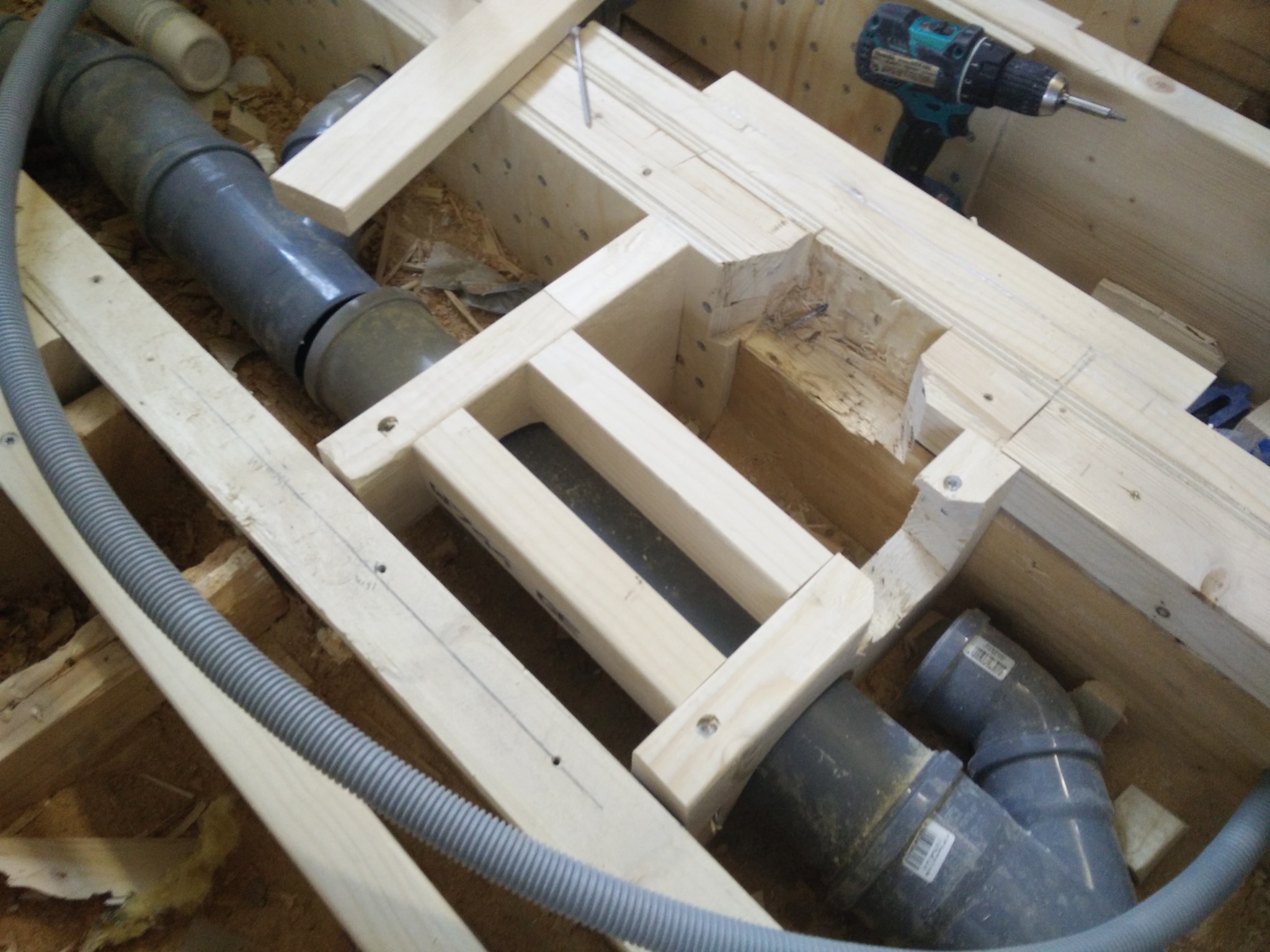
The new beams will be fixed only after I have drilled through them and inserted a 75mm drainage pipe.
Will drill through the last beam and install the drainage and pre-drill a bit for RiR that will go in the beam structure when there is a little extra space.
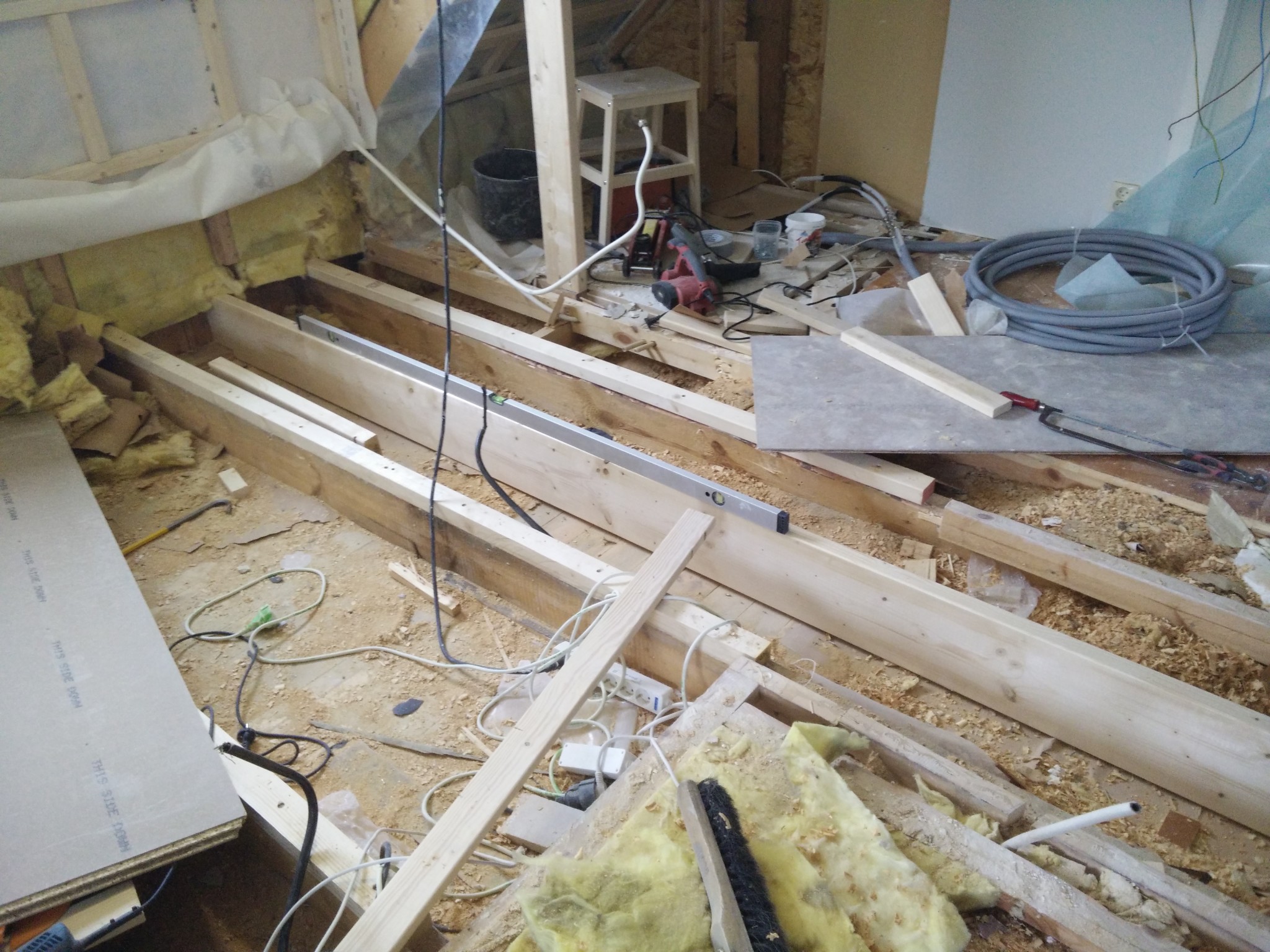
But otherwise, the beams are level and at the same height with each other.
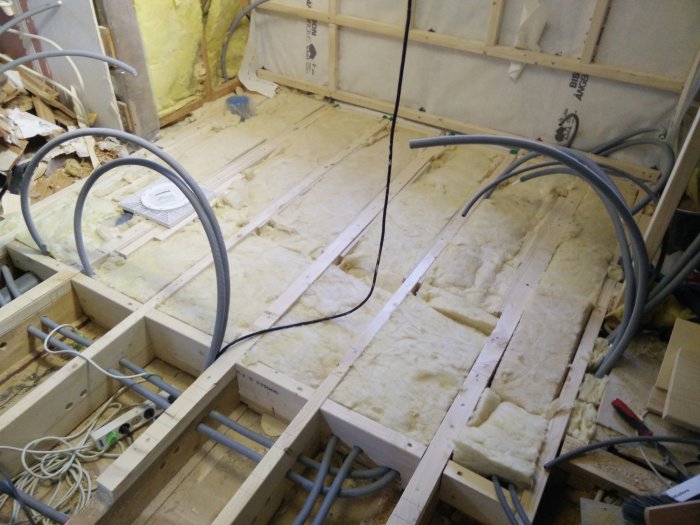
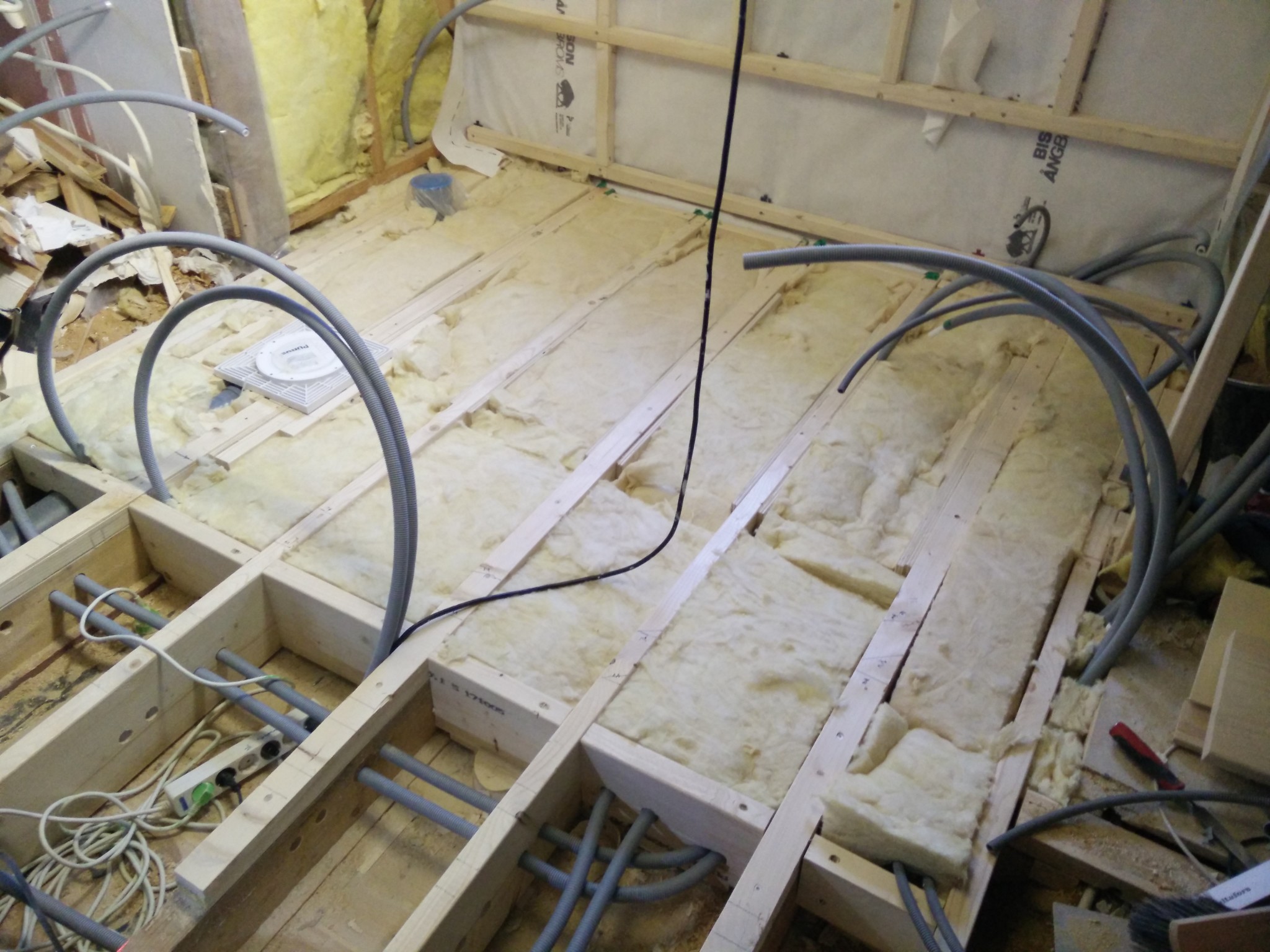
Now I have gotten far enough that the subfloor is being put in place inside the bathroom. I think the reinforcements felt stable, and the noggins under the bathroom wall (which happens to be at half the span) shored up part of it as well.