
2,028 views ·
8 replies
2k views
8 replies
Asphalt/bitumen on basement floor?
Hello!
Diligent Byggahus reader here, grateful for all the help one can get and find.
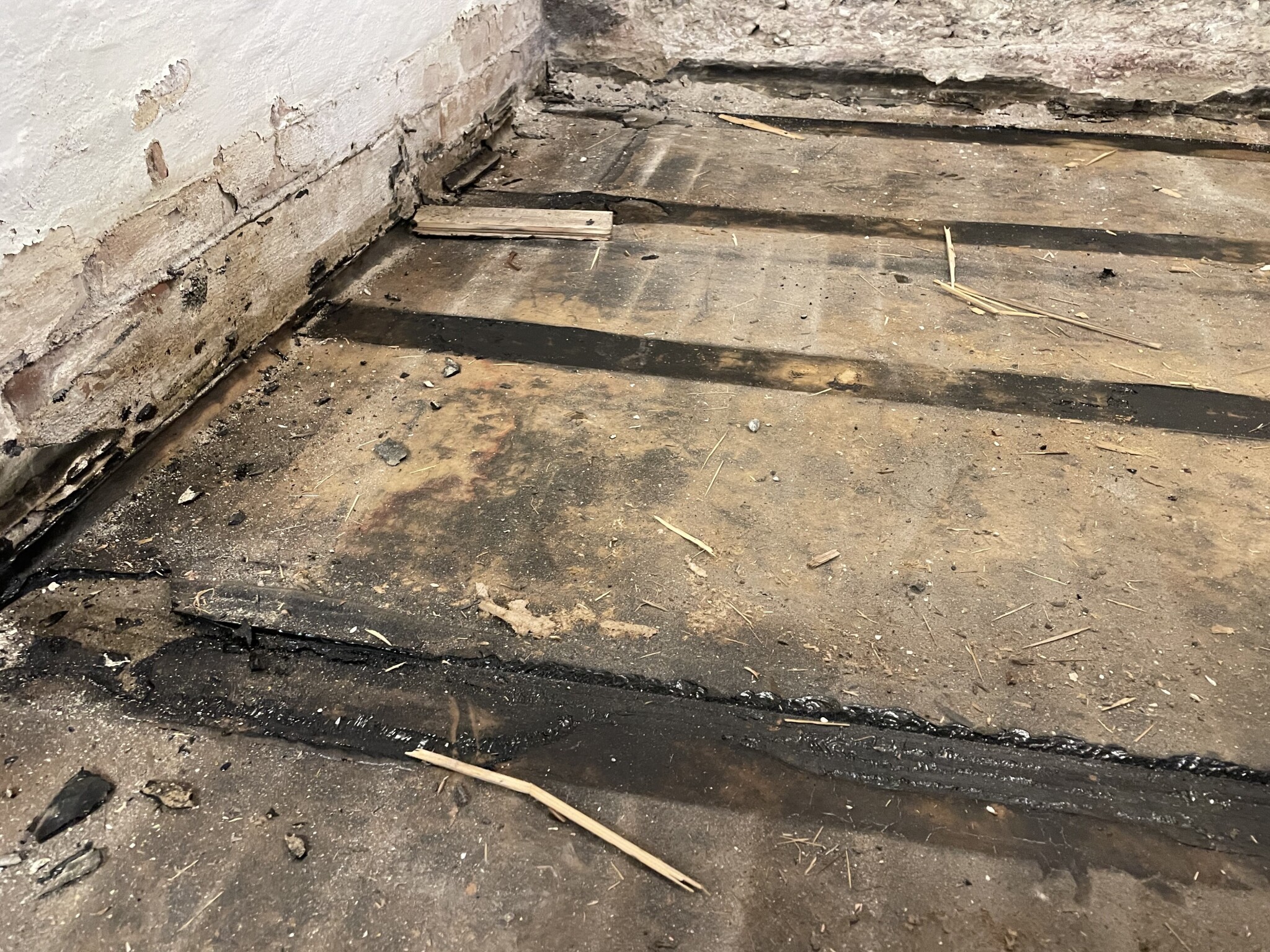
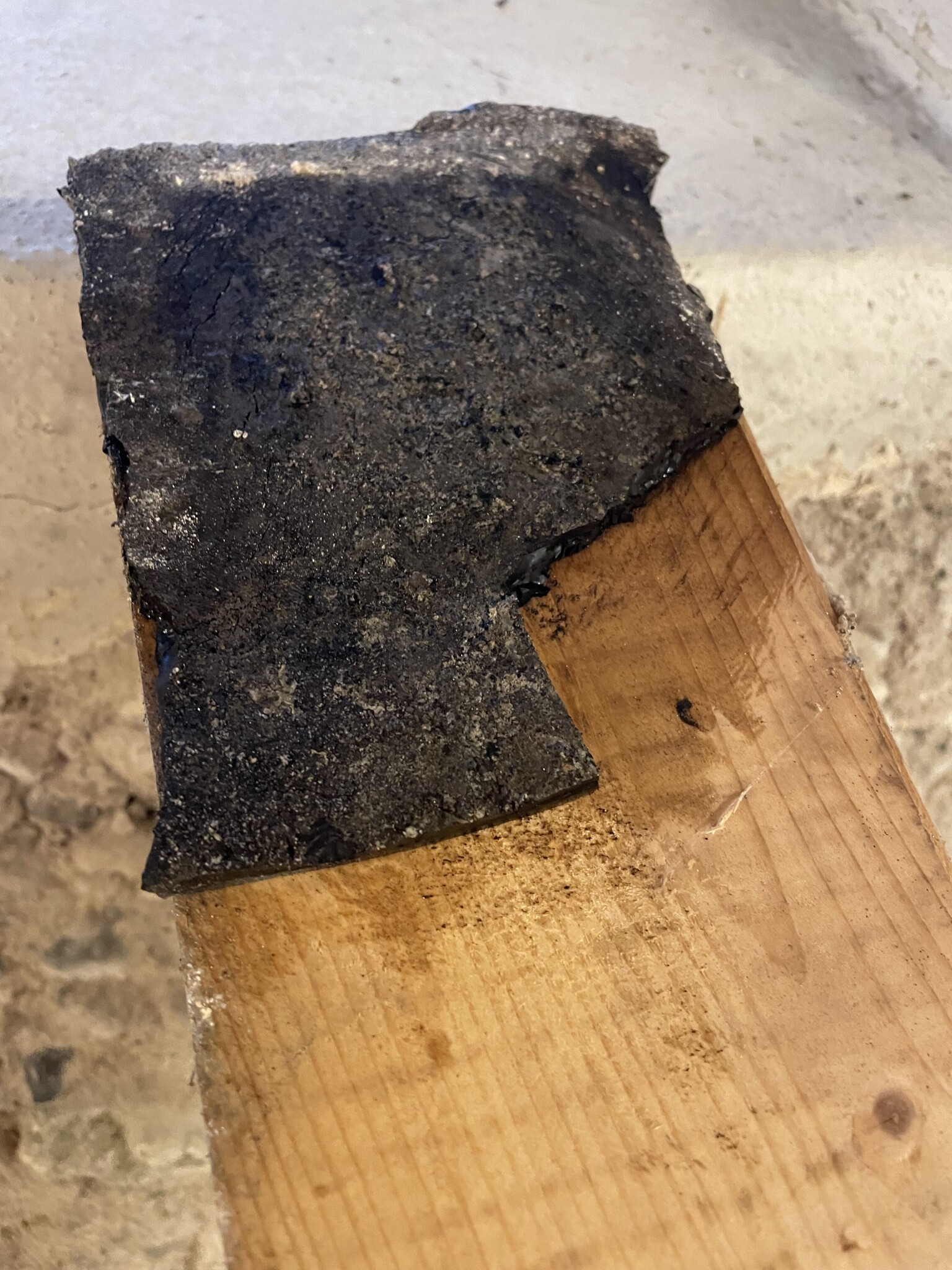
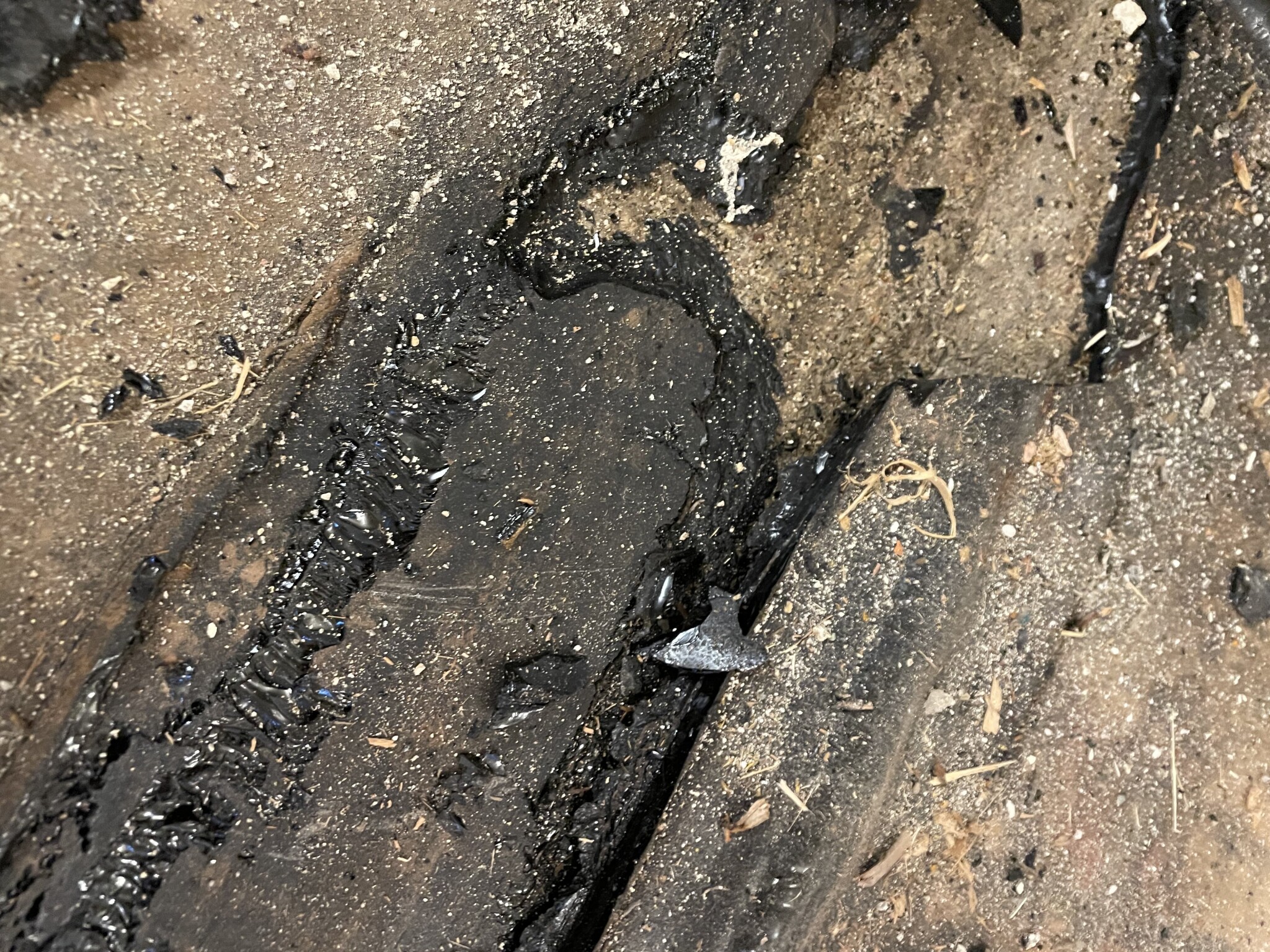
I have just torn down framed wooden walls and a wooden floor in the basement of my house from the 1930s. I suspect the walls and floor were added in the 1970s. Under the floor is a thick black carpet-like structure, which I suspect is asphalt or bitumen. However, I have no experience, and when searching the forum, most asphalt pictures seem "thinner." Is there a kind soul who knows and can enlighten me? What can be done to remove it? Try to tear it down myself or bring in help with blasting? Or simply leave it as is?
The floor joists have been directly on the "carpet," which also had a small upturn at the edges around the room. Attaching pictures.
Grateful for your help!
Diligent Byggahus reader here, grateful for all the help one can get and find.
I have just torn down framed wooden walls and a wooden floor in the basement of my house from the 1930s. I suspect the walls and floor were added in the 1970s. Under the floor is a thick black carpet-like structure, which I suspect is asphalt or bitumen. However, I have no experience, and when searching the forum, most asphalt pictures seem "thinner." Is there a kind soul who knows and can enlighten me? What can be done to remove it? Try to tear it down myself or bring in help with blasting? Or simply leave it as is?
The floor joists have been directly on the "carpet," which also had a small upturn at the edges around the room. Attaching pictures.
Grateful for your help!
Member
· Västernorrland
· 12 082 posts
Why do you want to remove it then? Does it smell?

It was not uncommon at all to use waterproofing felt similar to roofing felt as an indoor waterproof layer in the past, particularly in larger, more commercial spaces like changing rooms and laundry rooms, but it also appeared in residential bathrooms. If it's used under a wooden floor, the idea was probably as a moisture barrier, which might be somewhat unique, but I'm not sure. If the felt is from the 1930s, it might be coal tar, which is not very healthy, but if it's from the 1970s, it's bitumen and harmless.
Can you cast or use leveling compound over it?
Can you cast or use leveling compound over it?
Thanks for the response! The room was originally storage for fuel for the boiler according to the 30s drawing. At some point later, it was instead turned into a wooden furnished room, thinking the 70s due to the previous owner's age (now deceased, so unfortunately can't ask). The timber I tore out didn't feel ancient either, had red "mechanical" markings on the short sides, as timber does even now.Rickard. said:
It was not at all uncommon to use waterproofing felt not far from roofing felt as a waterproofing layer indoors in the past, especially common in large more commercial spaces like locker rooms and laundries, but it also occurred in residential bathrooms.
If it's used under a wooden floor, the idea was probably as a moisture barrier, which might be a bit unique, but I don't know. If the felt is from the 30s, it could be coal tar, which is not very healthy, but if it's from the 70s, it's bitumen and harmless.
Can you pour or self-level over it?
It's quite thick, also laid in strips resulting in unevenness where two strips overlap. I think it will be difficult for me to make it look nice with it still there. I'll probably aim to rip it out with a mask on, and try to sand the floor underneath.

Some feedback on how it went, for the sake of it and as a thank you for the help Rickard.
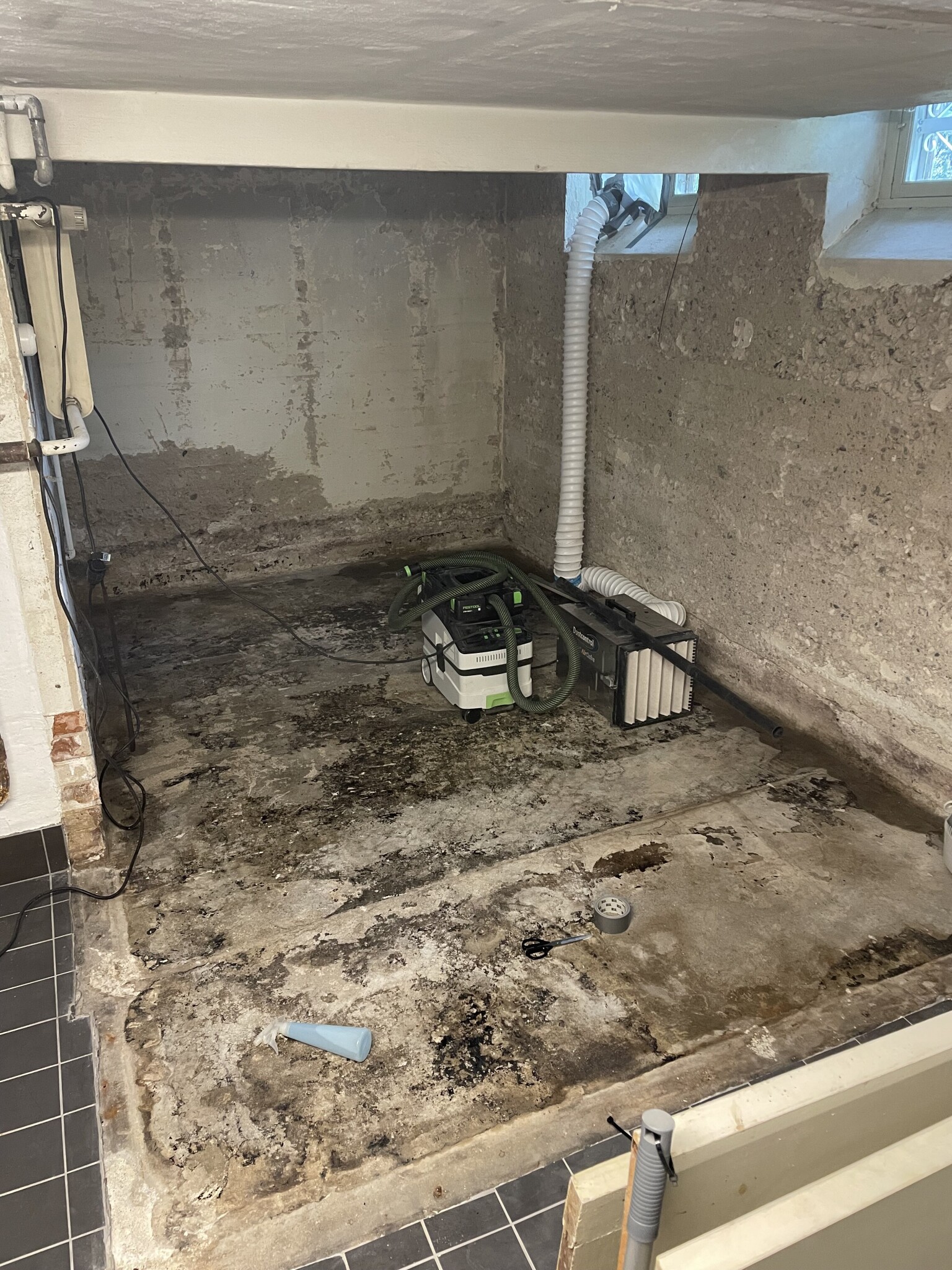
I laminated, rented a dust trap/air cleaner, and created negative pressure using an exhaust. Then I manually tore up the asphalt/roofing felt with a crowbar and bark spade. Exhausting as hell, but it took just a few hours. Now there are small remnants left, but nothing thick. I think I should be able to lay tiles relatively easily on it now.
I laminated, rented a dust trap/air cleaner, and created negative pressure using an exhaust. Then I manually tore up the asphalt/roofing felt with a crowbar and bark spade. Exhausting as hell, but it took just a few hours. Now there are small remnants left, but nothing thick. I think I should be able to lay tiles relatively easily on it now.
Click here to reply