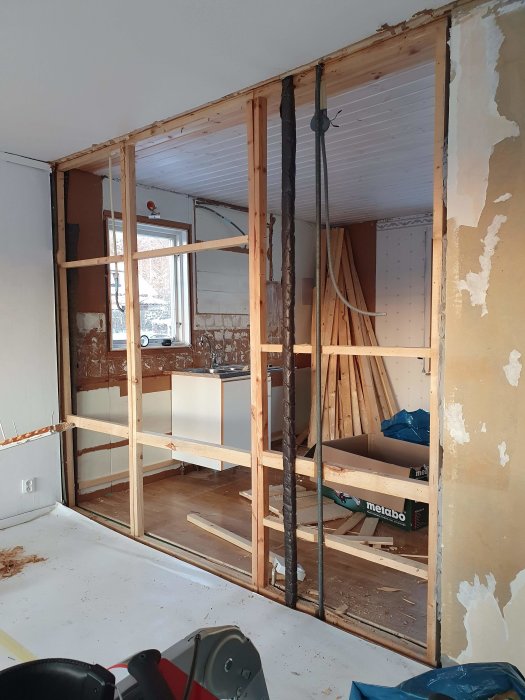
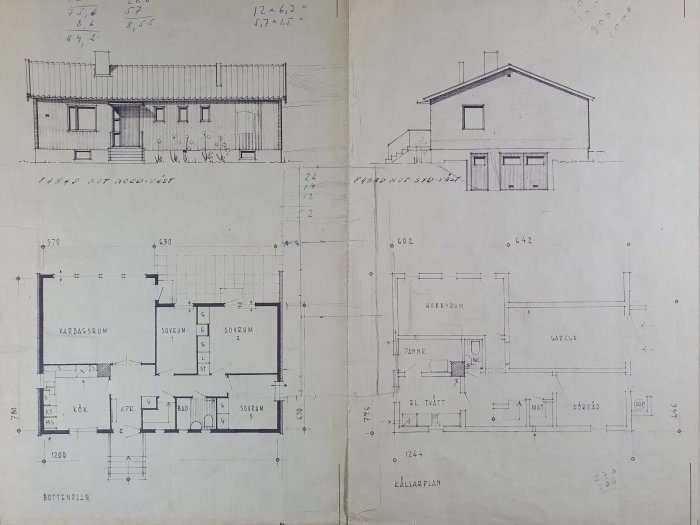
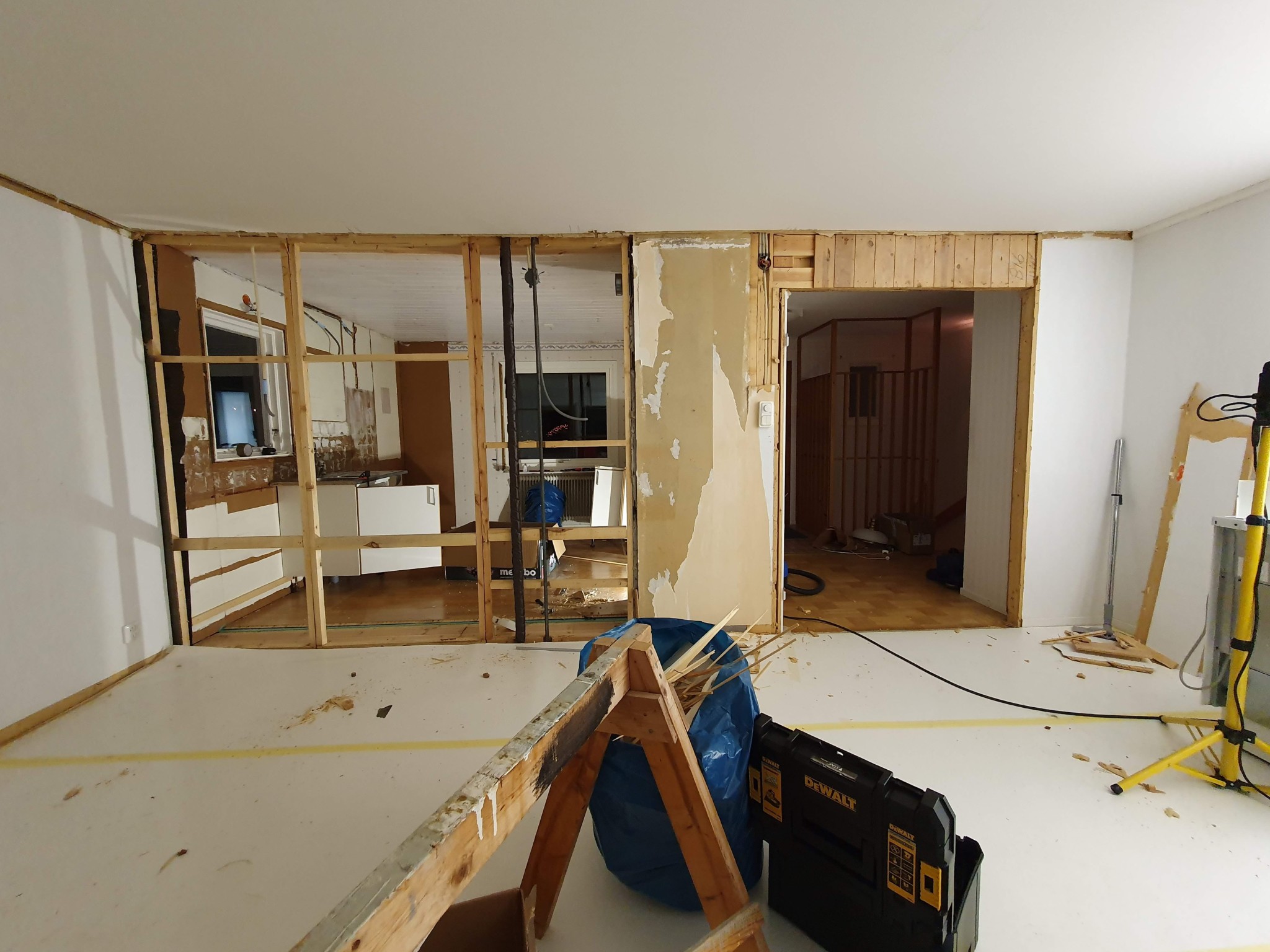
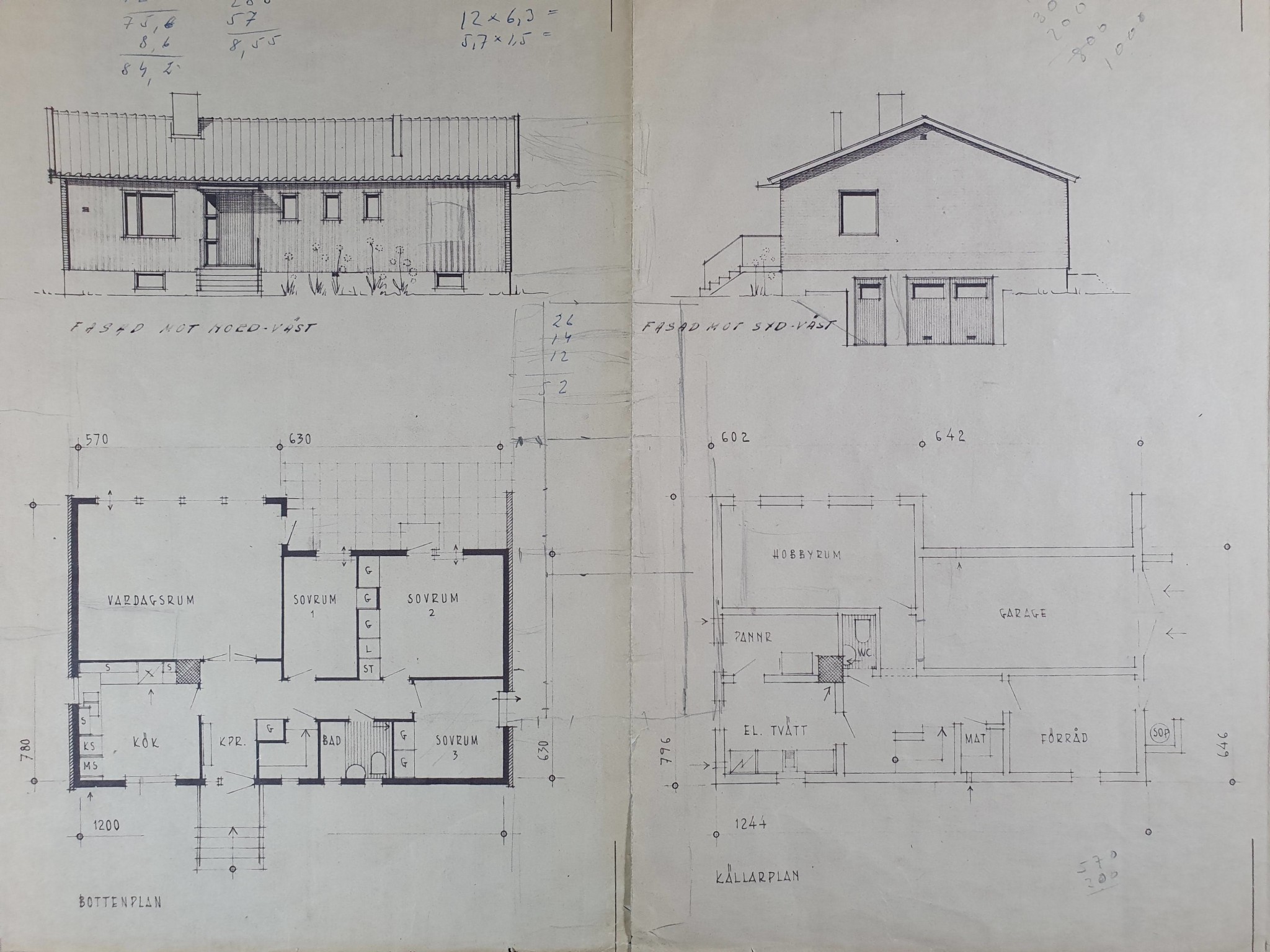
Last week, we gained access to our first house, a single-story house with a basement. We are now in the process of removing the wall between the kitchen and living room and depending on the difficulty, also the small piece of wall to the right of the chimney. The chimney is located between the kitchen wall and the entrance to the living room.
The question is whether these are load-bearing or not. We will hire a structural engineer, but it would be interesting to hear what others have to say. Any input is appreciated
What suggests that they are load-bearing (for an inexperienced person) is that:
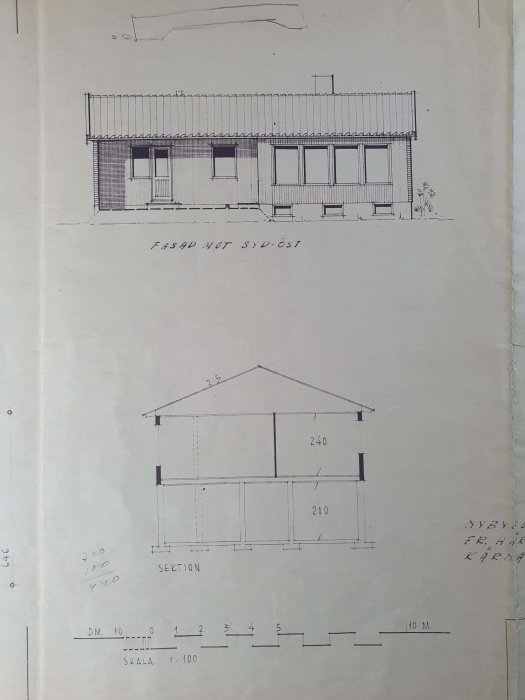
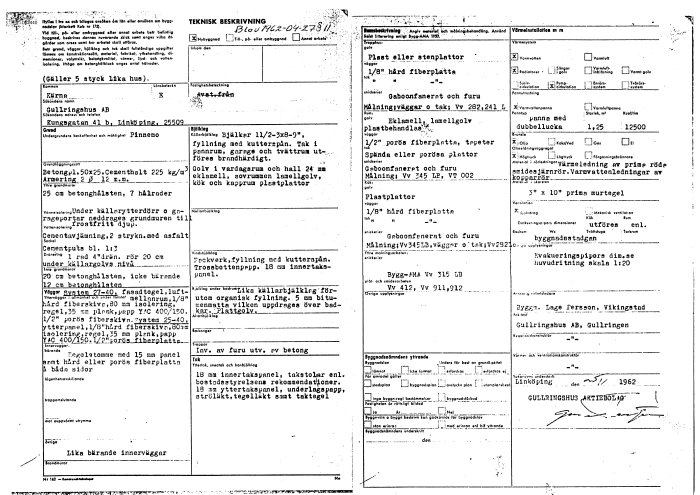
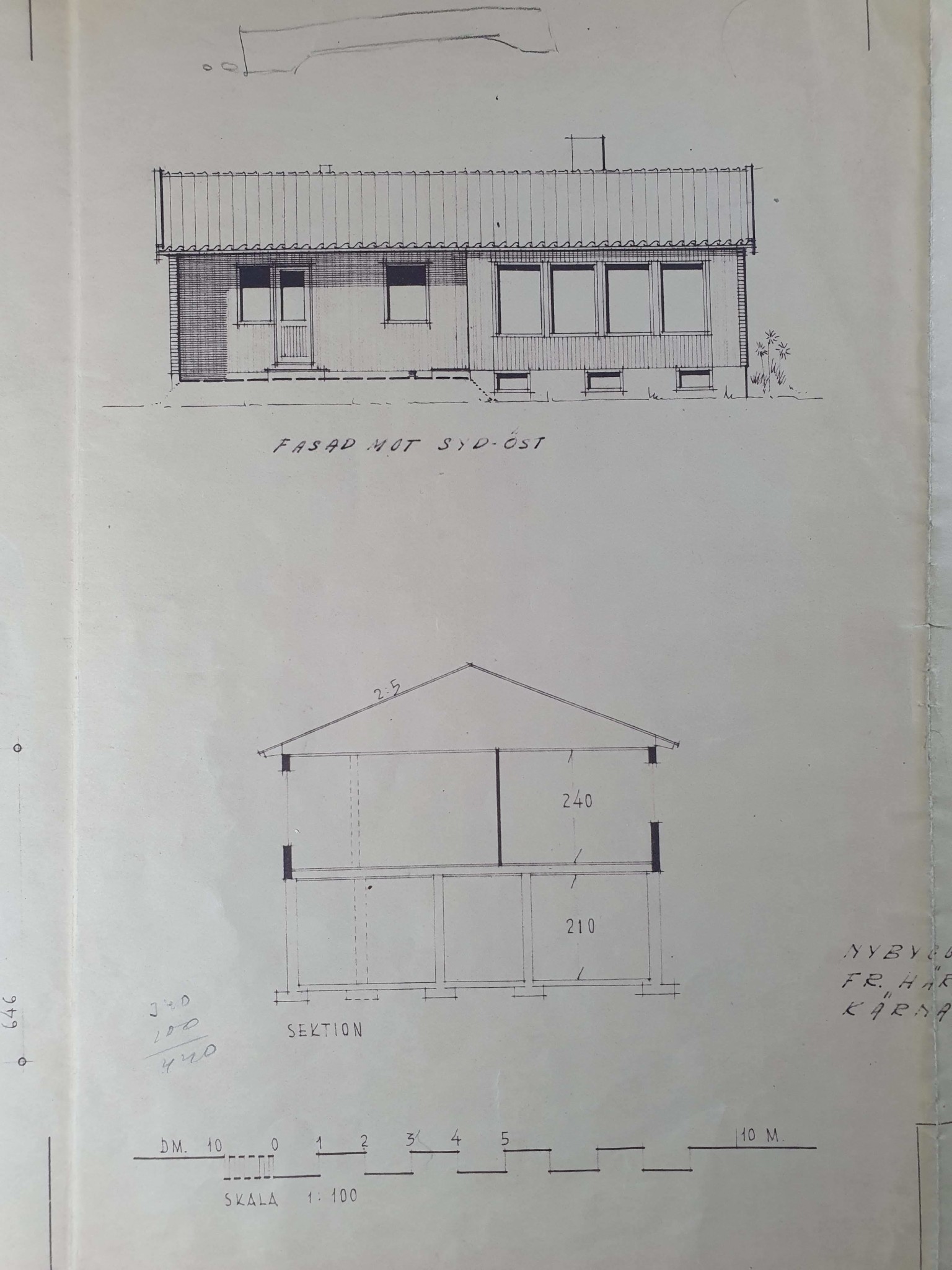
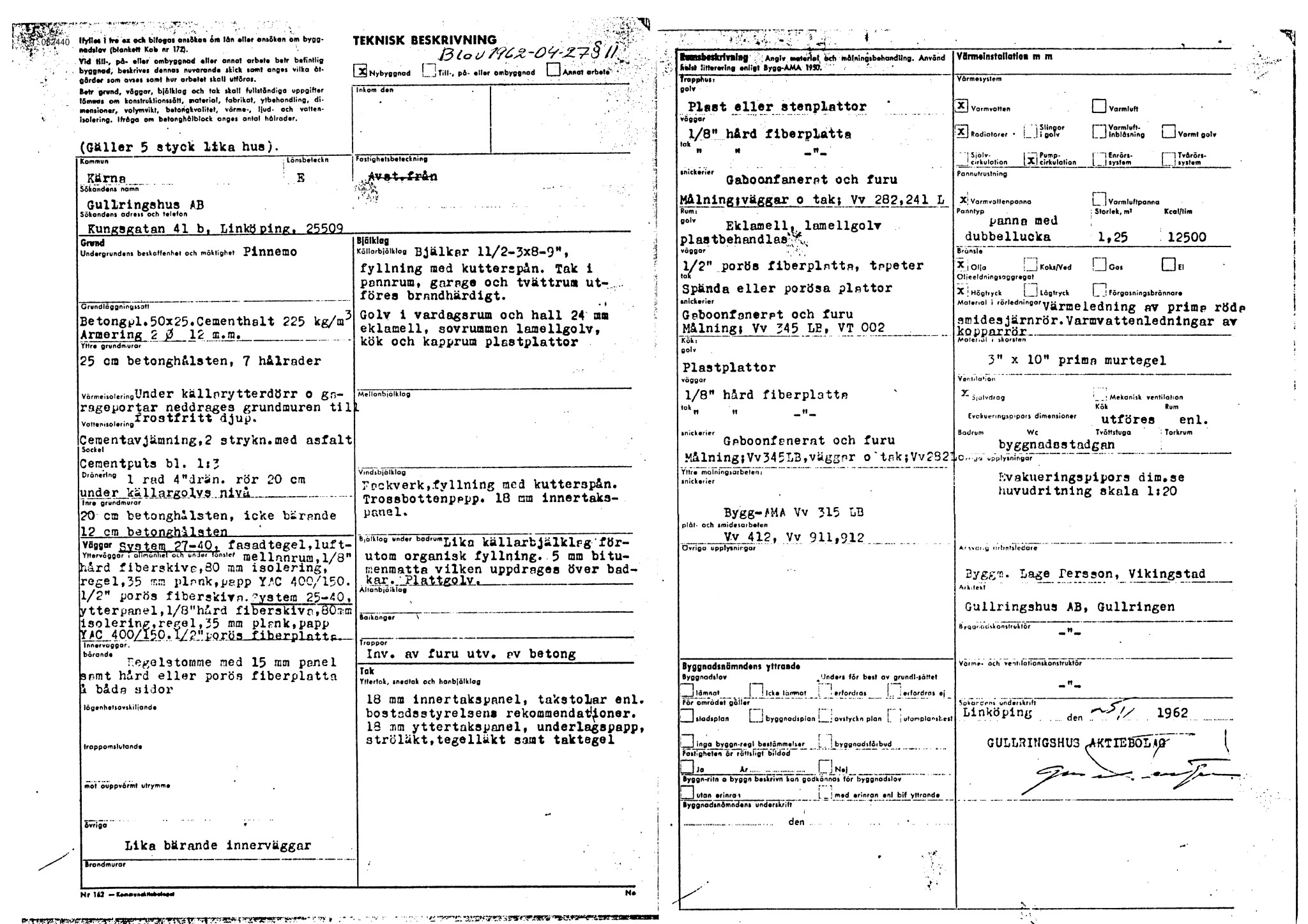
The sectional drawing clearly marks this wall.
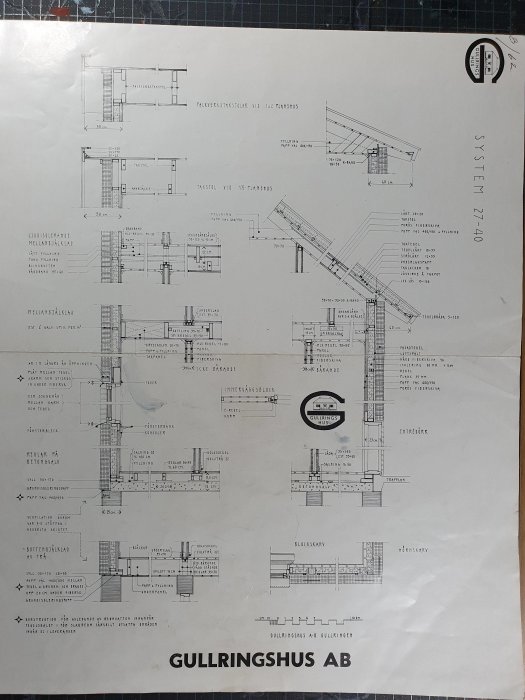
The technical description outlines how load-bearing walls are constructed.
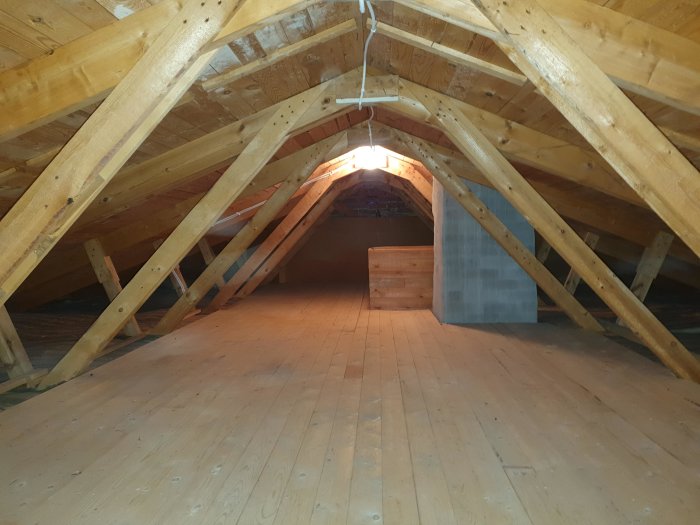
7.8 m span between the inside of the exterior walls. A bit too long?
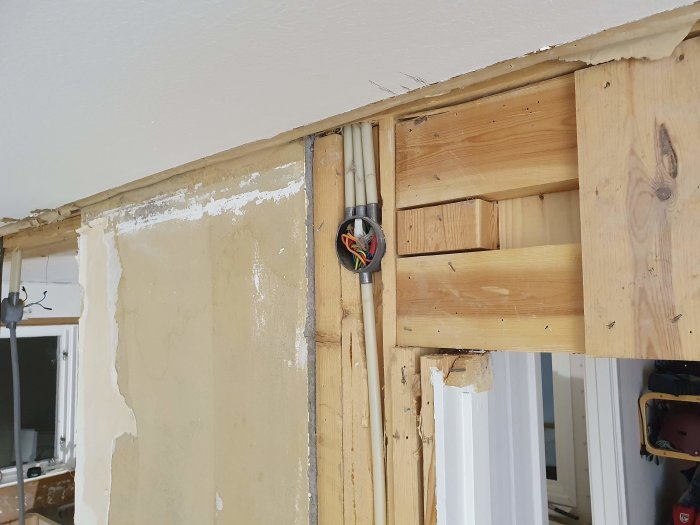
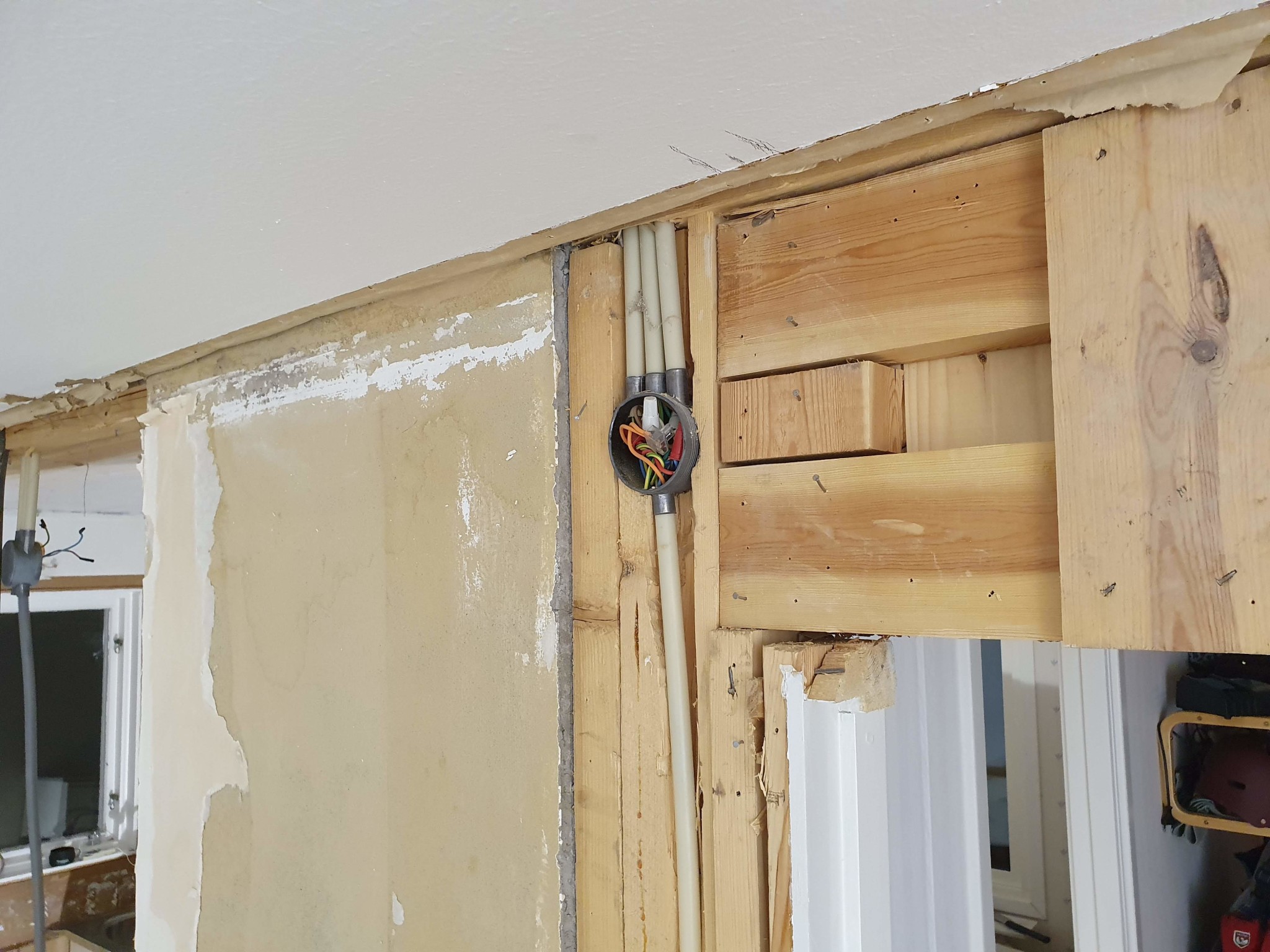
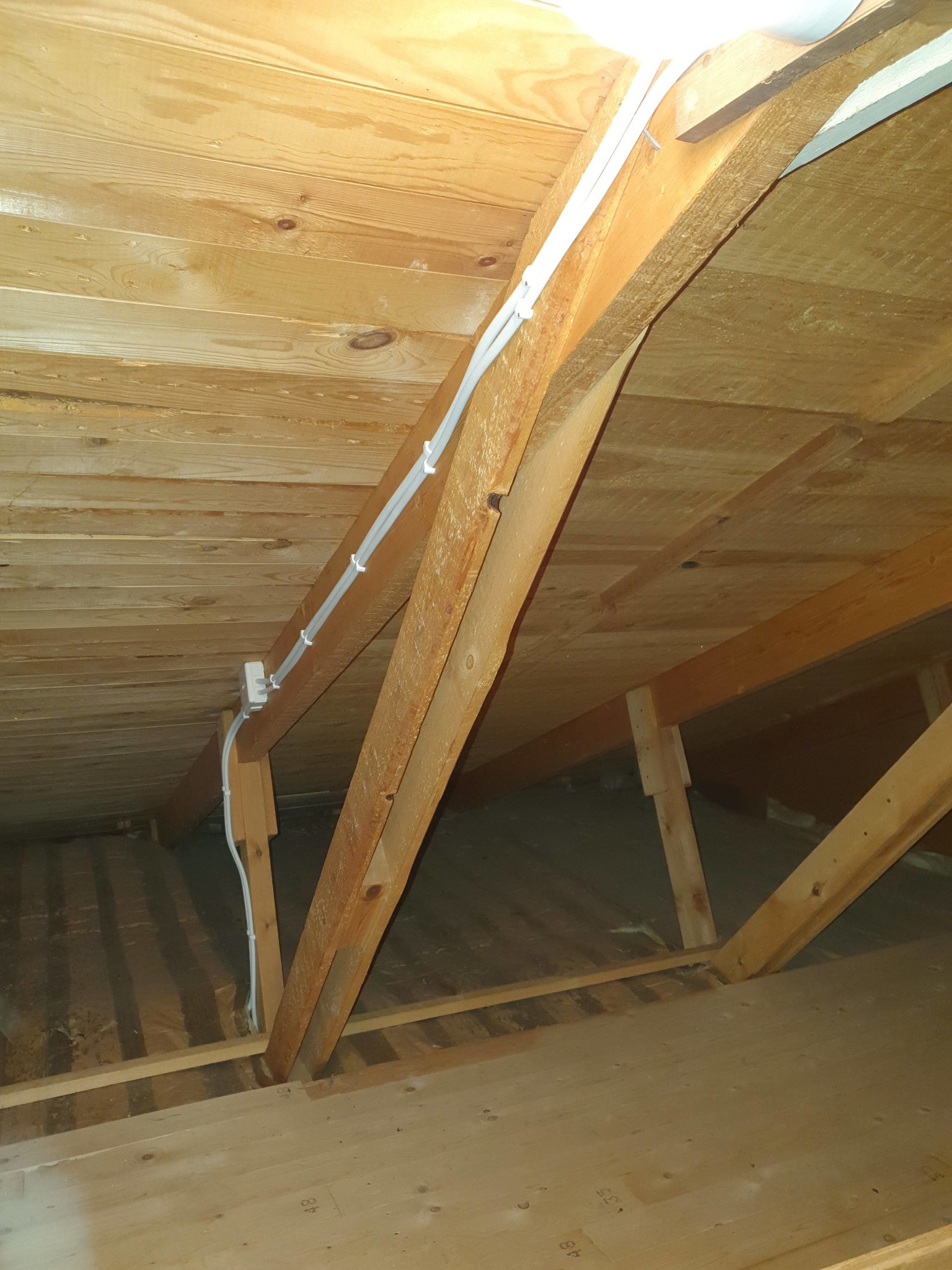
The horizontal stud barely visible at the ceiling level might be supporting something in some way. Not checked yet.
What argues against it:
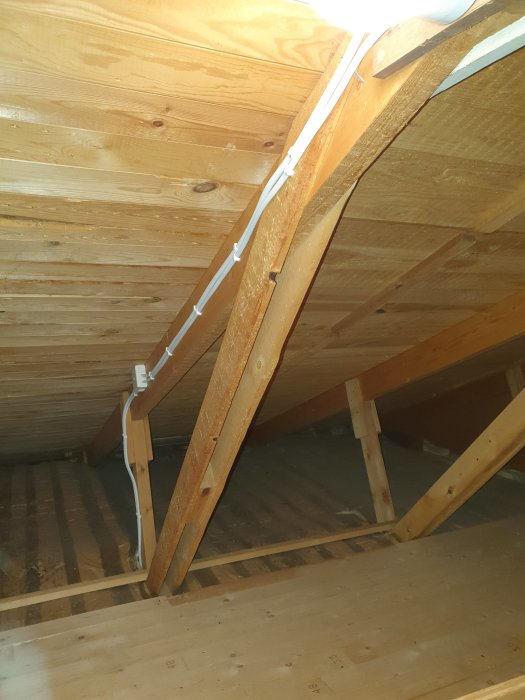
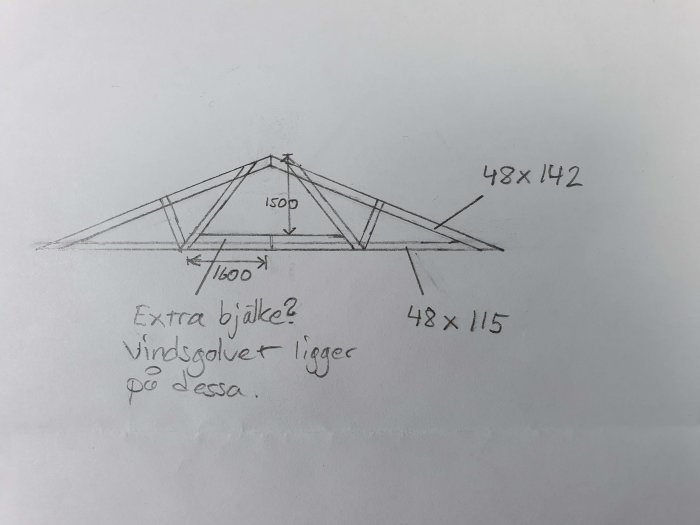
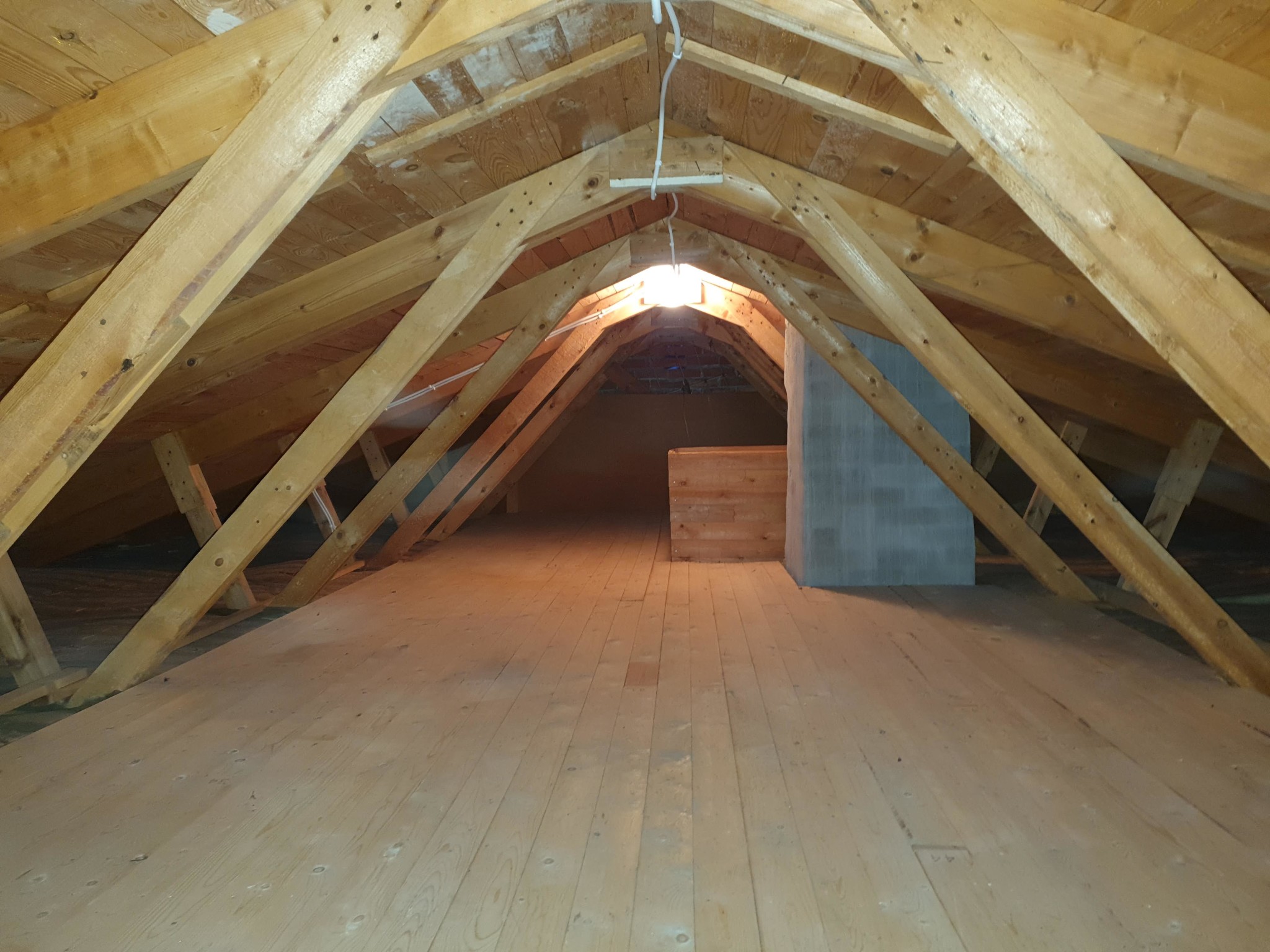
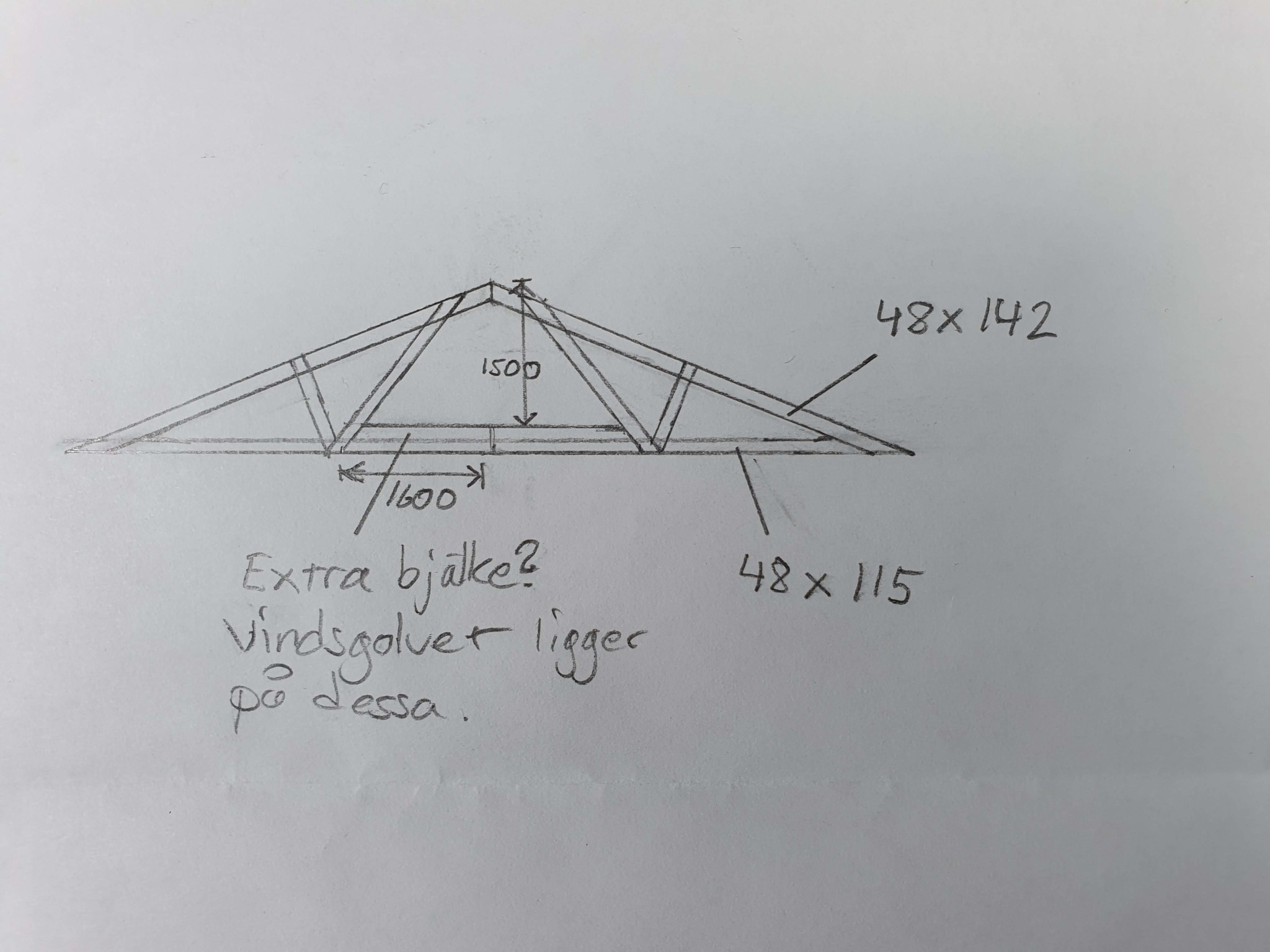
W-trusses, self-supporting?
The interior wall does not have a basement wall directly underneath it. But maybe that was how it was built in the past?
The studs are poorly attached and seem to bear minimal load. Had to be anchored with screws to stay in place when the wall panel was broken off.
The extra beam in the truss might just be so that the floor is above the insulation.
This is how a question should be presented on Byggahus! It's worth a gold star. No, there are no load-bearing interior walls in this house. (That does not mean you can remove all of them. They have a stabilizing effect.) The rafters are self-supporting between the exterior walls.
Thank you so much @justusandersson! And thank you for taking the time to answer all these load-bearing wall questions. It is appreciated. I've read many of your answers
We called a structural engineer who had time to come out this afternoon. The assessment was similar to yours, that the trusses are self-supporting. He added that "it might bend down slightly but there's no danger." Which is also what happened when the last stud in the kitchen wall was knocked loose. The ceiling settled a few millimeters lower. It also flexes slightly if one jumps lightly in the attic. According to him, the inner wall was there to counteract this deflection.
Tomorrow we will probably remove the section to the right of the chimney.
Hi,
I have been searching and looking for this particular question, about this house type, for quite a while now.
Moved into a similar house a few months ago and am now planning to tear down the wall between the kitchen/living room, just like you. May I be bold and ask for some after pictures?
Did you also take down the last little “wall bit” towards the first bedroom? Everything that is to the right of the chimney?
Hi,
I have been searching and looking for this specific question, for this type of house, for quite a while now.
Moved into a similar house a few months ago and am now planning to tear down the wall between the kitchen/living room, just like you did. Can I be cheeky and ask for some after-pictures?
Have you also taken down the last little "wall chunk" towards the first bedroom? Meaning everything that is to the right of the chimney stack?
Thanks in advance!
/Hampus Thuresson
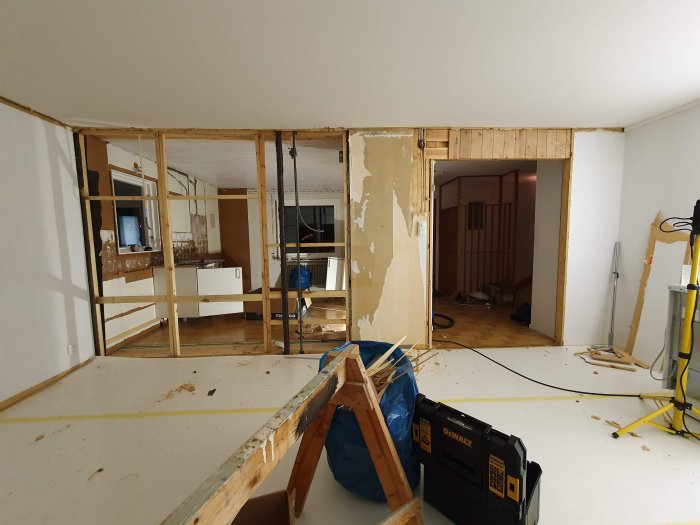
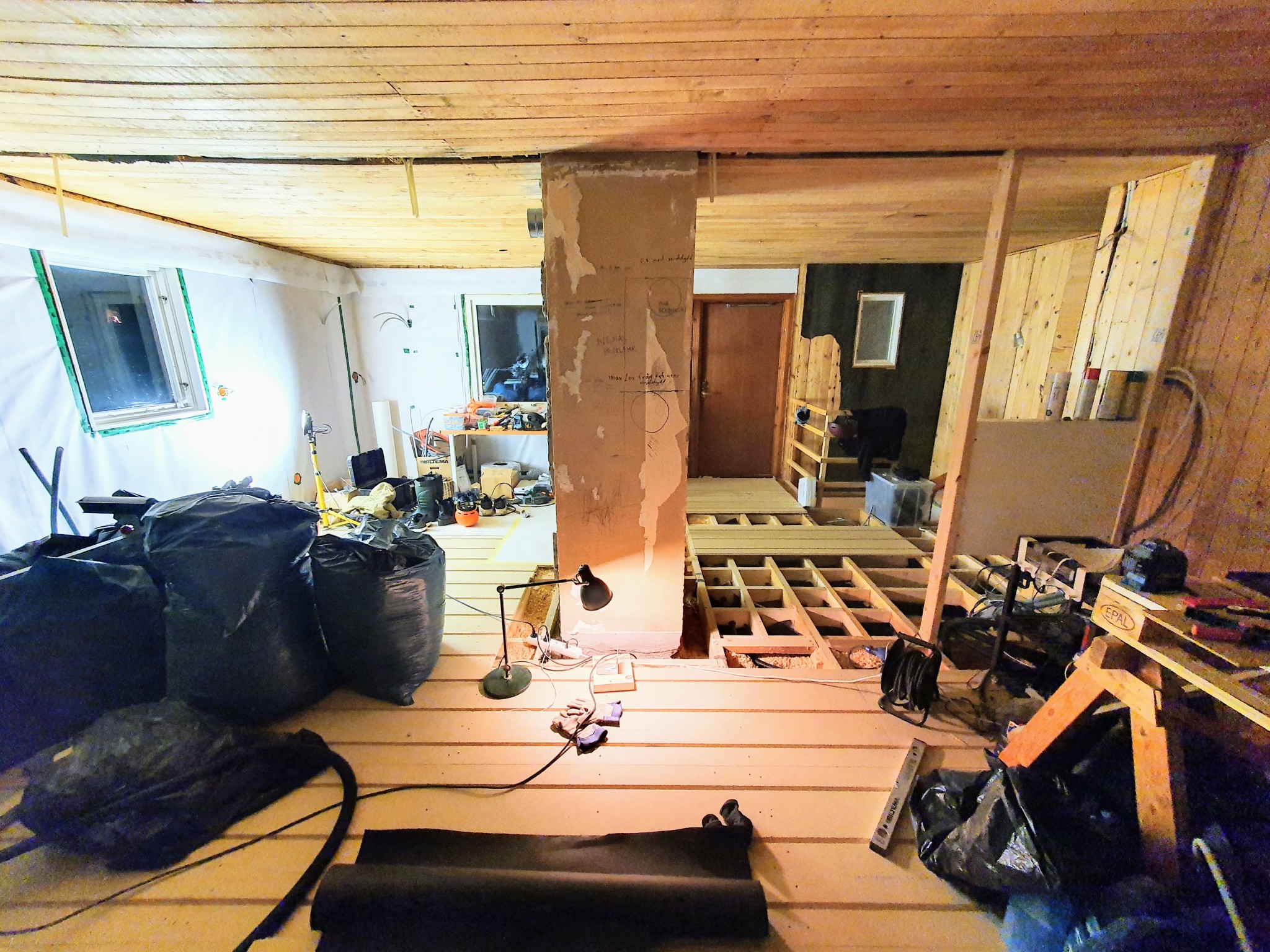
We took down the last bit of wall towards the bedroom to build it up again with a distribution cabinet for underfloor heating inside. The wall section on the same side but towards the chimney stack we are leaving gone.
We took down the last piece of wall towards the bedroom to rebuild it with a distribution cabinet for underfloor heating inside. The wall section on the same side but towards the chimney we let remain gone.
Here's the situation right now:
[image]
Friskt kopplat said:
We took down the last piece of wall towards the bedroom to rebuild it with a distribution cabinet for underfloor heating inside. The wall section on the same side but towards the chimney we let remain gone.
Here's the situation right now:
[image]
Looks like it could turn out great. How have you planned for the kitchen? We have brainstormed several ideas, but haven't really settled on exactly how we will do it.
Looks like it could be super good. How have you planned the kitchen? We've brainstormed several ideas but haven't quite settled on exactly how we should do it.
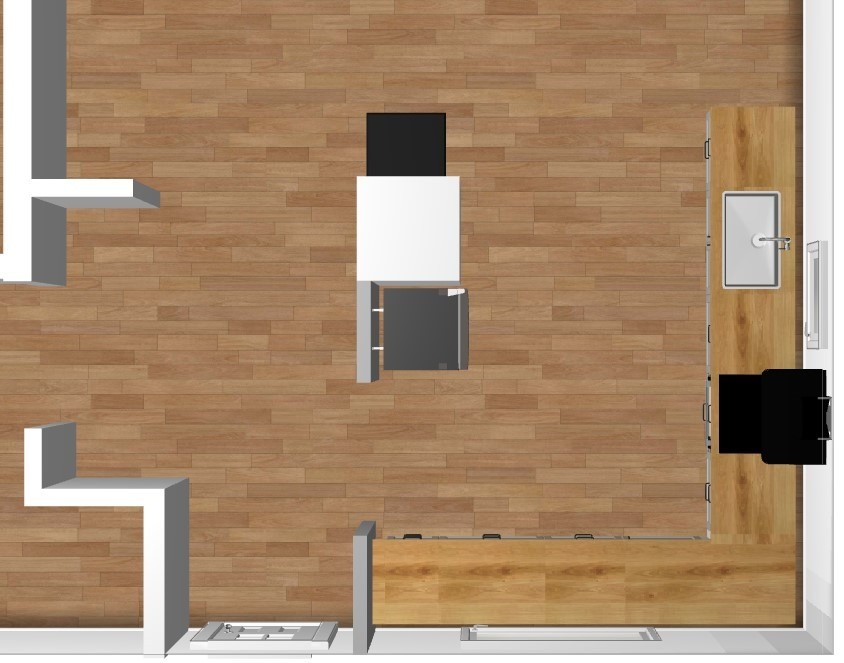
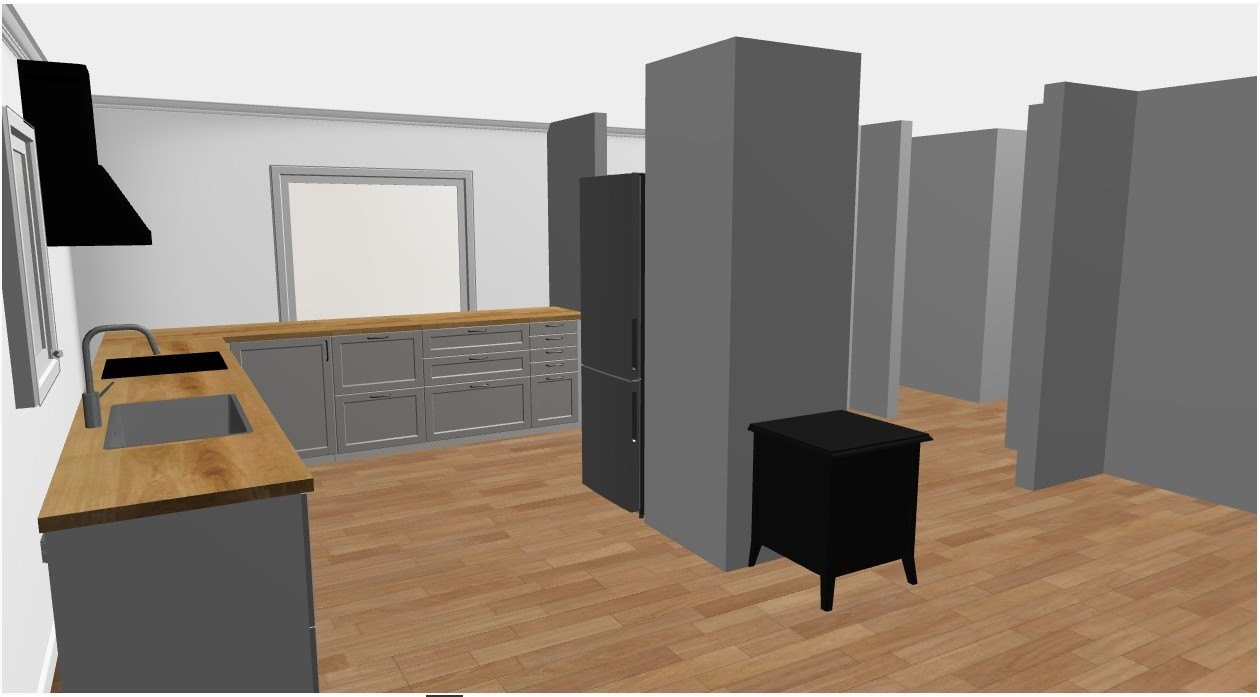
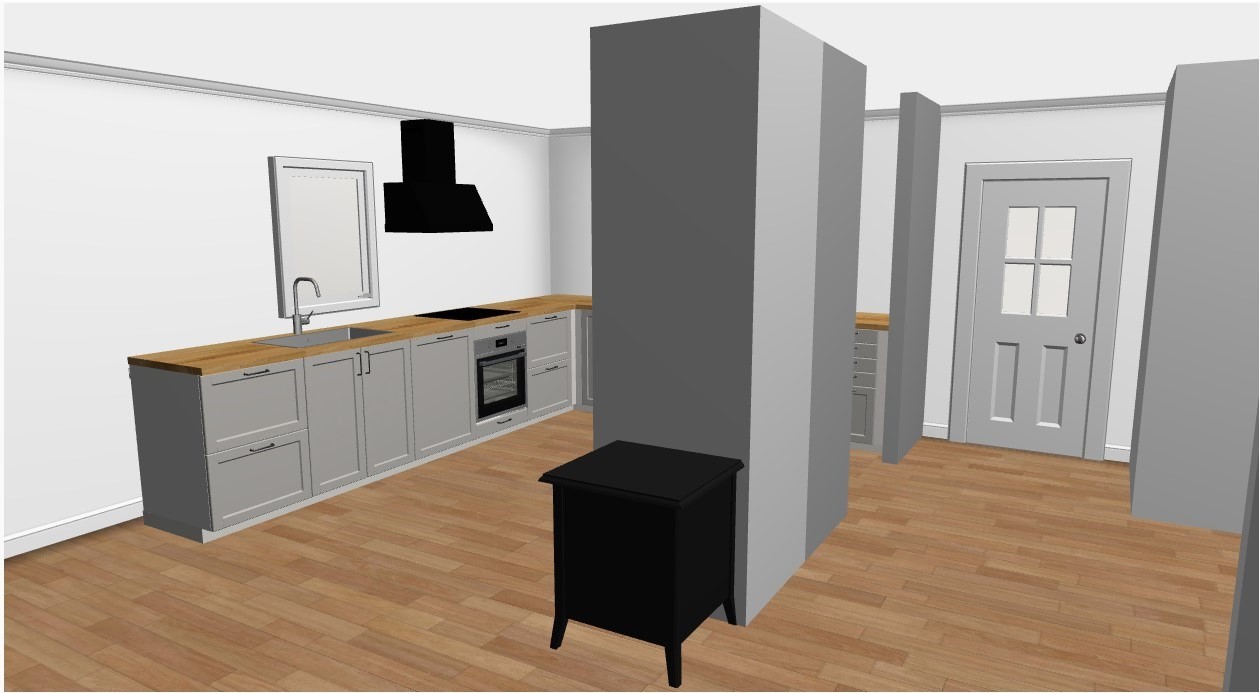
We've envisioned a kitchen without upper cabinets with a 70 cm deep countertop. We will likely extend an Ikea frame 10 cm from the wall. The wall behind the fridge is wider than in the pictures, about 96 cm, to fit a 70 cm or preferably slightly wider fridge/freezer. Would have liked to fit a 90 cm wide one, but that's too big. We plan to vent the stove hood through the wall.
The black box is supposed to represent a fireplace, which according to the chimney sweep's suggestion, will be connected to the basement toilet's flue. The basement toilet will instead share a flue with the laundry room by making a hole between them down in the basement.
Click here to reply
Vi vill skicka notiser för ämnen du bevakar och händelser som berör dig.





Friskt kopplat said: