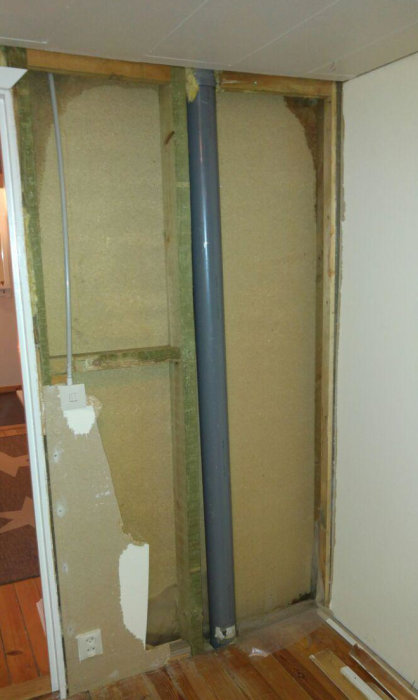
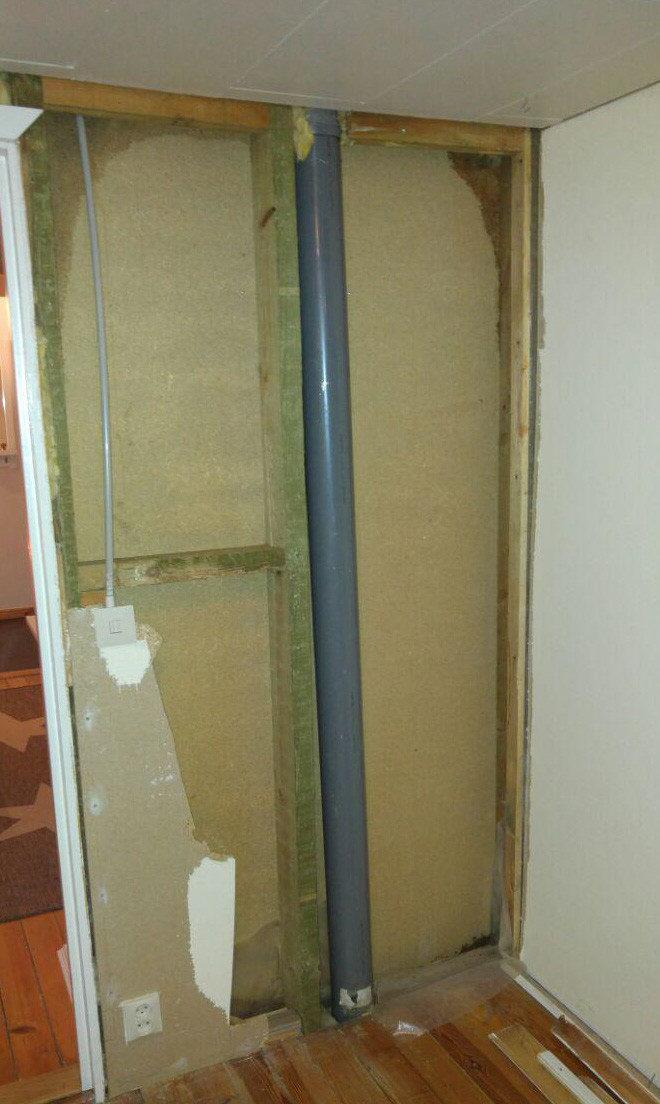
It looks like some fool of a previous owner of the house has used pressure-treated wood in an interior wall. See picture:
Or could there be another explanation, that it is a wood that is not treated but looks treated? It's mainly the side of the stud towards the picture that is green-colored.
You can see the spots in the corners of the particle board, which was the reason I started tearing down the wall, old water damage.
If it is treated wood, I assume I should remove the treated wood while I'm tearing down the wall anyway?
A major renovation was done with the furnishing of the attic, expansion, and removal of fireplaces in 1979. I guess that's when this interior wall was built, so it's borderline in that case.
I don't think it's pressure-treated lumber. It just seems to be the narrow edge of the lumber that's green. Either I think they've used some kind of glue when they installed the gipen. Alternatively, it's Cuprinol that's been used.
It probably depends on what is expressed as a problem. During the inspection last spring before we bought the house, the inspector noted that he sensed a chemical smell, but it is nothing we have noticed or suffered from. We looked at a 70s house before with treated foundation beams, and it smelled quite strong, so we know how it can smell.
I also suspect that the facade is treated or processed in some way, as I also think it looks greenish where it is not painted with Falu red paint.
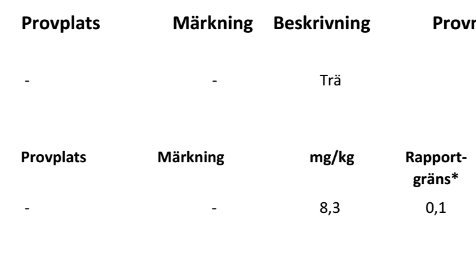
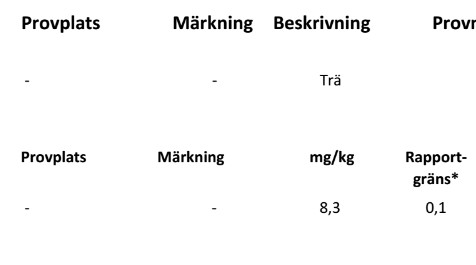
The results have arrived. The beams contain pentachlorophenol. The question is whether I should leave it be or start tearing it out. If I do start tearing it out, I will probably need to demolish much of the house's interior walls, floors, and upper floor.
At least it was serious of you to investigate and not rush.
But Pentaklorfenolet can apparently spread an awful smell if the humidity and degradation are "right." I would probably try to remove it if I were you.
Today's printed materials do not contain this chemical and are considered harmless in that aspect (which not everyone knows).
Yes, I felt I needed to check it out to be completely sure of what I'm dealing with. I've read quite a bit about pentachlorophenol in the meantime, and it doesn't feel good that it was used in the construction during the house renovation. I don't think it's painted but rather pressure-treated wood that's been used. I know it exists in other places too, such as at a door threshold a few meters away where you can see in the gaps that it's pressure-treated wood underneath. I believe it was used when building the interior frame of walls that are not outer walls.
I know how it can smell when it has gone far with chlorinated anisoles as I mentioned earlier in the thread. Some smells can be sensed in the house in a couple of places, but it's unclear if it's because of that or something else.
The house was extended at the same time, so I'll try to see if I can access and see if there's pressure-treated wood in the construction there as well. When we looked at the foundation before buying, we didn't see any pressure-treated wood at least from underneath.
I bought the house last summer, so I'm interested in whether I can take action against the previous owners in some way; they should have known about it, but nothing was mentioned about pressure-treated wood being in the house before purchase.