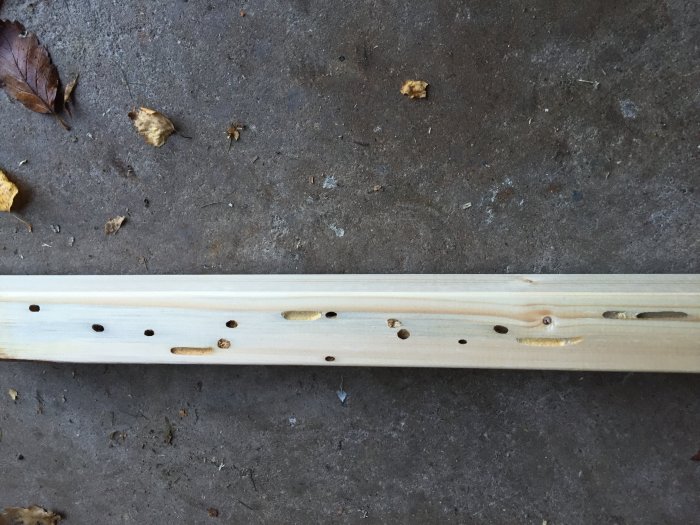
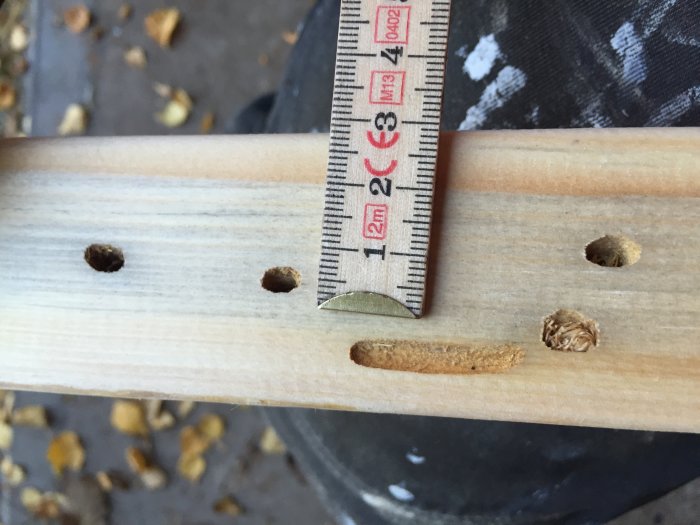
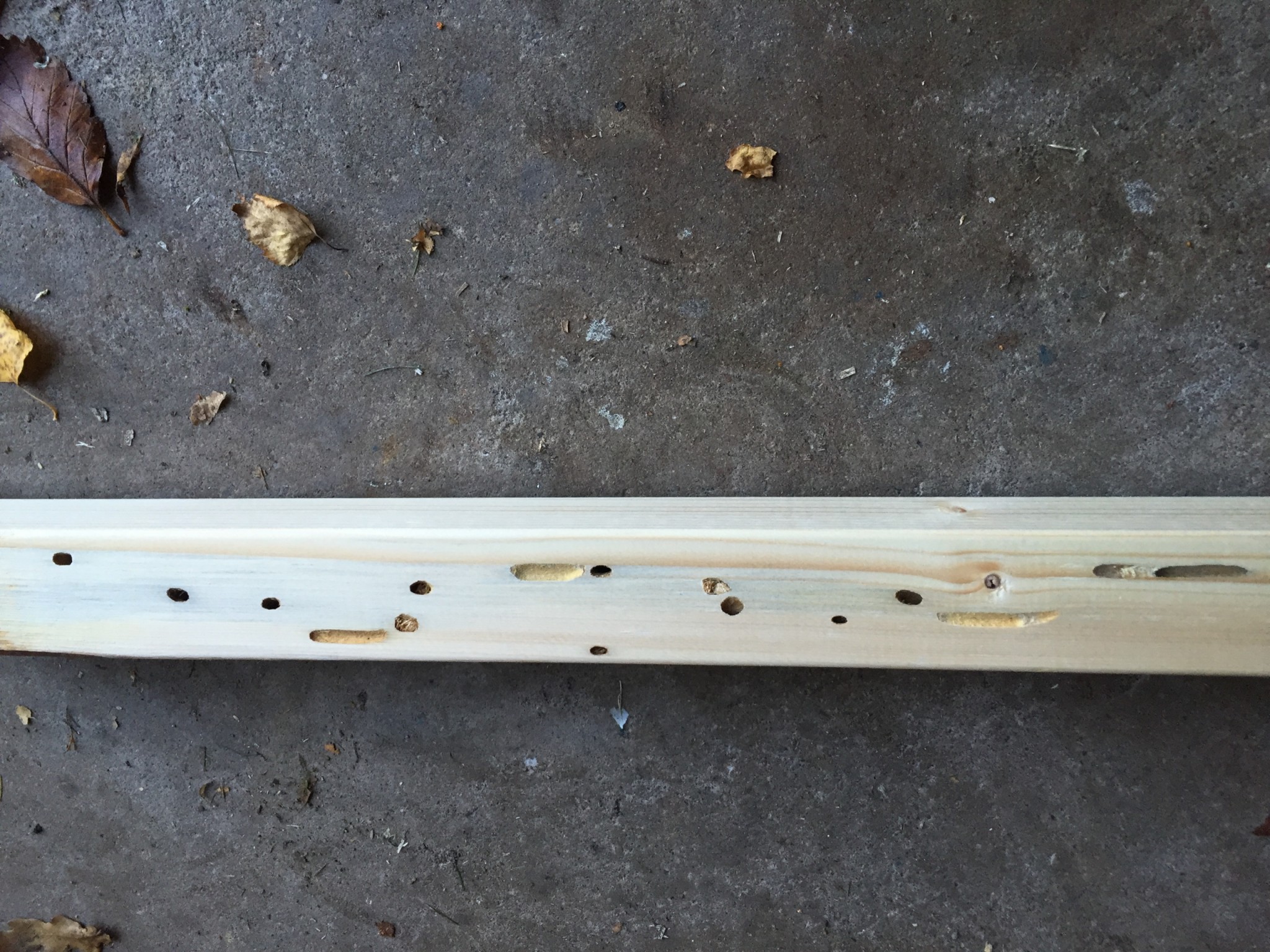
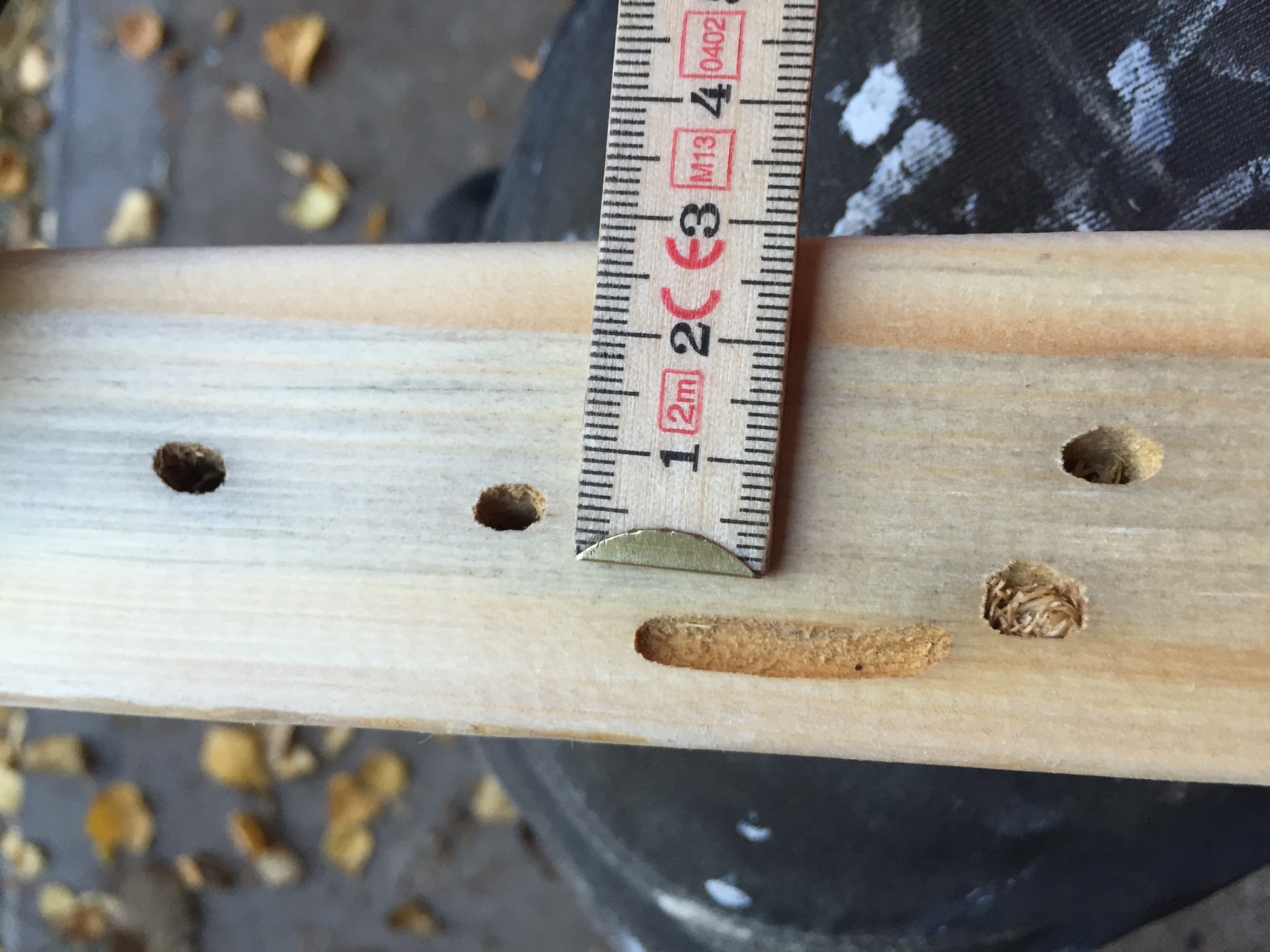
Can also be Hästmyra or Strimlig trädgnagare.
Carefully check other timber nearby and preferably contact Anticimex, so they can determine if there is no greater damage to the house itself.
Were there no holes before, because it looks like they have been planed after the holes formed. And from what I can see, they seem to be adjacent to the blåträ. Where did you buy the timber?
Andersson: I have not seen them before, but I agree with you that it looks like it was before the timber was planed. The question might need to be clarified to: Is there a risk that the animals remain in the wood after they have stopped feeding on it?
A little unsure of where exactly this timber was bought, I have a couple of different places I usually shop at, so I don't want to take a chance if it's wrong.
There may very well be larvae inside the timber. It's already damaged, so cut and split a few pieces, and you'll find out if the larvae are still there. Bluewood and damaged timber should be sorted out already at the sawmill/planing mill, so my thought was if it was purchased privately from a smaller home sawyer who hasn't been very meticulous.
It comes from one of the larger chains in the country, so it's not a homemade product from someone who has cut corners. More likely poor control over the production, I would think
I haven't found any insects, so I feel calm. But of course, I don't use the pieces that look even slightly affected.
I have had blåhjon at home but only in split firewood for burning. You can easily hear the larvae gnawing. Cut open in a few places to see if there are larvae, otherwise, they hatch in spring and become blue-black beetles. In my split wood, it took two seasons before they disappeared.