My house has both horizontal and vertical paneling.
There should be an air gap behind the paneling. But how is it supposed to work exactly? Should it be open at the bottom/top in some way to allow airflow, or should it just be a spacer?
Because when I look at my house, it has been done in different ways.
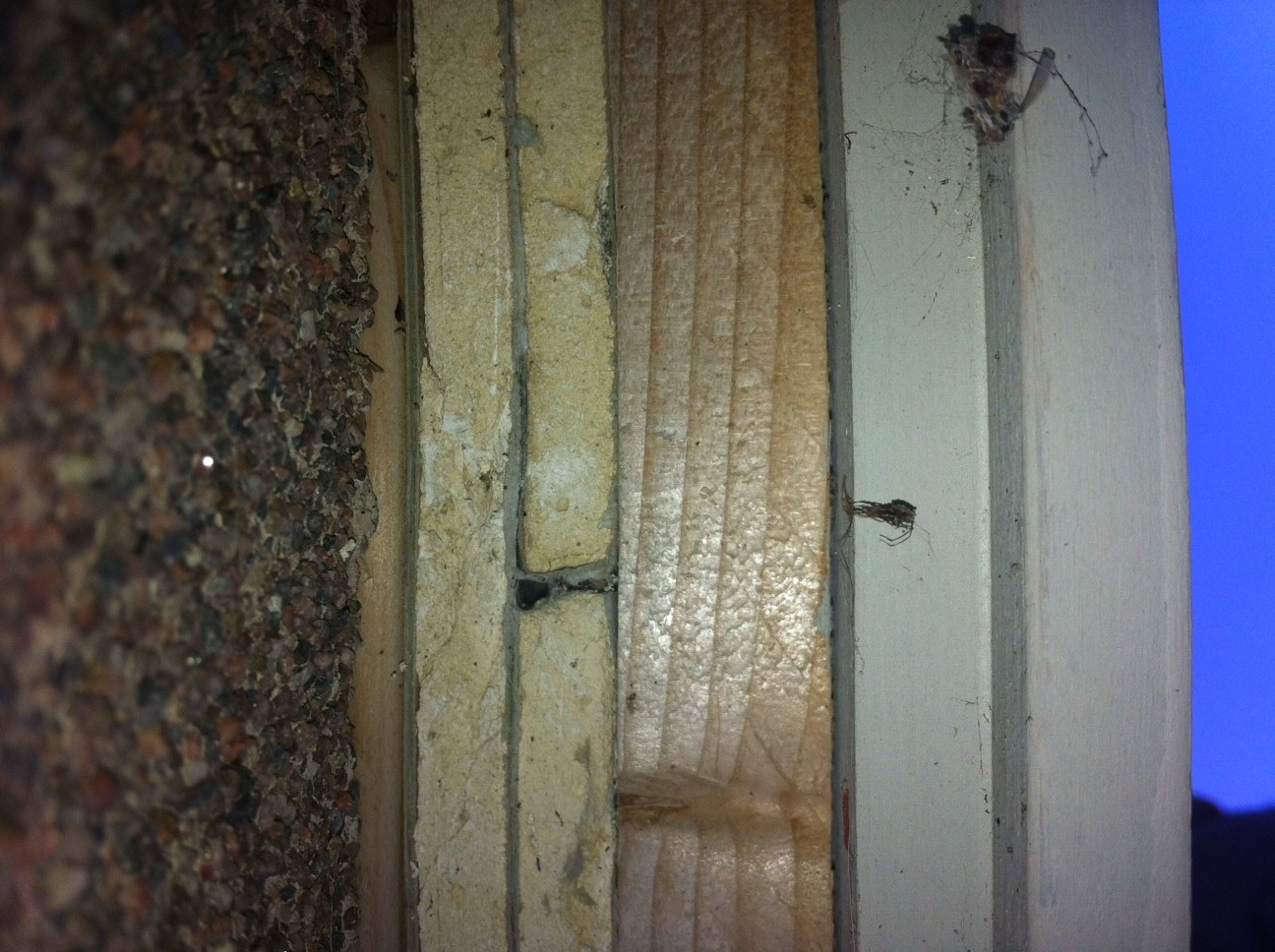
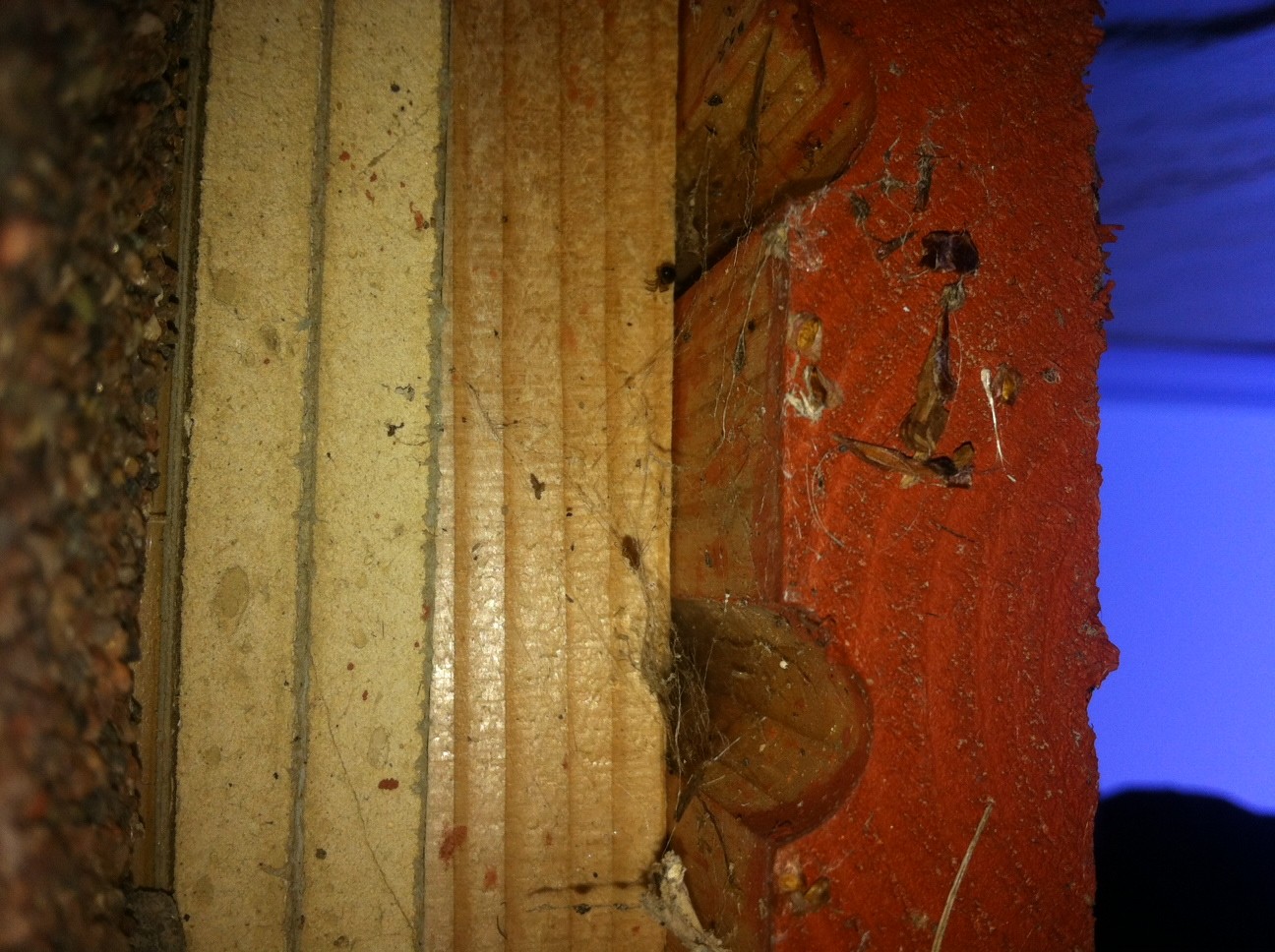
Where there is vertical paneling, it's nailed to horizontal battens. Are the milled grooves intended to provide airflow?
In most sections with horizontal paneling (vertical battens), there is naturally quite a large air gap underneath.
But then in some sections, they have let the lowest horizontal batten (but only the lowest) run along the entire facade, even though there is both horizontal and vertical paneling. This results in no air being able to enter at the bottom in the sections with horizontal paneling.
A wooden facade should be mustät, but maybe not bomtät. However, there are usually some gaps here and there in a wooden facade where the air can move, but it depends a bit on the type of panel and how many layers of paint there are.
There are probably a few different schools of thought.
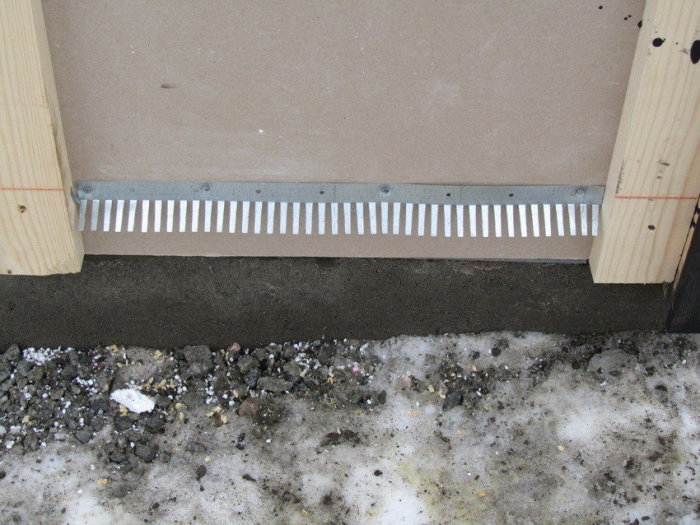
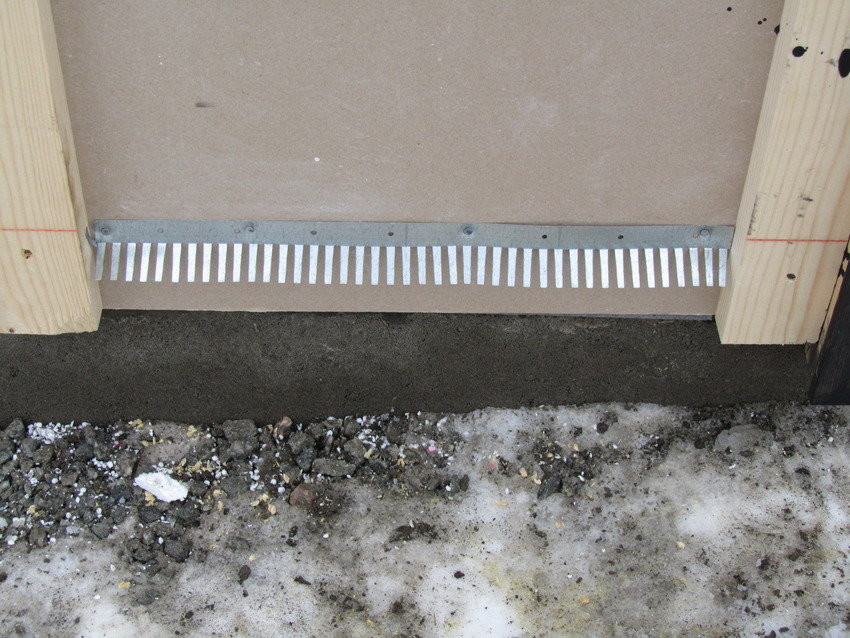
I have horizontal paneling, with vertical furring strips, and my QA (quality assurance) got the builder to install a "musband" at the bottom edge of the panel.
So it's ventilated but mouse-proof.
But at the top it's sealed, so there won't be much air exchange.
However, any leaking water can at least run down and out.
For vertical paneling, there are two schools of thought:
Either you count on the gaps between the underpanel boards to manage air exchange at the lock panel/lockstrip panel.
Or you place a spacer behind the nails on the furring strips with e.g. 6.4 mm board, so that air can pass behind the furring strips.
What type of panel do you have? (Spåntad, locklist, fjällpanel, etc?)
With the horizontal panel, it might be that the air comes in from the sides, perhaps through small air channels under the trims & corner boards? Depends on how the facade is designed.
Then it's not necessarily the end for your house if there's a lack of a functioning air gap. My 1940s house with vertical siding has no air gap at all (the siding is nailed directly against the wind barrier, which in turn is directly on the sheathing), and no diffusion-tight plastic on the inside of the wall either. In the areas where I've been working (an extension and a new opening for patio door and window), the wood has looked perfect despite being 70 years old.