
19,640 views ·
62 replies
20k views
62 replies
Advice on actions in an old basement
I have a similar cellar in my house in Malmö, built in 1932. Could have been my house you're describing as they are very similar. I haven't drained it and it hasn't been done by previous owners either. It was furnished with wooden studs and plaster when we moved in. That's gone now and the two worst rooms have been replastered with lime mortar. I run a small dehumidifier, but during the height of summer, it's not quite enough. I can see some moisture penetration from the floor up to about 30-40 cm. Installed a bathroom fan in the laundry room that works on both constant ventilation and humidity control. Sanded off the plastic paint from the floor and plan to test water glass as a surface treatment. I have wooden joists with reed matting. I've repaired the worst parts with lime mortar and then use sand putty. The current plan is to skip the drainage, buy a more powerful dehumidifier, and supplement with better ventilation. The ceiling is too low to do anything sensible with the space without excavation, so the cellar will be used exclusively for storage. I feel quite satisfied with this solution, even though I sometimes feel like tearing up all the paving, decking, etc., and draining. If I were to do it all over again from the start today (have lived there for nearly ten years), I would have drained as it still nags at me.
We seem to have a very similar situation!M mangeroffe said:Have a similar basement in my house in Malmö built in 1932. Could be my house you're describing as they are very similar.
I haven't drained either, and it hasn't been done by previous owners. It was lined with wooden studs and plasterboard when we moved in. It's gone now and the two worst rooms have been re-plastered with lime mortar. Using a smaller dehumidifier, but during high summer it is not quite enough. Can see some moisture penetration from the floor up to about 30-40cm.
Installed a bathroom fan in the laundry room that runs both on constant ventilation and humidity control.
Sanded off plastic paint from the floor and plan to test water glass as a surface treatment. Have a wooden beam ceiling with reed matting. Have repaired the worst with lime mortar and then use sand filler.
The current plan is to ignore drainage, buy a more powerful dehumidifier and supplement with better ventilation. It's too low to the ceiling to make any sensible use of the space without excavating so the basement will be used exclusively for storage. I feel pretty satisfied with this solution even though I sometimes feel like tearing up all the paving, decking, etc., and draining. Had I done it all over from the start today (have lived there for almost ten years) I would have drained since it still nags.
I just realized I have thick layers of paint on my floors as well. In many places it's torn off, but in the best room it's completely intact. Is it a bad idea to lay the tiles directly on this? It should be completely sealed against water vapor, and don't you want the tiles to breathe?
As I understand it, the paint should be removed. The tiles breathe through the grout joints. The paint is sealed. You will likely trap moisture in the slab, and over time the paint will certainly detach, along with your overlying tiles. I would remove it. We used an angle grinder and it created a hellish amount of dust, seal everything you can and then some more. It finds its way up through gaps in the joists to the upper floor. If I can reduce the humidity a little more, I'll lay sisal matting or similar over the water glass. It can handle being outside, and I think my climate is a bit better than thatG Galten said:We seem to have a very similar situation!
I just realized that I also have thick layers of paint on my floors. In many places, it's worn off, but in the best room, it's completely intact. Is it a bad idea to lay the tiles directly on this? It should be completely sealed against water vapor, and don't you want the tiles to breathe?

I'm attaching some pictures of walls/floors and ceiling, before/after. Taken just after replastering, so it's less humid now. The pipes are also painted now. It makes a big difference in the impression with
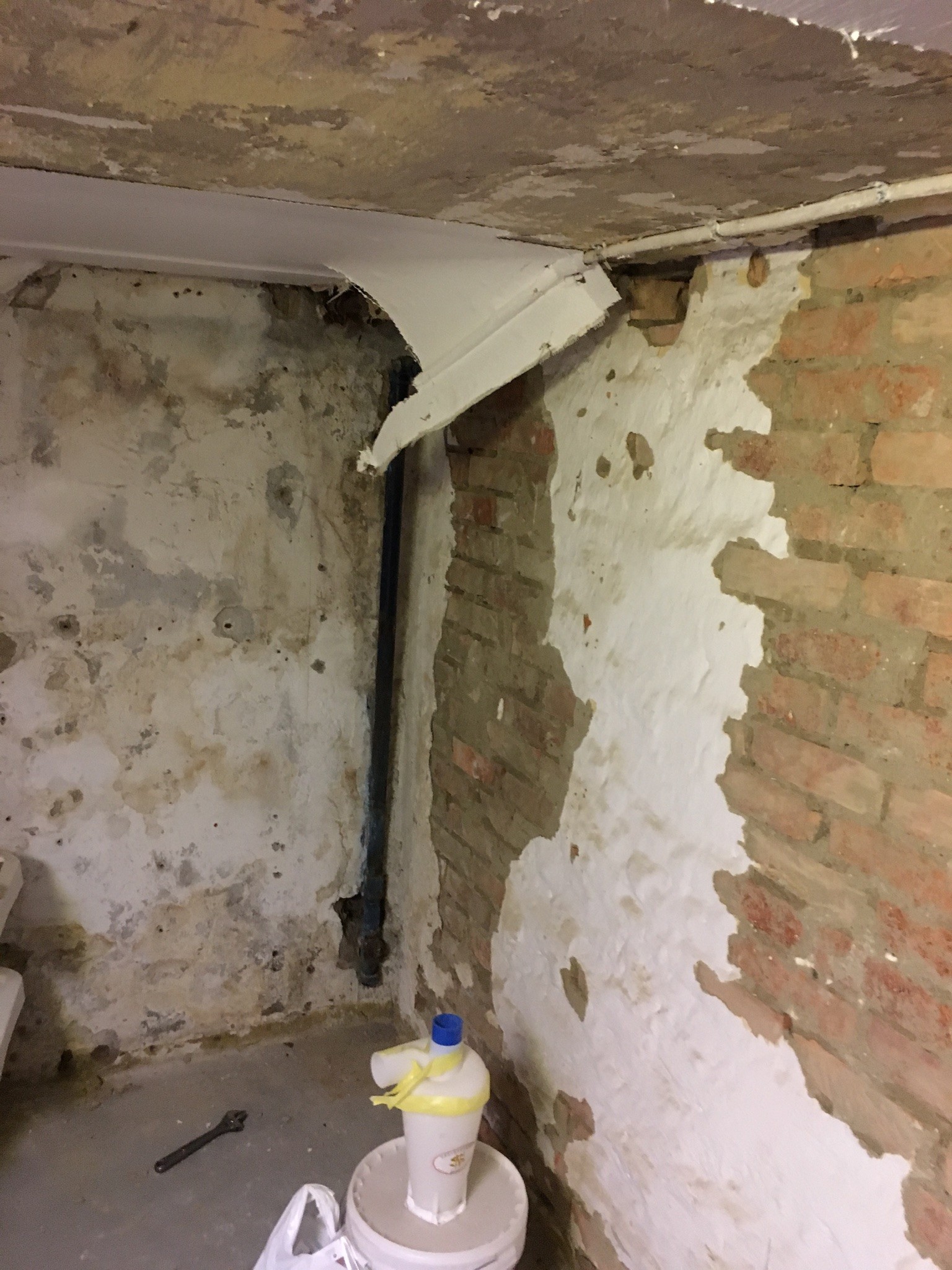
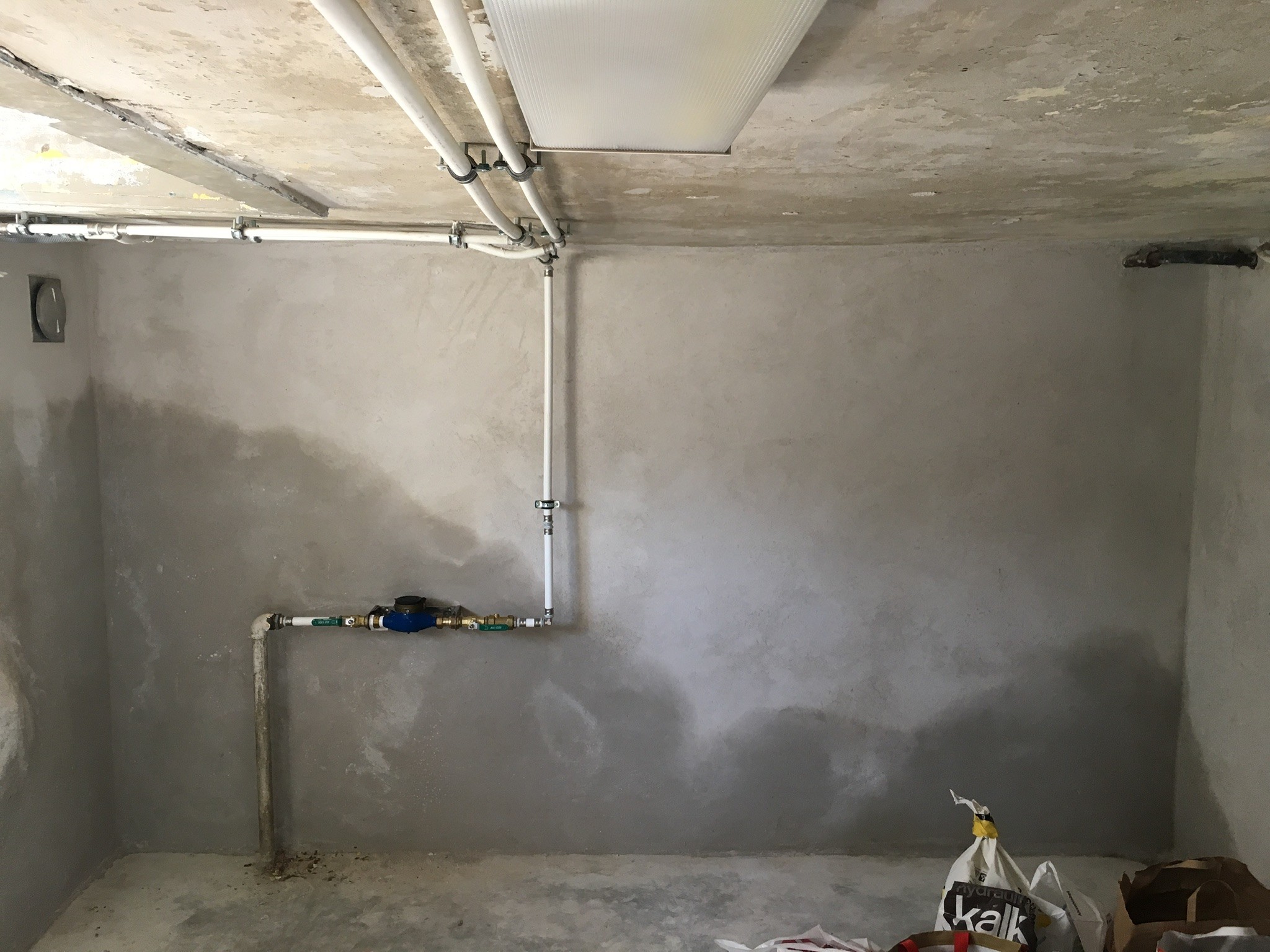
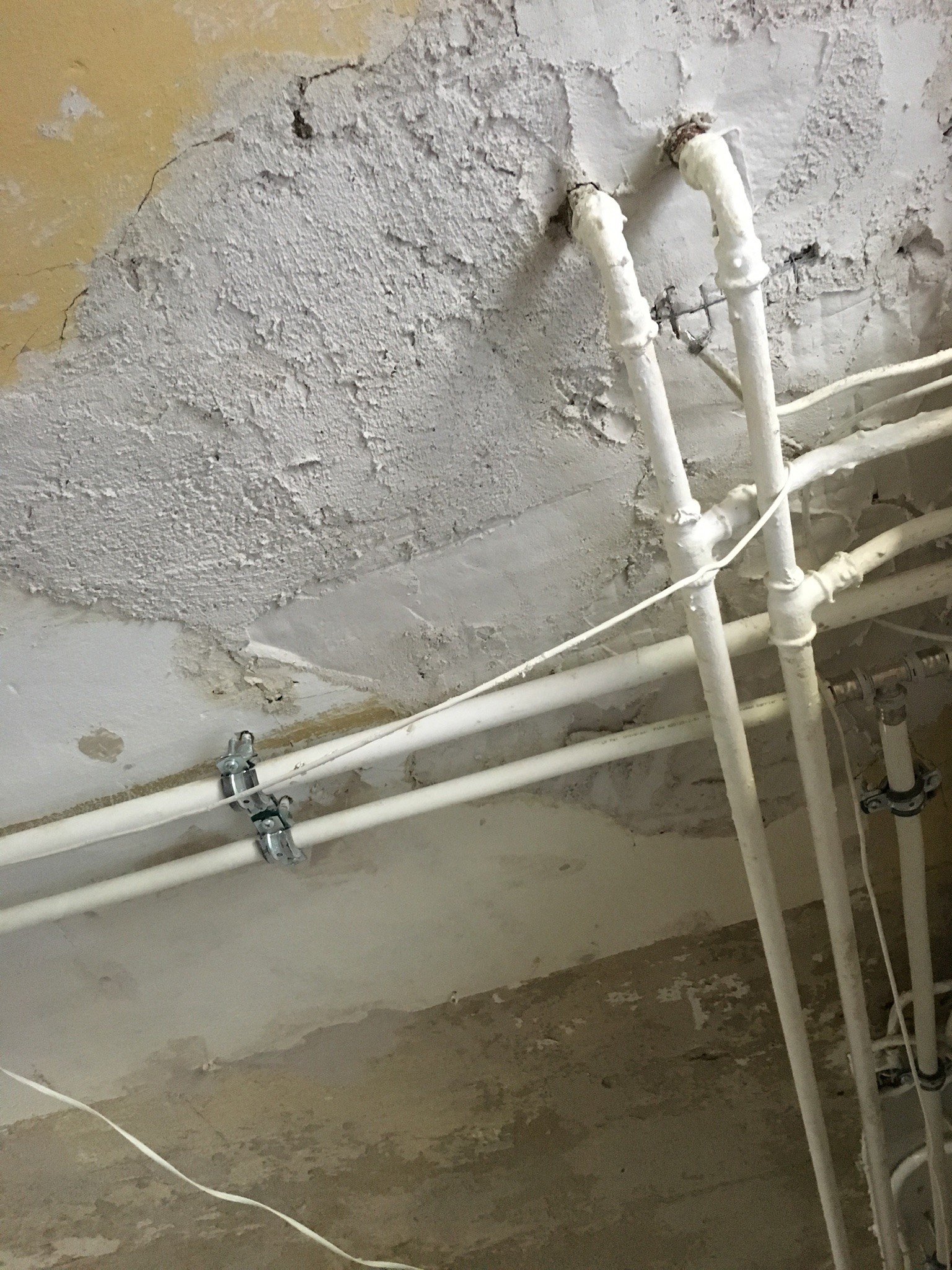

I have at least come this far that the basement is completely empty of stuff and I am going to rent a concrete grinder. Both the walls and the floor need to be sanded.
I would rather rent an expensive machine that gets the job done easily than save money. What would you choose to rent?
I would rather rent an expensive machine that gets the job done easily than save money. What would you choose to rent?
Speaking of something else, I have now been in contact with three different plumbing companies about the installation of a check valve/valves. All advise me against doing it. "There are no check valves that will withstand heavy rain" or "if the check valves hold, the external sewer pipe will not." A bit surprised that everyone seems so against it, and they still have an interest in selling.
Member
· Västernorrland
· 12 030 posts
The question is whether such check valves are just placebo in the end. For them to function, they need to be 100% clean and not have any leakage at all. Will this be the case in reality? It feels a bit like a false sense of security, but that's what I think. They might work perfectly well, what do I know.
I was surprised they seemed to think it was a waste of money, but I'm listening to them and opting out of check valves.S Stefan1972 said:
In 15 years, I've had sewage backup twice, one of which (in 2014) was massive. No check valves in the world could have stopped it (according to the plumbing companies). But it was a rain that comes once every 200 years.
I'm focusing on making it more flood-resistant with tiles and high thresholds for rooms with floor drains.
Talked to a colleague today who has installed an air-to-air heat pump in the basement (same type of house and district heating).
She seemed pleased with the climate it provided in the basement, for a few hundred SEK in electricity per month. Maybe it's something to consider.
She seemed pleased with the climate it provided in the basement, for a few hundred SEK in electricity per month. Maybe it's something to consider.

What do they cost on the other weekdays?G Galten said:
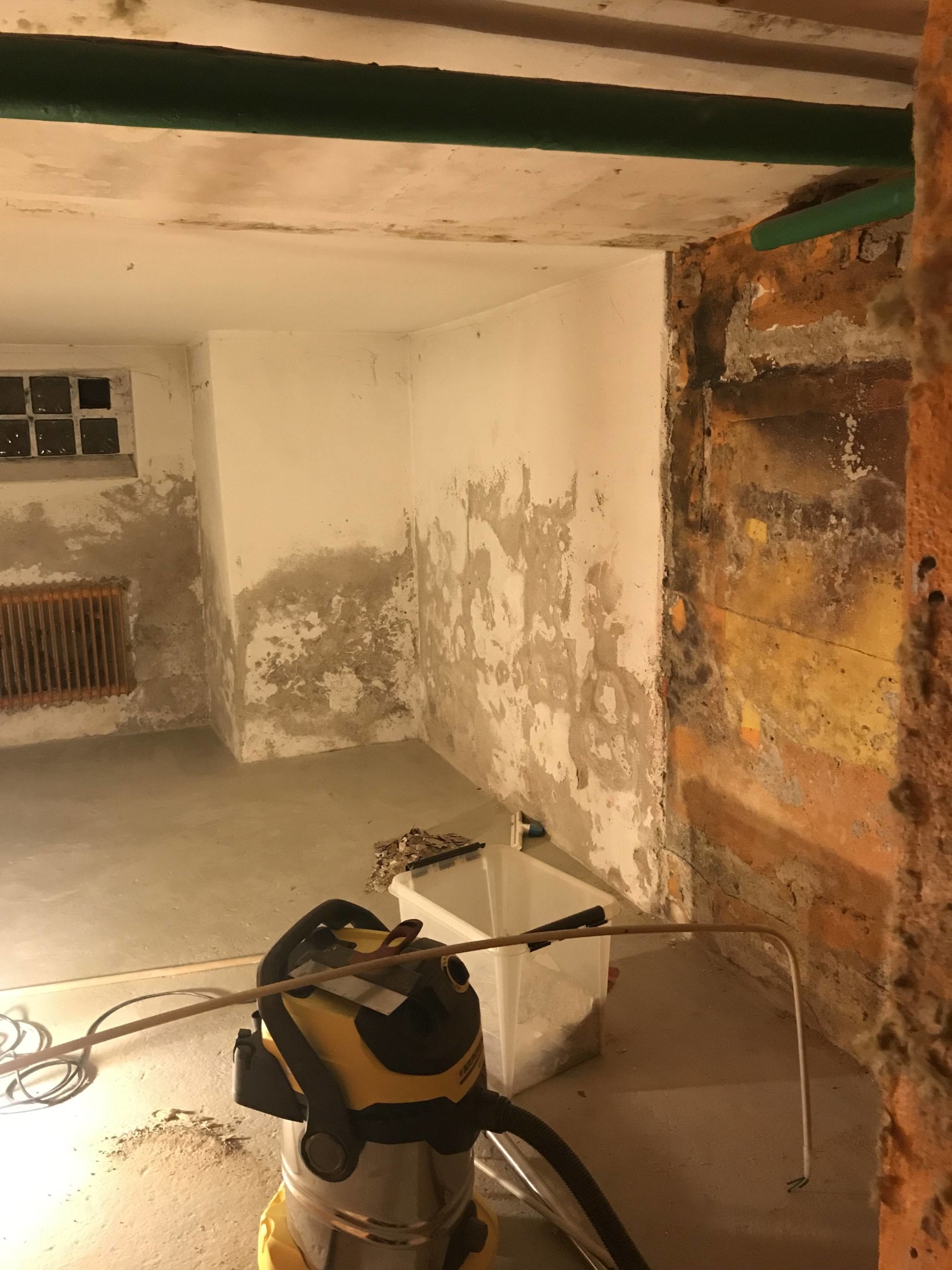
The interior walls are brick, so I probably just want to expose them under all layers of plastic paint. The exterior walls, I'm not sure what to do with yet.
In one corner of the room, I'm stepping through the concrete floor. It's as thin as paper. There's sand underneath. Grateful for your thoughts.
I'm not bothering to expose the brick walls. The plaster is really well stuck to those walls, so I'm just repainting. The exterior walls (like the ones in the picture) are sanded down to the concrete and painted with silicate paint (without plaster). The plaster would just fall off those walls anyway...
But now something completely different. One of the rooms in the basement is a half-finished bathroom. Someone in the past started a massive renovation for a "spa area" but gave up somewhere in the middle. This means that there is a toilet and sink installed (but only to the drain, no water connected. Additionally, a foundation for the shower cabin and space for a bathtub is cast (with floor drains installed for both). This room has tiles on the floor.
Firstly, the tiles (horribly ugly) and the concrete foundation need to go, but I assume I can chip those away with a suitable machine. Then the question is how do I get rid of the four drains? Is it something you can do yourself or does it require a plumbing company? Found a page that said it was OK to pour waterproof concrete into the traps, but what do you do in the two drains that don't have traps?
But now something completely different. One of the rooms in the basement is a half-finished bathroom. Someone in the past started a massive renovation for a "spa area" but gave up somewhere in the middle. This means that there is a toilet and sink installed (but only to the drain, no water connected. Additionally, a foundation for the shower cabin and space for a bathtub is cast (with floor drains installed for both). This room has tiles on the floor.
Firstly, the tiles (horribly ugly) and the concrete foundation need to go, but I assume I can chip those away with a suitable machine. Then the question is how do I get rid of the four drains? Is it something you can do yourself or does it require a plumbing company? Found a page that said it was OK to pour waterproof concrete into the traps, but what do you do in the two drains that don't have traps?
Could it be that the two drains without P-traps are scuppers? If so, you block them when you block the floor drains that have P-traps, as they are probably connected to them.G Galten said:
With the caveat that I have very little knowledge of plumbing:B bakterie said:
If we exclude the floor drains, the other two drains are just pipes sticking up (one for the toilet and one for the sink). With a bit of Googling about spygatters, I don't think you can use that for toilet flushing?
I've seen that you can buy "caps" to seal the pipes. But since I'm going to lay new tiles over the entire floor, I need to saw off the pipes at the concrete surface (or a bit below) and chisel out so I can put a cap on. If it's just as well to fill concrete in the holes, that would make it a lot easier.

Of course, you can pour concrete in. But first plug with a cloth or foam sealant before you fill the concrete.G Galten said:With the caveat that I have very little knowledge of plumbing:
If we exclude the floor drains, the other two drains are just pipes sticking up (one for the toilet and one for the sink). With some googling about spygatt, I don't think it can be used for toilet flushing?
I've seen that you can buy "caps" to seal the pipes. But since I'm going to lay new tiles over the entire floor, I need to saw off the pipes at the concrete surface (or a little below) and chip away so I can fit a cap. If it's just as good to fill concrete in the holes, that would make it easier...