
8,374 views ·
4 replies
8k views
4 replies
Advice for inexperienced: Casting garage threshold
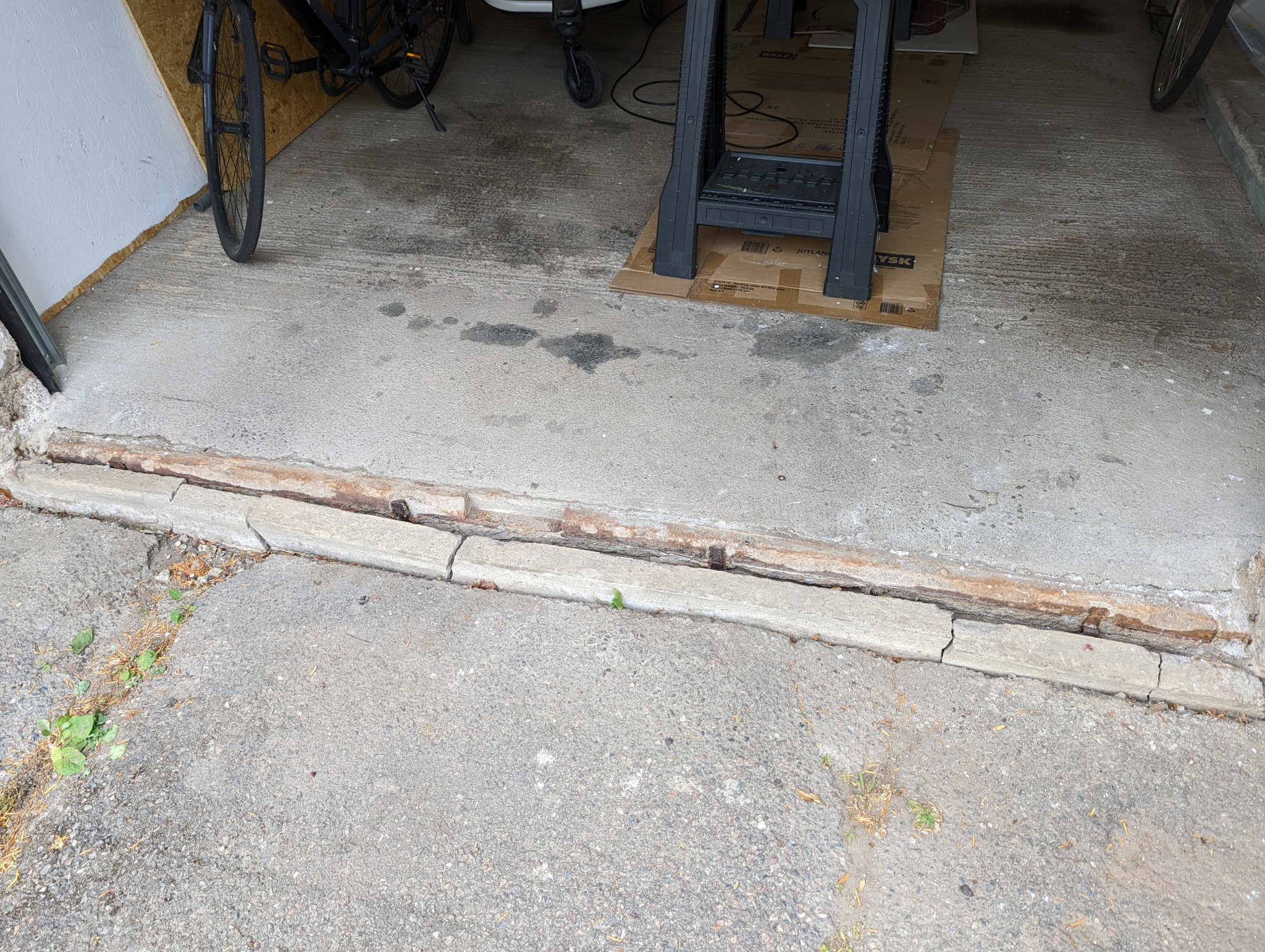
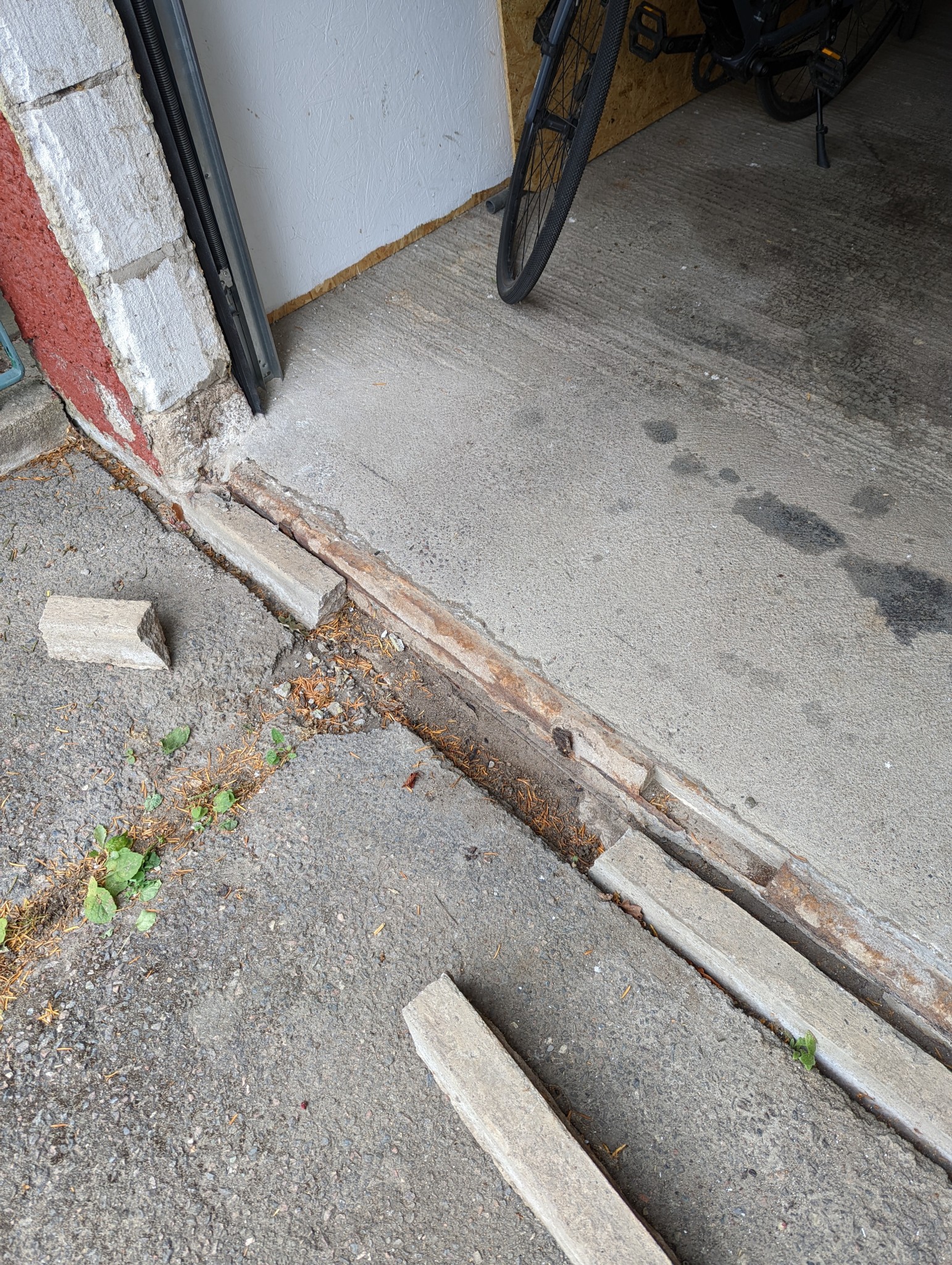
See images of the mess further down. Apologies in advance for the long text and many questions.
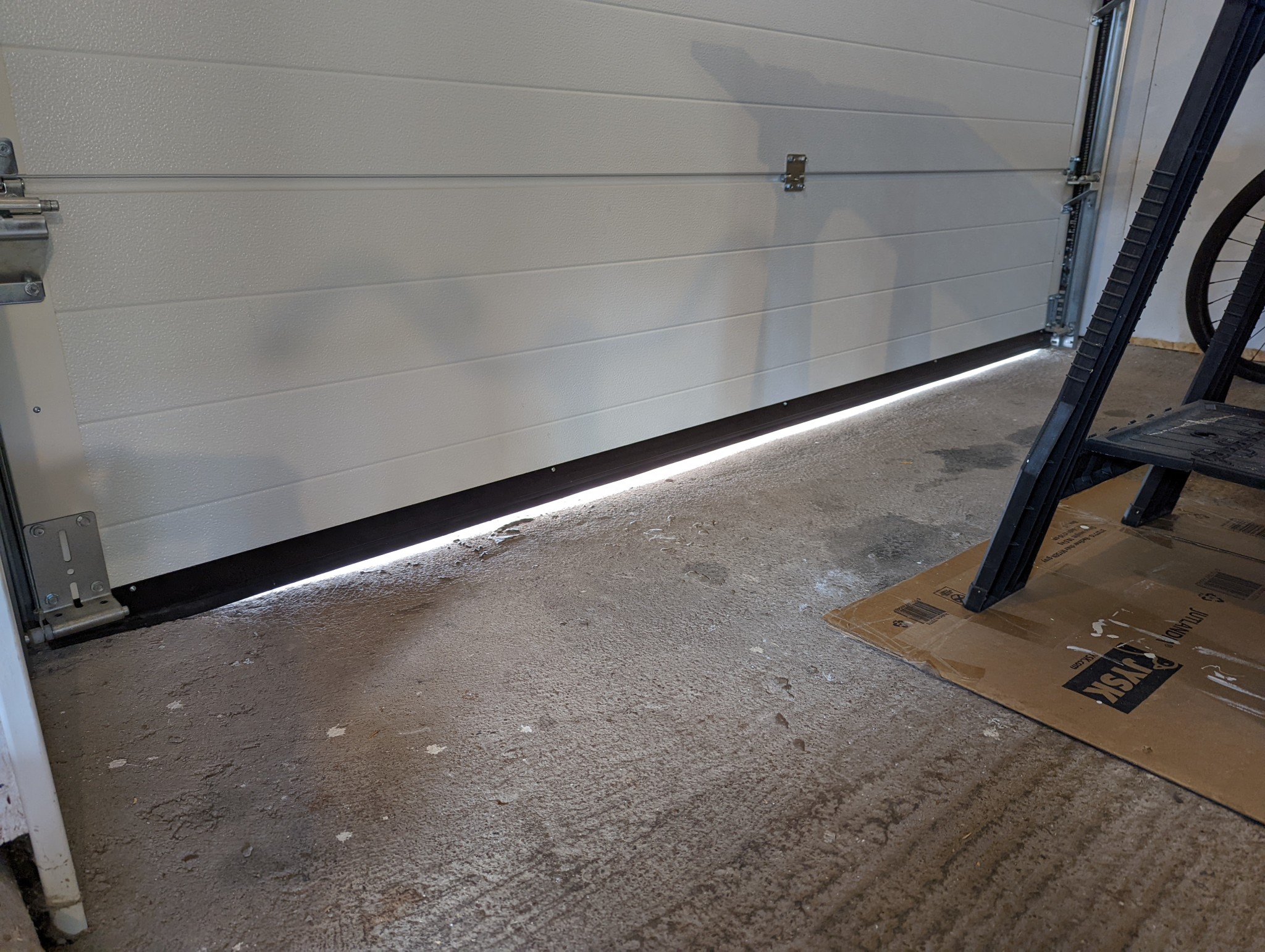
After recently replacing the garage door, the threshold now needs to be redone. Previously, there was a folding door attached to a metal frame around the entire door. Now there is a conventional overhead door. With the old door, the uneven garage floor wasn't an issue as the door closed "outside," but now it's evident that there's a gap under the door.
The first problem is that the floor is several centimeters higher in one corner due to a repair by a previous owner. This prevents the door from closing properly. To solve this, I'll remove a piece from the "bump" to allow the door to close a few centimeters further.
Once that's done, the door will close better against the floor, and the rubber strip will seal tightly.
General opinions on this casting and various solutions are gratefully received. =) More images can certainly be arranged.
After recently replacing the garage door, the threshold now needs to be redone. Previously, there was a folding door attached to a metal frame around the entire door. Now there is a conventional overhead door. With the old door, the uneven garage floor wasn't an issue as the door closed "outside," but now it's evident that there's a gap under the door.
The first problem is that the floor is several centimeters higher in one corner due to a repair by a previous owner. This prevents the door from closing properly. To solve this, I'll remove a piece from the "bump" to allow the door to close a few centimeters further.
Once that's done, the door will close better against the floor, and the rubber strip will seal tightly.
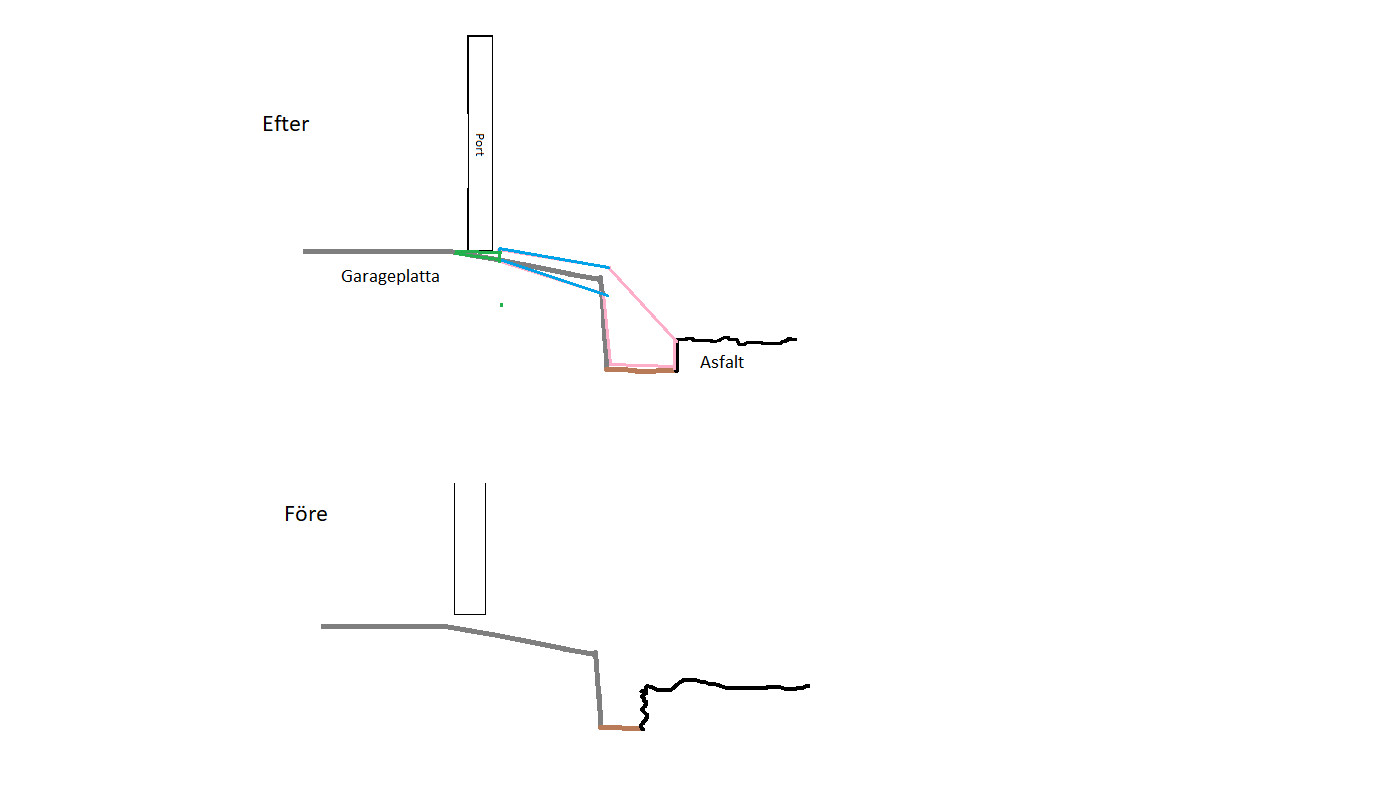
- Since the garage slab corner protrudes somewhat, and I don't want to chisel away too much, my idea is to make the threshold in two steps. A sharp edge where the threshold changes angle (between pink and blue in the drawing). For the pink part, I plan to use coarse concrete since the thickness is well over 10cm, and for the blue part, fine concrete (as it is thinner than 5cm at the tip). Is this procedure recommended, or can thicker parts (i.e., the whole thing) be cast with fine concrete?
I plan to cast the blue part first with a board where the pink will be to create a sharp edge, and then I'll cast the pink part.
- What type of primer should I use for the new casting to adhere to the existing concrete (the blue part)?
- How should I best reinforce the pink part? I'm thinking one or two longitudinal rebar resting on rebar stubs inserted into the garage slab?
- Regarding the green part in the sketch, I'd like to cast a thin layer to level the floor, but my feeling is it will surely crack if casting as thin as 5-20mm? I've read there's something called a slip layer used in similar situations where you want to cast thin?
General opinions on this casting and various solutions are gratefully received. =) More images can certainly be arranged.
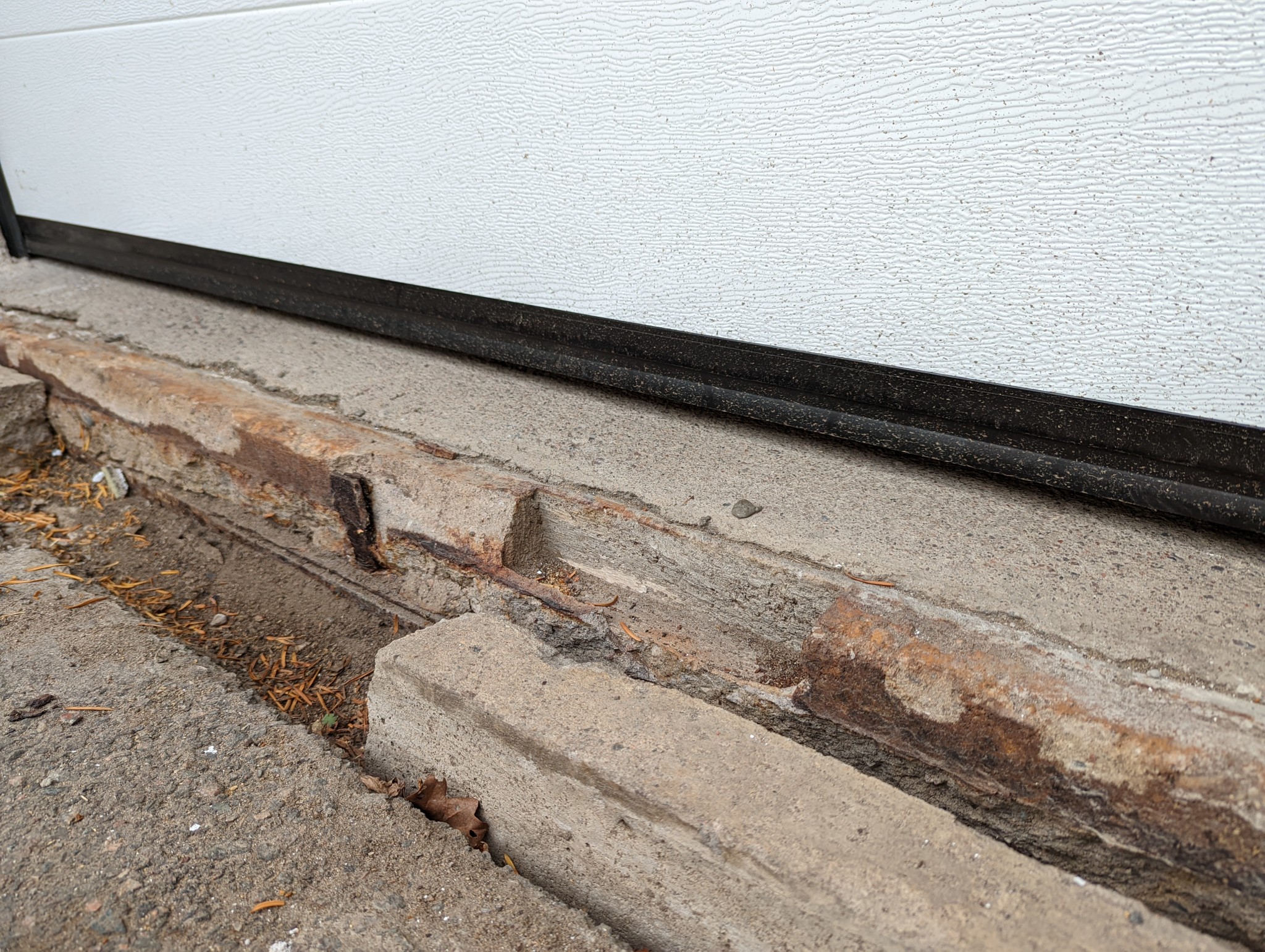
Before considering your casting, consider embedding a steel edge that takes most of the wear caused by everything that will be rolled in and out of the garage
https://markgrossen.se/husgrund/arm...Dt0jaYUe1pA8Cre0tgZ75ngEmk51y-ehoCKGEQAvD_BwE
https://markgrossen.se/husgrund/arm...Dt0jaYUe1pA8Cre0tgZ75ngEmk51y-ehoCKGEQAvD_BwE
Such a steel is intended to "dress the corner" of the concrete slab so to speak, or is it cast underneath the concrete to reinforce the corner? As I envision it, there will not be any 90-degree corners anywhere, but rather a ramp up in two different slopes. I understand that it's hard to see from my drawing =)M myrstack said:Before you consider your casting, consider embedding a steel edge that absorbs most of the hardship caused by everything that will be rolled in and out of the garage
[link] Shopping&utm_campaign=Google&utm_medium=cpc&utm_term=22302&gclid=CjwKCAjwmJeYBhAwEiwAXlg0ATQ1lsrSQ-j2RZ8foJOegNDt0jaYUe1pA8Cre0tgZ75ngEmk51y-ehoCKGEQAvD_BwE
Such a steel you suggest is actually not a bad idea as an alternative if I find my other solution too complicated, thanks!
Last edited:
There are ready-made corner irons with reinforcement. Perfect. You can slope upwards after the iron.freni126 said:
Such an iron is meant to "dress the corner" of the concrete slab, so to speak, or is it cast under the concrete to reinforce the corner? As I think, there won't be any 90-degree corner anywhere, but more like a ramp up in two different slopes. I understand it's hard to see on my drawing =)
Such an iron you suggest is actually not a bad idea as an alternative if I find my other solution too complicated, thanks!
normally you have the rods for sharp angles up to 90 degrees but they can also be used to protect smaller angles. Besides taking hits from vehicles, etc., they are practical so you can draw off the concrete against the edge when it starts to set.Such a rod is meant to "dress the corner" of the concrete slab, so to speak, or is it cast into the concrete to reinforce the corner? As my thought is, there won't be any 90-degree corner anywhere, but more like a ramp up at two different slopes. I understand it's hard to see from my drawing =)
Such a rod you suggest is actually not a bad idea as an alternative if I find my other solution too complicated, thanks!
Click here to reply