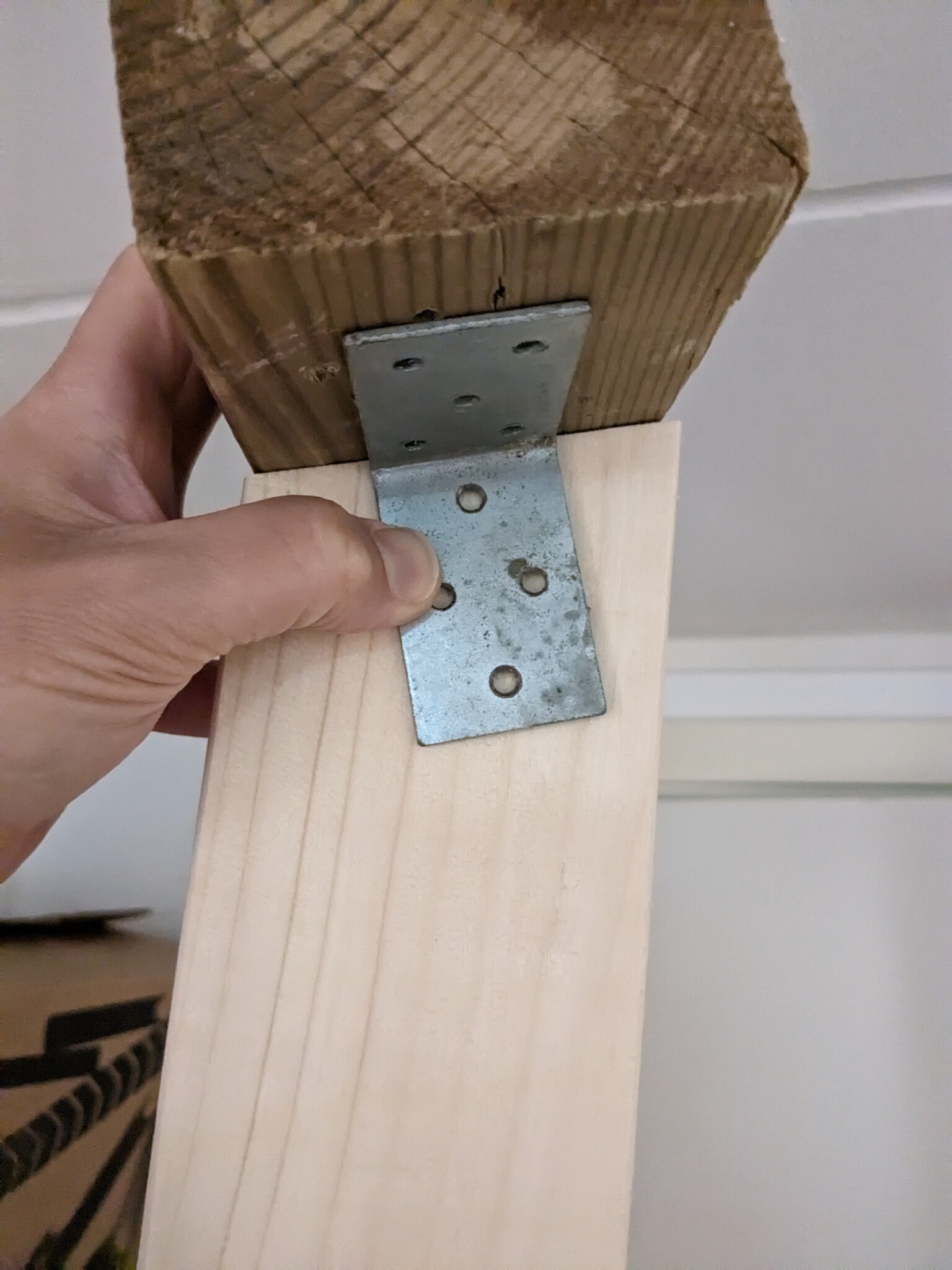
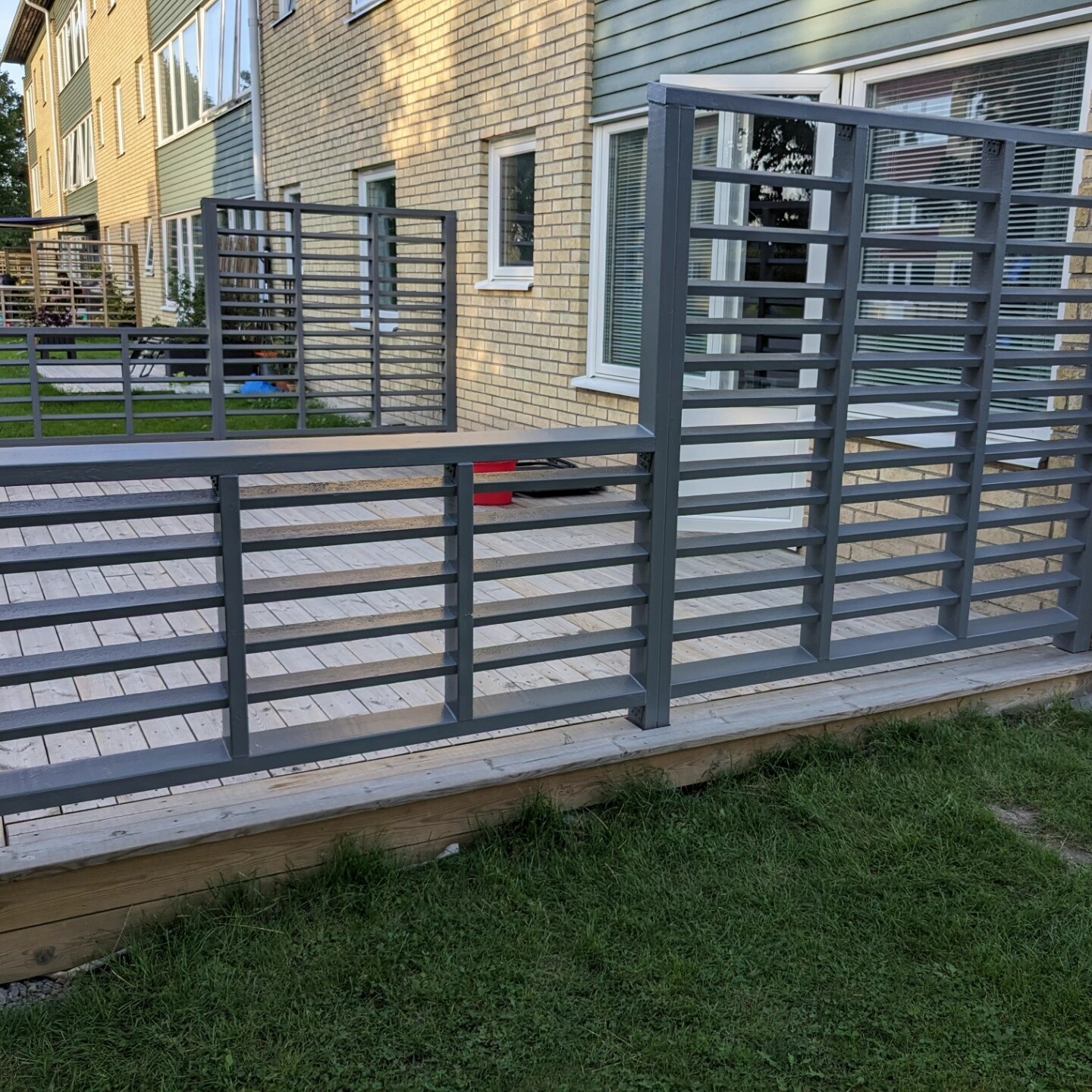
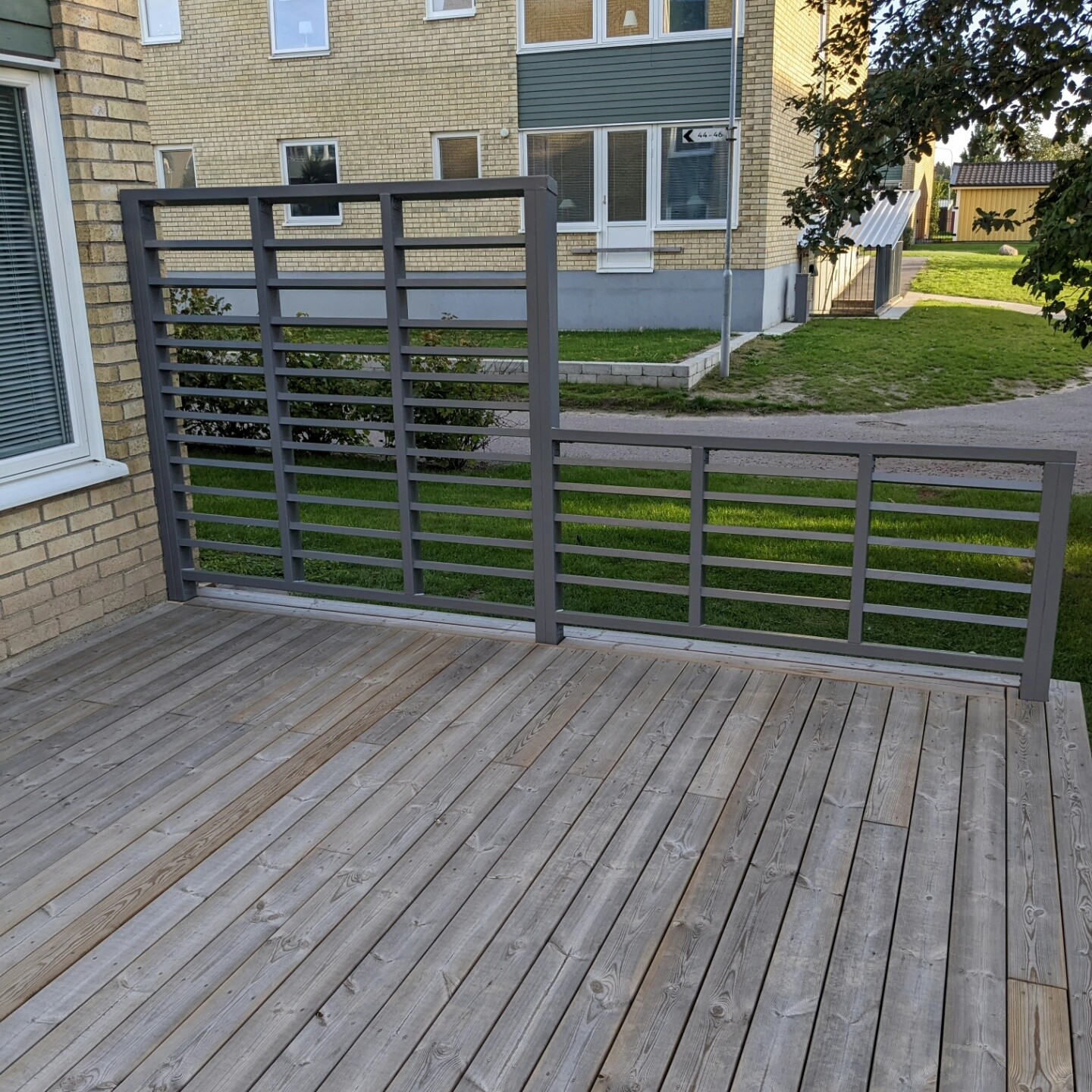
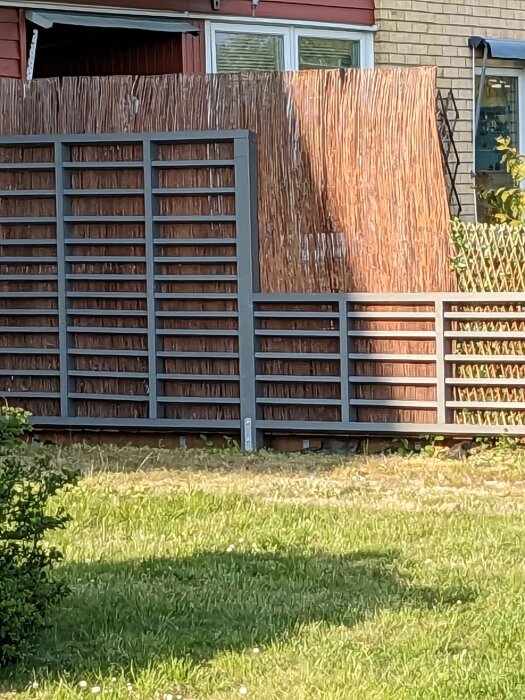
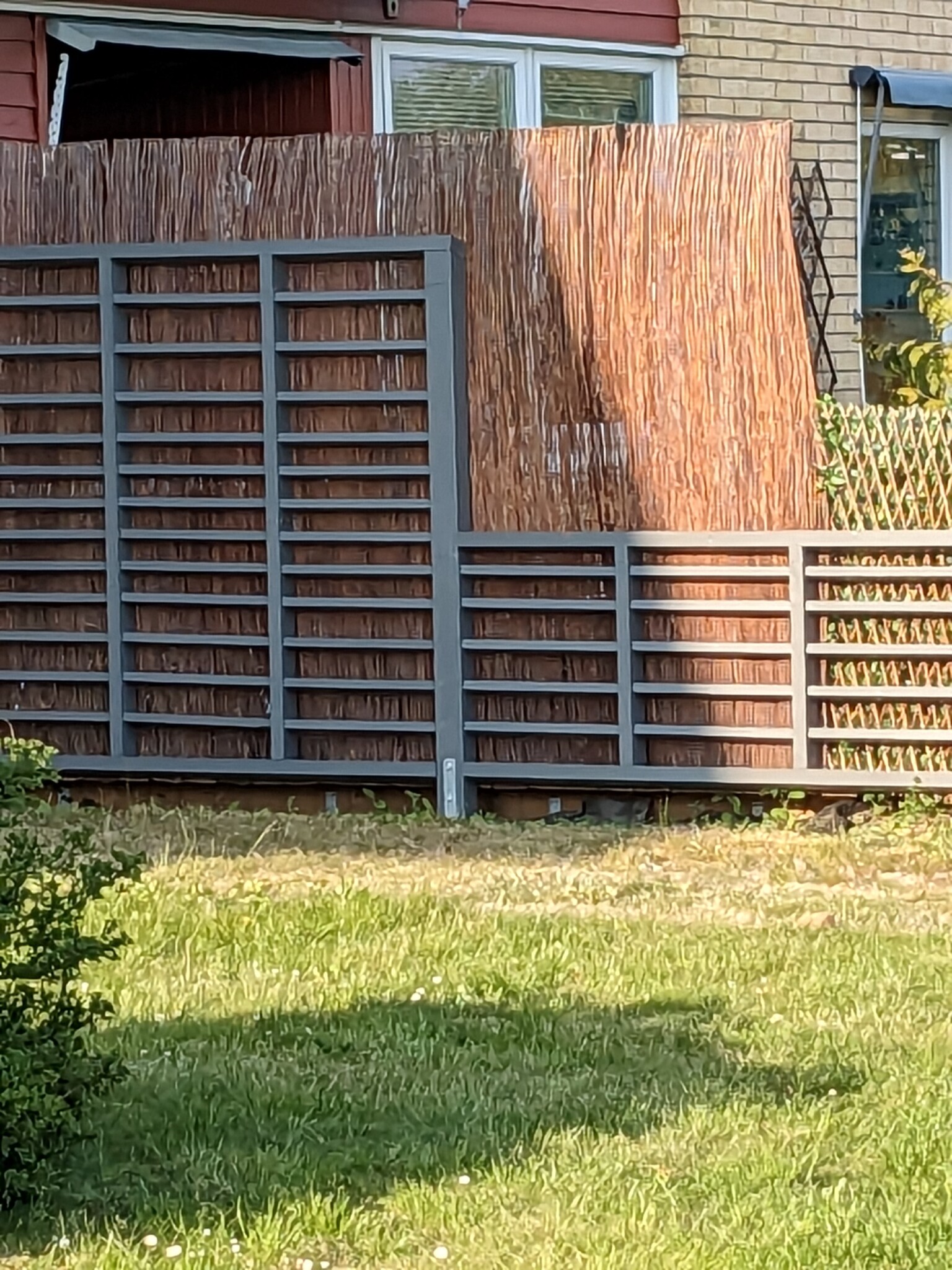
I need advice on how to attach the upper and lower crossbeams to the posts. The crossbeams are 45x95 and need to be attached to the posts (95x95). Painted timber, not pressure-treated.
I see three options but am having difficulty deciding which is best:
1) Screw from above down into the posts. Easiest but seems like the worst option as it will lead to water pooling in the screw holes
2) Screw in from underneath at an angle, possibly with pocket holes
3) Angle brackets
Just because it is painted wood, option 1 is immediately excluded.
Since you have painted wood, I think you should angle the posts so that the top rail tilts slightly. That way, you avoid water accumulation entirely on the top and everything will last much longer. If you angle the top rail, it's also not possible to use angle brackets, so that option is also excluded.
In other words, you have no choice. You can only choose to screw from underneath at an angle.
Just because it is painted wood, option 1 is immediately ruled out.
Since you have painted wood, I think you should angle the posts so that the rail slopes slightly. Then you completely avoid water pooling on the top, and everything will last much longer. If you angle the rail, you also can't use angle brackets, so that option is also ruled out.
In other words, you have no choice. You can only choose to screw obliquely from underneath.
The rail is angled at 15 degrees. Why wouldn't it work with a (smaller) angle bracket?
I don't really understand... And is it stronger than screwing?
In the post, you make a recess that is 45 mm high and 45 mm deep. In the handrail, you make a recess that is 45 mm deep. Now you can glue the handrail in the recess in the post. Screw or peg through the joint.
Another variant is to make a tenon at the end of the handrail and a corresponding hole in the post. Here, dowels work best but the holes should not be aligned; instead, the hole through the post should be a few millimeters deeper towards the bottom of the hole so that when a dowel is driven in, the handrail will be forced further into the hole.
Then there are techniques I've never tested/succeeded with, like making dovetails. Without a router and a good template, it's difficult to achieve.
The joints above with a good outdoor glue are probably stronger than screwing, but good screws are very strong in themselves so it's mostly examples of different fastening methods.


Janus82 said:
Just because it is painted wood, option 1 is immediately ruled out.