
3,010 views ·
12 replies
3k views
12 replies
According to Building Standards?
Is this customary to do? The plumber has "hung" one of the pipes (heating) with zip ties. Regular, small zip ties.
When do zip ties break? Ten years?
Wouldn't it be more professional to use stainless steel wire? Or a plank?
Is it okay to do this? I suspect it's not an exact science. But it looks really lousy!
When do zip ties break? Ten years?
Wouldn't it be more professional to use stainless steel wire? Or a plank?
Is it okay to do this? I suspect it's not an exact science. But it looks really lousy!



Apart from the suspension, does it appear to be joints in a space that is to be built up? Joints must not be concealed.


Oh, I missed that it was heat, but I can see now that it's stated in the first post.
I assume the steel pipes are old? Old steel pipes were barely clamped at all inside walls and floors. Often, the studs were just notched, the pipes laid in the notches, and then a nail was driven at an angle over the pipe and bent down. It only needed to hold until the wall panels, floors, or whatever was to cover them were in place. Then, the pipes didn’t go anywhere on their own. The pipes are also so stiff that they can be mounted with very few fastening points, which was often utilized if no suitable intersections with studs existed.
The zip ties mostly look like a temporary solution to hold the pipes in the right direction while the connections are tightened. Just fasten them properly when the wall is closed again.
I'm more bothered by the steel pipe connection that probably shouldn't be built in. In any case, MMA believes that their steel pipe connection should be visible or at least accessible.
The zip ties mostly look like a temporary solution to hold the pipes in the right direction while the connections are tightened. Just fasten them properly when the wall is closed again.
I'm more bothered by the steel pipe connection that probably shouldn't be built in. In any case, MMA believes that their steel pipe connection should be visible or at least accessible.
A nail holds forever. It's a GOOD solution. Zip ties feel really lousy.PNO said:
I assume the steel pipes are old? Old steel pipes used to barely be clamped at all inside walls and joists. Often, the studs were just notched, the pipes laid in the notches, and then a nail was driven at an angle over the pipe and bent down. It only needed to hold until the wall panels, floors, or whatever was covering it came into place. Then the pipes wouldn't go anywhere by themselves. The pipes are also so rigid that they can be mounted with very few anchor points, which was often utilized if there were no suitable intersections with studs.
The zip ties mostly look like a temporary solution to hold the pipes in the right direction while the connections are tightened. Just secure them properly when the wall is closed again.
I'm more bothered by the steel pipe connection that probably should not be built in. At least MMA believes their steel pipe connection should be visible or at least accessible.
Should I hire an external plumber? But who? He might also like zip ties?
Generally, I don't think it matters or is a problem.
If it were tap water, one might want to anchor so that pipes/fittings don’t move or vibrate when turning on and off. After 10 years of cycles, one can imagine a fitting potentially starting to leak.
But in a heating system, you don't have these pressure changes with subsequent movements, so I generally don’t think the above is a problem at all. Aesthetically, you can have whatever opinion you want about it, a pipe clamp would be neater. But on the other hand, you have a patchwork of wooden pieces that aren’t aesthetically pleasing either. Fortunately, the stuff is going to be nailed up, and nothing will show, so why spend time on a non-problem?
If it were tap water, one might want to anchor so that pipes/fittings don’t move or vibrate when turning on and off. After 10 years of cycles, one can imagine a fitting potentially starting to leak.
But in a heating system, you don't have these pressure changes with subsequent movements, so I generally don’t think the above is a problem at all. Aesthetically, you can have whatever opinion you want about it, a pipe clamp would be neater. But on the other hand, you have a patchwork of wooden pieces that aren’t aesthetically pleasing either. Fortunately, the stuff is going to be nailed up, and nothing will show, so why spend time on a non-problem?
But it might be a good idea to check which brand the coupling is, and if the manufacturer's instructions allow for concealed installation. It is not enough that safe water regulations generally allow concealed heat connections. The material must also be suitable.
Yes, all the mess shall be nailed over, at least screwedS Slarvpellen said:I generally don't think it matters or is a problem.
If it had been about tap water, you might want to reinforce it so that pipes/fittings don't move or vibrate during on and off cycles. After 10 years of cycles, you could imagine that a fitting could potentially start to leak.
But in a heating system, you don't have these pressure changes with subsequent movements, so I generally don't think the above is a problem at all. Aesthetically, you can have your opinion; a pipe clamp would be tidier. But on the other hand, you have a patchwork of wooden pieces that aren't aesthetically pleasing either. Fortunately, the crap is going to be nailed over and nothing will be visible, so why spend time on a non-issue?
 . But interesting response! Thank you for that.
One should be able to trust a plumber, right? That he knows what the heck he's doing? Or are they just winging it? Attaching pictures. Unclear what brand it is. It says MMA, CR, Vatette.H hempularen said:
How should one know what applies to these? Impossible for me to find.
The company is connected to COMFORT in all respects.

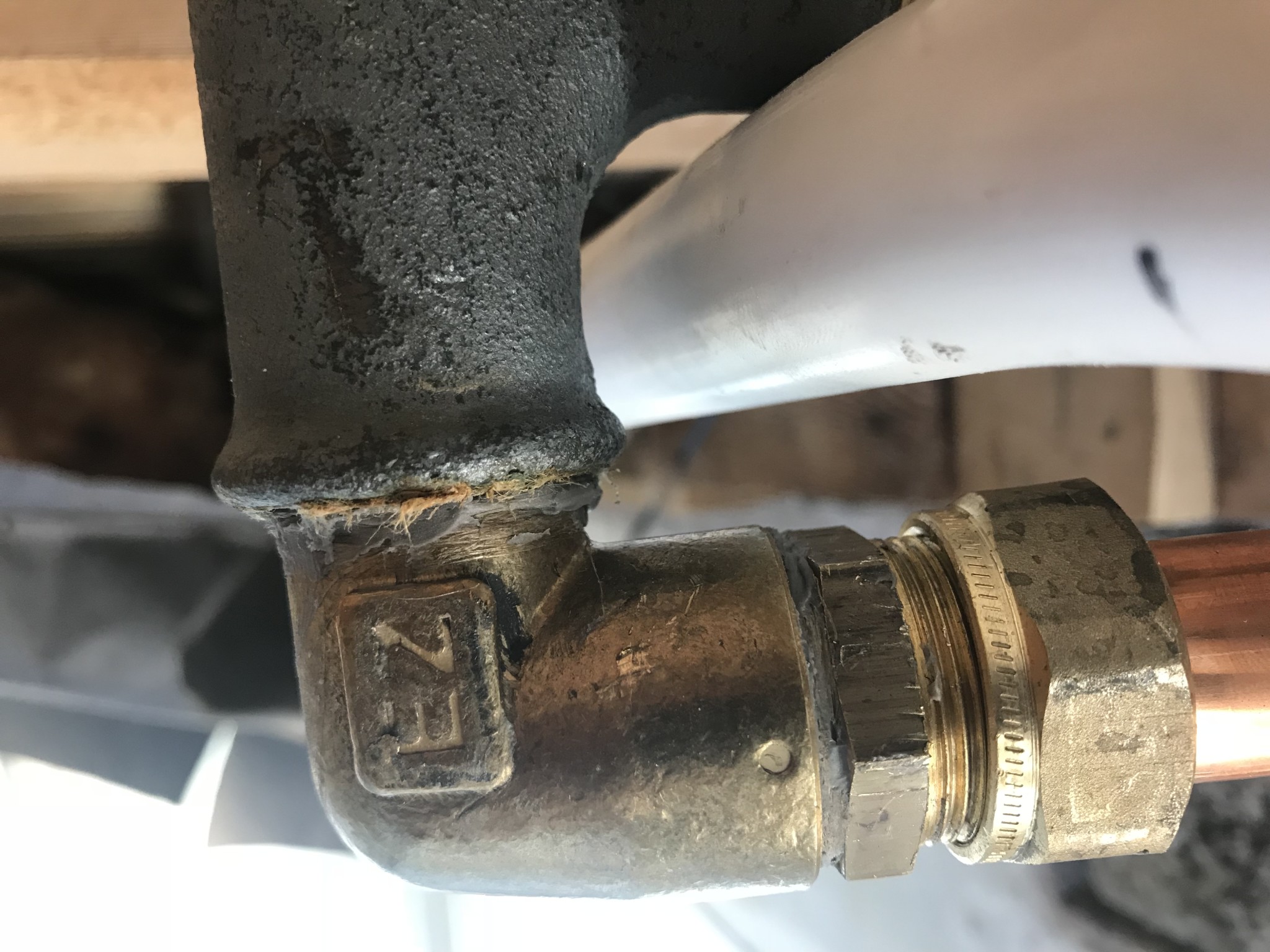
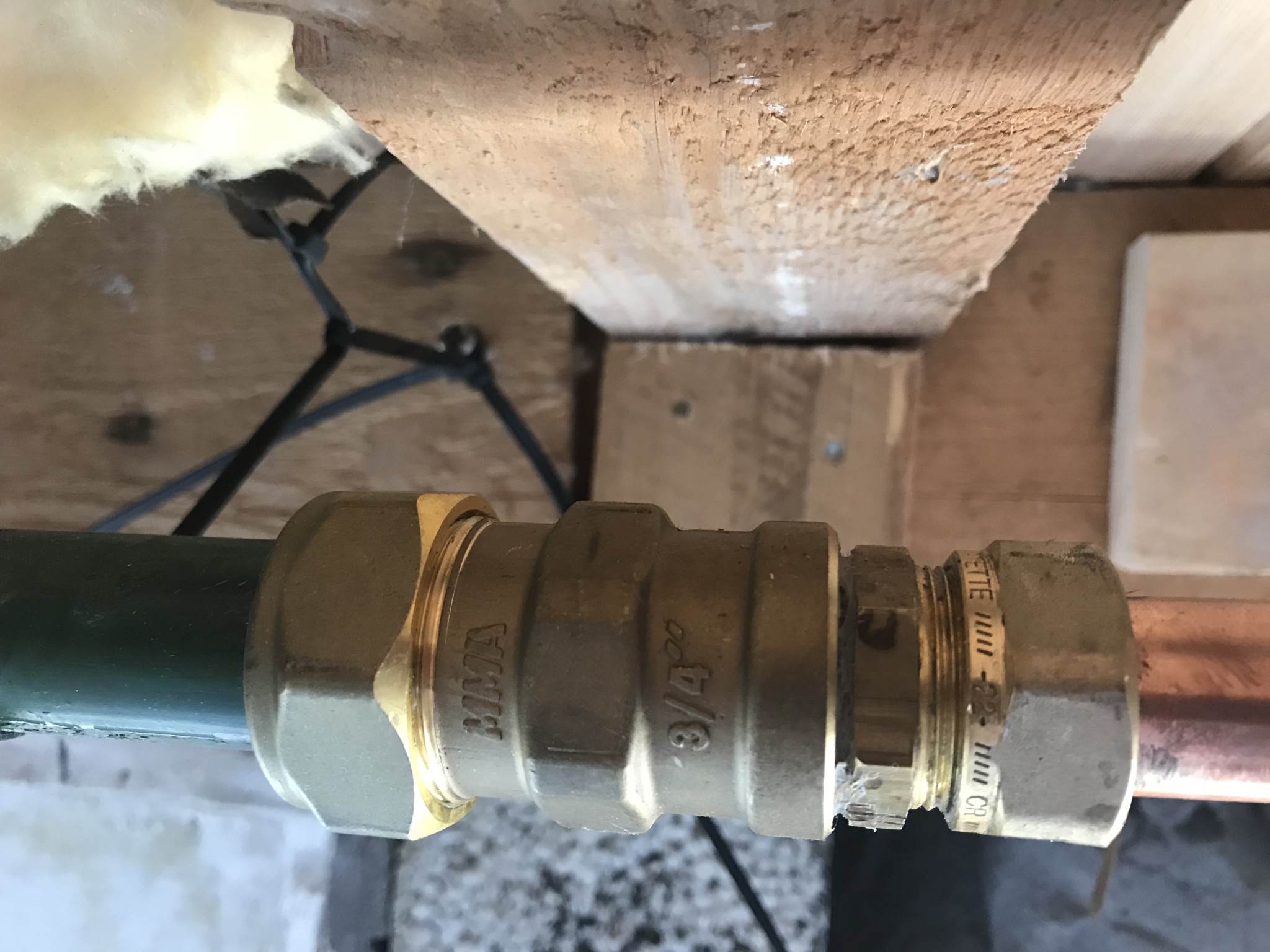
So it is the last image that shows a compression fitting against steel pipe. There may be limitations on where they can be used. I don't know about the one we see in the picture.
Whether you can trust this plumber might be somewhat connected to how everything else looks...
Whether you can trust this plumber might be somewhat connected to how everything else looks...
I have tried to jiggle the pipes. They are quite sturdy and everything is really solid. I actually don't think those zip ties make any difference. They probably just used them to "straighten" the pipes while they were working. Time will tell. Living on the edge...
Click here to reply