Hello!
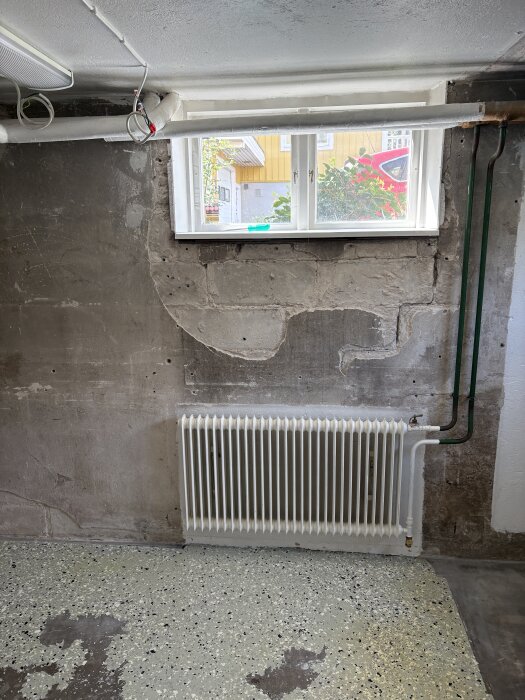
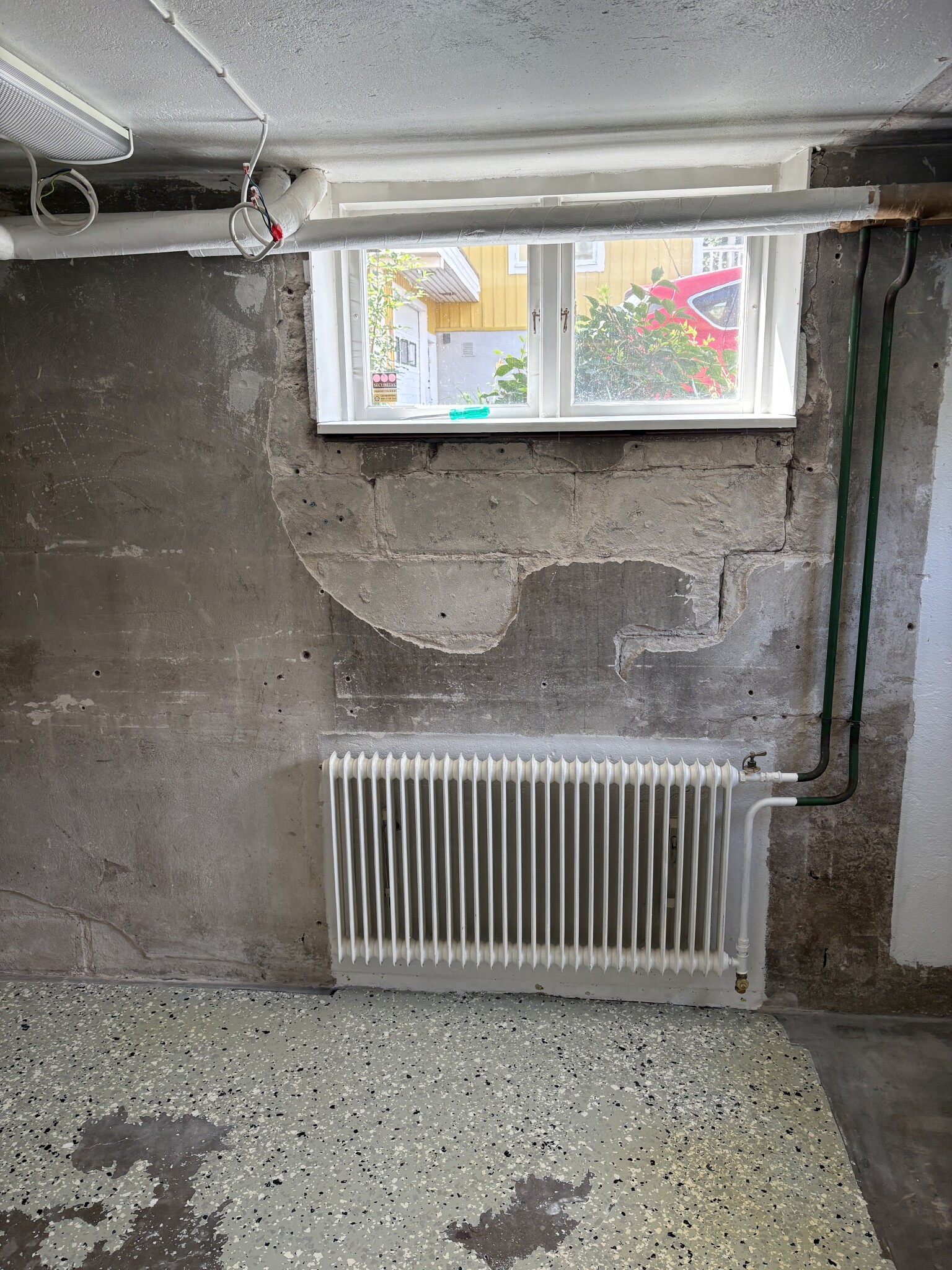
Renovation of the laundry room in the basement is underway. The basement's outer wall is made of concrete blocks. Built in 1939-1940. Parts of the plaster have been removed where it was loose, I will probably knock down a few more sections. I have noted a small crack between the concrete blocks in the foundation wall, it's nothing big so I'm not too worried about it, see picture. Below the right side of the window. The house has still stood for a long time, so it's not surprising to have some crack. Otherwise, it looks good as far as I can assess. But now that I'm about to plaster the wall, I want to do it as well as possible. Even though I am aware that it can move a few millimeters and create a new crack in the future.
I have scraped out loose material along the crack. Is it enough now to apply plaster mortar (probably plaster mortar c?) and try to press it into the small crack as much as possible? Or should I first fill the crack itself with something harder mortar and then apply plaster in the next step? Any tips are gratefully received! If there is also an easy way to prevent a new crack, it is of interest, even if it might be impossible.
Absolutely not render mortar C in the crack but use masonry and render mortar B instead. Clean and pre-water before you put new mortar in the crack, it will likely crack again.
Absolutely not plaster mortar C in the crack, but instead use mortar and plaster B..
Clean and pre-wet before you apply new mortar in the crack, it will likely crack again..
Thanks for the clear response! Strange that I haven't been able to find it in other threads, maybe I'm searching carelessly.. But then I'll go first with mortar B in the cracks according to your description.
Regarding preventing a new crack from returning in the same place. Is it worth considering? I remember seeing someone who installed a mesh, like a fine reinforcement mesh or similar over a crack and plastered over it. As a kind of reinforcing plaster carrier. But would that just result in it cracking in another place if it moved half a millimeter?
I agree. The crack isn't due to poor grouting, but because of a settlement combined with the fact that the wall/corner simply isn't self-supporting. So the question is how much effort it's worth putting into it.
Thanks for the clear answer! Strange that I haven't been able to find it in other threads, maybe I've been searching carelessly... But then I'll start with using mort b in the cracks according to your description.
Regarding preventing new cracks from appearing in the same spot. Is it worth it? I remember seeing someone who put up a net, like a fine reinforcement net or similar over a crack and plastered on it. Like a kind of reinforcing plaster carrier. But maybe that just results in it cracking somewhere else if it moves half a millimeter?
Masonry below ground is always done with at least mortar B or stronger, that's a general rule...
Yes, you can mesh with a steel mesh on the inside of the plaster if the current plaster is sufficiently thick...
Are you sure that the plaster there today is of C quality?
Brickwork below ground is always done with at least mortar B or stronger, it's a general rule..
Yes, you can attach a steel mesh on the inside in the plaster if the current plaster is thick enough..
Are you sure that the plaster there today is of C quality?
Okay! But is B hard enough in the joints, or is there any reason to consider even harder? (A?)
I'm not sure about C plaster. But I think it's quite porous and it seems to match descriptions of plaster mortar C. The plaster has probably been there since the house was built in the 40s. Can I be sure in any simple way if it's C or something else? Is there any reason to consider plaster mortar B on the walls?
Okay! But is B sufficiently hard in the joints, or are there reasons to consider even harder? (A?)
I'm not sure about C-plaster. But I think it is quite porous, and that seems to match descriptions of plaster mix C. The plaster has probably been there since the house was built in the 40s. Can I be sure in some simple way if it's C or something else? Are there reasons to consider plaster mix B on the walls?
Use masonry mortar B in the crack and plaster mix C in the plaster.
Agree. The crack is not due to poor grouting, but rather due to settling combined with the fact that the wall/corner is simply not self-supporting. So the question is how much work is worth putting into it.
I'll keep my fingers crossed that it has settled completely. But I'll be prepared to monitor the area in the future to detect any possible movements.
We also have some cracks in our old house (1920), planning to deal with the basement in a few years but got the tip to smear hobbygips in the meantime, it's easy and then you can see immediately if it cracks again. We don't know why they have cracked, could be old settlement damage, ground changes, etc.
Click here to reply
Vi vill skicka notiser för ämnen du bevakar och händelser som berör dig.