I'm turning to the forum to gain more knowledge and advice regarding my renovation of a kitchenette into a "kitchen."
I currently live in a condominium in Stockholm from around 1880.
There is a fairly "modern" kitchenette in the small apartment (about 42 sqm) where I have now removed a non-load-bearing wall to create a more pleasant/open and functional kitchen, ish.
But I'm having some thoughts.
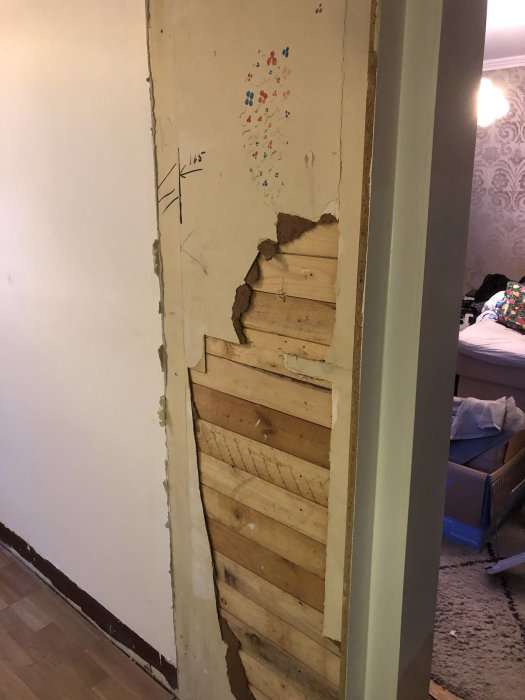
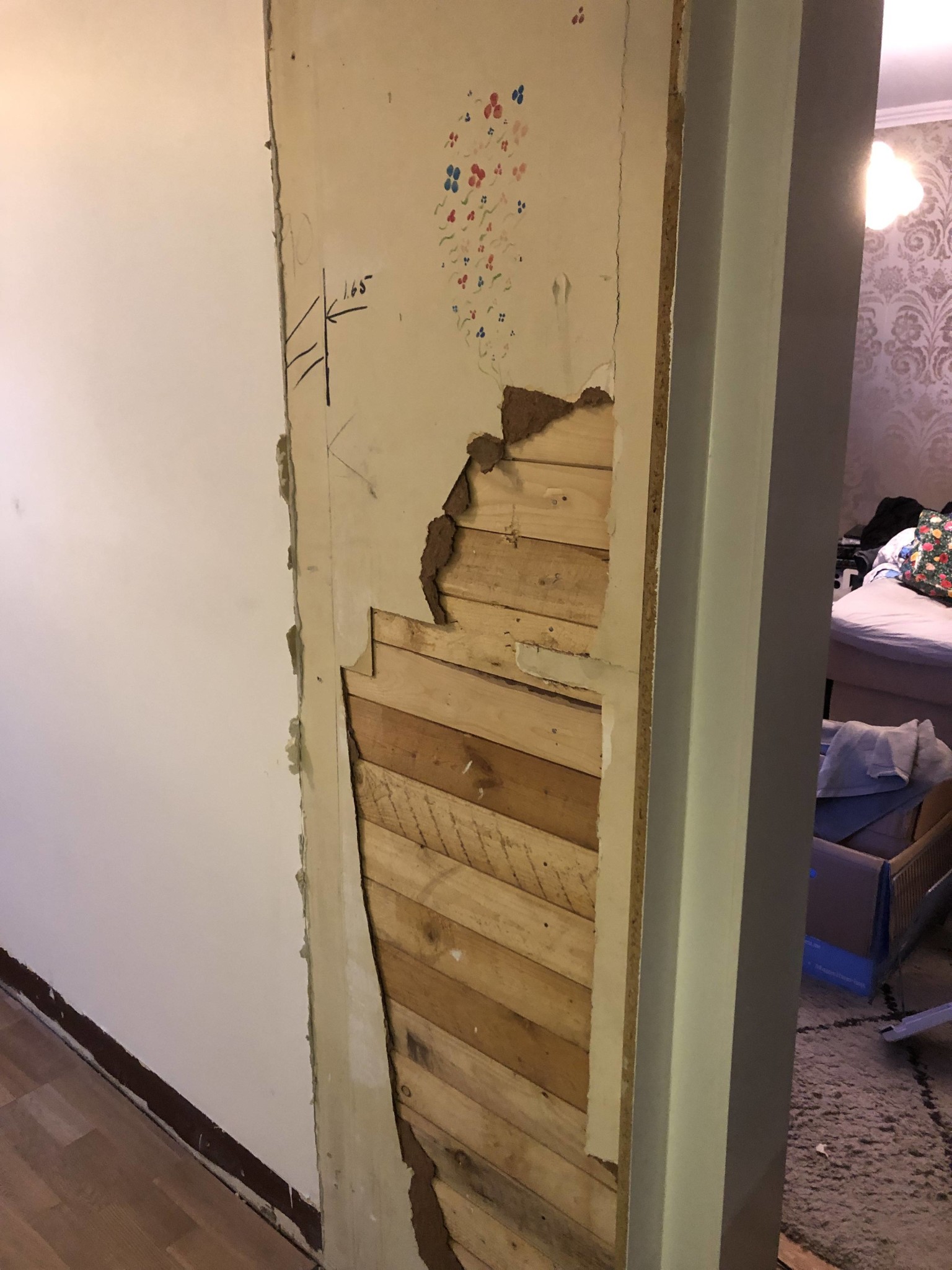
There is a more substantial wall, about which I have asked for advice from a building consultant regarding whether it is load-bearing or not. Now I think it will end with me not demolishing this wall. It seems to be a "plank wall," as interior walls were built over 100 years ago (?).
What do you think about this wall (see image)? Should I expose the planks and paint them white, type?
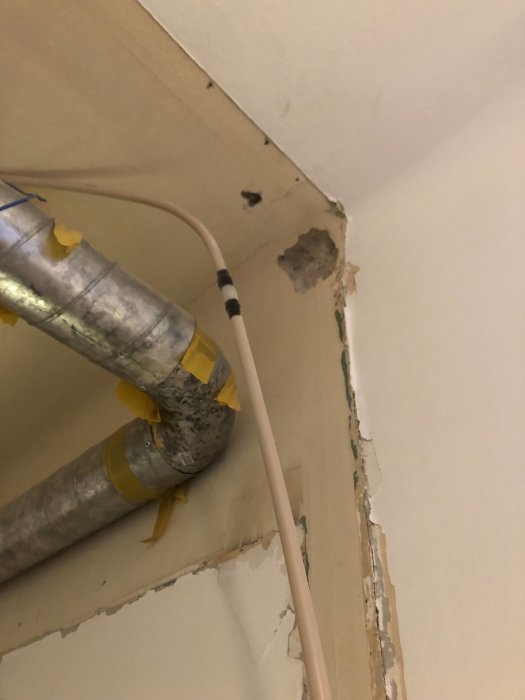
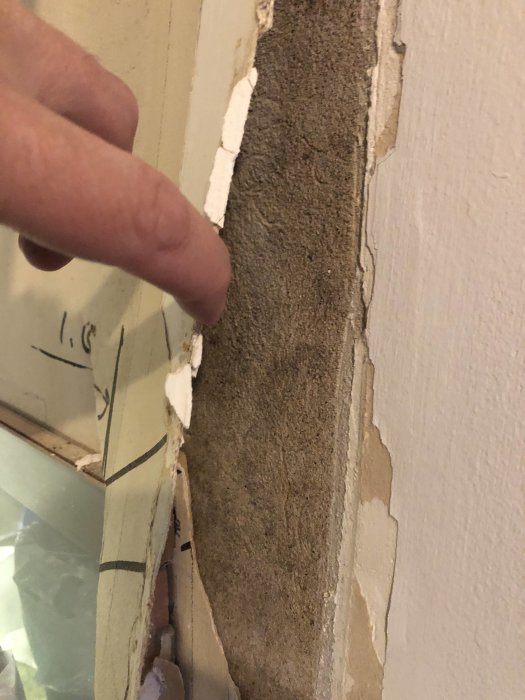
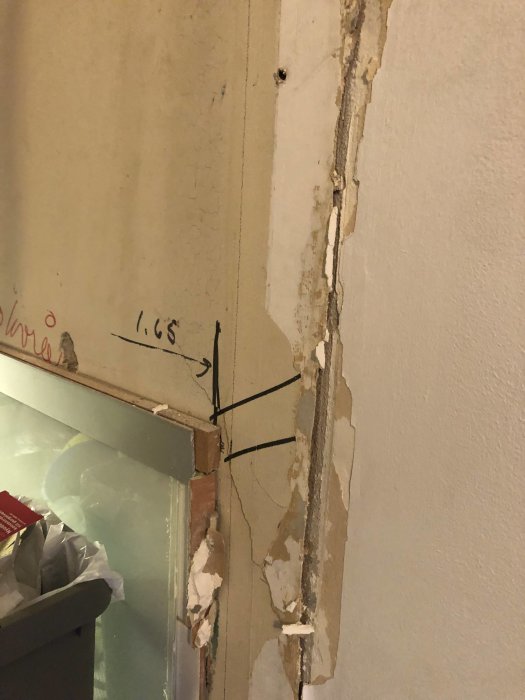
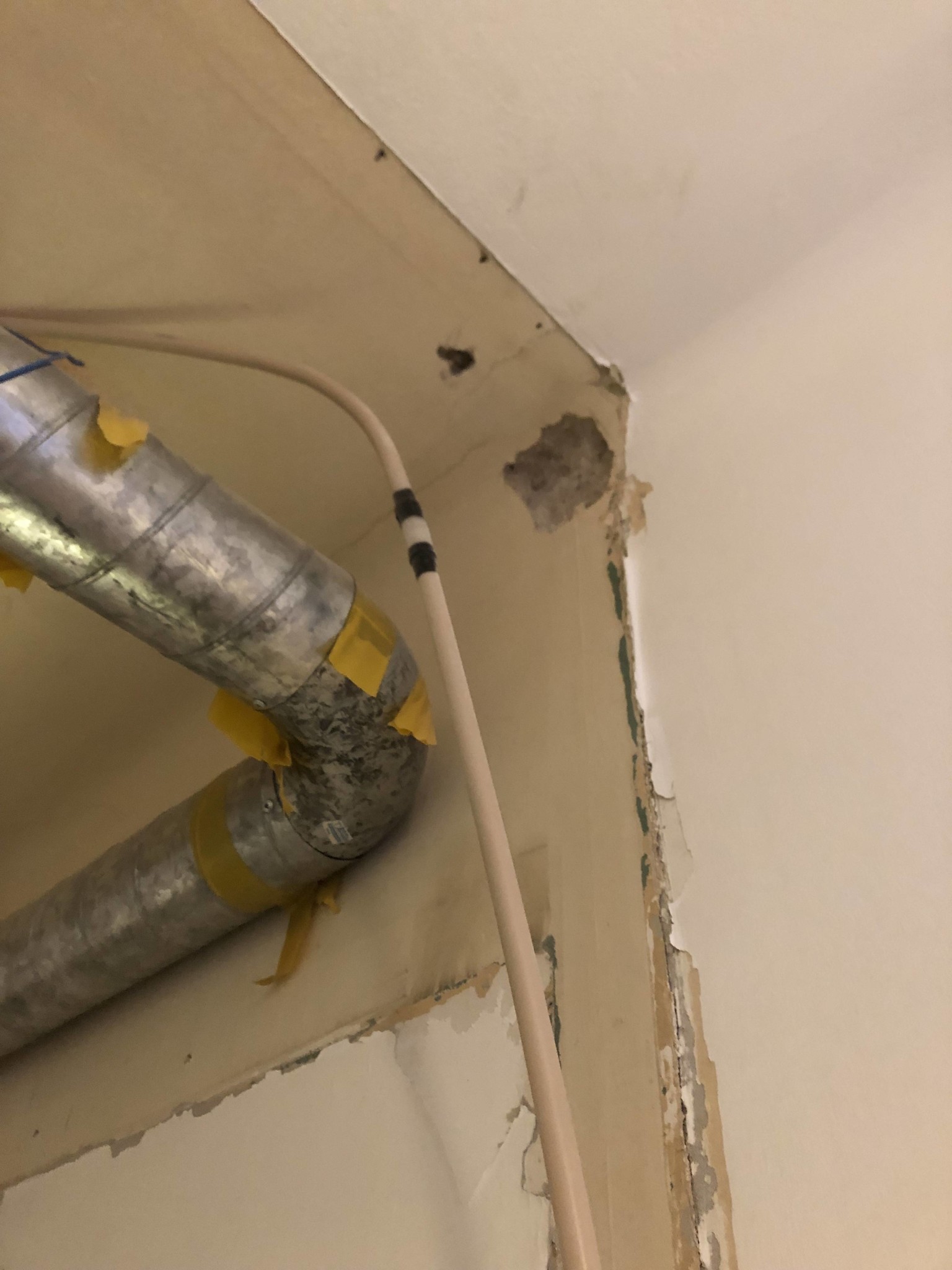
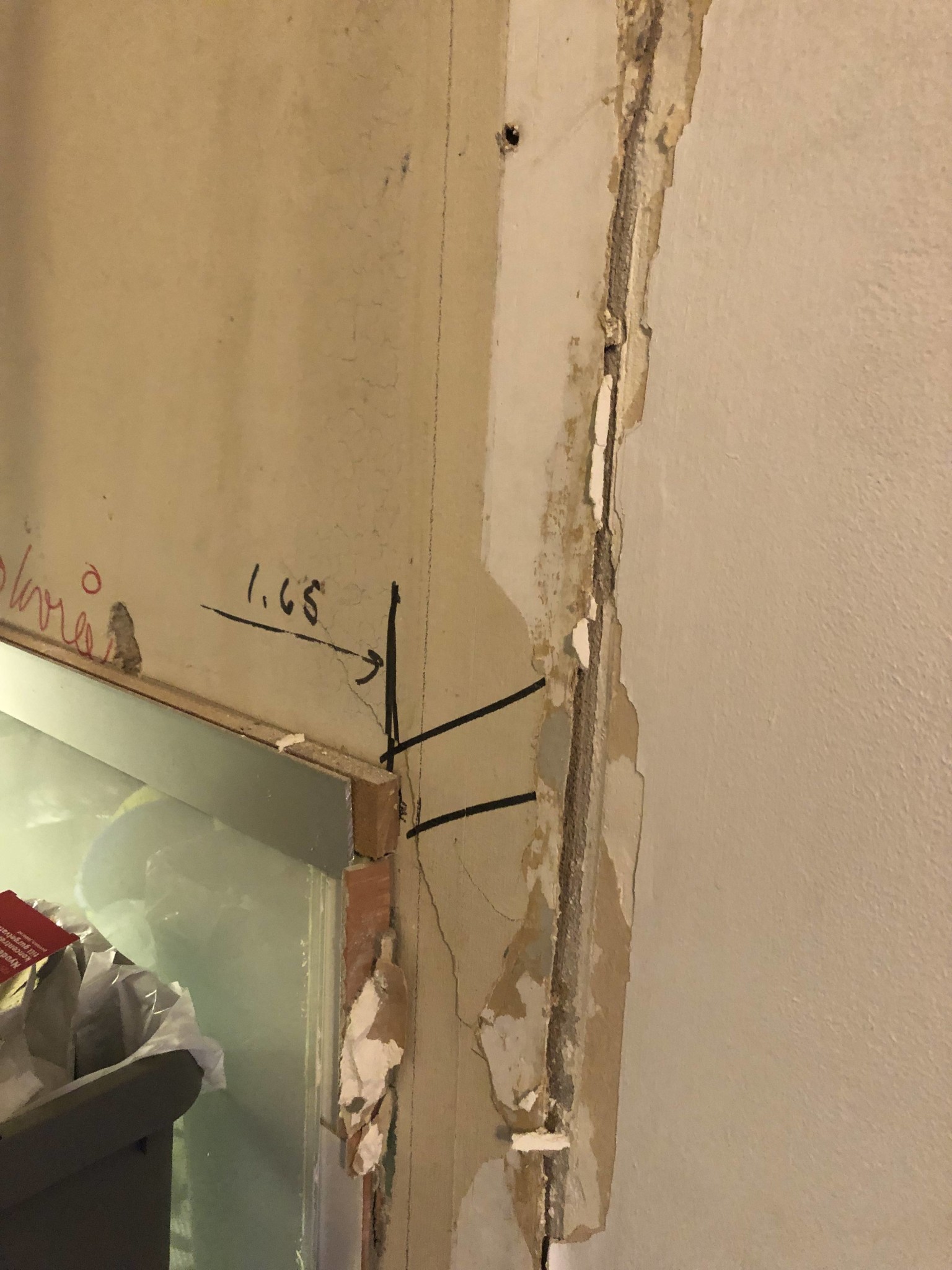
Then, "around" (also in the ceiling, where the previous, now demolished ceiling, was lowered to hold various electrical cables and vent.) the old kitchenette, there seems to be some kind of paper, or thick (really thick) "wallpaper," that is on the concrete, or is it plaster? This layer creates a sort of level difference between the walls, between the kitchenette and the other room (formerly a very small bedroom) that was previously separated by a non-load-bearing (modern, steel frame) wall.
What function could this wallpaper/paper have had? It feels like if I tear it down, a lot of concrete/plaster stuff will end up on the floor, you know. See images.
I was really surprised when the plank wall came to light. I think it's quite nice, so maybe I'll expose it and paint/stain...
Tension paper; it's great that I got the name for this. Now I can google further about how to possibly repair/treat tension paper, there was quite a bit to read.
Click here to reply
Vi vill skicka notiser för ämnen du bevakar och händelser som berör dig.